
Aquarium gravel and substrate are more than just decorative features. The right substrate can influence fish comfort, plant growth, cleaning, water flow, and the overall environment inside your aquarium.
With so many options available—from fine sand and traditional gravel to planted-tank substrates—it can be difficult for beginners to know what to choose. The best option depends on your fish, plants, tank setup, and how much maintenance you want to do.
Why Aquarium Substrate Matters
Substrate forms the foundation of an aquarium. It can provide a surface for plants to root, create hiding areas for bottom-dwelling fish, and contribute to the appearance of the tank.
However, the wrong substrate can create problems. Very sharp gravel may damage fish that spend time near the bottom, while an unsuitable grain size can make cleaning difficult or interfere with certain plants.
Before buying substrate, think about the needs of the animals and plants first—not just how the material looks.
1. Choose Substrate Based on Your Fish
Different fish interact with the substrate in different ways.
Some species spend much of their time close to the bottom, searching through the substrate for food. Others may dig, sift, burrow, or move gravel around.
When choosing aquarium substrate, consider:
- Whether your fish are bottom dwellers
- Whether they dig or sift through the substrate
- Whether they have delicate mouths or barbels
- Whether they prefer fine or coarse surfaces
- How much open swimming space they need
For example, fish that regularly forage along the bottom may benefit from a substrate that is smooth and appropriate for their natural behavior.
You should also consider the adult size and behavior of your fish when planning the entire aquarium. See How to Choose the Right Aquarium for Your Fish for more guidance.
2. Consider Your Aquarium Plants
If you plan to keep live plants, substrate becomes even more important.
Some aquarium plants can grow well in ordinary gravel when they receive appropriate nutrients, while other plants benefit from nutrient-rich substrates designed for planted aquariums.
Consider:
- Root development
- Nutrient availability
- Grain size
- Plant type
- Whether you plan to use root fertilizers
- How deeply plants need to be anchored
A substrate should support your planting plan rather than simply match the color of your aquarium.
For more guidance, see Best Freshwater Aquarium Substrate for Fish and Plants.
3. Understand Different Substrate Types
There is no single "best" aquarium substrate. Each type has advantages and disadvantages.
| Substrate TypeBest ForMain Consideration | ||
| Aquarium gravel | General freshwater setups | Easy to use and maintain |
| Fine sand | Certain bottom-dwelling fish | Can compact and require careful cleaning |
| Coarse gravel | Some community aquariums | Larger gaps can collect debris |
| Nutrient-rich planted substrate | Live plants | May require more careful setup |
| Natural-colored gravel | Natural-looking aquariums | Choose smooth, aquarium-safe pieces |
| Specialized substrates | Specific aquarium setups | Follow manufacturer guidance |
Your fish and plants should determine the choice rather than selecting a substrate simply because it is popular.
4. Pay Attention to Grain Size
Grain size affects both fish and maintenance.
Fine Substrate
Fine sand can create a natural appearance and may suit fish that naturally forage or sift through soft substrate.
However, very fine material can compact and may make cleaning more challenging if debris sits on or within the surface.
Medium Gravel
Medium-sized aquarium gravel is a common beginner-friendly choice. It can provide good water movement around the substrate and is relatively straightforward to clean.
Large Gravel
Larger pieces can create bigger spaces between individual pieces. Food and waste may collect in these gaps, making regular maintenance particularly important.
The ideal grain size depends on your livestock, plants, filtration, and cleaning routine.
5. Look for Smooth, Aquarium-Safe Materials
Regardless of the substrate type, avoid materials with sharp edges or unknown coatings.
Before adding gravel or other substrate, check for:
- Sharp or jagged pieces
- Cracked material
- Unusual coatings
- Loose paint or coloring
- Contaminants
- Materials not intended for aquarium use
Aquarium-specific products are generally the simplest choice for beginners because they are manufactured for aquarium environments.
6. Think About Maintenance
A beautiful substrate should still be practical to maintain.
Substrate can collect:
- Uneaten food
- Fish waste
- Dead plant material
- Other organic debris
Your cleaning method should be appropriate for the substrate. Gravel can generally be cleaned using an aquarium gravel vacuum, while very fine substrates may require a different technique to avoid removing the substrate itself.
Avoid choosing a substrate that makes routine maintenance unnecessarily difficult.
If you're establishing a regular cleaning schedule, see How to Build an Easy Aquarium Maintenance Routine.
7. Choose the Right Substrate Depth
The amount of substrate you need depends on the aquarium design and what you plan to grow or keep.
A relatively shallow layer may be sufficient for a simple aquarium where plants are limited. A planted aquarium may require a deeper or specially designed substrate arrangement depending on the plants.
Avoid adding excessive substrate simply because it looks attractive. A deeper layer can create additional areas where debris accumulates and may make maintenance more difficult.
8. Consider Whether the Substrate Changes Water Chemistry
Some substrates can influence water chemistry.
This can be useful when the effect matches the requirements of your aquarium, but it can be undesirable if it pushes water parameters away from what your fish and plants need.
If you are considering a substrate that may alter water chemistry, research its properties and test your aquarium water regularly.
For a better understanding of aquarium water parameters, see How to Test Aquarium Water: A Beginner's Guide.
9. Rinse Gravel Before Adding It
Many types of aquarium gravel should be rinsed before being placed in the aquarium to remove loose dust and particles.
A simple approach is:
- Place a manageable amount of substrate in a clean container.
- Rinse it with water.
- Stir the substrate gently.
- Drain cloudy water.
- Repeat until the water is substantially clearer.
- Add the cleaned substrate to the aquarium.
Do not use household soaps or detergents. Residues can be harmful to aquarium inhabitants.
Always follow the manufacturer's instructions, particularly for specialized planted substrates that may have different preparation requirements.
10. Match the Substrate to Your Overall Aquarium Design
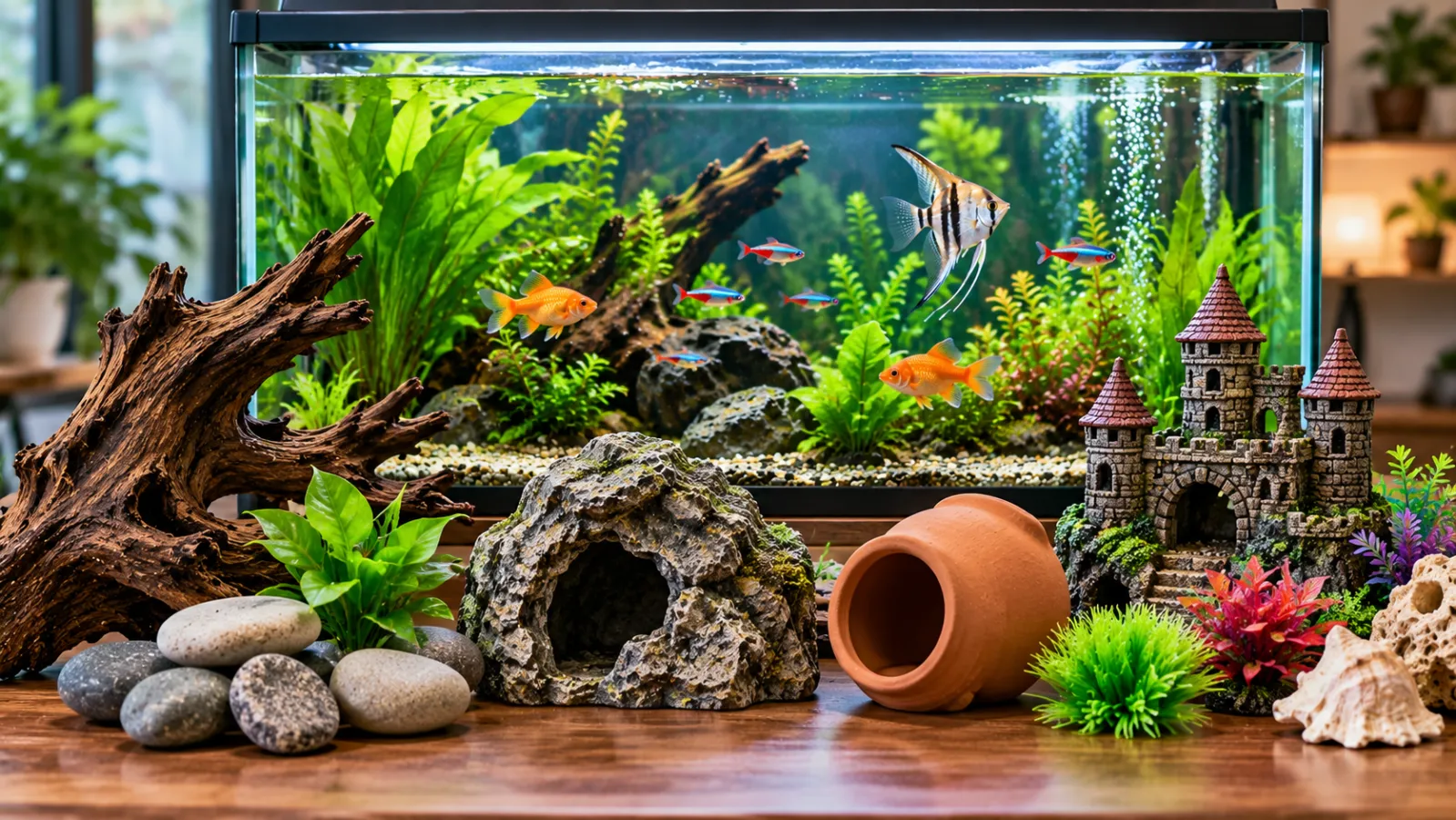
Substrate should work together with your decorations, plants, and available swimming space.
For example, you might combine:
- A natural-colored substrate
- Smooth rocks
- Aquarium-safe wood
- Live plants
- Open areas for swimming
Avoid filling every part of the tank with decorations or substrate features. Fish still need appropriate space to move naturally.
If you're also selecting decorations, see How to Choose Safe Aquarium Decorations.
Aquarium Substrate Checklist
Before buying aquarium gravel or substrate, ask:
| QuestionWhy It Matters | |
| What fish do I keep? | Different species have different substrate preferences |
| Am I keeping live plants? | Plants may have specific substrate requirements |
| What grain size is appropriate? | Affects fish behavior and maintenance |
| Is it smooth? | Helps reduce injury risks |
| Is it aquarium-safe? | Reduces the risk of unsuitable materials |
| Will it affect water chemistry? | Some substrates can influence water parameters |
| Is it easy to clean? | Important for long-term maintenance |
| How deep should it be? | Depends on plants and aquarium design |
| Will it reduce swimming space? | Important for fish welfare |
Common Aquarium Substrate Mistakes
Choosing Only Based on Appearance
A substrate may look great but still be unsuitable for your fish or plants.
Using Sharp Gravel
Rough or sharp pieces can be problematic for fish that spend considerable time on or near the bottom.
Ignoring Plant Requirements
Not every substrate provides the same support for rooted plants.
Making the Substrate Too Deep
More substrate is not necessarily better. Consider your aquarium's livestock, plants, and maintenance needs.
Failing to Clean New Gravel
Dust and loose particles can make the aquarium cloudy when new substrate is added.
Forgetting About Water Chemistry
If a substrate can affect water parameters, make sure that effect is appropriate for your aquarium.
Final Thoughts
The best aquarium gravel or substrate is the one that fits your fish, plants, aquarium size, maintenance routine, and water requirements.
For a simple community aquarium, smooth aquarium gravel may be a practical choice. A planted aquarium may benefit from a specialized substrate, while some bottom-dwelling fish may do better with a suitable fine substrate.
Instead of asking, "Which substrate is the best?", ask "Which substrate is best for the aquarium I am keeping?"
Sources & References
RSPCA. Fish and Aquariums.
OATA. How to Set Up and Look After a Freshwater Tank / Aquarium.
OATA – Freshwater Tank Setup and Care
OATA. How to Test Water Quality in Your Freshwater Tank / Aquarium.
OATA – Freshwater Aquarium Water Testing
Created with AI • Independently Verified
This article was created with the assistance of artificial intelligence and cross-checked using multiple AI systems to help identify errors, inconsistencies, and missing information.
Important factual claims are additionally checked against reputable veterinary, scientific, animal-welfare, and other authoritative sources before publication.
Our standard: AI helps us research and explain. Reliable evidence determines what we publish.
Last reviewed: September 2026