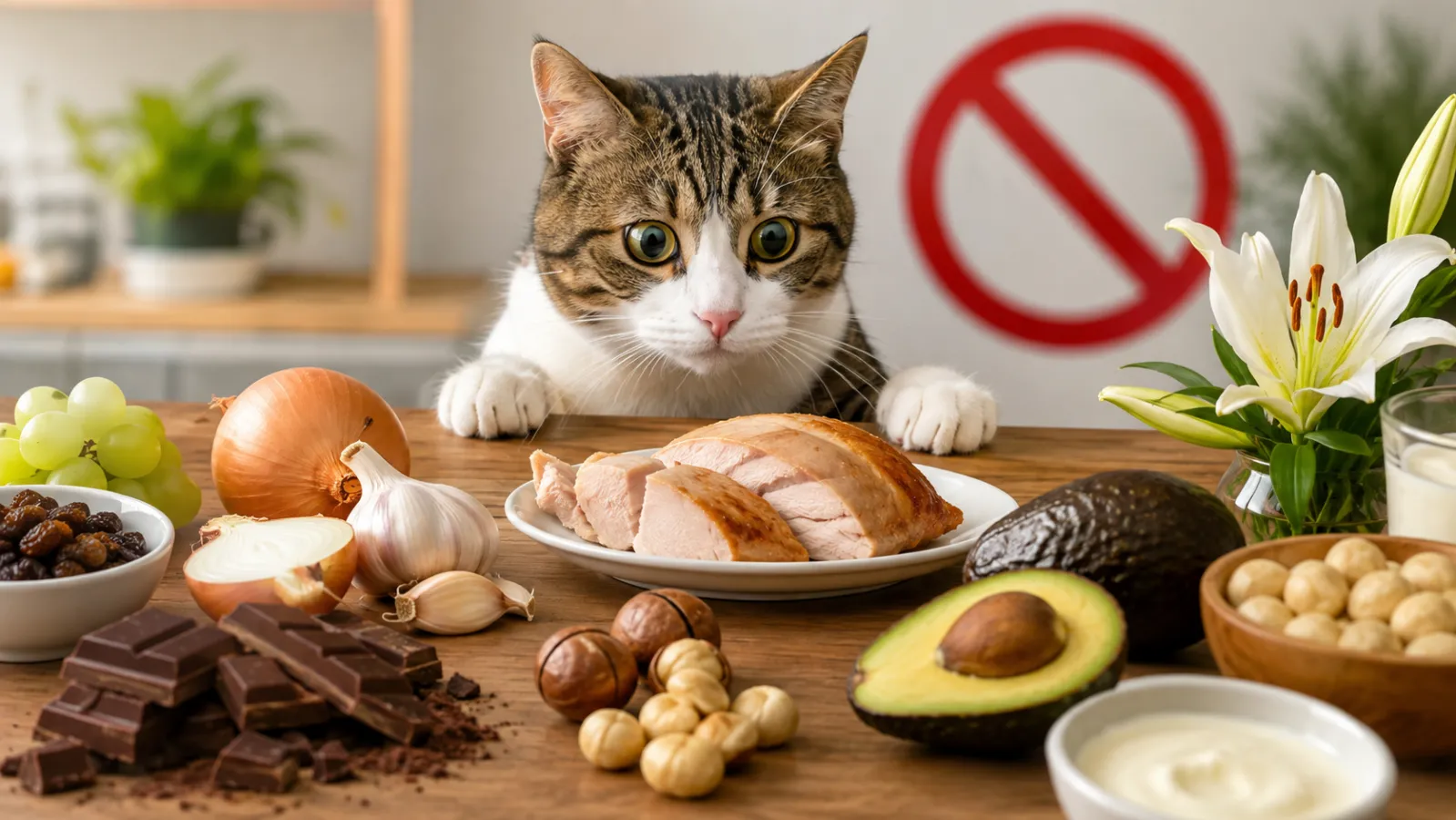
A cat sitting beside you during dinner, meowing while you prepare breakfast, or staring at you every time you eat can be difficult to resist. Many cat owners have experienced the familiar routine of a cat begging for food, especially when those pleading eyes are followed by persistent meowing or pawing.
Food begging is common, but it can become a problem when cats learn that begging consistently results in extra food or treats. Giving your cat a small bite may seem harmless, but repeated rewards can turn occasional begging into a daily habit. Extra calories can also contribute to unwanted weight gain and obesity.
The good news is that food begging can usually be managed with a combination of consistent feeding schedules, appropriate portion control, positive training, environmental enrichment, and family-wide consistency.
The goal is not to make your cat feel hungry or deprived. Instead, the aim is to create a predictable feeding routine and teach your cat that begging is not the behavior that earns food.
1. Understand Why Cats Beg for Food
Before changing your cat's behavior, it helps to understand why they beg.
Food begging can happen for several reasons. Some cats genuinely enjoy food and have learned that humans are an easy source of extra treats. Others may beg because they are bored, seeking attention, following a routine, or responding to the smell of food.
A cat may also beg because begging has worked in the past.
For example, if your cat meows while you are eating and you give them a piece of chicken, they may remember that behavior. The next time you eat, they may try the same strategy.
The cycle becomes:
Cat begs → owner gives food → cat learns begging works.
Breaking this cycle requires consistency.
However, persistent hunger should not automatically be assumed to be a behavioral problem. If your cat suddenly becomes much hungrier than usual, loses weight, drinks more water, or shows other changes, consult a veterinarian.
2. Establish a Scheduled Feeding Routine
A predictable feeding schedule can help reduce food-related begging.
Instead of feeding your cat whenever they ask, establish regular meal times that work for your household.
For example, your cat might receive meals in the morning and evening, with additional meals if appropriate for their individual nutritional needs.
The exact schedule will depend on your cat's age, health, diet, and veterinarian's recommendations.
The important part is consistency.
When cats know that food arrives at predictable times, they may become less focused on constantly asking for it.
Avoid frequently changing meal times or giving random snacks simply because your cat is begging.
3. Stop Rewarding Begging
This is one of the most important steps.
If you give your cat food every time they beg, they have little reason to stop.
Begging can include:
- Meowing repeatedly
- Pawing at you
- Following you into the kitchen
- Sitting beside your plate
- Jumping onto the table
- Staring at you while you eat
- Scratching at food containers
If begging is not related to an urgent need and your cat's nutritional needs are already being met, avoid rewarding the behavior with food.
This can be difficult at first.
Your cat may actually become more persistent when you stop rewarding a behavior that previously worked.
Stay consistent.
If you give in after several minutes of begging, your cat may learn that persistence eventually produces food.
4. Do Not Punish Your Cat for Begging
Stopping food begging does not mean punishing your cat.
Yelling, hitting, spraying water, or frightening your cat can create stress and damage your relationship.
Your cat may not understand why the punishment is happening.
Instead, focus on teaching a different behavior.
For example, reward your cat for sitting calmly in an appropriate location while you prepare food or eat.
Positive reinforcement allows your cat to learn what you want them to do instead of simply learning what they should not do.
5. Control Portions Carefully
Portion control is essential when managing food begging.
Cats can easily consume too many calories when meals are supplemented with treats, table scraps, or frequent snacks.
Even small amounts can add up over time.
Measure your cat's regular food rather than estimating portions.
If treats are part of your cat's routine, account for them as part of their overall daily intake.
Avoid giving large pieces of human food simply because your cat appears hungry.
Some human foods are also unsafe for cats, so feeding table scraps can create unnecessary health risks.
If you are unsure how much your cat should eat, ask your veterinarian for guidance based on your cat's age, size, activity level, and health.
6. Use Healthy, Low-Calorie Treats
Treats can still have a place in your cat's routine.
The key is to use them thoughtfully.
Choose small treats and keep portions controlled. Low-calorie treats can be useful when you are using food for training or rewarding appropriate behavior.
You can also break larger treats into smaller pieces.
Your cat does not necessarily need a large treat to recognize that they have been rewarded.
The reward is about the association, not the size.
Try to avoid using treats every time your cat demands attention. Instead, reward behaviors you want to encourage, such as calm sitting, coming when called, or using an enrichment toy.
7. Use an Automatic Feeder
An automatic feeder can be helpful for cats that constantly associate their owners with food.
If your cat wakes you early in the morning and demands breakfast, an automatic feeder can provide food at a predetermined time.
This creates a different association:
Meal time = feeder provides food.
Instead of learning that waking you produces breakfast, your cat can become accustomed to waiting for the scheduled meal.
Automatic feeders can also help maintain consistency when household schedules change.
However, an automatic feeder does not replace portion control. The amount of food dispensed should still fit your cat's overall nutritional plan.
8. Try Puzzle Feeders
Puzzle feeders can make meals more mentally stimulating.
Instead of eating everything immediately from a regular bowl, your cat has to interact with the feeder to access some or all of their food.
This can encourage natural food-seeking behaviors and provide mental enrichment.
Puzzle feeders may be especially useful for cats that eat quickly or appear bored between meals.
Start with an easy puzzle.
If the feeder is too difficult, your cat may become frustrated and stop using it.
Once your cat understands the concept, you can gradually introduce more challenging designs.
9. Provide Environmental Enrichment
Food begging is not always about hunger.
Sometimes cats beg because they are bored or want interaction.
Providing more enrichment can give your cat alternative activities.
Consider providing:
- Scratching posts
- Cat trees
- Window perches
- Interactive toys
- Puzzle feeders
- Safe climbing areas
- Hiding spaces
- Rotating toys
Interactive play can also help.
A few short play sessions throughout the day may be more useful than one long session.
Cats naturally benefit from opportunities to chase, stalk, pounce, climb, explore, and investigate.
A mentally and physically stimulated cat may be less likely to focus entirely on food.
10. Teach an Alternative Behavior
Instead of simply trying to stop your cat from begging, teach them what to do instead.
For example, you can teach your cat to sit on a specific mat or bed while you prepare meals.
Begin when there are no distractions.
Guide your cat toward the designated area and reward them for staying there calmly.
Gradually increase the amount of time they remain in the area.
Eventually, you can use this behavior during meal preparation.
Your cat learns:
Calm behavior in the designated spot = reward.
This gives them something productive to do instead of jumping on counters or begging beside you.
11. Be Consistent During Human Mealtimes
Human mealtimes can be particularly challenging.
If your cat has learned that sitting beside the dinner table sometimes results in food, they may continue trying.
Make a household rule that family members do not feed the cat from their plates.
This is especially important if several people live in the home.
If one person refuses to give food but another regularly shares leftovers, your cat will continue begging because the behavior still occasionally works.
Everyone needs to follow the same approach.
12. Keep Food Out of Reach
Prevention can make training easier.
Do not leave food unattended on countertops or tables where your cat can easily access it.
Cats are naturally curious, and the smell of food can be extremely motivating.
Keep food properly stored and clean surfaces after meals.
If your cat repeatedly jumps onto the kitchen counter while food is being prepared, provide an alternative location nearby where they can safely observe without interfering.
Reward calm behavior in the appropriate location.
13. Avoid Using Food for Every Form of Affection
Food is not the only way to show your cat affection.
If you automatically give treats whenever your cat approaches you, they may begin expecting food every time they seek attention.
Instead, use different forms of interaction.
Depending on what your cat enjoys, this might include:
- Gentle petting
- Play
- Verbal praise
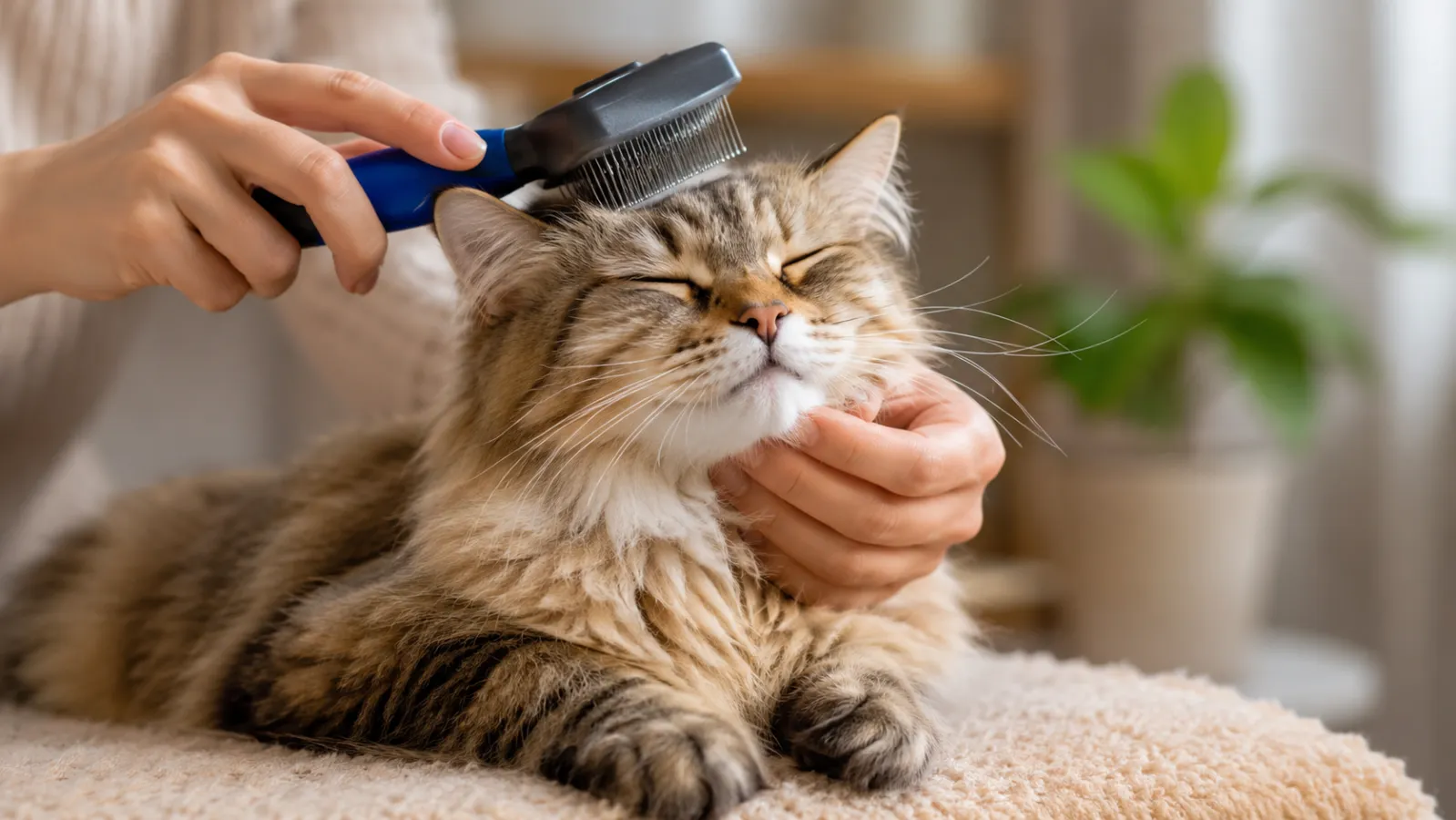
- Grooming
- A favorite toy
- Quiet companionship
This helps your cat understand that human interaction does not always result in food.
14. Recognize When Your Cat Is Actually Hungry
It is important not to confuse behavioral begging with genuine nutritional needs.
Growing kittens, pregnant or nursing cats, highly active cats, and cats with certain health conditions may have different nutritional requirements.
If your cat consistently appears hungry despite receiving an appropriate diet, talk with your veterinarian.
You should also pay attention to changes.
A sudden increase in appetite can sometimes accompany health problems.
Contact your veterinarian if begging is accompanied by signs such as:
- Unexplained weight loss
- Increased thirst
- Increased urination
- Vomiting
- Diarrhea
- Changes in energy
- Changes in appetite
- Changes in coat condition
Behavioral training should never replace appropriate veterinary care.
15. Prevent Obesity Through Healthy Habits
One of the biggest reasons to manage food begging is weight control.
Cats that regularly receive extra calories can gradually gain weight.
Obesity can affect a cat's overall health and may make movement more difficult.
You do not need to completely eliminate treats.
Instead, focus on moderation and appropriate portions.
Regular play can also support healthy activity.
A combination of measured meals, controlled treats, enrichment, and physical activity can help maintain a healthier lifestyle.
If you are concerned about your cat's weight, ask your veterinarian to evaluate their body condition and recommend an appropriate feeding plan.
16. Make Changes Gradually
If your cat has been receiving food whenever they beg, suddenly removing every extra treat may be challenging.
Your cat may become more persistent at first.
Stay calm and consistent.
You can gradually replace food rewards with play, attention, or other forms of enrichment.
If your cat is accustomed to multiple snacks throughout the day, work toward a structured routine rather than making unnecessary drastic changes.
The goal is to establish sustainable habits that you can maintain long term.
17. Reinforce Calm Behavior
One of the most effective training techniques is rewarding your cat when they are not begging.
If your cat is sitting quietly while you prepare food, reward that calm behavior appropriately.
If they remain on their cat tree while you eat, provide positive attention later.
If they walk away from your plate instead of trying to steal food, recognize that behavior with an appropriate reward.
This teaches your cat that calm behavior can be more rewarding than demanding behavior.
Timing matters.
Reward the behavior you want as soon as reasonably possible so your cat can understand the connection.
18. Give Your Cat Attention Before They Start Begging
Sometimes prevention is easier than correction.
If your cat usually becomes demanding around dinner time, schedule a short play session before you begin preparing your own meal.
You could also provide an appropriate puzzle feeder or enrichment activity during that period.
This gives your cat something to focus on while you are occupied.
A predictable routine can make the evening more manageable for everyone.
For example:
Play → cat meal → quiet activity → family meal
The exact routine can vary, but consistency can help your cat know what to expect.
19. Be Patient When Behavior Changes
When you stop rewarding begging, your cat may initially become more persistent.
This is not necessarily a sign that the training is failing.
Your cat may simply be testing whether the old strategy still works.
If begging previously produced food, your cat may try harder before giving up.
Remain consistent.
Do not reward the increased begging.
Instead, wait for calm behavior and reinforce that alternative.
Over time, your cat can learn that demanding food no longer produces the desired result.
Final Thoughts
Stopping a cat from begging for food is not about withholding necessary nutrition or making your cat feel uncomfortable. It is about creating healthy boundaries around food and teaching your cat that begging is not the way to receive extra meals or treats.
Start with a consistent feeding schedule and appropriate portion control. Avoid rewarding persistent meowing, pawing, jumping, or other demanding behaviors with food.
Automatic feeders can help separate meal times from human attention, while puzzle feeders can provide both food and mental stimulation. Healthy, low-calorie treats can still be used when appropriate, especially for training, but they should be included in your cat's overall daily intake.
Environmental enrichment is equally important. Interactive toys, scratching posts, climbing areas, window perches, and play sessions can give your cat other ways to spend their time.
Most importantly, everyone in the household should follow the same rules. If begging sometimes works, your cat has a reason to keep trying.
With patience, consistency, appropriate portions, and positive reinforcement, food begging can become much easier to manage. These habits can also help prevent excessive calorie intake and support your cat's long-term health and healthy weight.