One moment, your cat is peacefully sleeping on the couch. The next, they suddenly race through the house, jump onto furniture, skid across the floor, and disappear around a corner at full speed. Then, just as quickly as it started, the chaos ends.
If you have ever watched your cat sprint around the house for no obvious reason, you have experienced the famous cat zoomies.
These sudden bursts of energy can be surprising, especially when they happen late at night. However, in most healthy cats, zoomies are a completely normal part of feline behavior. They are often connected to play, hunting instincts, stored-up energy, excitement, and a cat's natural daily rhythm.
Understanding why zoomies happen can help you respond appropriately, provide better enrichment, and reduce disruptive nighttime activity without trying to eliminate a behavior that is natural for cats.
1. What Are Cat Zoomies?
"Zoomies" is the informal term commonly used to describe sudden bursts of running, jumping, chasing, and playful activity.
Your cat may suddenly:
- Run from one room to another
- Chase an invisible target
- Jump on furniture
- Sprint down a hallway
- Spin or change direction quickly
- Chase their tail
- Climb and jump from furniture
- Play intensely for several minutes
These episodes may last only a few minutes, although the exact duration varies between cats.
Zoomies can happen at almost any time, but many owners notice them early in the morning or during the evening.
This timing is not random.
Cats are naturally adapted to periods of activity around dawn and dusk. Although domesticated cats can adjust their schedules to human households, their instincts and biological rhythms still influence their behavior.
2. Why Do Cats Get the Zoomies?
There is rarely one single reason for zoomies.
Instead, several factors can contribute to sudden bursts of energy.
Stored-Up Energy
Cats, particularly indoor cats, may spend many hours sleeping or resting.
After a long period of inactivity, your cat may suddenly feel energetic and need an outlet.
A short sprint around the house can provide physical activity and mental stimulation.
This is especially common in young cats and kittens, which typically have more energy and curiosity than older cats.
Hunting Instincts
Cats are natural predators.
Even a well-fed indoor cat still has instincts related to stalking, chasing, pouncing, and capturing prey.
A zoomie session may be an expression of those instincts.
Your cat may race after a toy, chase another pet, or suddenly sprint as though something invisible is being pursued.
This is one reason interactive play can be so valuable.
Excitement
Sometimes zoomies simply happen because your cat is excited.
A favorite toy, another animal, a new smell, or an interesting sound can trigger a sudden burst of activity.
Some cats also become energetic after using the litter box or after eating.
Releasing Tension
Physical activity can also help cats release energy or excitement.
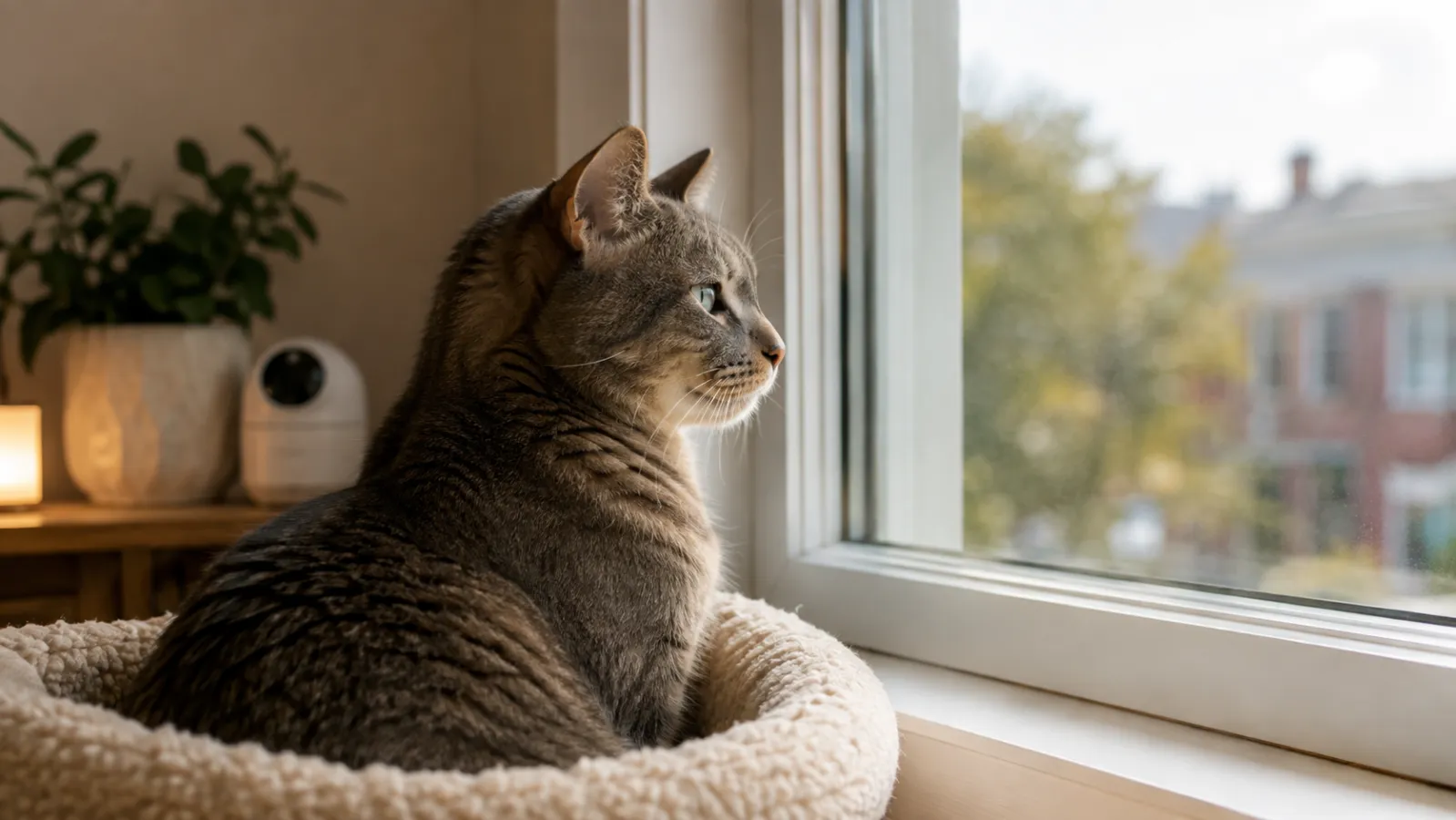
A cat that has been watching birds through a window, listening to unfamiliar noises, or waiting for playtime may suddenly run around once the opportunity arises.
3. Are Cat Zoomies Normal?
In most cases, yes.
Zoomies are generally normal when your cat appears happy, coordinated, alert, and otherwise healthy.
A typical zoomie episode may involve intense running followed by normal behavior.
For example, your cat might sprint around the living room for three minutes, stop, groom themselves, and then return to their usual routine.
That is generally not something to worry about.
Young cats are particularly likely to have frequent zoomies because they are developing coordination, exploring their environment, and learning how to use their bodies.
Adult cats can also experience zoomies, although their activity levels may vary based on age, personality, health, and lifestyle.
4. Your Cat's Exercise Needs Matter
Although zoomies are normal, frequent bursts of uncontrolled energy may sometimes indicate that your cat needs more opportunities for structured activity.
Indoor cats need physical and mental stimulation just like outdoor cats.
Without enough enrichment, a cat may become bored and look for their own entertainment.
Providing regular play sessions can help your cat use energy in a controlled and rewarding way.
Useful activities include:
- Interactive play
- Chasing toys
- Climbing
- Puzzle feeders
- Food-based games
- Exploring safe areas
- Training exercises
You do not need to keep your cat active all day.
Several short play sessions can be more practical and engaging than one long session.
5. Use Interactive Toys
Interactive toys are particularly useful because they allow you to recreate elements of the hunting process.
Feather Wands
Feather wands can encourage stalking, chasing, jumping, and pouncing.
Move the toy unpredictably rather than simply waving it in front of your cat. Allow your cat to occasionally catch it so the game remains satisfying.
Laser Toys
Laser toys can encourage cats to chase and sprint.
However, it is a good idea to finish laser play with a physical toy or another activity your cat can actually catch.
This provides a more complete hunting-style experience and prevents the play session from ending with an unattainable target.
Cat Tunnels
Tunnels provide opportunities to hide, chase, ambush, and explore.
You can move a toy past the tunnel entrance and allow your cat to stalk it from inside.
Tunnels can also become quiet hiding areas when your cat wants privacy.
6. Create an Evening Play Routine
If your cat regularly gets the zoomies at night, your evening routine may make a significant difference.
Instead of waiting for your cat to become energetic at midnight, schedule an interactive play session earlier in the evening.
A useful routine might involve:
Play → food → relaxation
Begin with an energetic play session using a feather wand or another interactive toy.
Allow your cat to chase and "catch" the toy.
After play, provide their normal meal or a small portion of food if appropriate for their feeding schedule.
Then give them time to relax.
This routine can resemble the natural sequence of hunting, catching prey, eating, and resting.
It may help some cats settle down more comfortably at night.
7. Give Your Cat More Environmental Enrichment
A stimulating home can help reduce boredom and encourage healthier activity.
Environmental enrichment means giving your cat opportunities to explore, climb, hide, scratch, play, and observe.
Consider adding:
- Cat tunnels
- Scratching posts
- Climbing shelves
- Cat trees
- Window perches
- Puzzle feeders
- Rotating toys
- Safe hiding spaces
Climbing shelves can be particularly valuable because cats often enjoy using vertical space.
A cat that can safely climb and observe the room from above has more opportunities to exercise and explore.
You do not need to purchase everything at once.
Even simple changes, such as rotating toys or creating a comfortable window perch, can make an indoor environment more interesting.
8. Rotate Your Cat's Toys
Leaving every toy available all the time can make them less interesting.
Instead, keep some toys stored away and rotate them.
For example, you might provide several toys for a few days and then replace some with different options.
This creates novelty without requiring constant purchases.
Interactive toys should generally be used with supervision, particularly toys involving strings, feathers, or small detachable parts.
9. Encourage Daytime Activity
If your cat sleeps for most of the day and becomes extremely energetic at night, increasing daytime activity may help shift some of that energy earlier.
Try scheduling short play sessions throughout the day.
For example:
- Morning: interactive play
- Afternoon: puzzle feeder or independent toy
- Evening: longer interactive play
- Before bedtime: calmer activity
The exact schedule will depend on your cat's personality and your household routine.
The goal is not to prevent your cat from sleeping.
Cats naturally sleep a lot.
Instead, provide enough opportunities for activity and enrichment during their waking periods.
10. Make Nighttime Less Exciting
If your cat starts running around the house at 2 a.m., your reaction can influence what happens next.
If you immediately get up, chase your cat, play with them, or provide attention, your cat may learn that nighttime zoomies lead to interaction.
Whenever possible, avoid turning nighttime activity into a game.
Instead, focus on creating an evening routine that gives your cat appropriate opportunities for exercise before bedtime.
If your cat is safely entertaining themselves and there is no danger, you may not need to intervene at all.
11. Keep Your Home Safe During Zoomies
Zoomies can be harmless, but high-speed running creates opportunities for accidents.
Look around your home for potential hazards.
Secure:
- Loose electrical cords
- Small objects that can be swallowed
- Breakable decorations
- Unstable furniture
- Open windows
- Dangerous plants
- Sharp objects
Make sure shelves, cat trees, and climbing structures are stable.
If your cat likes to sprint through hallways, keep walkways clear.
Avoid leaving string, ribbon, or small toys unattended if they could be swallowed.
A little preparation can make energetic play much safer.
12. Provide Safe Vertical Space
Cats naturally enjoy climbing and observing their surroundings from elevated positions.
Climbing shelves, cat trees, and secure furniture can provide both physical exercise and mental stimulation.
Vertical space also allows cats to move through the environment in ways that mimic natural climbing behavior.
If you install climbing shelves, make sure they are securely attached and positioned at appropriate distances.
Your cat should be able to move between surfaces without dangerous jumps.
For renters or households where permanent shelves are not practical, a stable cat tree can provide a similar benefit.
13. Don't Punish Zoomies
Zoomies are not bad behavior.
Your cat is not trying to annoy you by running around the house.
Punishing, yelling, or frightening your cat is unlikely to solve the underlying reason for the behavior.
Instead, focus on meeting their physical and mental needs.
If the zoomies are happening at inconvenient times, adjust the daily routine, increase enrichment, and provide structured play.
Think of zoomies as information.
They can tell you that your cat has energy that needs somewhere appropriate to go.
14. Zoomies After Using the Litter Box
Some cats appear to get a sudden burst of energy immediately after using the litter box.
This behavior is commonly reported by cat owners.
There are several possible explanations, but there is no single proven reason that applies to every cat.
For some cats, leaving the litter box may simply trigger a moment of excitement or relief.
If your cat otherwise uses the litter box normally and shows no signs of discomfort, occasional post-litter-box zoomies are generally not concerning.
However, sudden changes in litter-box behavior should be taken seriously.
15. When Zoomies May Be Abnormal
Although normal zoomies are usually nothing to worry about, not every episode of frantic activity should automatically be considered playful behavior.
Pay attention to changes in your cat's overall behavior.
Contact your veterinarian if your cat's sudden activity is accompanied by signs such as:
- Confusion
- Loss of coordination
- Repeated vocalization that seems distressed
- Difficulty breathing
- Pain
- Aggression that is unusual for your cat
- Repeated frantic behavior
- Changes in appetite
- Changes in litter-box habits
- Excessive grooming
- Significant changes in sleep or activity patterns
A sudden and dramatic behavioral change is more important than the occasional playful sprint.
If you are unsure whether your cat's behavior is normal, a veterinarian can help determine whether there is an underlying medical or behavioral concern.
16. Consider Your Cat's Age
Age can influence how frequently your cat gets the zoomies.
Kittens and young cats tend to have frequent bursts of activity because they are developing physically and mentally.
Adult cats may still have energetic play sessions, but their activity patterns can be more predictable.
Senior cats may become less active.
If an older cat suddenly develops unusually intense or frantic activity, particularly when combined with other behavioral changes, it is worth discussing with a veterinarian.
The important factor is not simply how much your cat runs.
It is whether the behavior is normal for that individual cat.
17. Build a Balanced Daily Routine
A predictable routine can help your cat understand when it is time to play, eat, rest, and interact with you.
A balanced routine might include:
Morning:
Short interactive play followed by breakfast.
Daytime:
Rest, window watching, exploration, and independent enrichment.
Evening:
More active play using feather wands, tunnels, or other interactive toys.
Night:
Calm environment with access to comfortable sleeping areas.
Your cat's routine does not need to be perfect.
Consistency is more important than following a strict schedule.
Final Thoughts
Cat zoomies can look completely chaotic, but they are often a normal expression of energy, playfulness, curiosity, and natural hunting instincts.
In most healthy cats, sudden bursts of running are nothing to fear. Instead of trying to eliminate zoomies, focus on giving your cat appropriate ways to use their energy.
Interactive toys such as feather wands, tunnels, climbing shelves, and puzzle feeders can provide valuable physical and mental stimulation. Regular play sessions, particularly in the evening, may also help reduce disruptive nighttime activity.
At the same time, make your home safe for high-speed feline adventures. Secure unstable objects, remove dangerous items, and provide safe climbing and play areas.
Most importantly, learn your individual cat's normal behavior. A few minutes of enthusiastic running can be perfectly healthy. A sudden and persistent change accompanied by distress or other unusual symptoms deserves professional attention.
Once you understand why zoomies happen, those midnight sprints may become less confusing and much more entertaining. Your cat is not necessarily being wild—they may simply be doing what cats naturally do best: moving, exploring, chasing, and having fun.