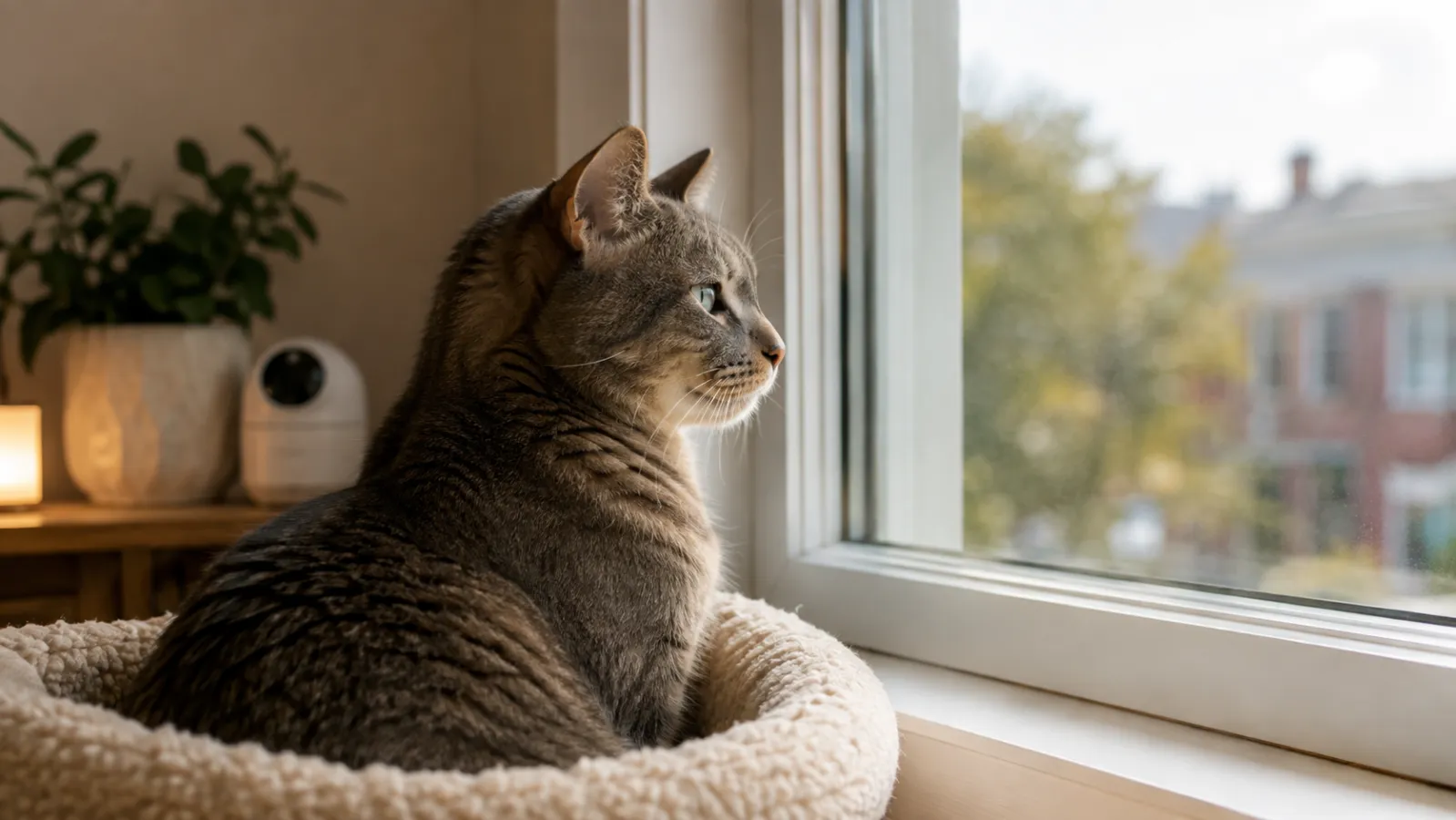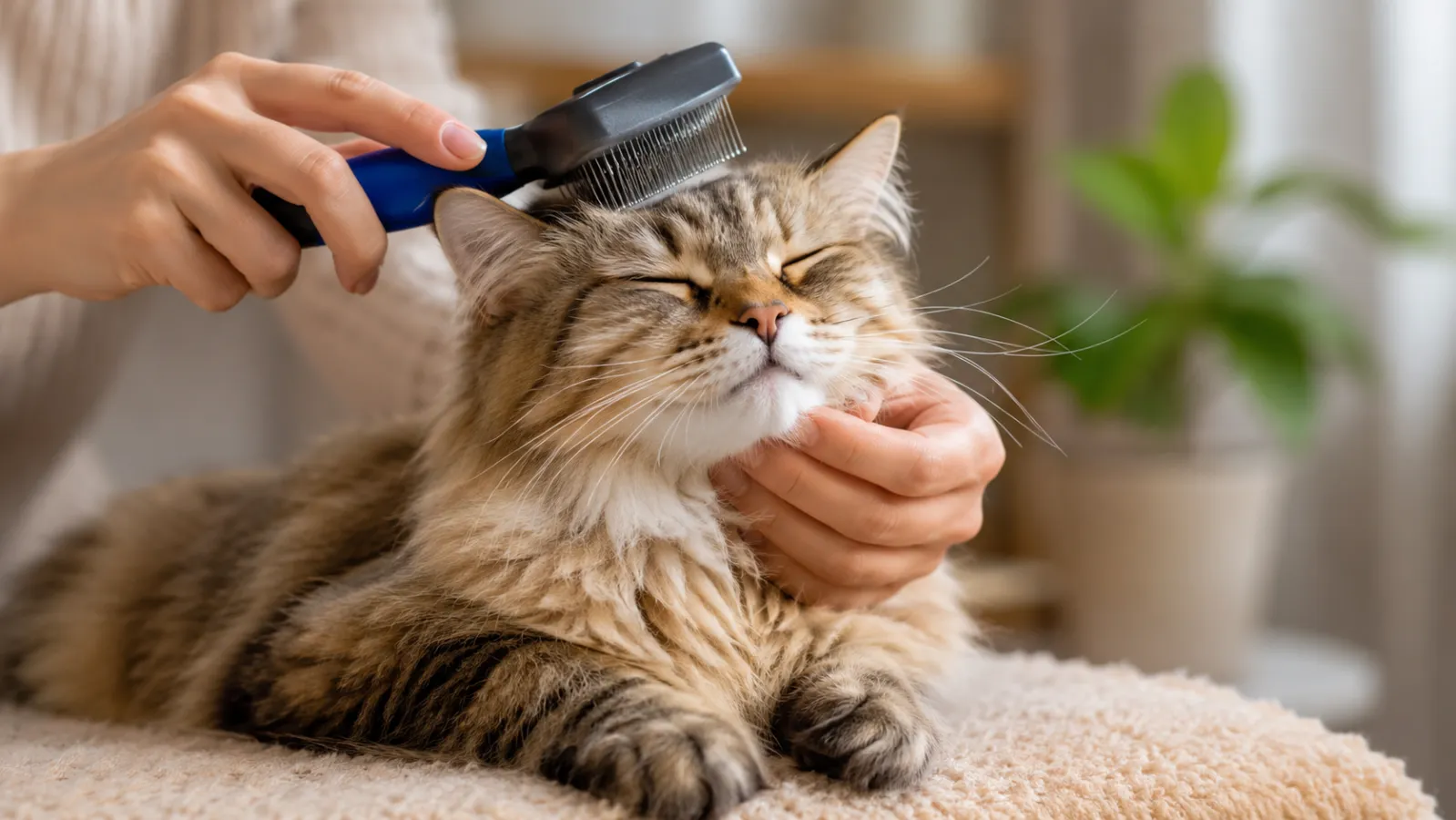
If your cat follows you from the bedroom to the kitchen, waits outside the bathroom, sits beside you while you work, and somehow appears every time you walk into another room, you are definitely not alone. Many cat owners wonder why their feline companion seems determined to be involved in everything they do.
So, why does your cat follow you everywhere?
In most cases, it is completely normal. Your cat may be showing attachment, looking for attention, satisfying its curiosity, following a familiar routine, or simply enjoying your company. Cats are often more social and observant than people realize. However, constant following can sometimes be connected to boredom, stress, or separation-related distress, especially if it appears suddenly or comes with other changes in behavior.
Understanding the reason behind your cat’s behavior can help you respond in the right way while strengthening your relationship.
1. Your Cat May Be Attached to You
One of the simplest explanations is that your cat likes being around you.
Cats can form strong social bonds with their human caregivers. Although cats are often described as independent animals, many enjoy regular interaction, companionship, and predictable contact with people they trust.
If your cat follows you around but otherwise appears relaxed, this may simply be its way of staying connected to you.
You may notice your cat:
- Walking behind you from room to room
- Sitting beside you while you work
- Sleeping near you
- Greeting you when you return home
- Rubbing against your legs
- Purring when you sit together
- Watching you from a nearby location
These behaviors can indicate that your cat feels comfortable and secure around you.
Your cat does not necessarily need to be sitting on your lap to show affection. Some cats prefer what could be called “nearby companionship.” They may want to be in the same room without necessarily wanting to be touched.
For example, your cat may sit on the floor while you watch television, lie on a chair while you work, or follow you into the kitchen and quietly observe what you are doing.
That is still companionship.
2. Curiosity Is a Major Reason Cats Follow People
Cats are naturally curious animals. Your daily activities provide endless opportunities for investigation.
Think about what happens when you walk into the kitchen. You open cabinets, prepare food, turn on appliances, open the refrigerator, and create interesting smells. From your cat’s perspective, something potentially exciting is happening.
The same thing happens when you:
- Open a closet
- Enter a different room
- Unpack shopping bags
- Start cleaning
- Open a package
- Go outside
- Move furniture
- Prepare food
Your cat may simply want to know what is happening.
Curiosity can be especially noticeable in intelligent and highly interactive cats. A Siamese cat, for example, is often known for being social, vocal, and interested in interacting with people. Individual personalities still vary, but some cats are naturally more involved in household activities than others.
Your cat may not be thinking, “I need to follow my owner.”
It may simply be thinking, “What are you doing, and should I investigate?”
3. Your Daily Routine Can Teach Your Cat to Follow You
Cats are creatures of habit. They often become familiar with the patterns of everyday life.
If you wake up, feed your cat, make coffee, work, prepare lunch, and relax in the evening at roughly the same times each day, your cat may learn that routine.
Following you can become part of that routine.
For example, your cat may follow you into the kitchen every morning because breakfast usually happens there. It may follow you to the bedroom at night because bedtime usually means quiet companionship.
Your cat can also learn that certain actions predict rewards.
If you regularly give treats after sitting at your desk, your cat may start appearing whenever you sit down. If playtime usually happens after dinner, your cat may follow you around the house once dinner is finished.
This is not necessarily a problem. In fact, predictable routines can help cats feel secure. Cats generally benefit from consistency and predictable environments, particularly when changes in their surroundings can cause stress.
4. Your Cat May Be Looking for Attention
Sometimes your cat follows you because it wants something from you.
That “something” might be food, play, petting, grooming, or simply interaction.
Cats can learn very quickly which behaviors get a response from their humans.
For example, imagine your cat follows you into the kitchen and meows. You give it a treat. The next day, it follows you again and meows. Eventually, your cat learns that following you into the kitchen can lead to food.
The same principle can apply to attention.
Your cat may follow you because previous experiences have taught it that being near you results in:
- Petting
- Verbal attention
- Treats
- Play
- Food
- Being picked up
- Access to another room
Attention-seeking behavior is not automatically bad. Cats need social interaction and mental stimulation. The goal is to make sure your cat has healthy ways to receive attention rather than becoming completely dependent on constant interaction.
Interactive toys can be particularly useful here. Instead of providing attention every time your cat demands it, schedule regular play sessions where your cat can chase, pounce, stalk, and problem-solve.
5. Your Cat Could Be Bored
A cat that has very little to do may decide that following you is the most interesting activity available.
Indoor cats especially need opportunities for physical exercise and mental stimulation. Without enough enrichment, some cats may become overly focused on their owners simply because the owner is the most exciting thing in the environment.
Look at your cat's daily life.
Does it have places to climb? Toys to explore? Opportunities to watch birds through a window? Things to investigate? Regular play sessions?
If the answer is “not much,” boredom could be contributing to the behavior.
Try introducing:
- Interactive toys
- Puzzle feeders
- Scratching posts
- Cat trees
- Window perches
- Rotating toys
- Food-dispensing toys
- Short daily play sessions
Puzzle feeders can be especially helpful because they make your cat work for part of its food and encourage natural problem-solving behavior.
Rotating toys can also make old toys feel new again. Instead of leaving every toy available all the time, keep some stored away and bring them out periodically.
6. Some Cats Are Simply More Social Than Others
There is no single personality type for cats.
Some cats are independent and happy to spend hours sleeping alone. Others want to be involved in practically everything their owners do.
Breed can influence tendencies, but it should never be treated as a guarantee of personality.
Siamese cats, for example, are commonly recognized as highly social and interactive. Other breeds and individual cats can also be extremely people-oriented.
At the same time, a mixed-breed cat can be just as affectionate and attached.
Personality is influenced by many factors, including early experiences, socialization, environment, genetics, and individual temperament.
So if your cat follows you everywhere, it does not necessarily mean something is wrong. It may simply be a naturally social cat.
7. Could It Be Separation Anxiety?
Sometimes constant following deserves closer attention.
Separation-related distress occurs when a pet becomes distressed when an important companion is absent. In cats, the signs can vary, and following you around the house by itself is not enough to diagnose separation anxiety.
Pay attention to what happens when you leave.
Does your cat become extremely distressed? Does it vocalize excessively, stop eating, eliminate outside the litter box, become destructive, or show other unusual behaviors when left alone?
A pattern of distress specifically connected to separation is more concerning than a cat that simply enjoys following you.
Veterinary behavior specialists recommend looking at what happens when the pet is alone rather than assuming that following the owner automatically means separation anxiety. If separation-related distress is suspected, veterinary guidance can help determine the cause and appropriate treatment.
A simple camera can sometimes help you understand what your cat does when you are away. You may discover that your cat settles down and sleeps after you leave, which can be reassuring.
8. Help Your Cat Build Independence
If you want your cat to feel comfortable spending time alone, you do not need to push it away or ignore it completely.
Instead, create opportunities for independent activities.
Start by giving your cat attractive alternatives to following you.
For example, create a comfortable area with:
- A soft bed
- A scratching post
- A cat tree
- A window view
- A favorite toy
- A puzzle feeder
- A quiet hiding place
Safe spaces are particularly valuable because cats often appreciate having areas where they can retreat and relax without being disturbed.
You can also reward calm independent behavior.
If your cat chooses to relax on its bed while you are in another part of the room, allow it to enjoy that space. You can occasionally reward calm behavior with a small treat or gentle praise.
The goal is not to teach your cat that being near you is bad.
The goal is to teach your cat that being apart from you can also be safe and rewarding.
9. Avoid Accidentally Encouraging Constant Following
Sometimes owners unintentionally strengthen a behavior.
Imagine your cat follows you every time you stand up. You immediately pet it, give it food, or start playing.
Your cat learns:
“Following my person gets rewards.”
That is perfectly fine if you enjoy the behavior. But if your cat becomes increasingly demanding, you may want to change the pattern.
Instead of rewarding every instance of following, provide scheduled attention throughout the day.
For example:
Morning: feeding and short play session
Afternoon: independent puzzle feeder or toy
Evening: interactive play and affection
Night: quiet companionship
This gives your cat predictable opportunities for interaction without teaching it that every movement you make requires attention.
10. When Should You Worry?
Following behavior is usually not concerning when your cat is otherwise healthy, relaxed, eating normally, using the litter box normally, and behaving as usual.
However, a sudden change in behavior deserves attention.
Be more cautious if your cat suddenly becomes extremely clingy and you also notice:
- Changes in appetite
- Increased or decreased drinking
- Changes in litter box habits
- Excessive vocalization
- Hiding
- Restlessness
- Aggression
- Excessive grooming
- Weight loss
- Low energy
- Difficulty moving
- Confusion or disorientation
- Other unusual personality changes
Cats can sometimes hide signs of illness, so behavioral changes should not automatically be dismissed as attention-seeking.
For example, Cornell notes that medical conditions can sometimes be associated with changes in behavior, and cats may not always appear obviously sick.
Older cats may also develop age-related behavioral changes. Significant changes such as disorientation, altered sleep patterns, unusual vocalization, reduced interest in activities, or changes in litter box behavior warrant veterinary attention.
If your cat's clinginess is sudden, intense, or accompanied by other changes, speak with your veterinarian rather than trying to solve the problem through training alone.
11. Strengthen Your Cat's Confidence
A confident cat does not necessarily need to be independent all the time. Confidence means your cat feels secure enough to explore, rest, play, and handle normal changes in its environment.
You can help build that confidence by creating a predictable home environment.
Give your cat access to elevated areas, hiding spaces, scratching surfaces, toys, and regular opportunities for play.
Avoid forcing your cat into interactions it does not want.
If your cat wants to retreat to a safe space, allow it to do so. If it approaches you for attention, respond appropriately.
Positive experiences can gradually help your cat feel more secure.
Environmental enrichment is especially important for indoor cats because it provides opportunities to express natural behaviors such as climbing, scratching, exploring, hunting, and problem-solving.
12. Let Your Cat Have a Balanced Relationship With You
There is nothing wrong with having a cat that wants to be your little shadow.
In fact, your cat following you around may be one of the ways it expresses its social connection with you.
The important thing is balance.
Your cat should be able to enjoy time with you while also feeling comfortable resting, playing, and exploring independently.
You can encourage that balance by combining affection with enrichment.
Give your cat attention, but also provide interactive toys.
Enjoy cuddles, but also create comfortable resting areas.
Play together, but also offer puzzle feeders that encourage independent problem-solving.
Maintain a predictable routine, but gradually help your cat become comfortable with small changes.
The result is not a less affectionate cat. It is a cat that feels secure both with you and on its own.
Final Thoughts
So, why does your cat follow you everywhere?
The answer may be surprisingly simple: your cat likes you, trusts you, and wants to know what you are doing.
For many cats, following their owners is a normal combination of attachment, curiosity, routine, attention seeking, and companionship. Some cats are naturally more social than others, and breeds such as Siamese cats may be particularly interactive, although every cat has its own personality.
If your cat is healthy and relaxed, there is usually no reason to discourage this behavior simply because it follows you from room to room.
At the same time, make sure your cat has opportunities to develop independence. Interactive toys, puzzle feeders, safe spaces, climbing areas, and predictable routines can help keep your cat mentally stimulated and confident.
Most importantly, pay attention to changes. A cat that has always followed you is one thing. A cat that suddenly becomes unusually clingy while also showing changes in appetite, litter box habits, grooming, energy, vocalization, or general behavior is another.
Your cat may not be able to tell you exactly what it needs, but its behavior can provide important clues.
Sometimes, when your cat follows you into yet another room, it may simply be saying, in its own feline way, “Where are you going? I want to come too.”
And honestly, being chosen as your cat's favorite person is not such a bad problem to have.