Waking up to your cat meowing, walking across your bed, scratching at the door, or demanding attention can quickly become frustrating, especially when it happens night after night. Many cat owners experience this problem and wonder why their cat seems wide awake while everyone else is trying to sleep.
The good news is that nighttime activity is usually connected to your cat's natural behavior, daily routine, feeding schedule, or environment. Cats are not deliberately trying to ruin your sleep. They may simply be following instincts or repeating a behavior that has previously received a response from you.
Understanding why your cat wakes you up is the first step toward changing the routine. Instead of punishing your cat or reacting with frustration, you can use consistent feeding schedules, evening play sessions, environmental enrichment, and appropriate boundaries to encourage calmer nights.
Whether you have a kitten, an adult cat, or a senior cat, identifying the underlying reason can help you create a healthier routine for both of you.
1. Understand Your Cat's Natural Sleep Patterns
One of the most important things to understand is that cats do not naturally follow the same sleep schedule as humans.
Cats are often most active around dawn and dusk. These periods are known as crepuscular periods. Their natural activity patterns are connected to their hunting instincts, which means your cat may become energetic around the same time you are getting ready for bed or waking up.
Cats also sleep for many hours during a typical day. If your cat spends most of the afternoon sleeping, they may have plenty of energy left when you go to bed.
This is particularly common with indoor cats. A comfortable home provides food, shelter, warmth, and safety, but it may not provide enough opportunities for natural behaviors such as hunting, exploring, climbing, and problem-solving.
You do not need to completely change your cat's natural sleep pattern. Instead, you can encourage a routine that better fits your household.
Providing appropriate activity throughout the day and scheduling interactive play in the evening can help your cat use some of their energy before bedtime.
2. Hunger May Be Waking Your Cat
Hunger is another common reason cats wake their owners.
If your cat regularly receives food early in the morning, they may begin anticipating that meal. Over time, they can learn to wake you before breakfast.
For example, imagine your cat starts meowing at 5:00 a.m. You wake up, walk to the kitchen, and give them food. Your cat may quickly make a connection between the behavior and the reward.
The lesson becomes simple:
Meowing wakes my owner, and waking my owner produces food.
Once this pattern develops, your cat may continue doing it even if they are not extremely hungry.
A consistent feeding schedule can help. Try to keep meals at predictable times rather than feeding your cat whenever they wake you.
An automatic feeder can also be useful. If appropriate for your cat's feeding plan, it can provide food at a scheduled time without requiring you to get out of bed.
This can gradually reduce the association between waking you and receiving breakfast.
However, sudden changes in appetite or unusually persistent hunger should not automatically be treated as a behavioral issue. If your cat seems constantly hungry, loses weight, drinks excessively, or shows other unusual symptoms, speak with a veterinarian.
3. Boredom Can Cause Nighttime Activity
Cats need more than food and a comfortable sleeping area. They also need mental and physical stimulation.
A cat that spends most of the day sleeping without opportunities for play may become active at night because they finally have energy and nothing else to do.
Boredom can lead to behaviors such as:
- Running around the house
- Knocking objects from shelves
- Scratching furniture
- Playing with household items
- Meowing repeatedly
- Chasing shadows
- Attacking moving feet
- Exploring cupboards or rooms
Environmental enrichment can provide your cat with appropriate ways to stay occupied.
Consider adding:
- Puzzle feeders
- Interactive toys
- Scratching posts
- Cat trees
- Window perches
- Safe climbing areas
- Rotating toys
- Food-searching activities
You do not need to buy everything at once. Even a few carefully selected enrichment options can make a significant difference.
Rotating toys can also help maintain interest. Instead of leaving every toy available all the time, keep some stored away and introduce them periodically.
4. Your Cat May Be Seeking Attention
Some cats wake their owners because they have learned that nighttime behavior produces attention.
Attention does not necessarily mean positive attention. Talking to your cat, telling them to stop, getting out of bed, opening a door, or physically moving them can all become forms of interaction.
If your cat repeatedly wakes you and you respond every time, they may learn that the behavior works.
The cycle can look like this:
Cat wakes you → you respond → cat receives attention → behavior is repeated.
If there is no medical or safety concern, reducing your response to attention-seeking behavior can help.
This does not mean ignoring your cat's genuine needs. If your cat is crying unusually, appears distressed, cannot settle, or is showing other concerning symptoms, investigate the cause rather than assuming it is attention-seeking.
The important point is to distinguish between a genuine need and a learned behavior.
5. Use Evening Play Sessions
One of the most effective ways to help manage nighttime activity is to provide an appropriate play session before bedtime.
Interactive play allows your cat to engage in behaviors that resemble hunting.
Wand toys, feather toys, and other interactive toys can encourage your cat to stalk, chase, pounce, and capture.
Instead of simply waving a toy randomly, allow your cat to follow it, hide, chase, and eventually catch it.
A useful evening routine may look like:
Play → meal → quiet time → sleep
This sequence can work well because it follows a natural behavioral pattern: activity, food, relaxation, and rest.
Every cat is different, so experiment with the timing and duration that works best for your household.
Avoid extremely intense play immediately before you expect your cat to settle if it appears to make them more energetic. Give them time to calm down afterward.
6. Create a Consistent Feeding Schedule
Cats generally benefit from predictable routines.
If breakfast, dinner, playtime, and bedtime happen at completely different times every day, your cat may have difficulty developing a stable routine.
Try to keep important activities reasonably consistent.
For example:
- Morning meal at a predictable time
- Daytime enrichment
- Evening interactive play
- Evening meal
- Quiet time before bed
- Consistent household bedtime
The exact schedule does not need to be perfect.
Consistency is more important than following a particular clock time.
If your cat currently wakes you at 4:00 a.m. for food, avoid suddenly changing everything overnight. Gradual adjustments may be easier for some cats.
An automatic feeder can also help maintain feeding consistency while reducing the need for you to respond personally during the early morning.
7. Avoid Rewarding Unwanted Nighttime Behavior
If your cat wakes you for attention and there is no underlying problem, responding can unintentionally reinforce the behavior.
For example, if your cat scratches the bedroom door and you open it every time, they may learn that scratching is an effective way to get access.
If they meow and you start playing, they may learn that nighttime meowing leads to playtime.
The goal is to avoid accidentally rewarding the behavior you want to reduce.
However, consistency is essential.
If you ignore the behavior for several nights but then give in on the fourth night, your cat may learn that persistence eventually works.
This can make the behavior particularly difficult to change.
Instead, provide attention and interaction at appropriate times during the day and evening so your cat has regular opportunities to receive what they need.
8. Provide Environmental Enrichment
A stimulating environment can help reduce boredom and encourage healthier activity patterns.
Cats naturally enjoy exploring, climbing, scratching, hiding, and observing their surroundings.
You can create enrichment opportunities with simple household arrangements.
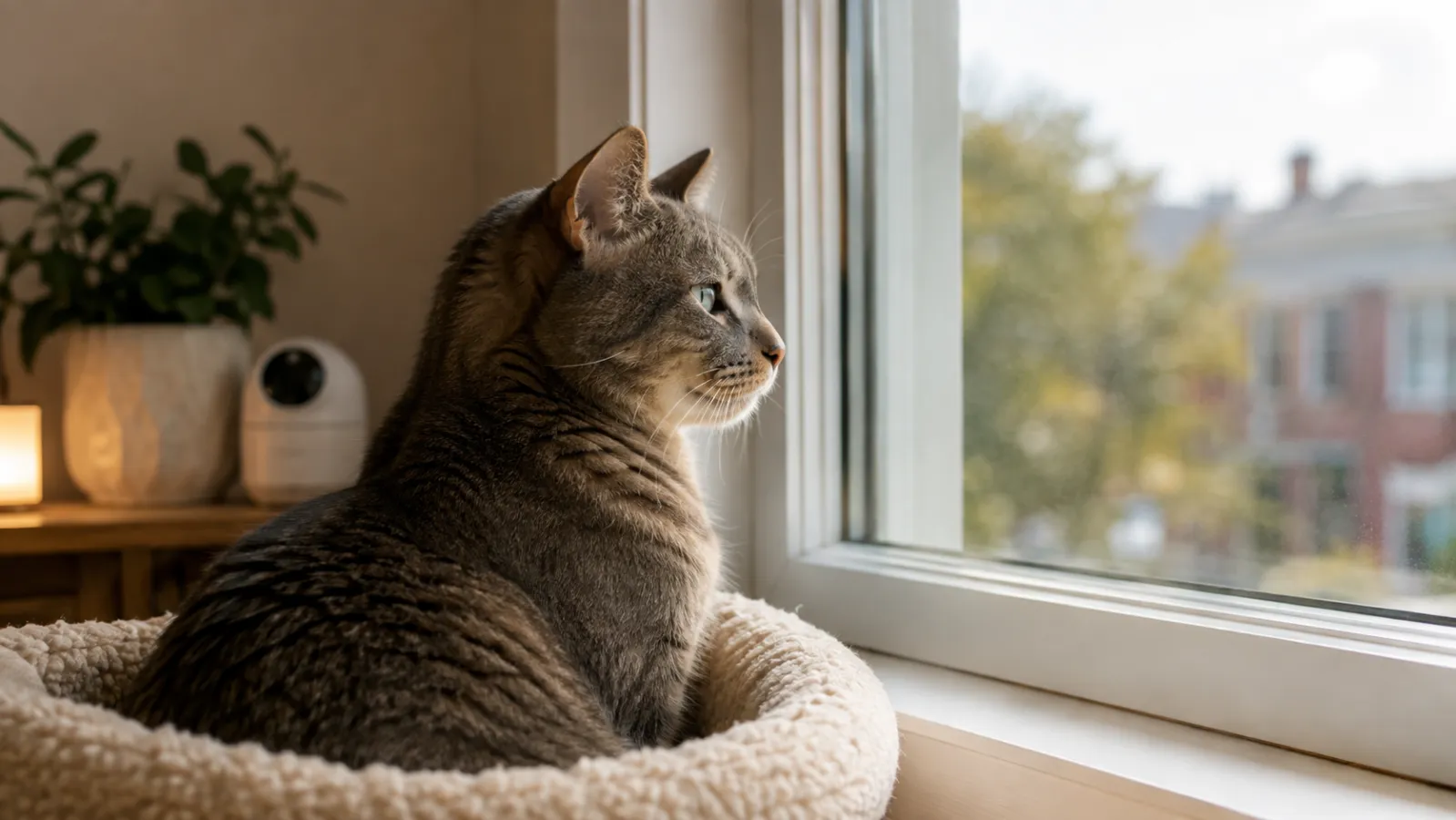
A window perch can give your cat a place to watch birds, people, trees, and outdoor activity.
A cat tree can provide climbing opportunities and a high resting location.
Cardboard boxes can provide safe places to investigate and hide.
Puzzle feeders can make mealtime more mentally stimulating by requiring your cat to work for some of their food.
Interactive toys can encourage movement and problem-solving.
The important thing is variety. Your cat should have different ways to interact with their environment.
9. Try Puzzle Feeders
Puzzle feeders are particularly useful for cats that eat quickly or become bored between meals.
Instead of receiving food immediately from a bowl, your cat may need to move, push, bat, or manipulate an object to access part of the food.
This can provide mental stimulation and encourage natural food-seeking behaviors.
Start with an easy puzzle if your cat has never used one before.
If the puzzle is too difficult, your cat may become frustrated and lose interest.
Once they understand how it works, you can gradually introduce more challenging options.
Puzzle feeders can be especially helpful during the evening as part of a calming routine, provided the feeding amount fits into your cat's overall daily diet.
10. Use Interactive Toys
Not all toys provide the same type of stimulation.
A toy that sits on the floor may be interesting for a short time, while an interactive toy can encourage your cat to chase, stalk, and think.
Wand toys are often useful because you control the movement and can make the toy behave more like prey.
Rotate different toys to prevent your cat from becoming bored.
Always supervise play with toys that contain strings, small parts, or other components that could become dangerous if swallowed.
When playtime is finished, store toys that could pose a safety risk.
11. Make the Bedroom Less Interesting at Night
If your cat has developed a habit of waking you specifically for attention, make nighttime interaction as boring as possible.
Avoid turning nighttime interruptions into play sessions.
Do not start an exciting game, offer treats randomly, or provide extended attention simply because your cat wakes you.
Instead, make sure your cat has appropriate places to rest and activities available outside the bedroom.
Some owners choose to keep their bedroom door closed. If you do this, consistency matters.
Your cat may initially protest the change, especially if they are accustomed to sleeping with you.
If you decide that your cat will remain outside the bedroom at night, establish a comfortable nighttime area with access to water, a litter box, bedding, and appropriate enrichment.
12. Do Not Punish Your Cat
Punishment is not an effective way to address nighttime activity.
Yelling, hitting, spraying water, or frightening your cat can increase stress and damage the trust between you and your pet.
Your cat may not understand why they are being punished.
Instead of teaching the desired behavior, punishment may simply make your cat afraid of you.
Positive routines are more useful.
Reward calm behavior when appropriate. Provide enrichment during the day. Schedule play sessions. Keep feeding times predictable and avoid reinforcing unwanted nighttime attention-seeking.
The goal is to change the environment and routine rather than frighten your cat into stopping.
13. Consider Your Cat's Age
Age can influence nighttime behavior.
Kittens often have significant energy and may need more play and structured activity.
Adult cats can also develop nighttime habits when their daily routine does not provide enough stimulation.
Older cats may behave differently. A senior cat that suddenly begins wandering, vocalizing, or waking you at night deserves additional attention.
Changes in sleep behavior are particularly important when they occur suddenly rather than gradually.
Age-related changes can sometimes affect sleep, activity, hearing, vision, or behavior.
14. When Nighttime Waking May Be a Medical Issue
Not every nighttime behavior problem is behavioral.
A sudden change in your cat's nighttime routine can sometimes indicate an underlying medical issue.
Pay attention if nighttime waking is accompanied by:
- Increased thirst
- Increased hunger
- Weight loss
- Weight gain
- Frequent urination
- Changes in litter box habits
- Vomiting
- Diarrhea
- Difficulty walking
- Confusion
- Excessive vocalization
- Signs of pain
- Changes in grooming
- Reduced appetite
- Unusual restlessness
Older cats may also develop medical or age-related problems that affect their nighttime behavior.
If your cat suddenly starts waking you after years of sleeping normally, or if the behavior is accompanied by other changes, contact your veterinarian.
A veterinary evaluation is especially important when behavior changes are sudden, persistent, or accompanied by physical symptoms.
15. Give the New Routine Time
Changing your cat's nighttime habits usually does not happen overnight.
If your cat has been waking you every morning for months, they may not immediately understand why the routine has changed.
Consistency is important.
Continue providing appropriate daytime stimulation, evening play, predictable meals, and a calm nighttime environment.
Avoid constantly changing your approach.
Your cat needs time to learn which behaviors receive attention and which do not.
Small improvements are still progress.
Perhaps your cat wakes you at 5:00 a.m. instead of 4:00 a.m. Or perhaps they wake you once instead of three times.
These changes can indicate that the new routine is beginning to work.
Final Thoughts
If your cat wakes you up at night, the behavior is usually not simply a case of your cat being difficult. Cats have natural activity patterns that can differ from human schedules, and nighttime behavior can also be influenced by hunger, boredom, attention-seeking, insufficient daytime activity, or an inconsistent routine.
Start by looking at your cat's entire day rather than focusing only on what happens at night. Provide appropriate environmental enrichment, interactive toys, puzzle feeders, and regular opportunities for play.
An evening play session followed by a suitable meal and quiet time can help create a predictable bedtime routine. Keep feeding schedules consistent, and consider an automatic feeder if early-morning hunger appears to be contributing to the problem.
If your cat wakes you for attention, avoid unintentionally rewarding the behavior. At the same time, never punish your cat. Yelling or frightening them can increase stress without teaching them what you actually want.
Most importantly, pay attention to changes. If nighttime vocalization or activity suddenly appears, especially in an older cat or alongside other symptoms, speak with your veterinarian.
With patience, consistency, and the right combination of enrichment and routine, many cats can gradually develop calmer nighttime habits. A well-structured day can benefit your cat's physical and mental well-being while helping the entire household get better sleep.