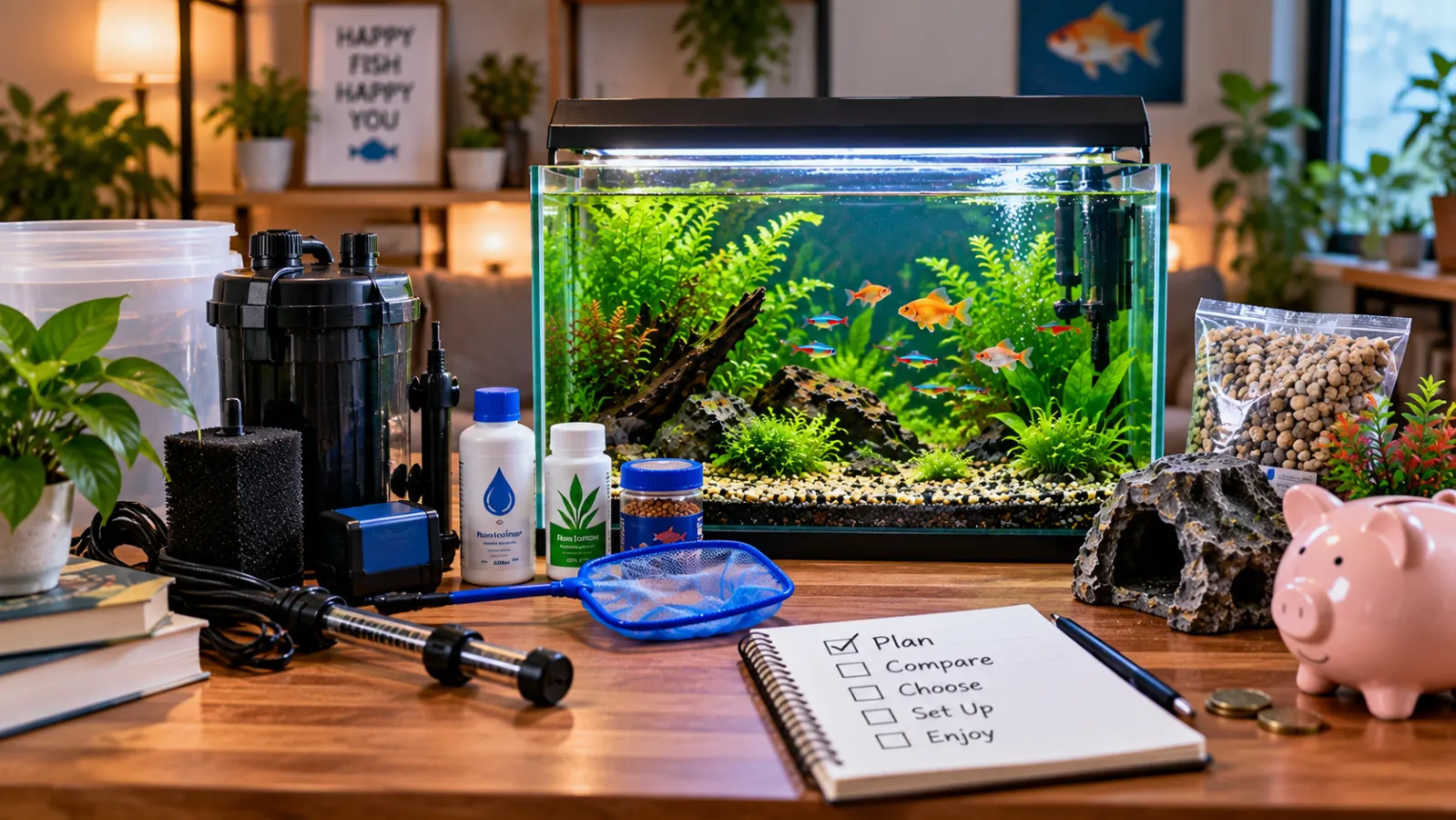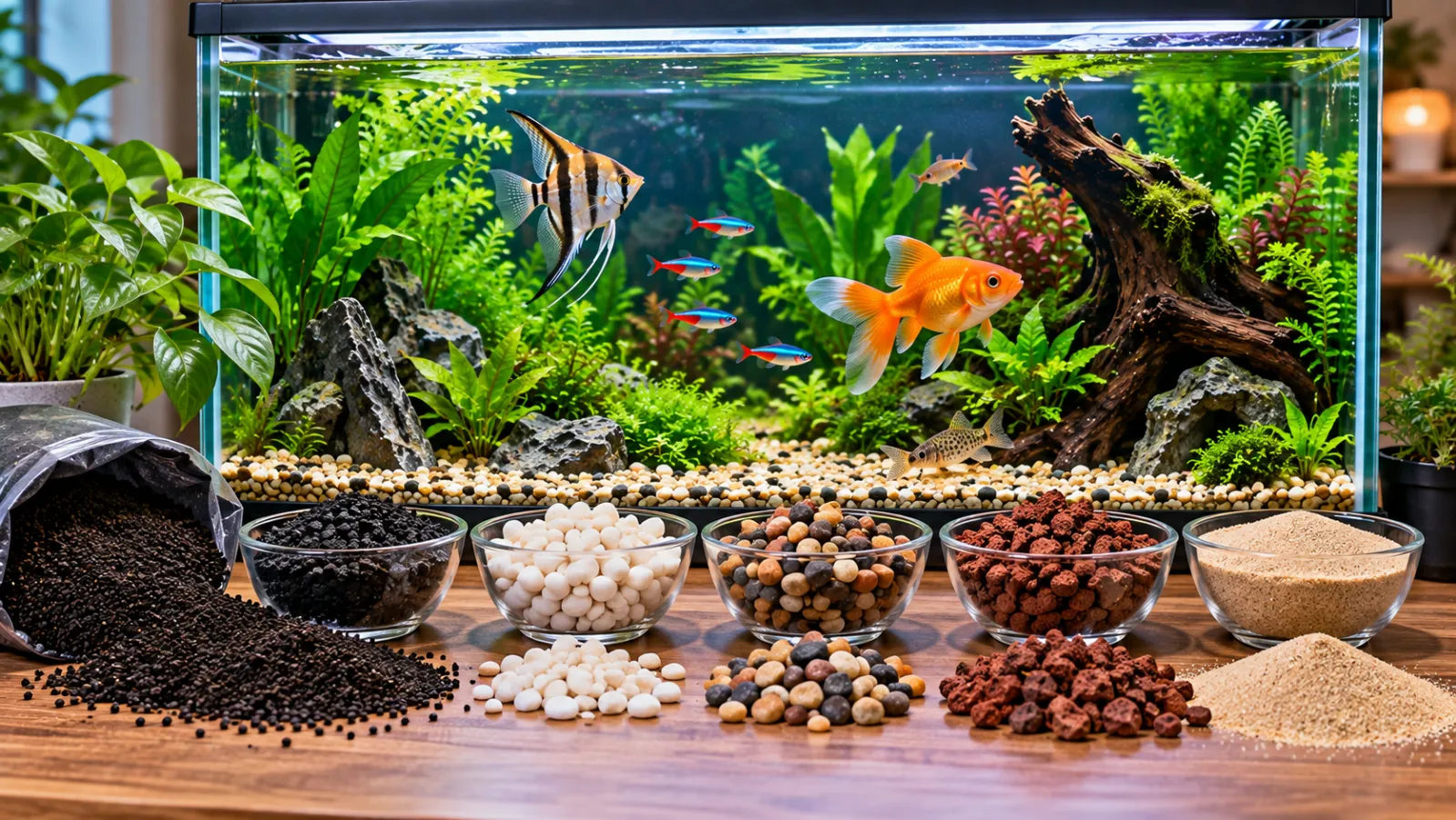
Whether you're setting up a freshwater community tank, a planted aquarium, or a simple fish-only setup, understanding these factors can help you choose and use aquarium lighting more effectively.
If you're planning a planted aquarium, you may also want to consider the best freshwater aquarium substrate for fish and plants, as the overall setup should support the needs of both plants and aquatic animals.
Why Is Aquarium Lighting Important?
Light plays an important role in an aquarium, particularly when live plants are involved.
Aquatic plants use light as an energy source for photosynthesis. Fish and other aquatic animals also experience changes between light and darkness in their natural environments.
A consistent lighting routine can therefore help create a more predictable aquarium environment.
However, lighting needs to be balanced.
Too little light may make it difficult for many aquatic plants to grow properly, while excessive intensity or excessively long lighting periods can encourage algae.
According to OATA's freshwater aquarium guidance, aquarium lighting is an important part of setting up and maintaining a suitable freshwater aquarium environment.
What to Consider When Choosing Aquarium Lighting
There are four major factors to consider:
- Fish requirements
- Plant requirements
- Light intensity
- Daily lighting schedule
Let's look at each one.
1. Consider Your Fish Requirements
Fish don't necessarily require extremely bright lighting.
In nature, different species live in different environments. Some are exposed to relatively bright conditions, while others naturally live among plants, rocks, shaded areas or deeper water.
When choosing lighting, consider:
- Fish species
- Natural habitat
- Activity patterns
- Availability of shaded areas
- Aquarium decorations
- Plant coverage
If your fish appear uncomfortable under intense lighting, adding floating plants, caves, driftwood or other shaded areas can provide places where they can retreat.
The goal isn't to make the aquarium as bright as possible.
It's to create an environment appropriate for the species you're keeping.
2. Consider Your Plant Requirements
Live plants generally require light for photosynthesis, but different plants have different lighting requirements.
Some aquatic plants can grow under relatively modest lighting, while others may require stronger and more carefully managed lighting.
Before choosing a light, identify:
- Plant species
- Growth requirements
- Plant density
- Aquarium depth
- Available CO₂
- Nutrient availability
A common mistake is purchasing a very powerful light simply because the aquarium contains plants.
More light isn't automatically better.
Plant growth depends on multiple factors, including light, nutrients and carbon availability.
Low-Light vs High-Light Aquarium Plants
A simple way to think about plant requirements is to divide them into broad categories.
| Plant Requirement General Lighting Approach | |
| Low-light plants | Moderate or lower-intensity lighting |
| Medium-light plants | Moderate lighting |
| High-light plants | Higher-intensity lighting with careful management |
These categories are general rather than strict.
The specific requirements of each plant should always be checked before designing your lighting setup.
3. Understand Light Intensity
Light intensity is one of the most important considerations when selecting aquarium lighting.
A brighter light doesn't necessarily mean healthier plants.
Excessive intensity can contribute to algae problems if other factors aren't balanced.
Light intensity reaching plants can also vary depending on:
- Aquarium depth
- Light position
- Water clarity
- Aquarium dimensions
- Light fixture design
- Distance between the light and plants
For this reason, two aquariums using the same light fixture may not receive exactly the same amount of light at plant level.
What Happens If Aquarium Lighting Is Too Strong?
Excessive lighting can contribute to algae growth, particularly when nutrients, carbon availability and other aquarium conditions aren't balanced.
Signs that your lighting may need adjustment can include:
- Rapid algae growth
- Excessive green film on surfaces
- Algae covering plant leaves
- Plants struggling despite very bright lighting
- Aquarium becoming difficult to maintain
Algae itself isn't always harmful, but uncontrolled algae can become an aesthetic and maintenance problem.
Instead of immediately buying a stronger light, consider whether your current lighting intensity and schedule are appropriate.
What Happens If Aquarium Lighting Is Too Weak?
Insufficient lighting can make it difficult for many aquatic plants to grow.
Depending on the plant species, signs can include:
- Slow growth
- Weak or elongated growth
- Poor coloration
- Leaf loss
- Plants failing to establish
However, poor plant growth isn't always caused by lighting.
Other factors include:
- Nutrient availability
- CO₂ availability
- Water parameters
- Temperature
- Plant species
- Substrate
It's therefore important to look at the aquarium as a complete system rather than assuming lighting is always the problem.
4. Create a Consistent Daily Lighting Schedule
Aquarium lighting should follow a consistent routine rather than being switched on and off randomly.
A predictable light-dark cycle provides a more stable environment for aquarium inhabitants and helps establish a regular daily rhythm.
For planted aquariums, lighting duration also influences plant growth and algae management.
Instead of leaving the aquarium light on throughout the day, establish a reasonable schedule and observe how your aquarium responds.
A timer can make this much easier.
A practical approach
Set the light to switch on at approximately the same time each day and switch off at approximately the same time each evening.
Consistency is often more important than constantly changing the schedule.
How Many Hours Should Aquarium Lights Be On?
There isn't one universal lighting duration that works for every aquarium.
The appropriate schedule depends on:
- Plant species
- Light intensity
- Aquarium type
- Fish
- Algae levels
- Natural room lighting
- Overall aquarium conditions
For many planted aquariums, starting with a moderate daily lighting period and adjusting based on plant growth and algae levels can be a sensible approach.
If algae becomes excessive, reducing lighting duration or intensity may be one factor worth considering.
Should Aquarium Lights Be Left On at Night?
Generally, no.
Fish need periods of darkness, and an aquarium shouldn't be brightly illuminated continuously.
Leaving strong aquarium lighting on around the clock can interfere with a natural day-night routine and may also contribute to unnecessary algae growth.
A consistent period of darkness each day is therefore an important part of aquarium lighting management.
What Type of Aquarium Light Should You Choose?
Modern aquarium lighting is available in several forms, but LED lighting is one of the most commonly used options.
LED aquarium lights can provide:
- Energy-efficient illumination
- Adjustable brightness on some models
- Different color temperatures
- Compact designs
- Programmable schedules on some systems
The important point is not simply choosing LED.
You need to select a light that provides appropriate intensity and coverage for your aquarium and plants.
Fish-Only vs Planted Aquarium Lighting
Your lighting requirements can be very different depending on whether you're keeping plants.
Fish-Only Aquarium
If your aquarium contains fish but no demanding live plants, lighting can primarily focus on:
- Providing a suitable day-night cycle
- Making fish visible
- Improving aquarium appearance
- Avoiding unnecessary excessive intensity
Planted Aquarium
A planted aquarium requires greater consideration of:
- Plant species
- Light intensity
- Light duration
- Aquarium depth
- Nutrients
- CO₂
- Algae management
This doesn't mean you need the strongest possible light.
It means you need a light appropriate for the plants you're actually growing.
How Aquarium Lighting and Algae Are Connected
One of the most common aquarium-lighting concerns is algae.
Algae require light to grow, but reducing light isn't always the complete solution.
Algae can also be influenced by:
- Nutrient levels
- Organic waste
- CO₂ availability
- Water movement
- Maintenance
- Aquarium stocking
- Lighting duration
This means algae management should involve looking at the aquarium as a whole.
If you're experiencing recurring aquarium problems, reviewing your overall maintenance practices can help. YourPetsWorld's easy aquarium maintenance routine can help you establish a more consistent approach to aquarium care.
Aquarium Lighting Schedule Example
Here's an example of a simple starting schedule:
| TimeLighting | |
| Morning | Lights OFF |
| Midday | Lights ON |
| Afternoon | Lights ON |
| Evening | Lights OFF |
| Night | Complete darkness |
The exact times aren't important.
Consistency is.
If you use an aquarium timer, set the lighting period according to your aquarium's plant requirements and adjust it when necessary.
How to Reduce Algae Caused by Lighting
If algae is increasing, consider the following:
Reduce Lighting Duration
If the light is currently running for a very long period, reducing the daily duration may help.
Reduce Light Intensity
If your light has brightness controls, try lowering the intensity.
Check Nutrients
Excess nutrients can contribute to algae problems.
Improve Maintenance
Remove algae and accumulated organic waste regularly.
Check Fish Feeding
Overfeeding can increase the amount of waste entering the aquarium.
Avoid Direct Sunlight
Direct sunlight entering the aquarium can add uncontrolled light and make algae management more difficult.
Common Aquarium Lighting Mistakes
Leaving the Light On All Day
Long lighting periods aren't automatically better for plants.
Leaving Aquarium Lights On Overnight
Fish need darkness as part of their daily cycle.
Choosing the Brightest Light Available
High intensity isn't necessary for every aquarium.
Ignoring Plant Requirements
Different plants have different lighting needs.
Increasing Light When Plants Aren't Growing
Poor plant growth can have many causes besides insufficient light.
Ignoring Algae
Rapid algae growth can indicate that lighting or other aquarium conditions need adjustment.
Quick Guide to Choosing Aquarium Lighting
| Aquarium Setup Main Lighting Consideration | |
| Fish-only tank | Comfortable brightness and day-night cycle |
| Low-light planted tank | Moderate, suitable lighting |
| Medium-light planted tank | Appropriate intensity and coverage |
| High-light planted tank | Stronger lighting with careful management |
| Deep aquarium | Ensure sufficient light reaches plants |
| Algae-prone aquarium | Review intensity and duration |
Frequently Asked Questions
What is the best aquarium lighting for fish and plants?
The best aquarium lighting depends on the fish, plants, aquarium depth and desired lighting schedule. For planted tanks, choose lighting that meets the requirements of your specific plants rather than simply selecting the brightest option.
How many hours should aquarium lights be on?
There is no universal number that works for every aquarium. Consider plant requirements, light intensity and algae growth, then establish a consistent daily schedule.
Should aquarium lights be turned off at night?
Yes. Fish benefit from a regular period of darkness, and leaving aquarium lights on continuously can contribute to unnecessary algae growth.
Is LED lighting good for planted aquariums?
LED lights can be an effective option for planted aquariums. However, the important factors are appropriate intensity, coverage and suitability for the plants you're growing.
Can too much aquarium light cause algae?
Excessive or prolonged lighting can contribute to algae problems, particularly when combined with other favorable conditions for algae growth.
Do fish need aquarium lights?
Fish don't necessarily need extremely bright aquarium lighting, but an appropriate day-night cycle can help create a more natural and consistent environment.
Is sunlight good for an aquarium?
Direct sunlight can make aquarium lighting difficult to control and may contribute to algae growth. It's generally better to use controlled aquarium lighting.
Final Thoughts
Choosing the best aquarium lighting for fish and plants isn't about making your aquarium as bright as possible.
The right lighting should match the needs of your fish and plants while providing a consistent day-night cycle.
Before choosing a light, consider:
- Fish requirements
- Plant species
- Aquarium depth
- Light intensity
- Light coverage
- Daily lighting duration
- Algae levels
- Maintenance requirements
For planted aquariums, remember that lighting works together with nutrients, carbon availability and overall aquarium conditions.
Start with an appropriate lighting level, maintain a consistent schedule, and observe how your fish and plants respond.
The goal is balanced lighting—not maximum lighting.
Sources & References
RSPCA. Fish and Aquariums.
Ornamental Aquatic Trade Association (OATA). How to Set Up and Look After a Freshwater Tank / Aquarium.
OATA — How to Set Up and Look After a Freshwater Tank / Aquarium
Aqueon. Aquarium Lighting Basics.
Aqueon — Aquarium Lighting Basics
Aqueon. How to Control Algae in Your Aquarium.
Aqueon — How to Control Algae in Your Aquarium
Fluval. Aquarium Lighting.
Fluval — Aquarium Lighting Resources
Created with AI • Independently Verified
This article was created with the assistance of artificial intelligence and cross-checked using multiple AI systems to help identify errors, inconsistencies, and missing information.
Important factual claims are additionally checked against reputable veterinary, scientific, animal-welfare, and other authoritative sources before publication.
Our standard: AI helps us research and explain. Reliable evidence determines what we publish.
Last reviewed: September 2026