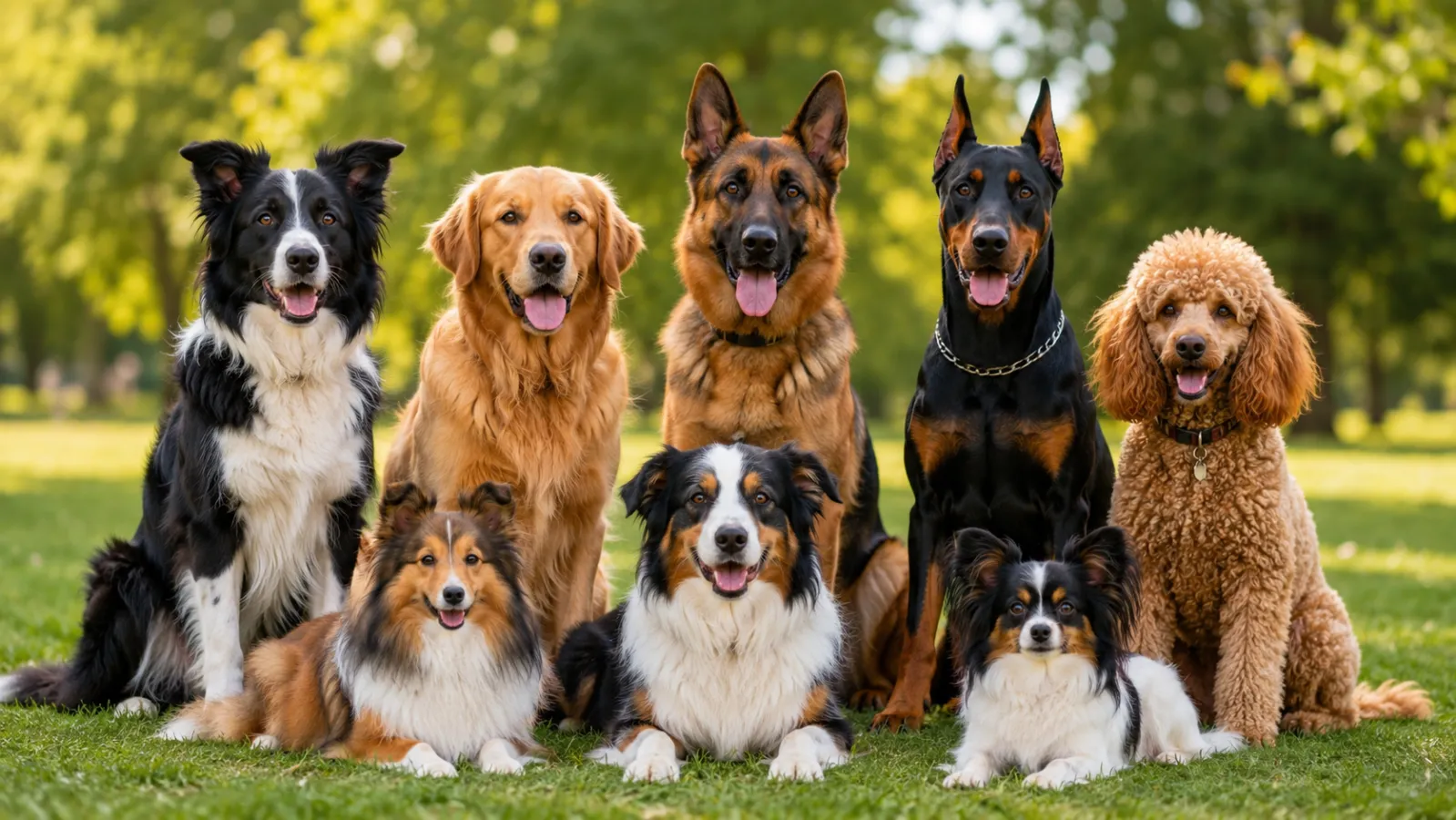

Choosing the Right Dog Breed for Your Lifestyle
You fall for the soft eyes in a photo, the fluffy coat, the goofy grin. Then you picture the reality: the 6 a.m. walk when it’s still dark, the muddy paws after rain, the puppy who decides your favourite shoes are far more interesting than the expensive toy you just bought.
Choosing a dog is less about which breed looks best on Instagram and more about which one will actually fit the life you can give it. A big house does not automatically make you a match for a high-drive working dog. An apartment does not rule out dog ownership. What matters is your ordinary Tuesday—how long you’re out, how much time and energy you truly have, and what you are honestly willing to do every single day.
Start there, not with the breed list.
Look at your real weekday first
Picture a normal Tuesday, not a holiday or a weekend when you have extra hours. How long are you gone? Can you manage daily walks even when you’re tired? Do you have kids, other pets, or a landlord with rules? Would regular brushing feel manageable, or does the idea of daily coat care already make you tired?
Those answers will do more to narrow your options than any cute photo ever could.
Space matters—but not the way most people think
You can keep a dog happy in an apartment if you meet its exercise, toilet, and companionship needs. Some dogs settle well indoors. Greyhounds, Cavalier King Charles Spaniels, and certain small companion breeds can adapt, depending on the individual. But size is a poor guide. A small terrier can be louder and more restless than a larger dog that is content to nap between walks.
Ask yourself:
- How much barking is realistic for your neighbours?
- Can you provide enough walks, play, and mental work?
- Does your building allow dogs, and can the dog manage stairs, lifts, and shared spaces?
A secure garden is useful, especially for more active dogs such as Labradors or Australian Shepherds. It is not a substitute for your time. Dogs still need interaction, training, and new experiences beyond the same patch of grass every day.
Match energy levels honestly
This is usually the make-or-break decision.
Some dogs are content with moderate walks, sniffing, and play at home. Others need serious physical exercise and mental challenges daily. Bringing home a high-energy breed because it looks impressive, then discovering your preferred evening activity is the sofa, leaves both of you frustrated.
People who prefer a quieter routine often do well with dogs such as Shih Tzus, Basset Hounds, or Greyhounds—still needing proper walks, enrichment, and company, but typically less intense. Flat-faced breeds (certain Bulldogs, for example) can have breathing and heat-tolerance issues worth discussing with a veterinarian before deciding.
Moderate activity levels often suit Labrador Retrievers, Golden Retrievers, and many Poodles. Young dogs in these breeds can still be surprisingly energetic.
If hiking, running, or outdoor adventures are a regular part of your life, breeds commonly associated with higher needs—Border Collies, Australian Shepherds, Vizslas, German Shorthaired Pointers—may fit better. Many of them also thrive when given jobs, scent games, or training challenges. You can read more in our guide to active dog breeds for outdoor lifestyles.
These are only starting points. Age, health, previous experience, and individual personality can make two dogs of the same breed very different. Puppies should never be expected to handle the same exercise as healthy adult dogs; their bodies are still developing.
Time away from home is not optional to plan for
A dog’s day continues when yours gets busy. Puppies need frequent toilet breaks, supervision, and training. Adult dogs still need companionship, exercise, and mental stimulation. No breed is automatically fine alone all day.
Before bringing a dog home, sort out:
- Who will handle toilet breaks and exercise while you’re at work
- Whether a reliable dog walker, family member, or daycare can help
- How you’ll teach the dog, gradually, to spend short periods alone
- Plans for travel, busy weeks, and emergencies
Working from home helps with some logistics, but it does not remove the need to teach a dog to feel secure when you leave. A predictable routine makes a big difference. Our guide to creating a daily routine for your dog has practical ideas for fitting meals, walks, rest, and training into ordinary days.
Children and other pets change the equation
Many dogs live happily with kids, cats, or other dogs. Compatibility is not guaranteed by breed. Labrador Retrievers and Golden Retrievers are popular family dogs because many are sociable, and Beagles or Boxers can also suit some households. Still, no breed is automatically safe with every child. Even a friendly dog can become uncomfortable if handled roughly or given no space to rest.
Teach children to let the dog approach rather than forcing contact, to leave the dog alone while it eats or sleeps, and to notice when the dog wants distance. Young children should never be left unsupervised with any dog.
If you already have a cat or another dog, plan slow, supervised introductions and give every animal a safe retreat. Prey drive, past experiences, and the individual dog’s ability to settle around other animals matter more than the breed label. For an adult rescue dog, ask the shelter what is known—and what is still uncertain—about behaviour around children and other pets.
Grooming is not optional, and “low-shedding” is not the same as low-maintenance
That beautiful coat comes with a job. Short-coated dogs usually need less brushing but still shed and require routine nail, ear, and dental care. Long-haired or easily matting coats can demand frequent brushing and regular professional grooming. Poodles, Shih Tzus, Yorkshire Terriers, and Afghan Hounds are well-known examples of coats that need consistent attention.
Be honest about whether you can keep up with brushing, bathing, nail care, and the cost of professional help when needed. A lower-shedding coat often needs more clipping and upkeep, not less. Choose a routine you can maintain on ordinary busy weeks, not only on ideal ones.
The long-term cost is higher than the initial fee
Food, preventive care, unexpected vet bills, toys, training, and boarding add up over years. Larger dogs often cost more in food and equipment, though individual health needs vary. Make sure you can cover both routine care and the unexpected before you commit.
Adoption or breeder—both can work if you choose carefully
Adoption can be an excellent route if you are open to mixed-breed dogs or an adult whose personality is already clearer. Shelters often know a good deal about a dog’s activity level and behaviour with people or other animals.
A responsible breeder may make sense if you have a specific breed in mind. Look for someone who prioritises health and temperament, shares health testing results, discusses potential inherited conditions, and answers questions without pressure. Avoid anyone who withholds information, keeps puppies in poor conditions, or rushes you into a decision.
A pedigree does not guarantee future health or personality. Thoughtful matching does.
Meet the individual dog
Breed descriptions are useful for general tendencies. They cannot tell you everything about the dog in front of you. Two puppies from the same litter can have very different temperaments. An older dog of a traditionally high-energy breed may settle into a quieter household beautifully.
Whenever possible, meet the dog. Watch how it responds to ordinary surroundings, ask about its history, and talk through any known health or behavioural needs with the rescue, breeder, or veterinarian.
If this is your first dog, our guide to the best dog breeds for first-time owners offers some starting ideas. Remember that the individual dog’s needs and your ability to meet them matter more than any breed’s reputation for being “easy.”
The right dog is the one whose needs you can meet
A high-energy Border Collie can be a fantastic partner for someone who loves training and outdoor time. A calmer adult dog can be the perfect match for someone who prefers leisurely walks and quiet evenings. Neither is better. The good match is the one that fits both sides.
Mixed-breed dogs make wonderful companions too, even if adult size, coat, and temperament can be harder to predict in a young puppy.
The best choice is rarely the smallest, smartest, most popular, or most beautiful dog. It is the dog you can care for consistently with patience, time, and realistic long-term commitment. When everyday life and the dog’s needs line up, the ordinary moments—the greeting at the door, the familiar walking route, the quiet company at the end of the day—become the ones that matter most.
EDITOR NOTES
- Softened absolute breed recommendations into clearer “starting points / individual variation” language to avoid overstating predictability.
- Retained all three existing internal links with destinations unchanged; only improved surrounding phrasing for natural flow.
- Kept careful wording around children/pets, separation, flat-faced breeds, and costs so no claim exceeds evidence or safety guidance.
- Removed formulaic list-heavy framing while preserving the practical decision points readers actually need.
References
- American Kennel Club (AKC) — Choosing the Right Breed for Your Lifestyle
- American Kennel Club (AKC) — What Dog Is Right for Me? How to Choose the Perfect Breed
- American Kennel Club (AKC) — Answer These 5 Questions to Find the Right Dog for You
- American Kennel Club (AKC) — Family Tips: What to Know When Considering a New Dog
- American Kennel Club (AKC) — The Right Dog for You: Public Education Guide (PDF)
How we create our content: Our articles are developed using AI-assisted research, cross-checked with multiple AI systems, and validated against reputable professional and authoritative sources before publication.