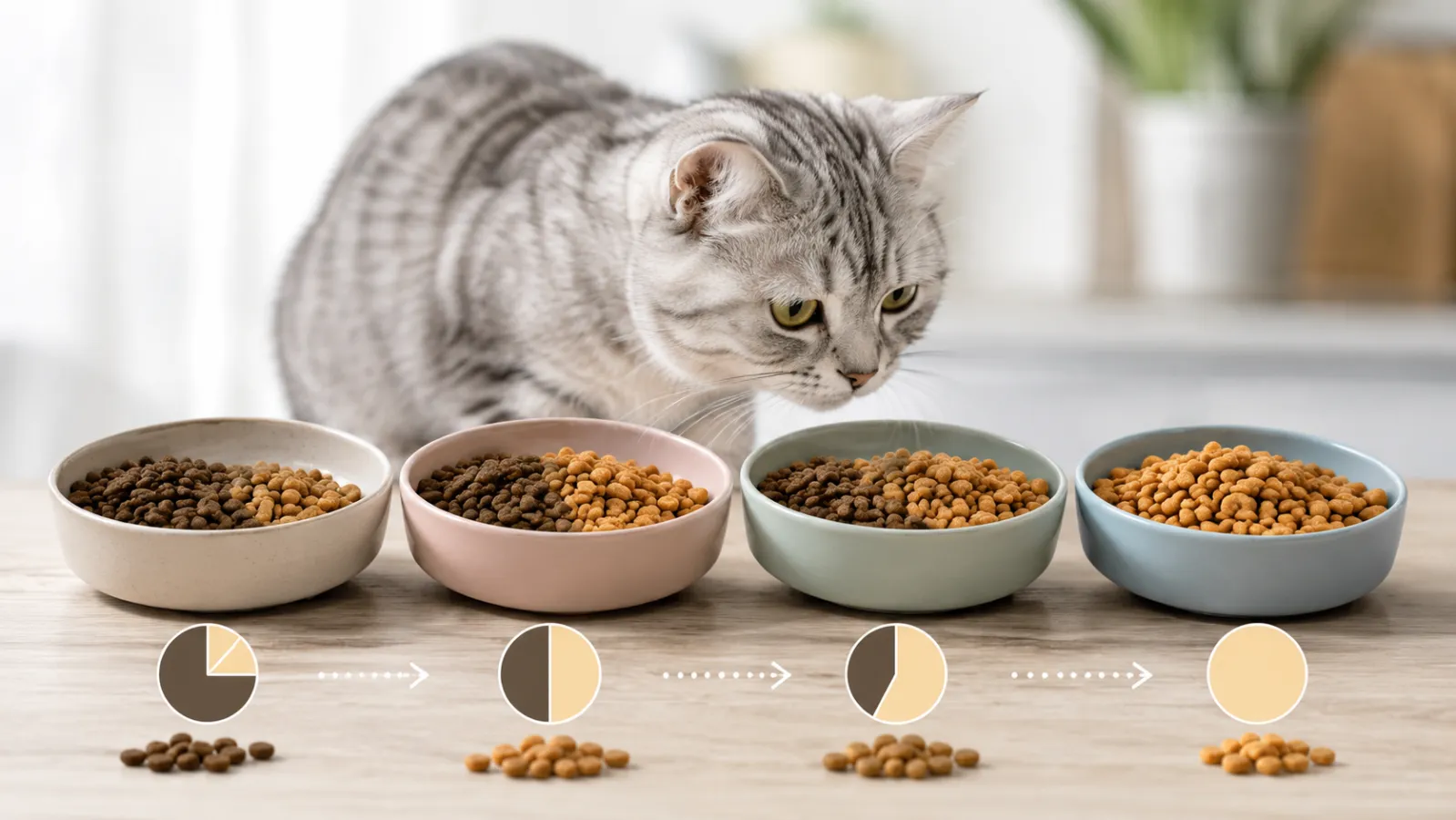
Food allergies and dietary sensitivities can be confusing for cat owners. A cat may develop itchy skin, excessive grooming, vomiting, diarrhea, or recurring ear problems, yet the connection to food may not be immediately obvious. These symptoms can also have many other causes, which makes identifying a true food allergy more complicated than simply changing brands.
Cats can develop reactions to ingredients they have eaten for a long time, and the problem is not necessarily caused by the newest food in their bowl. Commonly reported food allergens in cats include animal proteins such as chicken, beef, and fish, although almost any dietary protein can potentially trigger an allergic reaction.
For cat owners across North America, the safest approach is to avoid guessing and work with a veterinarian when a food allergy is suspected. Proper diagnosis may involve a carefully controlled elimination diet, followed by a structured food challenge. Hypoallergenic or hydrolyzed diets may also be recommended when appropriate.
Understanding the difference between a food allergy and a food sensitivity, recognizing possible symptoms, and knowing how diagnosis works can help you make better decisions about your cat's long-term nutrition.
1. What Is a Cat Food Allergy?
A food allergy occurs when the immune system reacts abnormally to a substance in food, usually a protein.
The immune system mistakenly identifies the dietary protein as a threat and produces an inflammatory response.
Food allergies are different from simple food intolerance.
An intolerance may involve digestive difficulty without an immune reaction. For example, a cat may develop diarrhea after consuming a particular ingredient without actually having an allergy to it.
Both problems can cause unpleasant symptoms, but the diagnosis and management may be different.
Food allergies are not necessarily caused by low-quality food. A cat can develop an allergy to an ingredient found in a premium, standard, wet, or dry diet.
The important issue is the specific ingredient that triggers the reaction.
2. What Are the Most Common Cat Food Allergens?
Cats can potentially develop an allergic reaction to almost any dietary protein.
Some commonly reported allergens include:
Chicken
Beef
Fish
Dairy products
Egg
These ingredients are common in commercial cat foods, which means cats may be exposed to them repeatedly.
Chicken is frequently found in cat foods and treats, so a cat with a chicken allergy may need careful ingredient checking.
Beef is another potential allergen and may appear in wet food, dry food, treats, and flavored supplements.
Fish can also cause reactions in some cats.
However, an ingredient being common does not mean it is automatically the cause of your cat's symptoms.
A veterinarian needs to evaluate the overall pattern before determining whether a food allergy is actually present.
3. Can Cats Be Sensitive to Grains?
Grain sensitivity is frequently discussed online, but it is important not to assume that grains are responsible for every food-related problem.
Cats can potentially react to specific ingredients, but food allergies are more commonly associated with proteins than with carbohydrates.
A grain-free diet is therefore not automatically the solution for a cat with itching or digestive problems.
Removing grains without identifying the actual trigger can make diagnosis more difficult.
It can also lead owners to repeatedly switch foods without finding the underlying cause.
If you suspect your cat has a food allergy, focus on identifying the specific dietary trigger rather than simply choosing a food labeled "grain-free."
4. Recognize the Common Symptoms
Food allergy symptoms can affect the skin, digestive system, and sometimes other parts of the body.
Possible skin-related symptoms include:
Persistent itching
Excessive grooming
Hair loss
Red or irritated skin
Scabs
Skin infections
Recurring lesions
Cats may groom excessively because they are uncomfortable, and the resulting hair loss can sometimes be mistaken for a behavioral problem.
Digestive symptoms may include:
Vomiting
Diarrhea
Soft stools
Increased gas
Changes in appetite
Not every cat will experience the same symptoms.
Some cats may primarily develop skin problems, while others may show digestive signs.
Because these symptoms can also be caused by parasites, infections, environmental allergies, inflammatory diseases, or other medical conditions, they should not automatically be attributed to food.
5. Ear Problems Can Sometimes Be Related
Recurring ear inflammation can sometimes occur alongside allergic skin disease.
A cat may scratch around the ears, shake its head, or show irritation around the ear canal.
However, ear problems have many possible causes.
Parasites, infections, allergies, and other medical conditions can all produce similar symptoms.
If your cat repeatedly develops ear problems, a veterinarian should examine the ears rather than assuming that changing food will solve the issue.
Treating the underlying cause is important for preventing recurring discomfort.
6. Why Diagnosis Can Be Difficult
Food allergies can be challenging to diagnose because the symptoms overlap with many other conditions.
For example, itching may be caused by:
Fleas
Environmental allergies
Skin infections
Parasites
Food allergies
Other inflammatory conditions
Similarly, vomiting or diarrhea may result from dietary changes, infections, parasites, inflammatory gastrointestinal disease, or other health problems.
This is why randomly switching between several commercial foods can make the situation more confusing.
If a cat has persistent symptoms, a veterinarian may first investigate more common causes before recommending a dietary elimination trial.
7. The Role of an Elimination Diet
An elimination diet is one of the most useful tools for investigating a suspected food allergy.
The basic idea is to feed the cat a carefully selected diet containing ingredients it has not previously been exposed to, or a specially formulated hydrolyzed diet.
The diet must be followed strictly.
This means no unauthorized treats, table scraps, flavored medications, supplements, or other foods that could contain the suspected allergen.
The elimination period may need to continue for several weeks, depending on the symptoms and veterinary recommendations.
The purpose is to determine whether the cat's symptoms improve when potential dietary triggers are removed.
An elimination diet should ideally be performed under veterinary guidance because accidental exposure can make the results difficult to interpret.
8. Why Hydrolyzed Diets May Help
Hydrolyzed diets are specially formulated veterinary diets in which proteins are broken down into smaller components.
The goal is to make the proteins less likely to trigger the immune response in a cat with a suspected food allergy.
These diets are often used during diagnostic food trials.
Hydrolyzed diets can be particularly useful when a cat has already eaten many different proteins and it is difficult to identify an appropriate novel-protein diet.
However, not every cat needs a hydrolyzed diet.
These foods can also be more expensive than standard commercial diets, so they are best used for a clear nutritional purpose under veterinary direction.
9. What Is a Novel-Protein Diet?
A novel-protein diet contains a protein source the cat has not previously eaten.
For example, if a cat has eaten chicken, beef, and fish throughout its life, a veterinarian might select a diet containing a less familiar protein.
The concept sounds straightforward, but the cat's complete dietary history matters.
If the cat has previously eaten treats, canned foods, supplements, flavored medications, or table scraps containing the same protein, the protein may not actually be novel.
This is why discussing your cat's complete food history with your veterinarian is important.
10. Why Treats Can Ruin an Elimination Diet
One of the most common mistakes during an elimination diet is continuing to give regular treats.
Even a small treat can contain an ingredient that triggers symptoms.
The same applies to:
Table scraps
Dental treats
Flavored supplements
Flavored medications
Human foods
Other pets' food
Food used for training
If the goal is to determine whether a particular dietary ingredient is causing symptoms, the diet needs to be strictly controlled.
Ask your veterinarian which treats, if any, are permitted during the elimination period.
11. Chicken Allergy in Cats
Chicken is one of the most common animal proteins found in commercial cat food.
Because cats may consume chicken regularly through their primary food, treats, and supplements, it can become a potential trigger in cats that develop an allergy to it.
Possible signs can include itching, overgrooming, hair loss, skin inflammation, or digestive problems.
However, these symptoms do not prove that chicken is responsible.
A veterinarian may recommend an elimination diet to determine whether removing chicken actually improves the symptoms.
If chicken is confirmed as a trigger, careful label reading becomes important because chicken-derived ingredients can appear in unexpected products.
12. Beef Allergy in Cats
Beef is another protein that can trigger food allergies in some cats.
It can appear in canned food, dry kibble, treats, gravies, and mixed-protein diets.
If beef is identified as a trigger, owners may need to check every food product their cat receives.
Avoiding one ingredient can be difficult when multiple foods are being used throughout the day.
This is another reason a carefully selected veterinary diet can simplify the process.
13. Digestive Symptoms Should Not Be Ignored
Food-related problems can sometimes appear primarily as digestive symptoms.
A cat may experience:
Repeated vomiting
Chronic diarrhea
Soft stools
Changes in stool frequency
Reduced appetite
Occasional digestive discomfort
However, chronic digestive symptoms should not automatically be treated as a food allergy.
Parasites, infections, inflammatory gastrointestinal disease, dietary intolerance, and other conditions can cause similar problems.
If vomiting or diarrhea is persistent, recurrent, severe, or accompanied by weight loss, lethargy, dehydration, or appetite changes, veterinary evaluation is important.
14. Skin Problems May Be the Main Sign
Cats with food allergies can develop significant skin discomfort.
Some cats may scratch frequently.
Others may groom themselves excessively, especially around the abdomen, legs, back, or neck.
Repeated licking can cause hair thinning or bald patches.
Some cats develop small crusts or scabs across the skin.
These signs can resemble flea allergy dermatitis and other allergic conditions.
Because flea allergies are common in cats, appropriate parasite control is often part of investigating chronic itching.
A veterinarian can determine whether the skin problem appears more consistent with food allergy, parasites, infection, environmental allergy, or another condition.
15. Choosing Hypoallergenic Cat Food
Hypoallergenic cat foods are designed to reduce the likelihood of triggering an allergic response.
Some use hydrolyzed proteins, while others use carefully selected novel proteins.
However, "hypoallergenic" does not necessarily mean that every cat will tolerate the food.
A cat can potentially react to almost any protein.
When food allergy is being investigated, veterinary therapeutic diets may offer greater consistency than repeatedly switching between over-the-counter foods.
This is because veterinary diets are specifically formulated for controlled nutritional trials.
Your veterinarian can recommend the most appropriate option based on your cat's history.
16. Do Not Keep Switching Foods Randomly
When a cat develops itching or digestive problems, it can be tempting to buy a different food every few weeks.
Unfortunately, repeated food changes can make diagnosis more difficult.
Your cat may be exposed to numerous proteins without ever completing a controlled elimination trial.
Sudden dietary changes can also cause temporary digestive upset, making it harder to determine whether the original symptoms are improving.
Instead of constantly experimenting, work with a veterinarian to establish a structured nutritional plan.
17. Long-Term Management After Diagnosis
If an elimination diet and food challenge confirm a food allergy, long-term management usually involves avoiding the identified trigger.
This may sound simple, but ingredient control is important.
Read labels carefully.
Check treats.
Review dental products.
Check supplements.
Ask about ingredients in flavored medications.
Prevent access to other pets' food.
Avoid table scraps.
Even small amounts of the triggering ingredient can potentially cause symptoms in a sensitive cat.
Some cats may eventually be able to transition to a carefully selected commercial diet, while others may need to remain on a specialized veterinary diet.
Your veterinarian can help determine the best long-term approach.
18. Transitioning to a New Diet
Cats can be sensitive to changes in food.
When a veterinarian recommends a new diet, transition according to their instructions.
For many cats, gradually introducing the new food over several days can help reduce digestive upset and improve acceptance.
However, during a formal elimination diet, the veterinarian may recommend a specific transition strategy to maintain diagnostic accuracy.
If your cat refuses the new food, contact your veterinarian rather than allowing it to go without eating.
Cats should not be intentionally starved to force acceptance of a new diet.
19. Veterinary Treatment May Include More Than Food
Managing food allergies may involve more than changing the diet.
If a cat has secondary skin or ear infections, these may require appropriate veterinary treatment.
Parasite control may also be necessary when flea allergy or other parasites are contributing to symptoms.
The veterinarian may recommend medications or other treatments to control inflammation and discomfort while the dietary investigation is underway.
Treating only the food component without addressing infections or parasites may not fully resolve the problem.
20. Food Allergy vs. Environmental Allergy
It is important to understand that not every itchy cat has a food allergy.
Environmental allergies can be caused by substances such as pollen, dust mites, molds, or other environmental triggers.
These allergies can produce symptoms that look very similar to food allergies.
If your cat's symptoms continue despite an appropriate dietary trial, another cause may need to be investigated.
A comprehensive veterinary evaluation is therefore more useful than assuming every skin problem is caused by food.
Common Mistakes When Managing Suspected Food Allergies
Several mistakes can make food-allergy management more difficult.
One is changing food repeatedly without completing a controlled trial.
Another is continuing to give treats during an elimination diet.
Some owners choose grain-free food automatically without determining whether grains are actually responsible.
Others focus on a single ingredient without considering other possible causes of the symptoms.
Another mistake is stopping a veterinary diet as soon as symptoms improve without completing the recommended diagnostic process.
Improvement alone does not always prove that food was the cause.
The structured process of elimination and reintroduction is important for confirming the diagnosis.
Final Thoughts
Cat food allergies and sensitivities can cause frustrating skin and digestive problems, but identifying the underlying cause is possible with a careful approach.
Chicken, beef, fish, dairy, and other dietary proteins can trigger allergic reactions in some cats. Symptoms may include itching, excessive grooming, hair loss, skin irritation, vomiting, diarrhea, and recurring ear problems.
However, these signs can have many causes, so a food allergy should not be diagnosed simply because a cat is itchy or has an upset stomach.
A veterinarian can help rule out other conditions and determine whether an elimination diet is appropriate. Hydrolyzed diets and carefully selected novel-protein foods can be useful tools during the diagnostic process.
Once a food allergy is confirmed, long-term management usually involves avoiding the specific trigger and carefully checking food, treats, supplements, and other products for hidden ingredients.
Most importantly, avoid constantly switching diets or experimenting with restrictive foods without a plan. A structured approach is more likely to identify the problem and provide lasting relief.
With proper diagnosis, careful nutrition, and ongoing veterinary guidance, many cats with food allergies or sensitivities can enjoy a comfortable, healthy life while eating a diet that meets their individual nutritional needs.