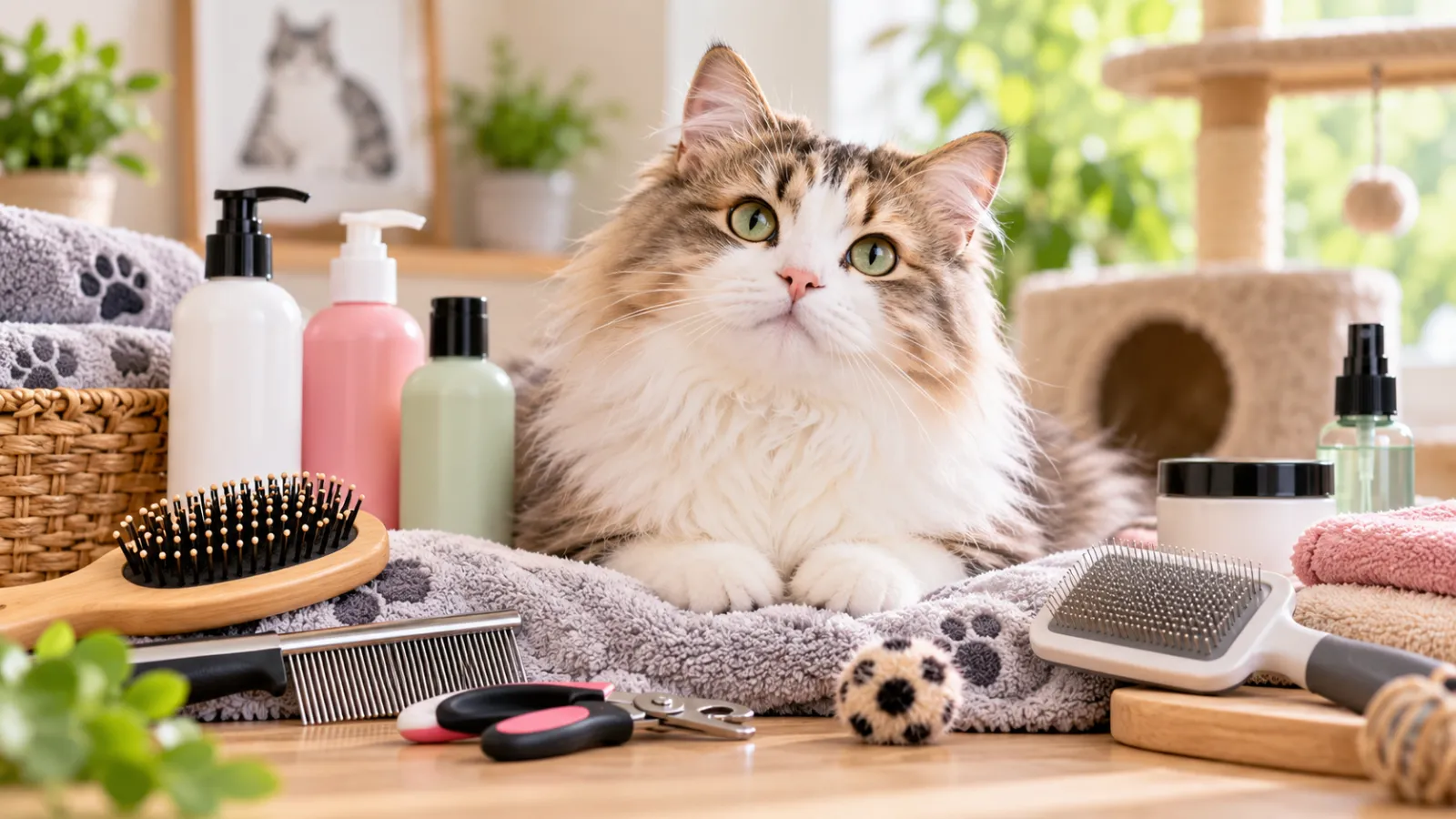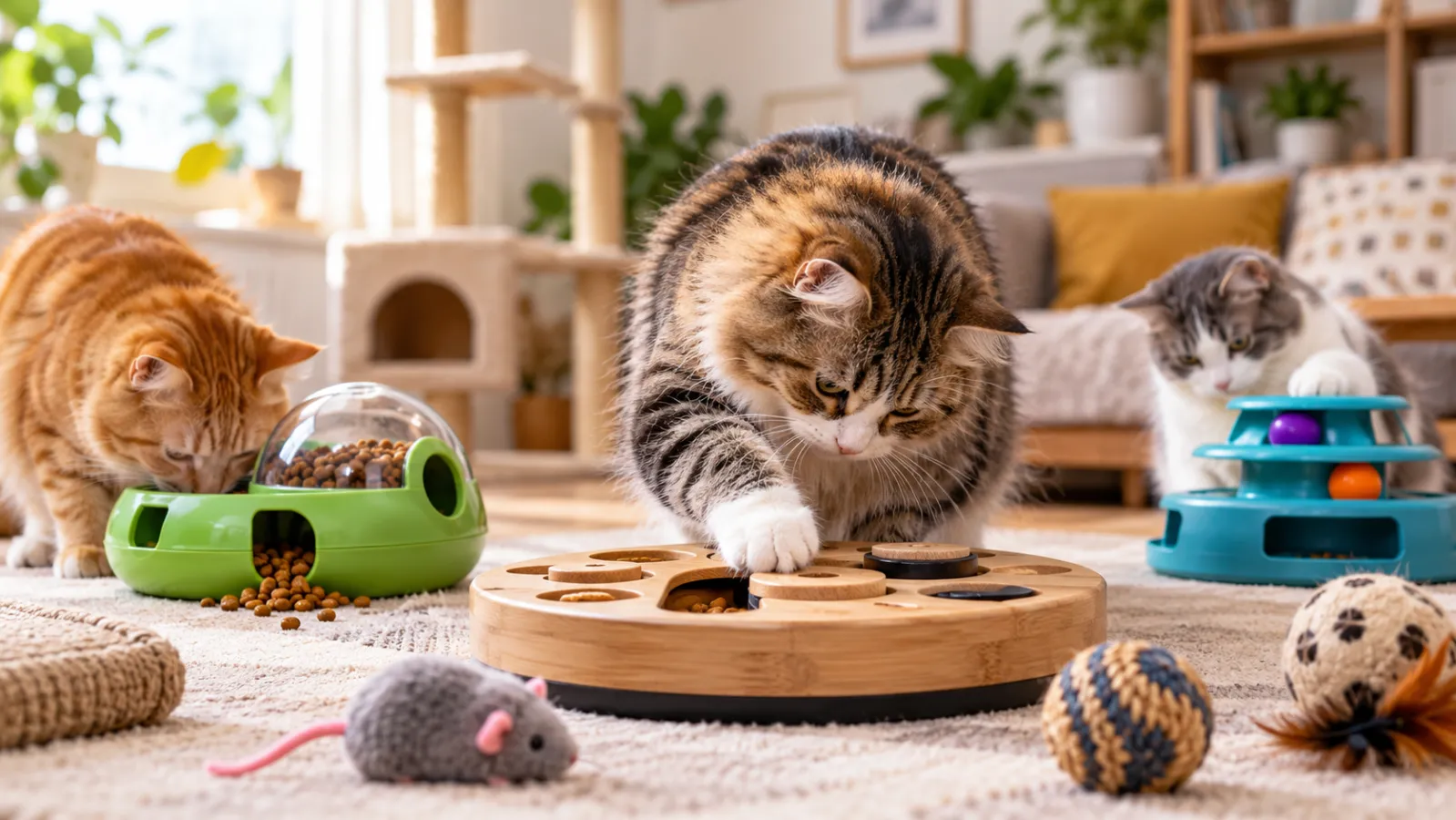
Choosing products for your cat can be surprisingly difficult. Pet stores are filled with attractive beds, toys, scratching posts, bowls, carriers, grooming tools, and other accessories, but appearance alone does not tell you whether a product is safe or durable.
Poor-quality products can break, develop sharp edges, shed loose pieces, become unstable, or simply be the wrong size for your cat. A product that looks perfect in a photograph may not be suitable once your cat starts chewing, scratching, climbing, or playing with it.
The safest approach is to look beyond the design and consider materials, construction quality, size, stability, and safety features before buying. It is also important to remember that the right product depends on your individual cat's age, size, behavior, and preferences.
Start With the Materials
The material used to make a cat product can affect both safety and durability.
Before purchasing a toy, bed, scratching post, carrier, or other accessory, examine what it is made from and how those materials are likely to hold up during normal use.
For products that your cat may chew or scratch, look for materials that are appropriate for pets and resistant to premature tearing or breakage. For bedding, consider whether the fabric and filling can withstand regular use and cleaning.
Avoid products with easily detached decorations, loose threads, exposed components, or materials that appear likely to break apart when handled.
This is particularly important with toys. Cornell's Feline Health Center recommends avoiding toys with small parts or strand-like components that could separate and be swallowed.
Check the Construction Quality
A product can be made from reasonable materials and still be poorly constructed.
Look closely at how the individual components are joined together. Check seams, stitching, joints, fasteners, handles, bases, and attachment points.
For example, a scratching post should not wobble when your cat puts their weight against it. A carrier should have secure closures and a structure that remains stable during transport. A toy should not have components that become loose after minimal handling.
Durability is especially important for products that receive frequent use. ASPCA guidance on cat care recommends a sturdy scratching post that is stable enough not to wobble during use.
Before giving a product to your cat, gently test the important parts yourself.
Choose the Correct Size
Size is one of the easiest safety considerations to overlook.
A product may be perfectly safe for a large cat but unsuitable for a kitten or smaller cat. A toy that is too small can potentially become a swallowing or choking hazard, while a bed that is too small may not allow your cat to rest comfortably.
When shopping, consider your cat's:
- Age
- Body size
- Weight
- Strength
- Activity level
- Typical behavior
Toy safety guidance from ASPCA Pet Health Insurance recommends choosing toys appropriate to the animal's size and avoiding toys small enough to become choking hazards.
Do not rely solely on the product photograph. Always check the manufacturer's size recommendations and compare them with your cat's actual measurements where appropriate.
Look for Stable and Secure Designs
Stability matters for anything your cat may climb, scratch, sleep on, or push against.
A tall scratching post with a narrow or weak base may tip over when used. A cat bed placed on an unstable elevated surface can create a fall risk. A lightweight structure may also move around enough to make your cat avoid using it.
Before buying a product, ask yourself:
Will this stay securely in place when my cat uses it normally?
For scratching posts, stability is particularly important. Your cat should be able to scratch and stretch without the entire structure shifting or falling.
Our guide on Best Cat Scratching Posts: What Should You Look For? explains how height, base stability, materials, and scratching style should influence your choice.
Inspect Toys for Small or Loose Parts
Toys deserve extra attention because cats may bite, carry, scratch, and chew them.
Small pieces can become dangerous when detached, particularly if a cat swallows them. Cornell recommends avoiding toys containing small pieces or linear strand-like components that may separate and be ingested.
Before giving a new toy to your cat, inspect it for:
- Loose eyes or decorations
- Detached feathers
- Fraying fabric
- Loose bells
- Broken seams
- Small detachable pieces
- Long strands or strings
Interactive toys can provide useful enrichment, but certain toys should be used only under supervision. PetMD also recommends putting away toys such as wand toys and string-based toys after playtime.
You can learn more about choosing appropriate enrichment in Best Cat Toys to Keep Your Cat Active and Happy.
Be Careful With Strings, Ribbons, and Similar Attachments
Strings and ribbons may be attractive to cats because they move like prey, but they can present a serious hazard if swallowed or become wrapped around the cat.
Cats Protection advises keeping items such as string, hair bands, and rubber bands out of reach because swallowed materials can become trapped in the digestive tract.
This does not mean every interactive toy containing a string must be avoided. Instead, use these products appropriately and supervise your cat during play when necessary.
Once the game is finished, store the toy somewhere your cat cannot access it independently.
Choose Cat Beds for Safety as Well as Comfort
When buying a cat bed, it is easy to focus entirely on softness and appearance.
Comfort certainly matters, but the bed should also be well constructed and appropriate for your cat's size and sleeping habits.
Look for secure stitching, durable fabric, and a design without loose decorative components that could be chewed or swallowed.
For heated beds, use products specifically designed for pets and follow the manufacturer's instructions carefully. Do not assume that a general household heating product is suitable for a cat.
Our article How to Choose the Perfect Cat Bed provides more detailed guidance on bed size, materials, stability, age, sleeping preferences, and maintenance.
Make Sure Scratching Products Can Handle Your Cat's Weight
A scratching post receives a surprising amount of physical force.
Cats may pull their entire body weight against the post while scratching and stretching. That means the base, central support, and scratching surface all need to be strong enough for the cat using them.
A product that is suitable for a small kitten may not be appropriate for a large adult cat.
The ASPCA recommends a sturdy scratching post that is tall enough for a cat to stretch and stable enough to remain upright during use.
Check the maximum recommended weight where the manufacturer provides one, and inspect the post periodically for signs of structural damage.
Pay Attention to Product Size for Kittens
Kittens require additional care when choosing products.
A toy with a small detachable component may pose a greater risk for a curious kitten that chews everything. Similarly, climbing structures, beds, and carriers should be suitable for the kitten's current size while allowing reasonable room for growth.
Do not assume that a product marketed for "cats" is automatically appropriate for every kitten.
Check the manufacturer's age or size recommendations and inspect products more frequently during the kitten stage.
Look for Practical Safety Features
Some products include features specifically intended to reduce risk.
For example, cat carriers may have secure closures, ventilation openings, and strong handles. Outdoor-use collars should be safety-release designs rather than ordinary fixed collars; the ASPCA recommends safety collars with an elastic or breakaway feature for cats allowed outdoors.
For beds and furniture, look for stable bases and secure construction.
For toys, look for securely attached components rather than loose decorative pieces.
Safety features do not make a product completely risk-free, so regular inspection is still necessary.
Check Products Before Every Use
Even a high-quality product can become unsafe after repeated use.
A toy that was secure when new may develop a loose seam after weeks of chewing. A scratching post may become unstable. A bed may develop a tear or exposed filling.
Make inspection part of your normal cat-care routine.
Look for:
| What to inspect? | |
| Seams | Open stitching or tears |
| Fabric | Significant fraying or holes |
| Attachments | Loose or missing pieces |
| Base | Wobbling or instability |
| Fasteners | Broken or unreliable closures |
| Surface | Sharp edges or exposed structure |
| Toy components | Parts that can be detached or swallowed |
If a product is damaged enough to create a hazard, remove it immediately rather than waiting until it completely breaks.
Think About How Your Cat Will Actually Use the Product
Product descriptions rarely tell the whole story.
Two cats can use the same product in completely different ways. One may gently bat a toy, while another chews it aggressively. One cat may sleep quietly in a bed, while another kneads and scratches it every day.
Your cat's behavior should therefore influence your buying decisions.
A particularly active or destructive cat may need more durable materials. A kitten that investigates everything with its mouth may require especially careful toy selection. A senior cat may need products that are easier to access and less demanding physically.
The product should suit the way your cat behaves, not only the way the product looks.
Choose Easy-to-Clean Products
Durability is not only about surviving physical use. A good product should also be practical to maintain.
Beds, blankets, feeding items, grooming tools, and other regularly used products can collect fur, dirt, food debris, and other material over time.
Whenever possible, choose products that can be cleaned according to the manufacturer's instructions without damaging their structure.
For example, a removable and washable cat-bed cover can make routine maintenance much easier.
Keeping products clean also makes it easier to notice damage before it becomes significant.
Be Cautious With Product Claims
Marketing terms can make products sound safer or stronger than they actually are.
Words such as "indestructible," "100% safe," or "unbreakable" should not replace your own inspection. No cat product should be considered completely risk-free simply because a package uses reassuring language.
American Humane recommends checking toys regularly, supervising pets when needed, and replacing damaged items rather than relying on labels alone.
Instead of buying based on marketing claims, look at the actual construction, size, materials, and suitability for your cat.
Consider Product Recalls and Manufacturer Information
Before purchasing a product, especially food, supplements, or other regulated pet-related items, it can be worthwhile to check whether there are current recalls or safety notices.
The FDA publishes animal and veterinary advisories and recall information when concerns arise about regulated products.
Also pay attention to manufacturer instructions, cleaning guidance, age recommendations, weight limits, and warnings.
A reputable manufacturer should provide enough information for you to understand how the product is intended to be used.
Do Not Ignore Your Cat's Reaction
Sometimes your cat will tell you that a product is not working before you notice a physical problem.
Your cat may avoid a bed because it feels unstable. They may ignore a scratching post because it moves too much. They may refuse a grooming tool because it feels uncomfortable.
A product does not have to be objectively defective to be unsuitable for your individual cat.
Watch how your cat interacts with new products and make adjustments when necessary.
For example, if your cat ignores a scratching post, the issue may be its height, material, stability, or location rather than a lack of interest in scratching. Best Cat Scratching Posts: What Should You Look For? explores these factors in more detail.
A Simple Safety Checklist Before You Buy
Before purchasing a product for your cat, ask yourself:
- Is the material appropriate for cats?
- Is the product strong enough for my cat's size and behavior?
- Is the size appropriate?
- Are all components securely attached?
- Are there small parts that could be swallowed?
- Does the product have appropriate safety features?
- Is it easy to inspect and clean?
- Does the manufacturer provide clear instructions?
- Is there any reason this product might not suit my cat?
If you cannot answer these questions confidently, consider choosing a different product or asking your veterinarian for guidance.
Common Mistakes to Avoid
Choosing Appearance Over Construction
A beautiful product may not be a durable product. Examine how it is made rather than judging it only by its design.
Buying the Wrong Size
A product that is too small or too lightweight may not be suitable for your cat.
Ignoring Stability
Beds, towers, and scratching posts should remain secure during normal use.
Leaving Hazardous Toys Unsupervised
Strings, ribbons, and toys with detachable components may require supervision and should be stored safely afterward.
Continuing to Use Damaged Products
Do not wait for a toy, bed, or scratching post to completely fall apart before replacing it.
Assuming Expensive Means Safer
Price can reflect branding, design, or features. It does not automatically guarantee suitability or safety.
How to Build a Safer Cat-Friendly Home
Choosing safe products is only one part of protecting your cat.
Your home itself should also be checked for everyday hazards such as accessible cords, small objects, unsafe windows, chemicals, and other items your cat could chew, swallow, or knock over.
Cats Protection recommends securing hazards such as wires, string, rubber bands, and potentially dangerous windows as part of making the home safer for cats.
Think of every new product as part of the larger environment rather than as an isolated item.
A durable toy is helpful, but it still needs to be stored safely. A stable scratching post is useful, but it should also be positioned appropriately. A comfortable bed is valuable, but it should remain structurally sound and clean.
Final Thoughts
Choosing safe and durable products for your cat is not about finding the most expensive item or the product with the most attractive packaging.
Instead, focus on the things that genuinely affect safety and usefulness: materials, construction quality, appropriate size, stability, secure components, and practical safety features.
Look closely at how a product is made, consider how your cat is likely to use it, and check it regularly after purchase. Replace anything that becomes damaged or develops a potential hazard.
Most importantly, choose products according to your individual cat. A toy, scratching post, bed, or carrier that works beautifully for one cat may not be the right choice for another.
A thoughtful approach to buying cat products can help you avoid unnecessary purchases while giving your cat equipment that is comfortable, practical, and built to withstand everyday use.
Sources & References
ASPCA. General Cat Care.
https://www.aspca.org/pet-care/cat-care/general-cat-care
ASPCA. Destructive Scratching.
https://www.aspca.org/pet-care/cat-care/common-cat-behavior-issues/destructive-scratching
ASPCA. Cat Grooming Tips.
https://www.aspca.org/pet-care/cat-care/cat-grooming-tips
Cornell Feline Health Center. Safe Toys and Gifts.
Cats Protection. Keeping Your Cat Safe in the Home.
https://www.cats.org.uk/help-and-advice/getting-a-cat/keeping-your-cat-safe
PetMD. How To Cat-Proof Your Home.
https://www.petmd.com/cat/general-health/how-to-cat-proof-your-home
American Humane. Choosing Safe Toys for Pets.
https://www.americanhumane.org/public-education/choosing-safe-toys-for-pets/
FDA. Outbreaks and Advisories – Animal & Veterinary.
https://www.fda.gov/animal-veterinary/news-events/outbreaks-and-advisories
Created with AI • Independently Verified
This article was created with the assistance of artificial intelligence and cross-checked using multiple AI systems to help identify errors, inconsistencies, and missing information.
Important factual claims are additionally checked against reputable veterinary, scientific, animal-welfare, and other authoritative sources before publication.
Our standard: AI helps us research and explain. Reliable evidence determines what we publish.
Last reviewed: September 2026