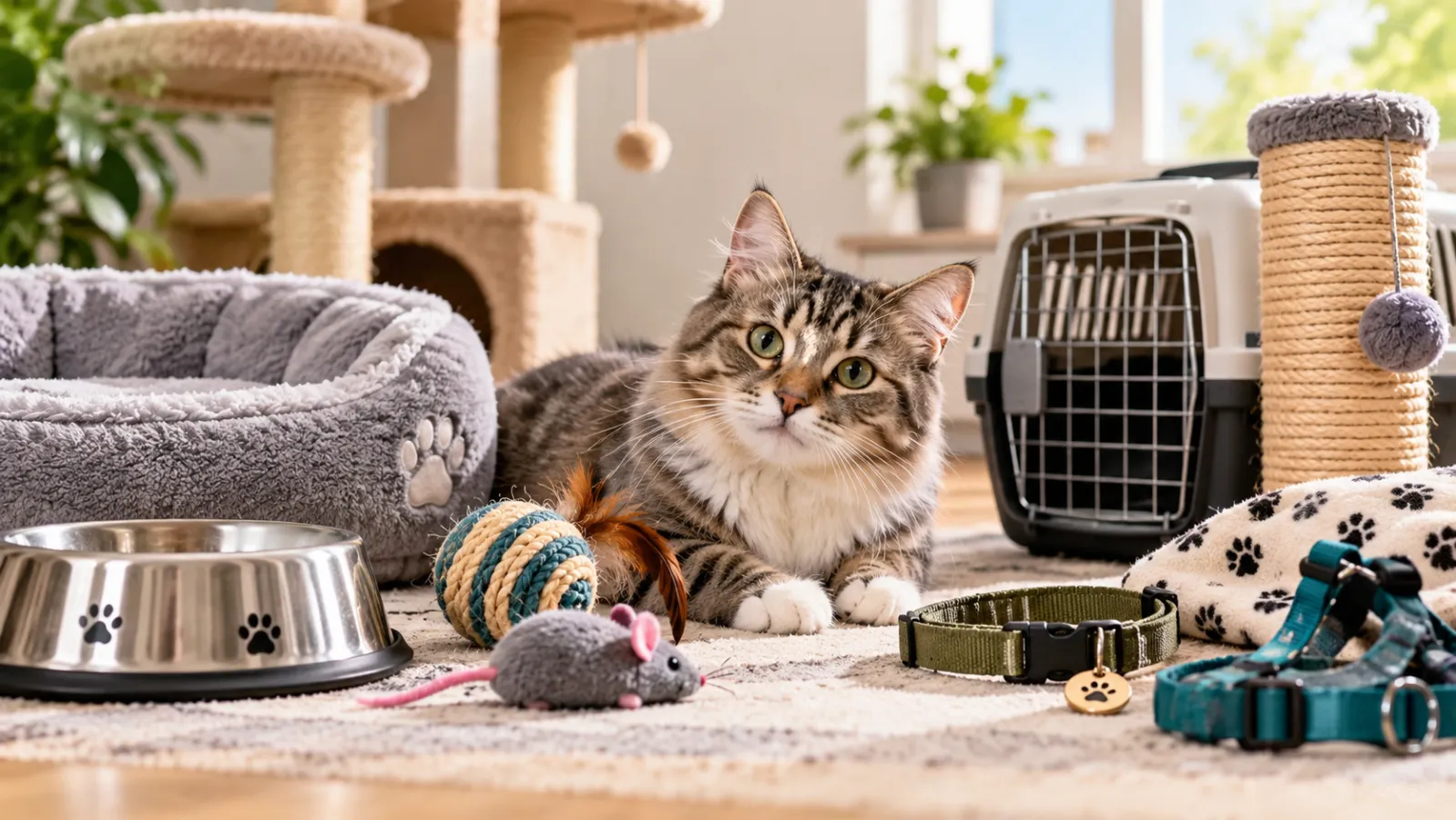
Bringing a new cat home is exciting, but preparing for your new companion can quickly become expensive. Pet stores and online shops are filled with beds, feeders, toys, scratching posts, grooming products, and other accessories, making it difficult to know what your cat actually needs.
The good news is that you do not need to buy everything at once. A new cat needs a few practical essentials for feeding, drinking, toileting, resting, scratching, and enrichment. Once your cat has settled in, you can learn their preferences and decide which additional products are genuinely useful.
Starting with the basics can help you avoid unnecessary spending while creating a comfortable environment for your cat.
Start With Food and Water Bowls
Food and water bowls are among the first products you should have ready before your cat arrives.
Choose bowls that are stable, appropriately sized, and easy to clean. Your cat should have access to fresh, clean drinking water, and the feeding setup should be easy for you to maintain every day.
You also do not need an expensive automatic feeder simply because it is marketed as a premium cat accessory. A straightforward feeding setup may be all you need initially.
The food you choose is more important than buying a collection of feeding gadgets. Your cat's age, activity level, and health can affect their nutritional needs, so discussing diet with your veterinarian can be useful. For more guidance, How to Choose the Right Cat Food for Your Pet can help you understand the factors to consider when selecting cat food.
Choose a Suitable Litter Box and Litter
A litter box is an essential part of setting up your home for a new cat.
Place the litter box somewhere quiet, accessible, and away from feeding areas. Cats may avoid boxes that are difficult to access or located in busy, intimidating areas. Regular cleaning also matters, with the ASPCA recommending daily removal of solid waste and regular complete cleaning.
The litter itself deserves some thought. Cats can have preferences regarding litter texture and scent, so avoid buying large quantities of a particular type before you know what your cat will accept.
For homes with multiple cats, litter-box requirements can increase. The ASPCA recommends one box per cat plus one extra when addressing litter-box problems.
Give Your Cat a Comfortable Place to Sleep
A comfortable sleeping area should be part of your initial setup.
Cats spend a substantial amount of their time resting, but that does not mean you need to buy the most expensive cat bed available. A soft, clean, safe resting area can be enough to begin with. The ASPCA recommends providing cats with their own clean, dry place to sleep and rest.
Your cat may also have a strong preference for where they sleep. Some cats like enclosed spaces, while others prefer open beds, blankets, furniture, or elevated areas.
Rather than assuming which bed your cat will love, observe where they naturally choose to rest. Our guide on How to Choose the Perfect Cat Bed explores bed size, shape, materials, location, safety, and maintenance in more detail.
Provide a Scratching Post or Scratching Pad
Scratching is a normal feline behavior, so a suitable scratching surface is an important addition to your home.
Cats scratch for several reasons, including stretching and maintaining their claws. Providing an appropriate scratching surface gives them a suitable place to express this natural behavior.
Look for a scratching post or pad that is sturdy enough to remain stable during use. Some cats prefer vertical posts, while others prefer horizontal scratching surfaces. The ASPCA notes that cats can have different preferences and recommends providing appropriate scratching surfaces.
If you are unsure which style would suit your cat, Best Cat Scratching Posts: What Should You Look For? explains how height, stability, scratching material, and scratching style can affect your choice.
Add a Few Enrichment Toys
Toys are useful, but you do not need a huge collection.
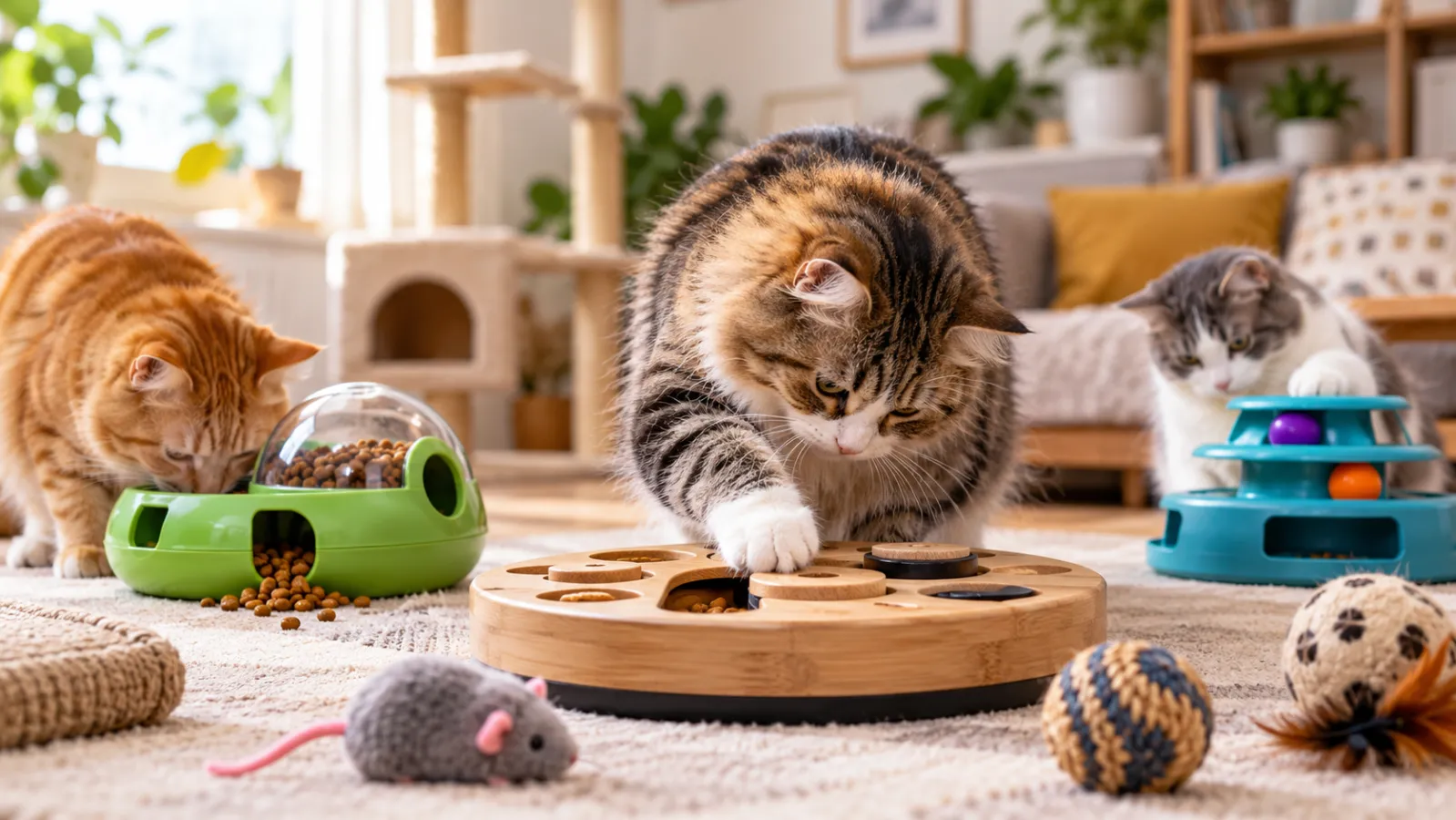
Choose a few different types that encourage movement, exploration, or interaction. Interactive toys, chase toys, and puzzle-based enrichment can give indoor cats opportunities to engage in natural behaviors such as stalking, chasing, batting, and investigating.
Start with a small selection and observe what your cat enjoys. One cat may love chasing a wand toy, while another may prefer a simple ball or food puzzle.
Our guide on Best Cat Toys to Keep Your Cat Active and Happy covers different toy types and explains how to choose enrichment according to your cat's play style.
Do Not Feel Pressure to Buy Everything Immediately
New cat owners often buy products based on what looks appealing rather than what their cat actually needs.
That can lead to unused beds, toys, feeders, carriers, and accessories taking up space while the essential items receive less attention.
A better approach is to build your cat's setup gradually.
Start with the products required for daily care. Once your cat has settled in, observe their behavior. Do they prefer sleeping in enclosed spaces? Do they scratch vertically or horizontally? Are they highly active or more relaxed? Do they enjoy food puzzles or simple chase toys?
These observations can help you make smarter purchases later.
Think About Your Cat's Age and Lifestyle
Your cat's individual circumstances should influence what you buy.
A kitten may need safe toys appropriate for their size and plenty of opportunities for play. An adult indoor cat may benefit from additional enrichment and scratching options. An older cat may appreciate an easily accessible resting area and products that accommodate changes in mobility.
The environment also matters. An indoor cat may need more opportunities for climbing, play, exploration, and environmental enrichment than a cat with access to a carefully managed outdoor environment. Providing multiple appropriate resources can also give cats more choice and control within their living space.
Keep Food, Water, and Toileting Areas Separate
Where you place your cat's resources is just as important as what you buy.
Keep food and water away from the litter box rather than putting everything in one convenient corner. Cats generally prefer their toileting area to be separate from where they eat.
A simple layout can make daily care easier:
| Resource Practical Setup | |
| Food bowl | Quiet feeding area |
| Water bowl | Separate, easy-to-access location |
| Litter box | Quiet and accessible area away from food |
| Bed | Calm resting location |
| Scratching post | Near areas your cat uses regularly |
| Toys | Stored safely and rotated during play |
You can adjust the arrangement after learning how your cat uses the space.
Make Scratching Easy to Access
Do not hide the scratching post somewhere your cat rarely visits.
If your cat starts scratching furniture, placing an appropriate scratching surface near the preferred scratching area can make it easier to redirect the behavior. The ASPCA recommends providing attractive scratching surfaces and positioning them where the cat is inclined to use them.
A stable scratching post that your cat actually wants to use is more valuable than several decorative products that remain untouched.
Choose Toys With Safety in Mind
When buying toys, look beyond appearance.
Check toys for loose pieces, damaged components, sharp edges, or parts that could become detached. Inspect toys regularly and remove damaged ones.
Interactive toys can be excellent for supervised play, while toys with strings or other potentially hazardous components may need to be put away after use. Your cat should not be encouraged to chew or swallow toy parts.
Safety should always come before novelty.
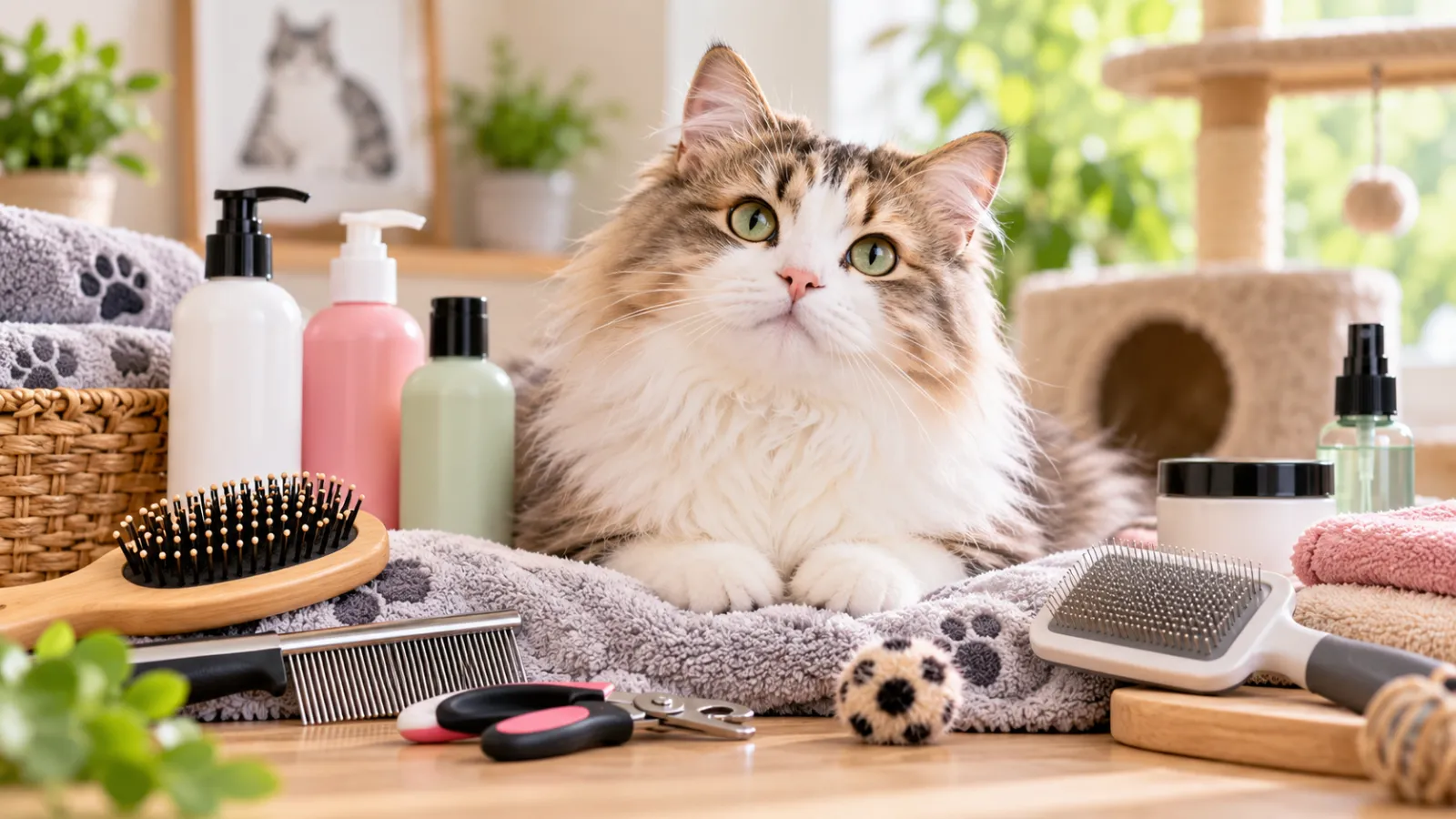
Consider Grooming Supplies, but Keep Them Basic
Grooming products can be useful, but most new owners do not need an entire grooming kit on the first day.
A suitable brush or comb may be enough initially, depending on your cat's coat. Nail-care equipment can also become useful as part of routine care.
The ASPCA notes that cats should be brushed or combed regularly and that some cats may not tolerate grooming safely at home.
Choose grooming products based on your cat's individual needs rather than buying every product available. You can learn more in How to Choose the Best Cat Grooming Products.
A Cat Carrier Is Also an Important Essential
Although your cat may not use a carrier every day, it is an important product to have available.
A suitable carrier allows you to transport your cat safely to veterinary appointments and during other necessary journeys. It is better to have a carrier prepared before you need one than to search for one during an emergency.
Introduce the carrier gradually rather than bringing it out only when your cat is going to the veterinarian. Leaving it accessible and making it a familiar part of the environment can help reduce the stress associated with using it.
What You Can Skip at First
Not every popular cat product is a genuine necessity.
You can usually wait before buying expensive automated gadgets, multiple decorative beds, large toy collections, elaborate feeding accessories, or products your cat has no obvious need for.
That does not mean these products are always useless. Some can become valuable additions once you understand your cat's preferences.
The key is to meet basic needs first and personalize the setup later.
A Simple Starter Shopping List
Before bringing your cat home, focus on these essentials:
| Product Priority | |
| Cat food | Essential |
| Food bowl | Essential |
| Water bowl | Essential |
| Litter box | Essential |
| Cat litter | Essential |
| Comfortable sleeping area | Essential |
| Scratching post or pad | Essential |
| A few safe toys | Essential |
| Cat carrier | Important |
| Basic grooming tools | Based on individual needs |
The ASPCA's own cat supply checklist also includes food, food and water dishes, interactive toys, grooming tools, a scratching post or pad, litter box and litter, a carrier, and a cat bed or box with a warm blanket or towel.
Common Mistakes New Cat Owners Make
One of the biggest mistakes is buying products before understanding the cat.
A second is focusing too much on appearance. A beautiful bed is not useful if your cat refuses to sleep in it, and an expensive scratching post has little value if it does not match your cat's preferred scratching style.
Another mistake is buying large quantities of food or litter before knowing what your cat accepts.
Start small, observe, and adapt.
Frequently Asked Questions
What are the most essential products for a new cat? Food, food and water bowls, a litter box and litter, a comfortable sleeping area, a scratching post or pad, a few safe toys, and a carrier are practical starting essentials.
Do I need an expensive cat bed? No. A clean, safe, comfortable resting area may be enough, and your cat's individual sleeping preference should guide future purchases.
How many litter boxes should I have? For households with multiple cats, the ASPCA recommends one litter box per cat plus one extra when dealing with litter-box needs.
Does every cat need a scratching post? Providing an appropriate scratching surface is recommended because scratching is a normal feline behavior.
How many toys should I buy for a new cat? You do not need a large collection. Start with a few safe toys that offer different types of play and observe what your cat prefers.
Do I need grooming products immediately? Basic grooming supplies may be useful depending on your cat's coat and needs, but there is no need to purchase a large grooming collection before you know what your cat requires.
What products can I buy later? Additional beds, automated feeders, specialized toys, climbing equipment, and other accessories can be added later based on your cat's behavior, preferences, and lifestyle.
Final Thoughts
Preparing for a new cat does not have to mean filling your home with pet products.
Start with the essentials: food and water bowls, an appropriate litter box and litter, a comfortable sleeping area, a scratching surface, a few enrichment toys, and a safe carrier. These products create a practical foundation for everyday care.
From there, let your cat guide your future purchases. Their sleeping habits, scratching preferences, play style, age, and lifestyle can tell you much more than a product advertisement ever could.
The goal is not to buy the most products. It is to create a home that is safe, comfortable, practical, and suited to the individual cat living in it.
Sources & References
ASPCA. General Cat Care.
https://www.aspca.org/pet-care/cat-care/general-cat-care
ASPCA. Cat Nutrition Tips.
https://www.aspca.org/pet-care/cat-care/cat-nutrition-tips
ASPCA. Litter Box Problems.
https://www.aspca.org/pet-care/cat-care/common-cat-behavior-issues/litter-box-problems
ASPCA. Destructive Scratching.
https://www.aspca.org/pet-care/cat-care/common-cat-behavior-issues/destructive-scratching
ASPCA. Cat Grooming Tips.
https://www.aspca.org/pet-care/cat-care/cat-grooming-tips
International Cat Care. Feline Environmental and Resource Considerations.
Created with AI • Independently Verified
This article was created with the assistance of artificial intelligence and cross-checked using multiple AI systems to help identify errors, inconsistencies, and missing information.
Important factual claims are additionally checked against reputable veterinary, scientific, animal-welfare, and other authoritative sources before publication.
Our standard: AI helps us research and explain. Reliable evidence determines what we publish.
Last reviewed: September 2026