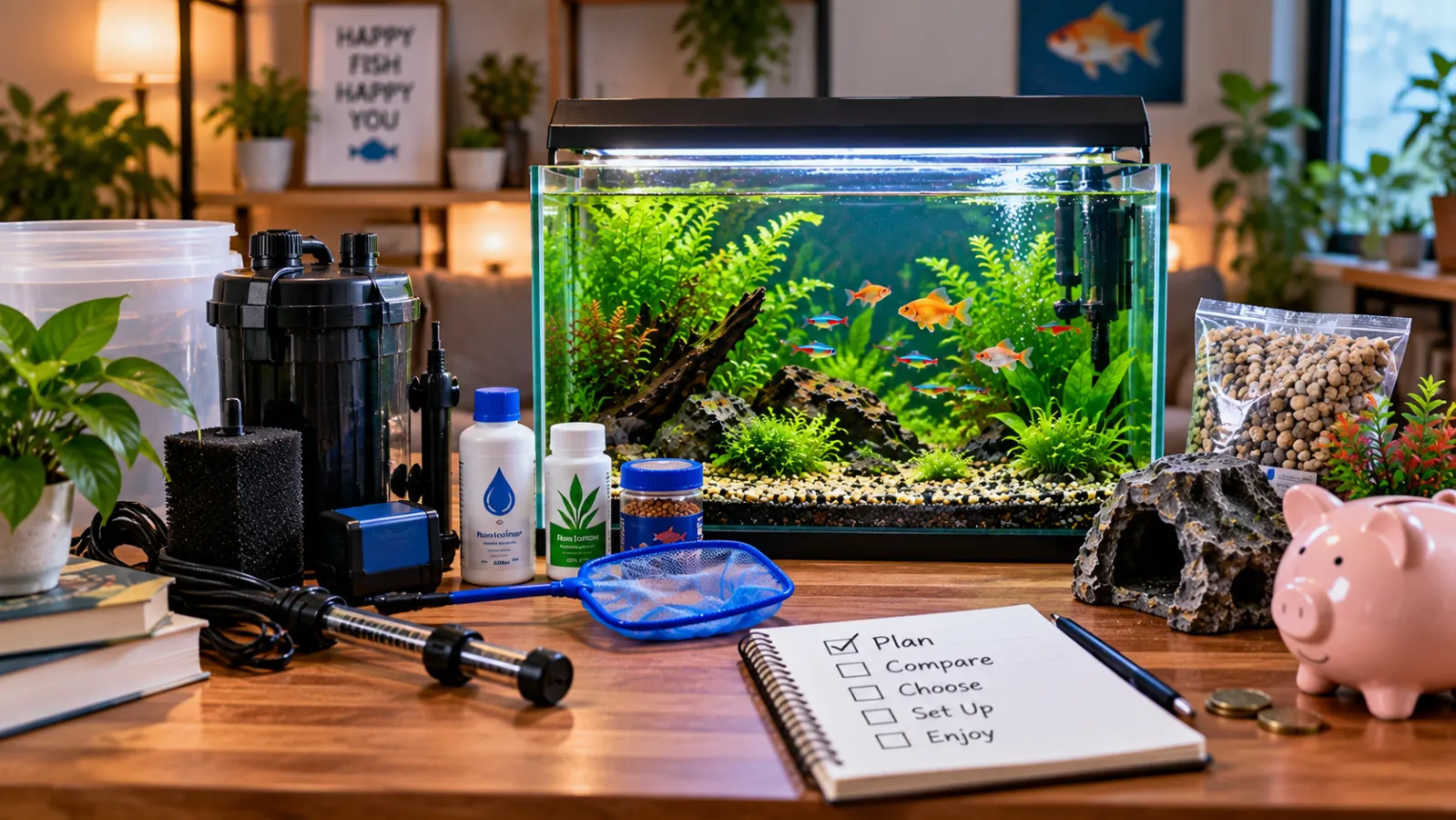
However, choosing an aquarium heater isn't simply a matter of buying the highest-wattage model available. Tank size, target temperature, heater wattage, placement, and safety features all deserve consideration.
The right heater should provide enough heating capacity for your aquarium without creating unnecessary temperature fluctuations or safety risks.
Why Is an Aquarium Heater Important?
Many tropical fish naturally live in relatively warm waters and may require a stable temperature range in captivity.
Sudden or prolonged temperature changes can be stressful for fish. Maintaining appropriate and consistent water conditions is therefore an important part of aquarium care.
According to the RSPCA's fish and aquarium guidance, aquarium owners need to consider the environmental requirements of the species they keep, including appropriate water conditions.
A heater can help maintain the desired temperature when the surrounding room is cooler than the aquarium.
However, a heater should be considered part of a complete aquarium setup rather than a standalone solution.
What to Consider When Choosing an Aquarium Heater
There are four main factors to consider:
- Tank size
- Target temperature
- Heater wattage
- Safety features
Let's examine each one.
1. Consider Your Tank Size
The size of your aquarium is one of the first things to consider when selecting a heater.
A small aquarium generally requires less heating power than a large aquarium because there is less water to warm.
However, tank volume isn't the only factor.
Heating requirements can also depend on:
- Room temperature
- Aquarium location
- Amount of temperature fluctuation
- Aquarium lid
- Water circulation
- Desired water temperature
- Ambient climate
For example, a tropical aquarium located in a cold room may require more heating capacity than the same aquarium located in a consistently warm environment.
This is why heater recommendations should be treated as a starting point rather than an absolute rule.
2. Determine Your Target Temperature
Before choosing a heater, identify the temperature requirements of the fish you keep.
Different species have different temperature preferences.
Rather than choosing a temperature simply because it is commonly used for tropical aquariums, research the specific requirements of your fish.
Consider:
- Fish species
- Natural habitat
- Recommended temperature range
- Other livestock
- Plants
- Seasonal room-temperature changes
If your aquarium contains several species, make sure their temperature requirements are compatible.
YourPetsWorld's guide on how to choose the right aquarium for your fish can also help when planning an aquarium around the needs of its inhabitants.
3. Choose the Correct Heater Wattage
Heater wattage indicates how much electrical power the heater uses to produce heat.
Common aquarium heater ratings include:
- 25 watts
- 50 watts
- 75 watts
- 100 watts
- 150 watts
- 200 watts
- 300 watts
The appropriate wattage depends on aquarium volume and the difference between the desired water temperature and surrounding room temperature.
Aqueon's aquarium heater guide explains that heater selection should take aquarium size and environmental conditions into account.
General Starting Guide
| Aquarium Size Approximate Starting Wattage* | |
| 20–40 litres | 25–50 W |
| 40–75 litres | 50–75 W |
| 75–115 litres | 75–150 W |
| 115–190 litres | 150–200 W |
| 190–300 litres | 200–300 W |
*These are general starting points, not universal recommendations. Actual requirements depend on room temperature, desired aquarium temperature, aquarium design and heater efficiency.
For a precise selection, always check the manufacturer's recommended aquarium volume and conditions.
Is a Higher-Wattage Aquarium Heater Better?
Not necessarily.
A heater with a higher wattage isn't automatically safer or more effective.
The objective is to select an appropriate heater for the aquarium rather than choosing the most powerful model available.
An oversized heater may have greater heating capacity than necessary, while an undersized heater may struggle to maintain the desired temperature when the surrounding room becomes colder.
The ideal choice depends on your aquarium and environment.
4. Look for Safety Features
Safety should be one of your biggest considerations when purchasing an aquarium heater.
Look for features such as:
Adjustable Temperature Control
An adjustable thermostat allows you to set the desired temperature rather than relying on a fixed temperature.
Automatic Shut-Off
A thermostat-controlled heater should switch heating off when the desired temperature is reached.
Temperature Indicator
A visible temperature setting makes it easier to check what the heater is configured to do.
Protective Guard
A heater guard can help reduce the risk of fish coming into direct contact with the heating element.
Shatter-Resistant Construction
A robust heater design can provide additional protection in an aquarium environment.
However, safety features vary between products, so always read the manufacturer's specifications.
Why a Separate Aquarium Thermometer Is Important
Don't rely entirely on the heater's temperature setting.
A separate aquarium thermometer allows you to check the actual water temperature.
This is important because:
- Heater settings aren't always identical to actual water temperature.
- Room temperature can change.
- Equipment can malfunction.
- Water circulation can affect temperature distribution.
Check the aquarium temperature regularly and adjust the heater when necessary.
For broader aquarium monitoring, you can also learn how to test aquarium water.
Where Should You Place an Aquarium Heater?
Correct placement can help distribute heat throughout the aquarium.
A heater is generally best positioned in an area with good water circulation.
Depending on the equipment, this may be near:
- A filter outlet
- A circulation pump
- Another area with consistent water movement
Good circulation helps distribute heated water rather than allowing warmer water to remain concentrated in one location.
Always follow the manufacturer's instructions for positioning the specific heater.
Can You Use More Than One Aquarium Heater?
For larger aquariums, some aquarium keepers use multiple heaters instead of relying on a single very large unit.
For example, rather than one extremely powerful heater, two appropriately sized heaters can provide heating from different locations.
Potential advantages include:
- More even heating
- Backup capacity if one heater fails
- Reduced dependence on one device
However, multiple heaters also mean more equipment to monitor.
Whether this approach is appropriate depends on aquarium size, equipment design and the specific setup.
What Happens If an Aquarium Heater Is Too Weak?
An undersized heater may struggle to maintain the desired temperature.
You might notice:
- Water temperature consistently below the target
- Temperature dropping when room temperature falls
- Heater remaining on for long periods
- Increasing temperature fluctuations
If this happens, don't simply increase the thermostat setting without checking the actual water temperature.
First verify:
- The thermometer is working.
- The heater is operating correctly.
- Water is circulating properly.
- The heater is appropriately sized.
- Room temperature hasn't changed significantly.
What Happens If an Aquarium Heater Malfunctions?
A heater can potentially fail in different ways.
It may:
- Stop heating
- Become stuck heating
- Display an inaccurate setting
- Experience electrical or mechanical failure
A failed heater can create unsuitable temperatures, which is why monitoring is important.
Checking the aquarium temperature regularly can help you identify problems before they become serious.
Aquarium Heater Safety Tips
Follow these basic precautions:
Never Run a Heater Dry
Always follow the manufacturer's instructions regarding water level and operation.
Allow Equipment to Cool Before Removing It
Don't immediately remove a recently operating heater from the water.
Use Appropriate Electrical Protection
Aquarium equipment should be installed safely and kept away from unnecessary water exposure.
Inspect the Heater Regularly
Look for cracks, damage, unusual behavior or other signs of failure.
Use a Separate Thermometer
Verify actual water temperature rather than relying only on the heater setting.
Follow Manufacturer Instructions
Different heater designs have different installation and operating requirements.
Aquarium Heater vs Room Temperature
Your aquarium's heating requirements depend partly on the surrounding room.
For example, if the room remains close to the aquarium's desired temperature, the heater may need to operate less frequently.
If the room becomes significantly cooler, the heater may need to work harder to maintain the target temperature.
This is why heater wattage recommendations should always take ambient temperature into account.
Aquarium Heater Maintenance
Aquarium heaters don't require complicated maintenance, but they should be checked regularly.
Look for:
- Damage
- Cracks
- Mineral deposits
- Unusual temperature behavior
- Changes in heating performance
- Loose components
Keep the surrounding area free of excessive debris and make sure water can circulate around the heater.
If you're developing a complete maintenance schedule, YourPetsWorld's easy aquarium maintenance routine can help you organize regular aquarium care.
Common Aquarium Heater Mistakes to Avoid
Choosing Wattage Without Considering Room Temperature
A heater's requirements depend on the difference between room temperature and desired aquarium temperature.
Setting the Temperature Without Checking the Water
Always verify the actual temperature with a reliable thermometer.
Choosing the Highest Wattage Available
More power isn't automatically better.
Ignoring Fish Requirements
Different fish have different temperature preferences.
Placing the Heater Where Water Doesn't Circulate
Poor circulation can result in uneven temperature distribution.
Forgetting About Safety
Aquarium heaters are electrical equipment used around water. Installation and operation instructions should always be followed carefully.
Quick Aquarium Heater Selection Guide
| Aquarium Situation What to Consider | |
| Small tropical aquarium | Lower-wattage adjustable heater |
| Medium aquarium | Heater matched to tank volume and room temperature |
| Large aquarium | Higher capacity or multiple appropriate heaters |
| Cold room | Greater heating capacity may be required |
| Stable warm room | Lower heating demand |
| Sensitive fish | Accurate temperature monitoring |
| Large aquarium | Consider multiple heating points |
Frequently Asked Questions
What wattage aquarium heater do I need?
The appropriate wattage depends on aquarium volume, desired temperature and surrounding room temperature. Always compare your setup with the manufacturer's recommended tank size and conditions.
What temperature should my aquarium heater be set to?
Set the heater according to the temperature requirements of your specific fish species. There isn't one temperature that is suitable for every aquarium.
Can an aquarium heater be too powerful?
Yes. Choosing a heater significantly larger than your aquarium's requirements isn't automatically better. Select an appropriate wattage based on tank size and environmental conditions.
Do I need an aquarium thermometer if my heater has a thermostat?
Yes. A separate thermometer allows you to verify the actual water temperature and identify potential problems with the heater or aquarium environment.
Where should an aquarium heater be placed?
Generally, place the heater where there is good water circulation so heat can distribute throughout the aquarium. Always follow the manufacturer's installation instructions.
Can I use two aquarium heaters?
Multiple heaters can be useful in larger aquariums and may provide more even heating or backup capacity. Their suitability depends on the aquarium and equipment.
Should aquarium heaters be left on all the time?
Thermostatically controlled heaters are designed to switch heating on and off as needed to maintain the selected temperature. Always follow the manufacturer's instructions.
Final Thoughts
Choosing the best aquarium heater isn't simply about finding the heater with the highest wattage.
The right choice depends on:
- Tank size
- Target temperature
- Room temperature
- Heater wattage
- Fish requirements
- Water circulation
- Safety features
- Temperature monitoring
For a small tropical aquarium, a suitable low-wattage adjustable heater may be sufficient. Larger aquariums may require greater heating capacity or multiple appropriately sized heaters.
Most importantly, don't rely solely on the number displayed on the heater. Use a separate thermometer to monitor the actual aquarium temperature and make sure the temperature remains appropriate for your fish.
A reliable heater, accurate temperature monitoring and regular aquarium maintenance can work together to create a more stable environment for your aquatic pets.
Sources & References
RSPCA. Fish and Aquariums.
Aqueon. Aquarium Heater Guide.
Aqueon — Aquarium Heater Guide
Aqueon. How to Choose the Right Aquarium Heater.
Aqueon — Aquarium Heating Resources
Ornamental Aquatic Trade Association (OATA). How to Set Up and Look After a Freshwater Tank / Aquarium.
OATA — Freshwater Tank Setup and Care
Created with AI • Independently Verified
This article was created with the assistance of artificial intelligence and cross-checked using multiple AI systems to help identify errors, inconsistencies, and missing information.
Important factual claims are additionally checked against reputable veterinary, scientific, animal-welfare, and other authoritative sources before publication.
Our standard: AI helps us research and explain. Reliable evidence determines what we publish.
Last reviewed: September 2026