Why Saltwater Aquariums Are Popular
Saltwater aquariums are known for their colorful fish, unique marine species, and beautiful underwater environments. Many hobbyists choose marine tanks because they provide an opportunity to observe ocean life from home while learning about marine ecosystems.
For teachers, educators, and parents, a marine aquarium can also serve as an educational tool that introduces concepts related to biology, ecology, and environmental science.
What Is a Saltwater Aquarium?
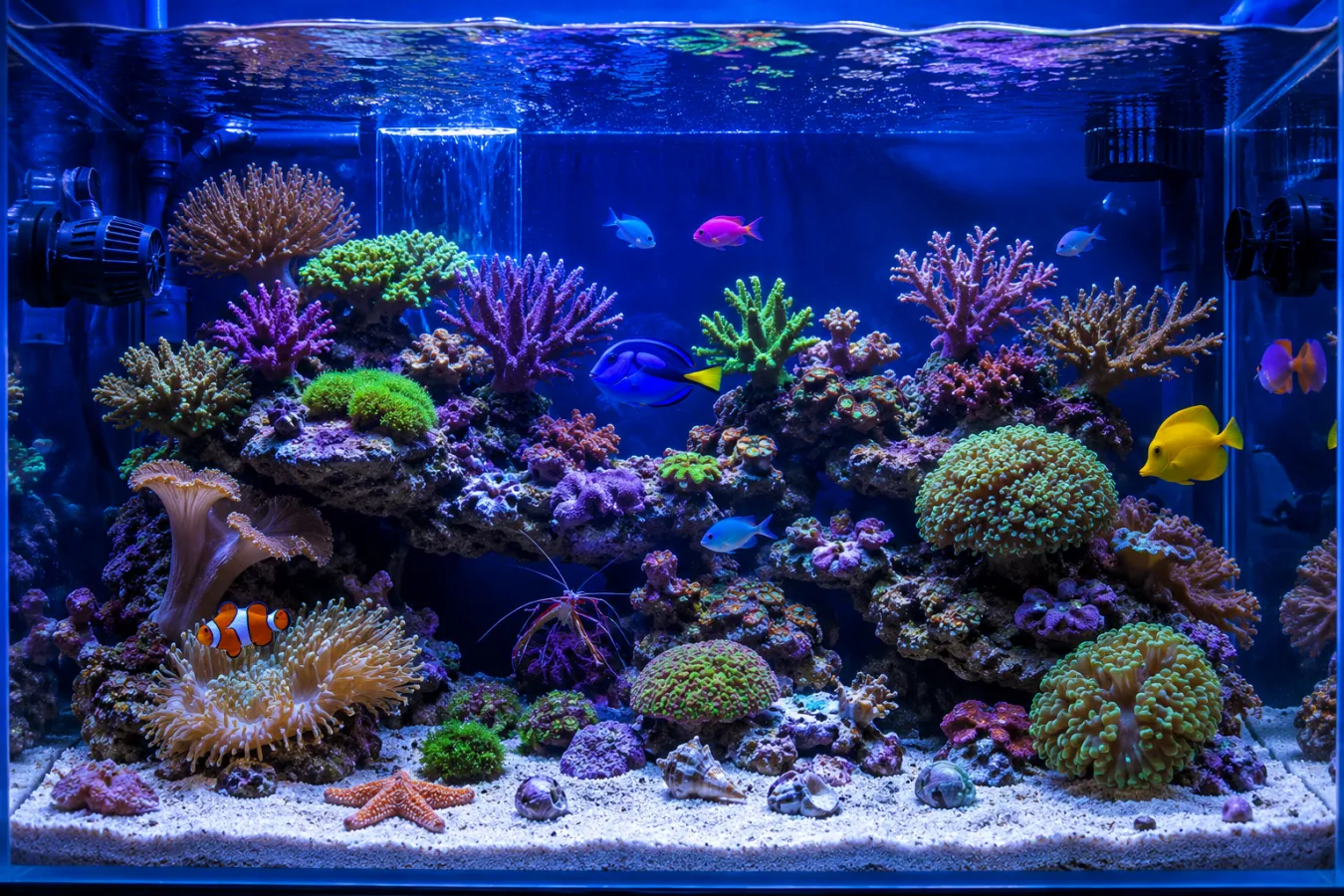
A saltwater aquarium recreates a marine habitat inside a glass tank. Unlike freshwater tanks, marine aquariums require carefully balanced salt levels, proper filtration, and stable water conditions.
The main components include:
- Marine fish
- Live rock
- Saltwater
- Filtration system
- Water circulation equipment
- Lighting
When properly maintained, these components work together to create a healthy environment for marine life.
How to Set Up a Saltwater Aquarium
Choose the Right Aquarium Size
Beginners should start with a tank between 30 and 50 gallons. Larger tanks are often easier to maintain because water conditions remain more stable.
Install Essential Equipment
The basic equipment includes:
- Aquarium tank
- Protein skimmer
- Filter system
- Heater
- LED lighting
- Water pumps
- Marine salt mix
- Water testing kits
Add Live Rock and Substrate
Live rock helps build beneficial bacteria that naturally process waste and improve water quality.
Prepare Saltwater
Mix purified water with marine salt according to the manufacturer's instructions. The ideal salinity level is typically between 1.023 and 1.025.
Complete the Nitrogen Cycle
Allow the aquarium to cycle for several weeks before adding fish. This process develops beneficial bacteria that help maintain a healthy environment.
Introduce Fish Slowly
Begin with hardy species such as:
- Clownfish
- Firefish
- Gobies
- Royal Gramma
- Blennies
Real-World Examples of Saltwater Aquariums
Classroom Marine Aquarium
A science teacher uses a marine tank to teach students about food chains, ecosystems, and water chemistry.
Family Learning Project
Parents and children work together to monitor water quality, feed fish, and learn about marine life.
Home Office Aquarium
Professionals often install marine aquariums to create a relaxing and visually appealing workspace.
Benefits of Keeping a Saltwater Aquarium
Maintaining a marine aquarium offers several advantages:
- Supports science education
- Encourages responsibility
- Promotes relaxation
- Enhances room aesthetics
- Increases knowledge of marine ecosystems
- Creates a rewarding long-term hobby
Common Saltwater Aquarium Mistakes
Many beginners experience problems because of avoidable mistakes.
Adding Fish Too Soon
Fish should never be introduced before the aquarium completes its cycling process.
Overstocking the Tank
Too many fish can quickly affect water quality.
Ignoring Water Testing
Regular testing helps identify problems before they become serious.
Overfeeding
Excess food creates waste and can damage water quality.
Choosing Advanced Species
Some marine fish require specialized care and are not suitable for beginners.
Essential Tools and Helpful Tips
Useful tools include:
- Salinity refractometer
- Water testing kits
- Aquarium maintenance apps
- Protein skimmer
- Automatic feeder
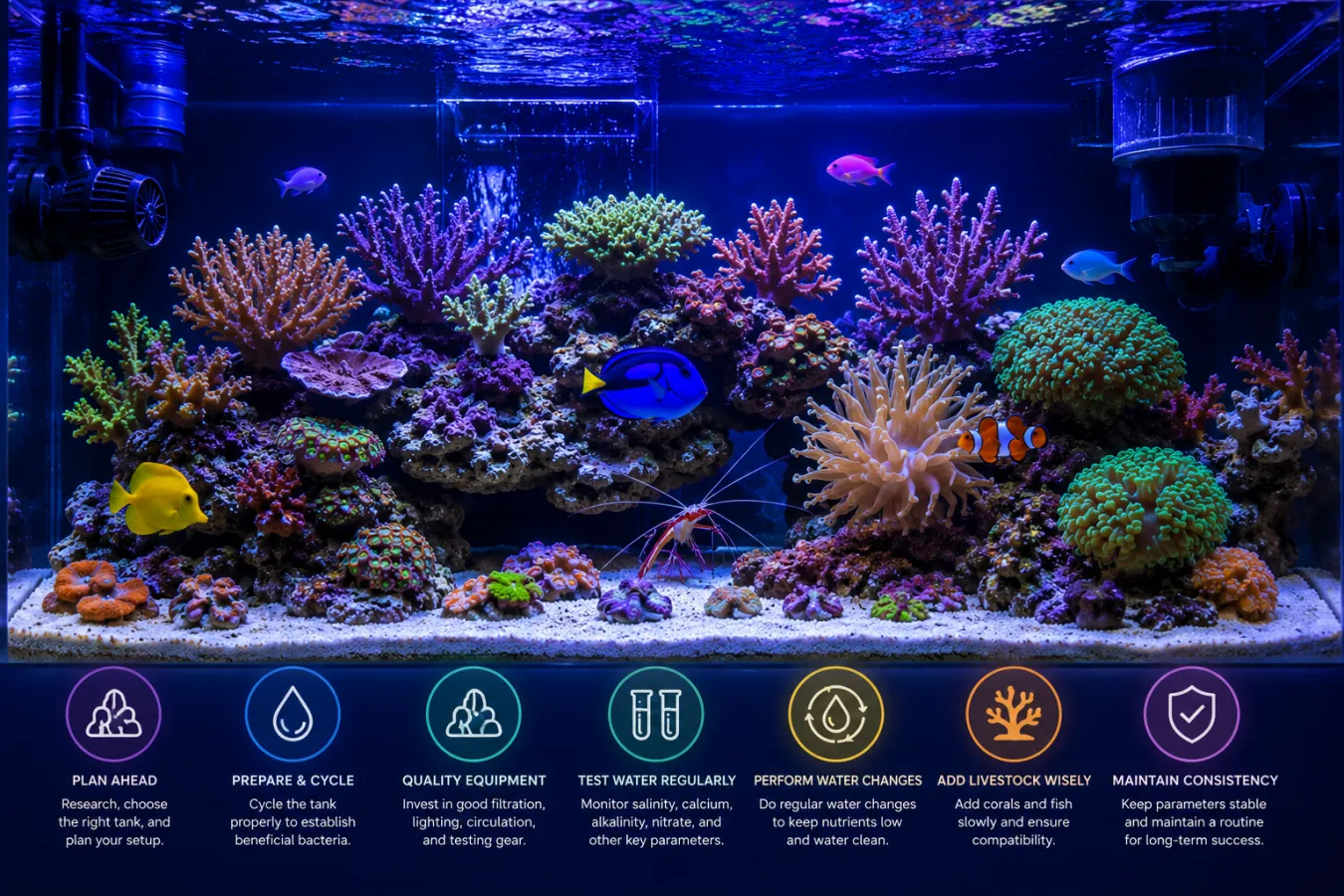
A simple framework for success is:
Plan → Cycle → Test → Stock Slowly → Maintain Regularly
Key Takeaways
- A saltwater aquarium recreates a marine ecosystem.
- Proper setup is essential for long-term success.
- Larger tanks are often easier for beginners.
- Water testing should be performed regularly.
- Fish should be added gradually.
- Consistent maintenance helps maintain healthy marine life.
Frequently Asked Questions
What is the best saltwater aquarium size for beginners?
A 30–50 gallon tank is usually recommended because it provides greater water stability.
How long does cycling take?
Most aquariums require four to eight weeks to complete the cycling process.
Which fish are best for beginners?
Clownfish, gobies, firefish, royal grammas, and blennies are excellent beginner choices.
How often should water be tested?
Testing once per week is recommended for most beginner aquariums.
Is a saltwater aquarium expensive?
Initial setup costs are generally higher than freshwater aquariums, but proper planning can help manage expenses.
Conclusion
A successful marine aquarium starts with patience, preparation, and regular maintenance. By following this saltwater aquarium guide, beginners can build a thriving marine environment while enjoying the educational and visual benefits of the hobby.
Whether you are setting up an aquarium for learning, relaxation, or family enjoyment, taking the time to understand the basics will help ensure long-term success.