An aquarium care guide is a step-by-step resource that helps beginners maintain a healthy fish tank. It covers tank setup, water quality, feeding, cleaning, and fish care. Following a proper aquarium care guide helps fish thrive, prevents common problems, and creates a clean, balanced aquatic environment.
Introduction
Starting an aquarium can be an exciting and rewarding experience. A well-maintained fish tank adds beauty to a home, classroom, or office while teaching responsibility and care. However, many beginners struggle with water quality, feeding schedules, and tank maintenance.
This aquarium care guide is designed to help new aquarium owners understand the basics of fishkeeping. Whether you are a parent creating a family aquarium, a teacher using a tank for educational purposes, or a beginner hobbyist, learning the right aquarium care practices can help you build a healthy and thriving aquatic ecosystem.
What Is an Aquarium Care Guide and Why Is It Important?
An aquarium care guide provides the essential knowledge needed to maintain a healthy fish tank. It explains how to set up an aquarium, monitor water conditions, care for fish, and prevent common problems.
Proper aquarium care is important because fish depend entirely on their environment. Unlike pets that can move around freely, aquarium fish live in a controlled habitat where water quality, temperature, and nutrition directly affect their health.
A good aquarium care routine helps:
- Maintain clean water
- Reduce fish stress
- Prevent diseases
- Support healthy fish growth
- Create a visually appealing aquarium
For beginners, understanding these fundamentals can prevent costly mistakes and improve long-term success.
Essential Steps for Beginner Aquarium Care
1. Choose the Right Aquarium Size
Many beginners assume small tanks are easier to manage. In reality, larger tanks are often more stable because water conditions change more slowly.
Recommended sizes:
- 20–30 liters for beginners
- 50+ liters for community fish tanks
- Larger tanks for multiple fish species
2. Install Proper Equipment
Every aquarium should include:
- Water filter
- Heater (for tropical fish)
- Thermometer
- Aquarium light
- Gravel or substrate
These tools help maintain a stable and healthy environment.
3. Cycle the Aquarium
Before adding fish, establish beneficial bacteria through the nitrogen cycle.
The cycling process:
- Set up the tank.
- Add water and equipment.
- Run the filter continuously.
- Allow beneficial bacteria to develop.
- Test water quality regularly.
This process usually takes several weeks but is essential for fish safety.
4. Monitor Water Quality
Regular testing helps prevent fish health issues.
Check:
- pH levels
- Ammonia
- Nitrite
- Nitrate
- Water temperature
Stable water conditions are critical for fish survival.
5. Feed Fish Correctly
Overfeeding is one of the most common beginner mistakes.
Best practices:
- Feed small amounts once or twice daily.
- Only provide food fish can consume within a few minutes.
- Remove uneaten food when necessary.
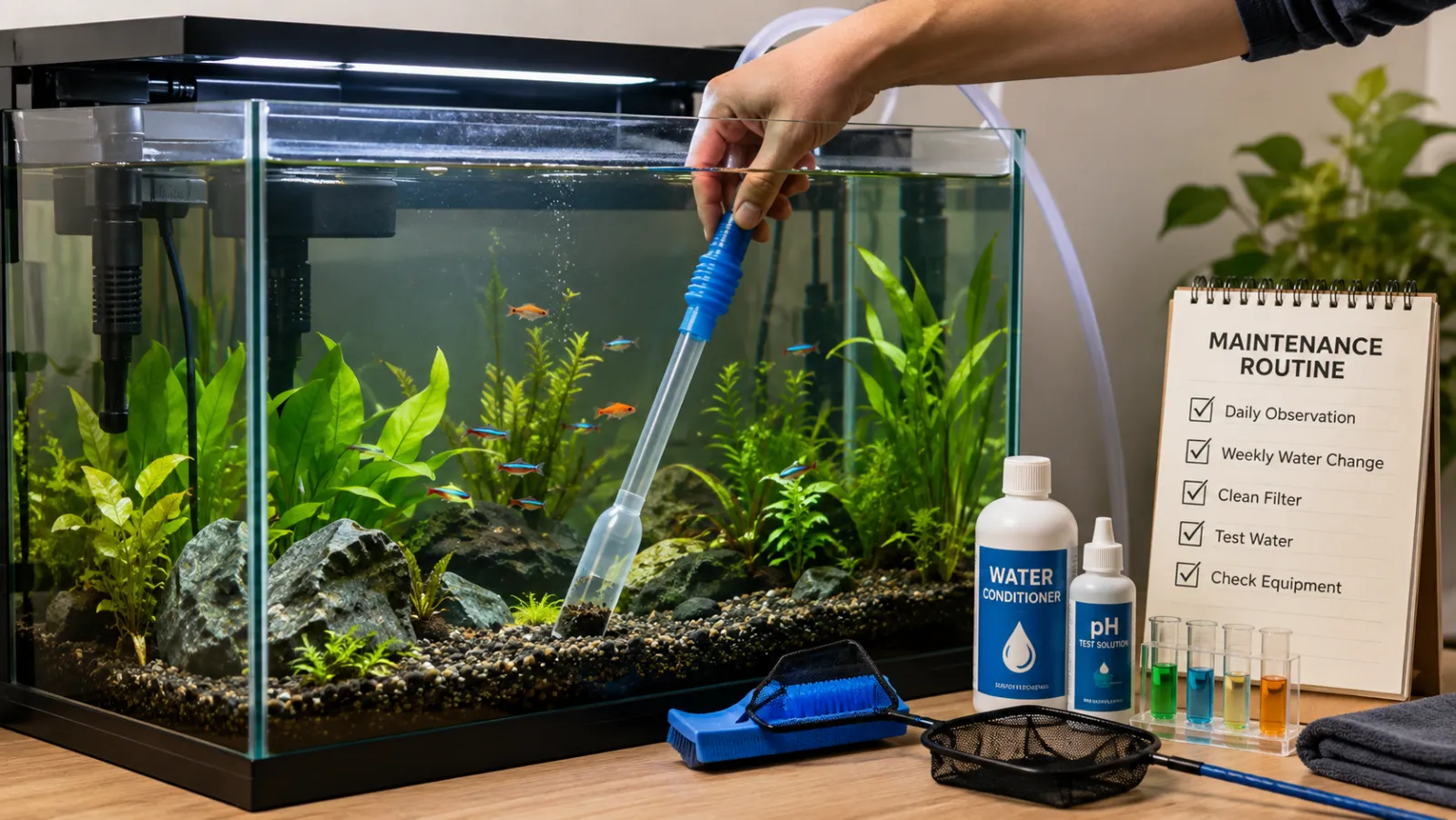
6. Perform Regular Maintenance
Routine maintenance keeps the aquarium healthy.
Weekly tasks:
- Partial water changes
- Gravel cleaning
- Glass cleaning
- Equipment inspection
Consistency is more important than deep cleaning.
Real-World Aquarium Care Examples
Example 1: Family Home Aquarium
A family sets up a 60- litre freshwater tank with guppies and tetras. Weekly water changes and proper feeding help maintain excellent water quality and healthy fish.
Example 2: Classroom Aquarium
A teacher uses an aquarium as a learning tool. Students observe fish behavior, learn about ecosystems, and participate in simple maintenance activities under supervision.
Example 3: First-Time Hobbyist
A beginner starts with a small community tank. By following a structured aquarium care guide and testing water regularly, they avoid common issues such as algae growth and fish stress.
Benefits of Following an Aquarium Care Guide
Proper aquarium care offers many advantages.
Healthier Fish
Stable water conditions reduce stress and disease.
Cleaner Aquarium
Routine maintenance prevents waste buildup and cloudy water.
Lower Maintenance Costs
Preventing problems is often less expensive than treating fish illnesses.
Better Learning Experience
Aquariums provide opportunities to learn about biology, ecosystems, and responsibility.
Greater Enjoyment
Healthy fish are more active, colorful, and enjoyable to observe.
Long-Term Success
Consistent care creates a sustainable aquatic environment.
Beginners vs Experts: Understanding the Difference in Aquarium Care
As aquarium owners gain experience, their approach to fishkeeping often changes. While beginners focus on learning the basics, experienced aquarists develop advanced skills that help them create more complex and stable aquatic environments.
Beginner Aquarium Owners
Beginners typically start with simple aquarium setups and easy-to-care-for fish species. Their primary goal is to learn the fundamentals of fish care and maintain stable water conditions.
Common beginner practices include:
- Keeping hardy fish species such as guppies, mollies, and tetras
- Using standard aquarium equipment
- Following basic feeding schedules
- Performing regular water changes
- Learning how to test water quality
For beginners, consistency and patience are the keys to success.
Expert Aquarium Owners
Expert aquarists have a deeper understanding of fish behavior, water chemistry, and ecosystem management. They often maintain larger aquariums, keep specialized fish species, and create advanced aquascapes.
Common expert practices include:
- Managing complex aquatic ecosystems
- Breeding fish and raising fry
- Using advanced filtration systems
- Monitoring detailed water parameters
- Designing heavily planted or themed aquariums
Experts focus on optimizing every aspect of the aquarium to support long-term fish health and ecosystem balance.
Which Approach Is Best?
Every expert aquarium owner started as a beginner. New fishkeepers should focus on mastering basic aquarium care before moving on to advanced techniques. A strong foundation in tank maintenance, water quality management, and fish care will make future aquarium projects much more successful.
By following this aquarium care guide, beginners can gradually develop the skills and confidence needed to become experienced and knowledgeable aquarists.
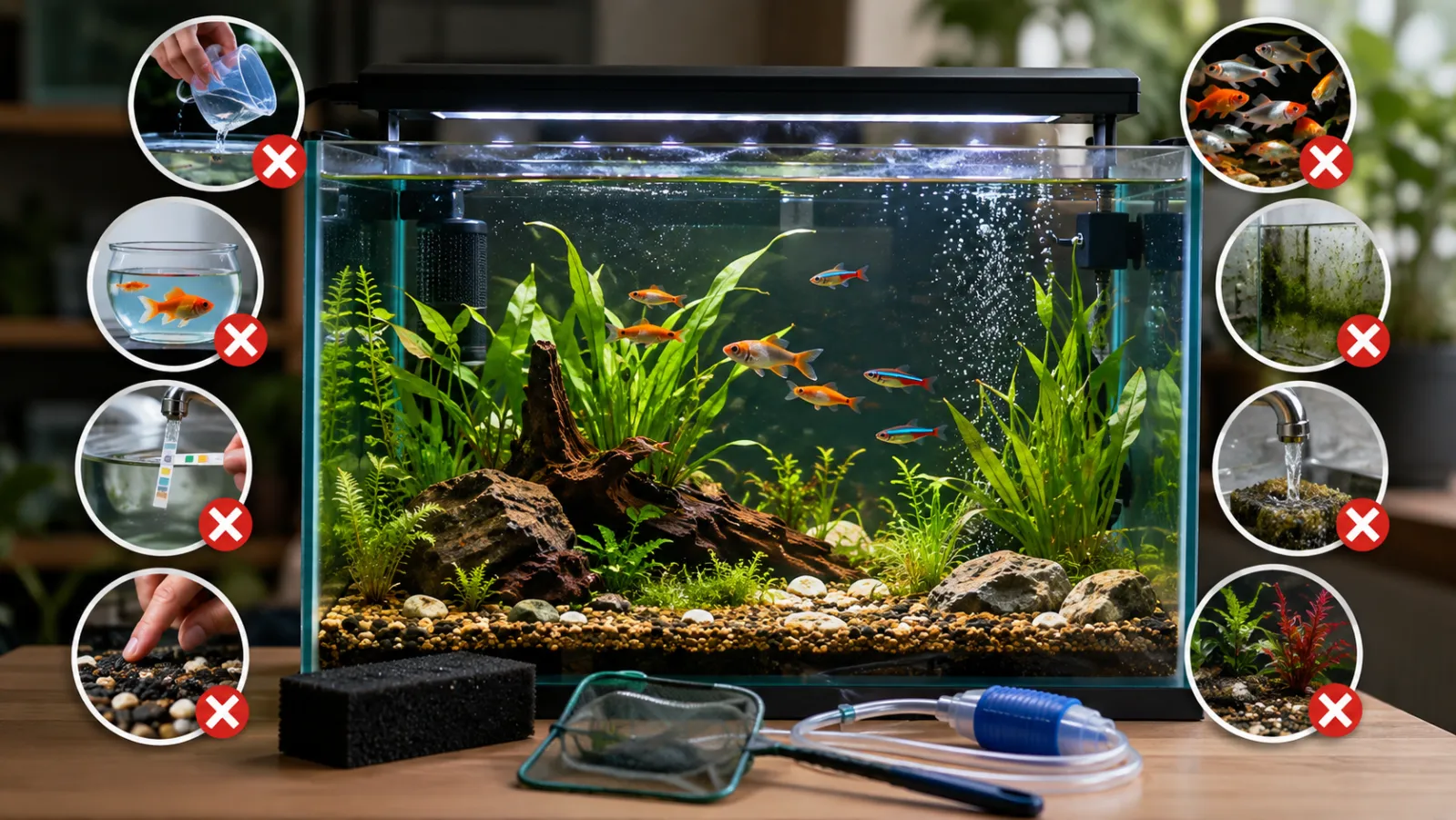
Common Aquarium Care Mistakes Beginners Should Avoid
Overfeeding Fish
Excess food pollutes the water and can cause health issues.
Adding Too Many Fish
Overcrowding increases waste and stress.
Skipping Water Changes
Poor water quality is a leading cause of fish problems.
Ignoring Water Testing
Water may appear clean while harmful chemicals remain present.
Cleaning Everything at Once
Removing all beneficial bacteria can disrupt the aquarium ecosystem.
Choosing Incompatible Fish
Different species may have different water and behavior requirements.
Useful Tools, Tips, and Aquarium Care Frameworks
Essential Aquarium Tools
- Water testing kit
- Gravel vacuum
- Fish net
- Algae scraper
- Water conditioner
- Thermometer
Beginner Aquarium Care Framework
Follow the simple "TEST" method:
T – Test Water
Check water quality regularly.
E – Examine Fish
Watch for signs of illness or unusual behavior.
S – Schedule Maintenance
Perform weekly cleaning and water changes.
T – Track Feeding
Maintain a consistent feeding routine.
Helpful AI Tools for Aquarium Management
Modern AI tools can help aquarium owners:
- Set maintenance reminders
- Track water testing schedules
- Create care checklists
- Organize feeding routines
These tools improve consistency and reduce forgotten tasks.
Key Takeaways
- An aquarium care guide helps beginners create a healthy aquatic environment.
- Proper tank setup is the foundation of successful fishkeeping.
- Water quality is more important than tank appearance.
- Regular testing and maintenance prevent most aquarium problems.
- Overfeeding and overcrowding are common beginner mistakes.
- Consistent care leads to healthier fish and cleaner aquariums.
- Simple routines make aquarium maintenance easier and more effective.
Frequently Asked Questions
How often should I clean my aquarium?
Perform partial water changes weekly and clean equipment as needed. Avoid replacing all water at once.
What is the most important part of aquarium care?
Maintaining stable water quality is the most important factor in fish health.
How often should fish be fed?
Most fish should be fed once or twice daily in small amounts.
Can beginners keep tropical fish?
Yes. Many tropical fish species are beginner-friendly when proper heating and filtration are provided.
Why is my aquarium water cloudy?
Cloudy water can result from overfeeding, bacterial blooms, or inadequate filtration.
How long should a new aquarium cycle before adding fish?
Most aquariums require several weeks to complete the cycling process and establish beneficial bacteria.
Conclusion
A successful aquarium starts with proper planning, consistent maintenance, and a commitment to learning. By following this aquarium care guide, beginners can create a healthy environment where fish thrive and aquatic ecosystems remain balanced.
Whether you are setting up a home aquarium, classroom tank, or personal hobby project, applying these aquarium care principles will help you enjoy a cleaner, healthier, and more rewarding fish keeping experience.
Ready to start your fish keeping journey? Begin with the right setup, follow a regular care routine, and watch your aquarium flourish over time.