Cats do not have the same nutritional needs throughout their lives. A growing kitten requires a different balance of nutrients and calories than a healthy adult cat, while an older cat may need adjustments based on changes in activity, muscle mass, appetite, teeth, digestion, or overall health.
Choosing age-appropriate food is therefore an important part of responsible cat care. The goal is not simply to find the most expensive food or the product with the most attractive packaging. A good diet should provide complete and balanced nutrition, appropriate calories, adequate protein, essential vitamins and minerals, and the right nutritional profile for the cat's current stage of life.
For cat owners across North America, commercial kitten food, adult maintenance formulas, and senior diets provide convenient options. However, life-stage labels are only the starting point. Your cat's individual health, body condition, activity level, and veterinary needs should also influence feeding decisions.
1. Kitten Nutrition: Supporting Rapid Growth
Kittens grow remarkably quickly during their first year of life. Their bodies are developing bones, muscles, organs, nervous systems, and immune defenses, which creates much higher nutritional demands than those of most adult cats.
Kitten food is specifically formulated to provide the energy and nutrients required during this growth period.
Protein is especially important because growing kittens need amino acids to build and maintain developing tissues. Their diets also need appropriate levels of fat, vitamins, minerals, and other essential nutrients.
A kitten should generally receive food formulated for growth or for all life stages that is complete and balanced for growth.
Do not assume that adult cat food is suitable for a rapidly growing kitten simply because it contains protein. The overall nutrient balance matters.
Kittens also tend to have smaller stomachs and high energy requirements, which means they may need several meals throughout the day rather than one or two large meals.
2. Choosing the Best Kitten Food
When shopping for kitten food, start with the nutritional adequacy statement.
Look for food that is complete and balanced for growth or suitable for all life stages.
Both wet and dry kitten food can be appropriate.
Wet kitten food provides substantial moisture and can be appealing to young cats because of its soft texture and strong aroma.
Dry kitten food is convenient, easy to measure, and simple to store.
Some owners use combination feeding, offering both wet and dry food as part of the kitten's overall daily calorie allowance.
The most important consideration is not whether the food is canned or dry. It is whether the diet provides the nutrients a growing kitten requires.
Avoid feeding a kitten an unbalanced homemade diet unless it has been professionally formulated specifically for that kitten.
3. How Often Should Kittens Eat?
Young kittens generally benefit from multiple meals throughout the day.
Because their stomachs are small and their energy requirements are high, dividing their daily food into several meals can make it easier for them to consume enough nutrition without overwhelming their digestive system.
Very young kittens may require particularly frequent feeding, while older kittens can gradually move toward a more structured feeding routine.
As the kitten approaches adulthood, the feeding schedule can be adjusted based on its growth, body condition, and individual needs.
Always monitor the kitten's growth and development rather than simply increasing food whenever it seems hungry.
A veterinarian can help determine whether the kitten is growing appropriately.
4. Adult Cats Need Maintenance Nutrition
Once a cat reaches adulthood, its nutritional priorities change.
An adult cat is no longer using large amounts of energy to build new tissues at the rapid rate seen during kittenhood. The focus shifts toward maintaining healthy muscles, organs, body condition, immune function, and normal daily activity.
Adult maintenance formulas are designed to provide balanced nutrition without the higher energy requirements associated with growth.
An adult cat's calorie needs can vary significantly.
A highly active cat may require more calories than a sedentary indoor cat. Neutered or spayed cats may also have different energy requirements.
This is why simply following a generic feeding amount may not produce the right result for every adult cat.
Monitor your cat's body condition regularly and adjust portions when appropriate.
5. Protein Remains Important for Adult Cats
Protein does not become unimportant when a kitten becomes an adult.
Adult cats still require protein to maintain muscle tissue and support normal physiological functions.
Cats are obligate carnivores, and their nutritional biology means they have specific requirements for amino acids and other nutrients.
However, "more protein" is not automatically better.
A food should provide an appropriate and balanced nutrient profile rather than focusing on one nutrient in isolation.
Healthy adult cats can thrive on a properly formulated complete and balanced diet appropriate for their life stage.
If your cat has a medical condition, protein requirements may need to be considered differently. For example, cats with certain kidney-related conditions may require veterinary nutritional management.
Do not make major dietary changes based solely on general internet advice.
6. Portion Sizes Often Change With Age
One of the biggest feeding mistakes owners make is continuing to feed the same amount throughout a cat's entire life.
A kitten's energy requirements can be relatively high because of rapid growth.
An adult cat may need fewer calories relative to its body weight.
An older cat may experience further changes in activity and energy requirements.
Portion sizes should therefore be reviewed as your cat moves from one life stage to another.
Measure food rather than relying on an overflowing bowl.
A measuring cup can be useful, while a kitchen scale can provide even greater accuracy.
Remember that treats also contribute calories.
If your cat receives several treats throughout the day, those calories should be considered when planning the total daily intake.
7. Vitamins and Minerals Are Essential
Cats require a carefully balanced range of vitamins and minerals.
These nutrients support bones, teeth, metabolism, immune function, muscles, nerves, and numerous other biological processes.
However, more vitamins are not necessarily better.
A complete and balanced commercial diet is generally formulated to provide essential nutrients in appropriate amounts.
Adding vitamin supplements without veterinary advice can create nutritional imbalances.
This is especially important for kittens because excessive or insufficient amounts of certain nutrients during growth can have serious consequences.
If you believe your cat needs a supplement, discuss it with your veterinarian before adding it to the diet.
8. Senior Cat Nutrition
Senior cats can have very different nutritional needs depending on their health.
Some older cats remain active and maintain excellent body condition. Others experience changes in muscle mass, appetite, digestion, teeth, mobility, or underlying health.
There is no single "senior diet" that is perfect for every older cat.
Some senior formulas are designed to provide appropriate calories and nutrients for aging cats, but the right choice depends on the individual animal.
Older cats may benefit from diets that are highly palatable and easy to eat.
Soft food can be useful for cats with dental discomfort or difficulty chewing, although dental problems should always be evaluated by a veterinarian.
Some senior cats may also require a therapeutic diet for a diagnosed medical condition.
9. Protein and Muscle Health in Older Cats
Maintaining muscle mass becomes increasingly important as cats age.
Senior cats can experience gradual muscle loss, sometimes referred to as age-related muscle wasting.
Adequate nutrition and appropriate protein intake can help support muscle maintenance, but the nutritional strategy should be individualized.
Do not automatically restrict protein simply because a cat is old.
At the same time, cats with specific medical conditions may need diets with carefully controlled levels of certain nutrients.
This is why veterinary assessment becomes increasingly valuable as cats get older.
Regular checkups can help identify changes in body condition and muscle mass before they become severe.
10. Feeding Older Cats More Carefully
Older cats may have different appetites and eating habits.
Some senior cats eat less because of dental discomfort, reduced sense of smell, illness, or other age-related changes.
Others may become unusually hungry or lose weight despite eating normally.
A noticeable change in appetite should not simply be dismissed as "old age."
Unexplained weight loss, increased thirst, increased urination, vomiting, diarrhea, difficulty chewing, or changes in eating habits can indicate an underlying health problem.
Older cats benefit from regular veterinary examinations, particularly when changes in weight or appetite occur.
Food should also be served in a comfortable location where the cat can eat without being disturbed.
11. Wet Food and Soft Food for Senior Cats
Wet food can be especially useful for some older cats.
Its soft texture may be easier to eat for cats with dental problems or reduced chewing ability.
It also provides additional dietary moisture.
However, wet food is not automatically necessary for every senior cat.
Some older cats prefer dry kibble and continue eating it comfortably.
If an older cat suddenly begins avoiding dry food, dropping kibble, chewing strangely, or showing signs of mouth discomfort, the issue should be investigated rather than solved simply by switching foods.
Dental disease is common in cats, and appropriate veterinary dental care is important.
12. Feeding Frequency Throughout Life
Feeding frequency often changes with age.
Kittens generally benefit from several meals throughout the day.
Healthy adult cats may do well with two or more measured meals depending on their individual needs and household routine.
Senior cats may also benefit from smaller, more frequent meals if their appetite has decreased or if they prefer smaller portions.
Some cats naturally prefer grazing, while others do better with scheduled meals.
The most important principles are appropriate total calorie intake, balanced nutrition, and consistent monitoring.
A feeding schedule should also make it easy for the owner to recognize changes in appetite.
If food is constantly available, it may be difficult to know whether a cat has suddenly started eating less.
13. Transitioning From Kitten to Adult Food
One of the major dietary transitions in a cat's life occurs when a kitten moves to an adult maintenance diet.
The timing depends on the individual cat, breed, growth pattern, and food formulation.
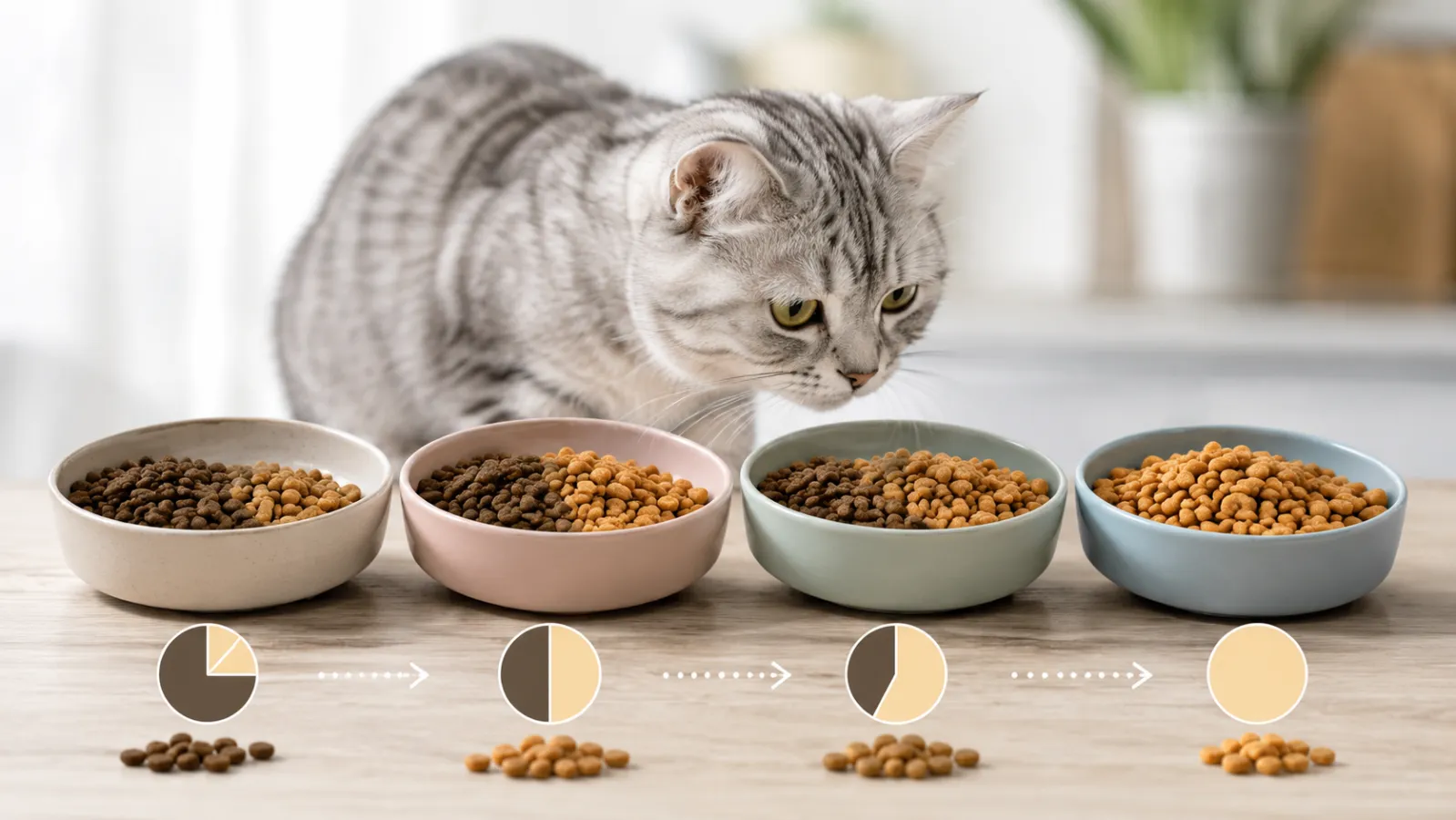
Rather than changing food suddenly, gradually introduce the new diet.
You can begin by mixing a small amount of the new food with the existing kitten food and slowly increase the proportion over time.
This gradual approach can make the transition easier for the digestive system and may improve acceptance.
Monitor the kitten's appetite, stool quality, weight, and overall behavior during the transition.
If digestive problems occur or the kitten refuses to eat, consult a veterinarian.
14. Transitioning to Senior Nutrition
Moving from an adult diet to a senior formula is not always mandatory.
Some older cats do perfectly well on a high-quality adult maintenance diet.
Others may benefit from a senior-specific formula or a therapeutic diet based on changes in health.
The decision should be based on your cat's individual nutritional and medical needs rather than age alone.
Before changing the diet of an older cat, consider body weight, muscle condition, dental health, appetite, activity level, and medical history.
A veterinarian can help determine whether a dietary change is appropriate.
15. Special Nutritional Care for Older Cats
Senior cats deserve closer nutritional monitoring than younger adults.
Check their weight regularly and pay attention to muscle condition.
Monitor how much food they consume and whether their eating habits have changed.
Watch for difficulty chewing or swallowing.
Pay attention to changes in thirst and urination.
Look for changes in activity and grooming.
These observations can help identify health issues early.
Older cats may also benefit from food and water bowls that are easy to access. Cats with arthritis or reduced mobility may have difficulty reaching elevated or distant feeding stations.
Making food and water easily accessible can help maintain regular eating and drinking.
16. What About Treats?
Treats can be appropriate at every life stage, but they should be used in moderation.
Kittens can receive small treats during positive socialization and training.
Adult cats can use treats as rewards or enrichment.
Senior cats may also enjoy treats, provided they fit within their nutritional and calorie requirements.
Low-calorie treats can be especially useful for cats that are prone to weight gain.
Treats should not replace complete and balanced meals.
If your cat receives multiple treats throughout the day, reduce other calories appropriately rather than simply adding treats on top of the normal daily food allowance.
17. Common Feeding Mistakes Across Life Stages
Some feeding mistakes occur regardless of age.
One common mistake is feeding the same food and portion size throughout a cat's entire life without reassessing its needs.
Another is choosing food based entirely on marketing claims.
Some owners also give too many treats or table scraps.
Sudden dietary changes can cause digestive problems or food refusal.
Another mistake is assuming that supplements are necessary simply because a cat is older.
A complete and balanced diet generally provides essential nutrients without additional supplementation unless a veterinarian recommends otherwise.
Finally, owners sometimes ignore gradual weight changes.
Regular monitoring can identify problems before they become more serious.
18. A Simple Life-Stage Feeding Guide
A practical approach looks like this:
Kitten:
Feed a complete and balanced growth diet.
Offer appropriately sized meals throughout the day.
Monitor growth and body condition.
Use wet food, dry kitten food, or a combination according to nutritional needs and preference.
Adult:
Use a complete and balanced maintenance diet.
Control portions according to calorie requirements.
Monitor body condition and weight.
Adjust feeding based on activity and lifestyle.
Senior:
Monitor weight and muscle condition more closely.
Consider palatability and ease of eating.
Use wet or soft food when appropriate.
Watch for appetite, dental, hydration, and health changes.
Consult a veterinarian about therapeutic or specialized diets when necessary.
This framework is a starting point rather than a universal prescription.
Final Thoughts
The best food for a cat depends largely on its stage of life and individual health.
Kittens need nutrition that supports rapid growth and development. Adult cats need balanced maintenance nutrition that supports healthy body condition and everyday activity. Senior cats may require closer monitoring and, depending on their health, changes in texture, calories, nutrients, or feeding frequency.
Kitten food, adult formulas, senior diets, wet food, dry kibble, and soft food can all have an appropriate place in feline nutrition.
The key is to choose a complete and balanced diet appropriate for the cat's current life stage, measure portions carefully, provide fresh water, monitor body condition, and adjust the feeding plan when your cat's needs change.
As your cat grows from kittenhood into adulthood and eventually reaches its senior years, nutrition should evolve with it.
Regular veterinary checkups are especially valuable because cats can hide signs of illness. Professional guidance can help identify changes in weight, muscle condition, appetite, dental health, and other factors that may influence dietary needs.
Good nutrition is not about finding one food that works forever. It is about adapting your cat's diet as its body, lifestyle, and health change.
By feeding appropriately at every stage of life, you can provide the nutritional foundation your cat needs to grow, maintain healthy muscles and body condition, and enjoy a comfortable and active life for years to come.