
Your dog probably knows when dinner is coming before you do.
Walk towards the kitchen at the usual time, and suddenly there they are. Pick up the leash, and the tail starts wagging. Turn off the television at night, and your dog may already be heading towards their bed.
Dogs are remarkably good at learning the rhythm of a household.
That is why a simple daily routine can make such a difference. It helps your dog understand what happens next and provides regular opportunities to eat, exercise, play, learn and rest.
The important word, however, is routine—not a rigid schedule.
You do not have to feed your dog at exactly 7:03 every morning or panic because today's walk happens an hour late. A good routine simply gives your dog a few dependable landmarks throughout the day.
For more practical advice, explore our guide to creating a daily routine for dogs.
A Simple Daily Routine for an Adult Dog
Here is a practical starting point for a typical adult dog.
Morning
- Wake up and take a bathroom break.
- Serve breakfast.
- Enjoy a walk, play session or sniffing adventure.
- Allow some quiet time while the household gets on with the day.
Midday
- Offer a bathroom break.
- Spend a little time playing or practising training.
- Provide enrichment activities and rest.
Evening
- Serve dinner.
- Go for a walk or enjoy active play.
- Spend five minutes practising commands or playing a simple game.
- Relax together as a family.
- Offer a final bathroom break before bedtime.
The exact times matter less than creating a pattern your dog can recognize.
Your routine must also work for your life. A schedule that looks wonderful on paper but is impossible to maintain is not a good schedule.
Start With the Things Your Dog Really Needs
Meals
Many healthy adult dogs eat twice a day, usually in the morning and evening.
Try to keep mealtimes reasonably consistent and measure food portions instead of continually topping up the bowl. Treats count too, and those innocent little extras can add up surprisingly quickly.
Puppies may need more frequent meals depending on their age, growth and nutritional needs. Ask your veterinarian if you are unsure how much or how often your dog should eat.
Bathroom Breaks
Do not make your dog wait until they are standing at the door giving you the look.
Good times to offer a bathroom break include:
- First thing in the morning
- After meals
- After active play
- After a long nap
- Before bedtime
Puppies need considerably more frequent opportunities than most adult dogs because they are still developing bladder control and learning where they should go.
Regular opportunities help prevent accidents and make house training easier. For more guidance, read our article on house training and potty training.
Exercise
There is no magic number of minutes that works for every dog.
A young, energetic working breed and a sleepy senior companion may have completely different ideas about the perfect afternoon.
Consider your dog's age, breed, size, health, fitness, energy level and personality when planning exercise.
Remember that a walk is not just cardio.
Let your dog sniff. We humans sometimes want to march from point A to point B, while our dogs want to investigate the fascinating message another dog left on a lamppost three hours earlier.
Sniffing and exploring are part of the experience. Mental stimulation matters just as much as finding appropriate ways to move their bodies.
Five Minutes of Training Is Enough to Matter
Training does not have to become another major item on your daily to-do list.
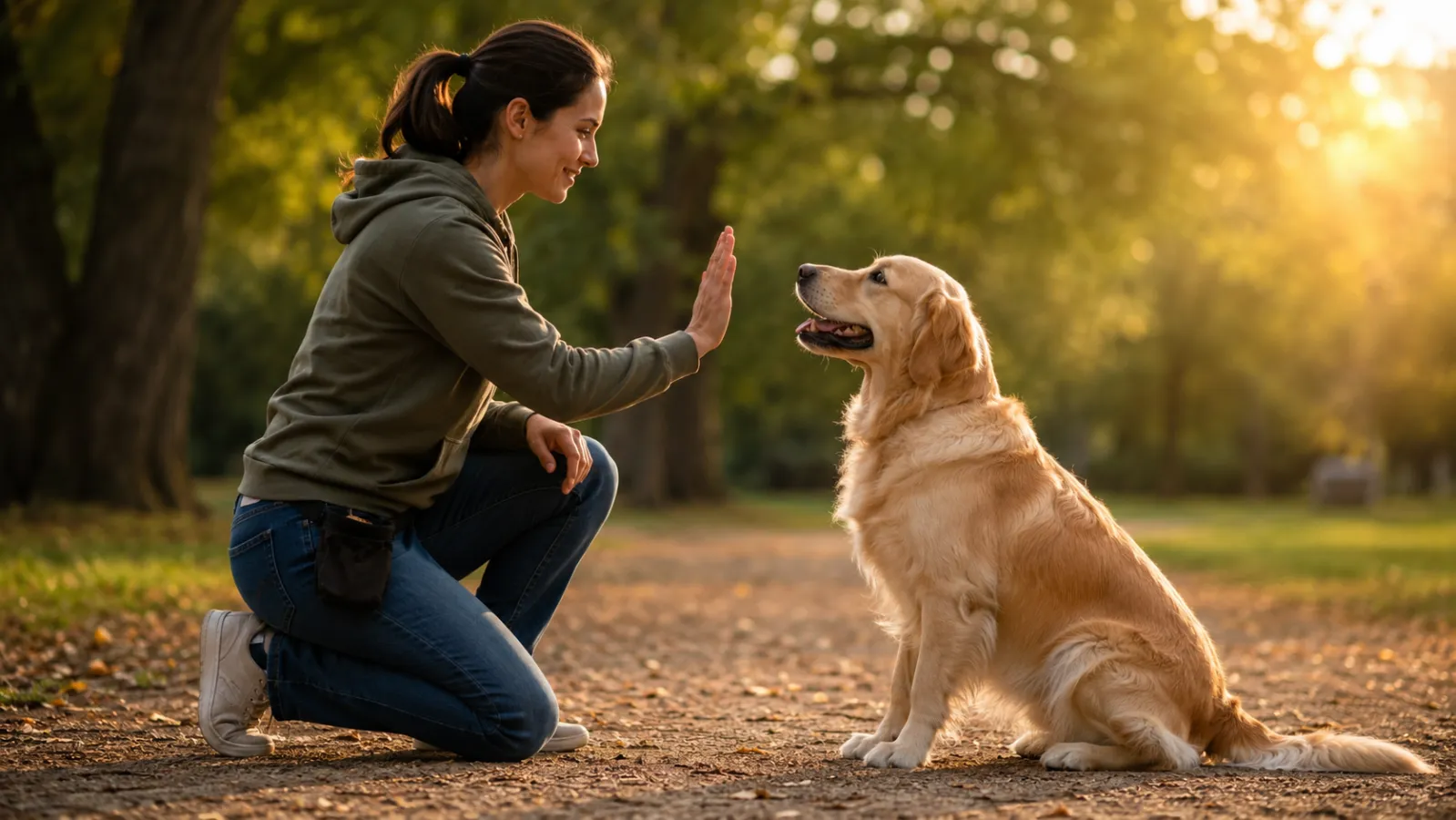
Five enjoyable minutes can be more useful than one long session that leaves both of you frustrated.
Practise simple commands such as:
- Sit
- Stay
- Come
- Leave it
- Wait at the door
- Walk politely beside you
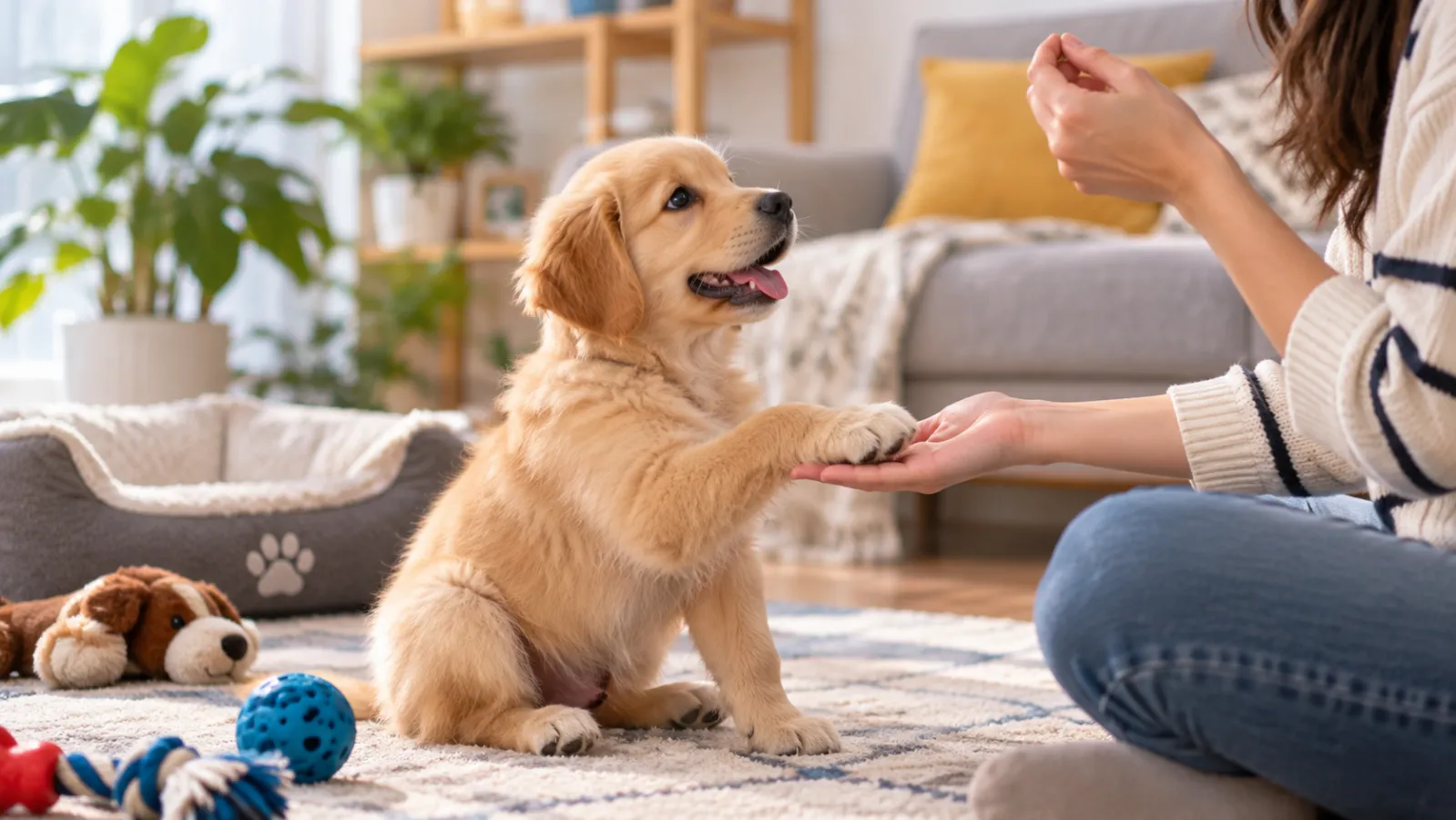
You can also practise during normal activities. Ask your dog to sit before putting down the food bowl or wait before opening the door.
Short, positive repetitions help build good habits over time.
Want to teach your dog essential skills? Explore our guide to basic obedience commands.
Do Not Forget the Fun Part
A routine should not make your relationship with your dog feel like a checklist.
Some of the best parts of the day have no serious purpose whatsoever.
Throw a ball. Play tug. Hide a treat and let your dog find it. Brush their coat, scratch their favourite spot or simply sit together.
Dogs need food and exercise, but they also need interaction with the people they trust.
Regular play and affection can strengthen your bond while giving your dog enjoyable ways to use their energy.
Rest Is Part of the Routine Too
One mistake people sometimes make, especially with puppies, is assuming that more activity is always better.
It is not.
Dogs need downtime. Puppies sleep a great deal while growing, and overtired puppies can sometimes become little furry tornadoes rather than peacefully falling asleep.
Adult and senior dogs also benefit from having a comfortable place where they can rest without constantly being disturbed.
An easy bedtime pattern might be:
Final bathroom break → quiet family time → bed.
Repeat it often enough, and your dog may start winding down before you do.
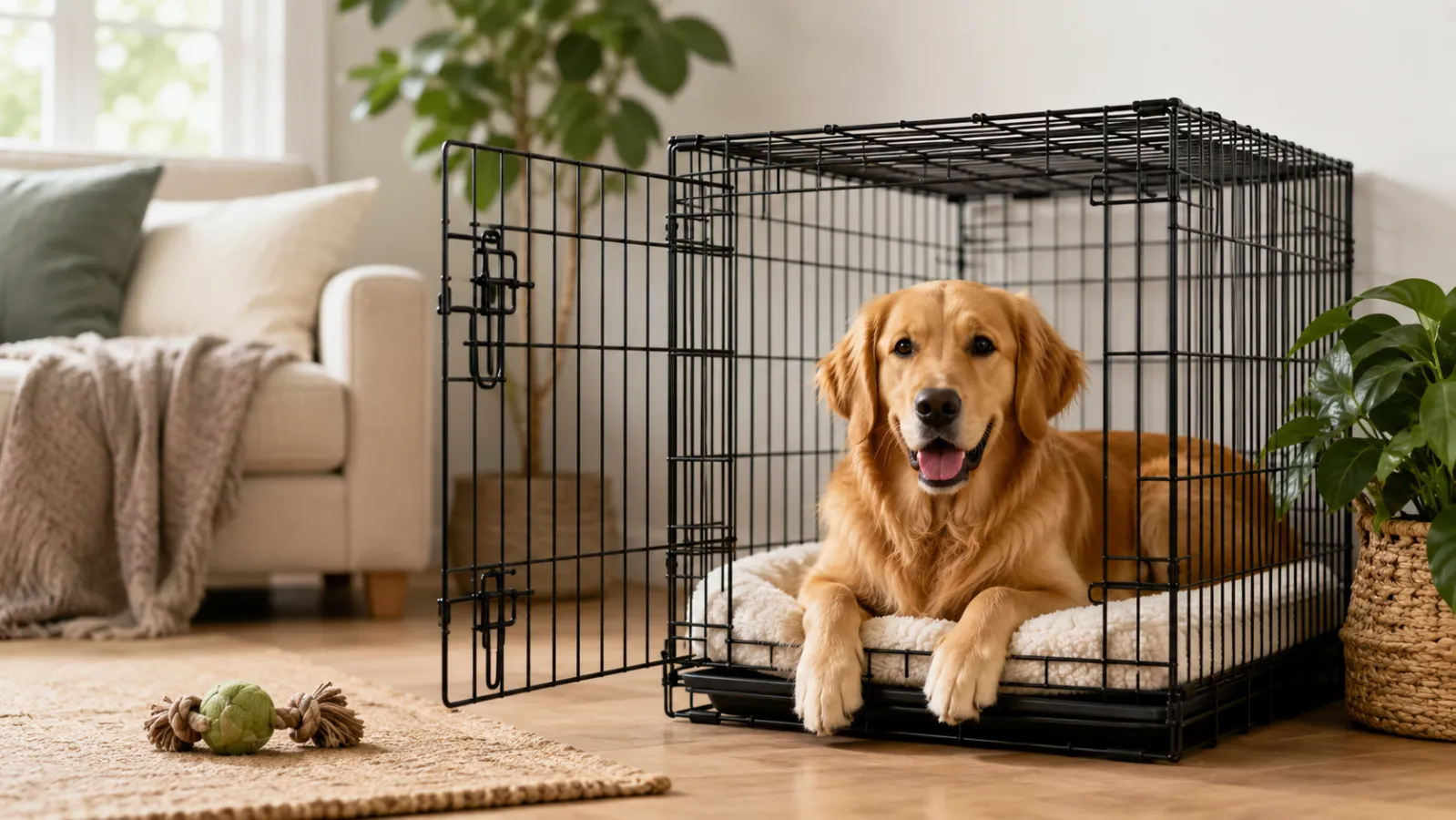
If you use a crate, introduce it gradually and make it a comfortable, positive place rather than a punishment. Our guide to using crate training properly explains how to make the experience more comfortable for your dog.
What Changes With a Puppy?
A puppy's day contains many of the same activities as an adult dog's day, but in smaller and more frequent pieces.
Bathroom break → meal → short play or training → bathroom break → sleep.
Then repeat.
Do not expect a young puppy to follow an adult dog's bathroom schedule, exercise level or attention span.
This is also the age when simple habits begin to stick, so consistency pays off enormously. Use positive reinforcement, supervise your puppy and allow plenty of time for rest.
For more advice on early training, read Puppy Training: Building Good Habits from Day One.
What Changes With a Senior Dog?
The structure can remain familiar even as your dog slows down.
Senior dogs may appreciate:
- Shorter or gentler walks
- Comfortable resting areas
- Easier access to bathroom breaks
- Gentle games and mental stimulation
- More time to get up, move around or navigate stairs
Watch the dog in front of you rather than automatically following the routine they had five years ago.
If you notice a significant change in appetite, thirst, bathroom habits, mobility, sleep, energy or behaviour, do not simply assume it is old age. Speak with your veterinarian.
Do Not Make the Routine Too Perfect
Here is something worth remembering: life happens.
You sleep in. It rains. A meeting runs late. The children have somewhere to be.
Your dog does not need every day to be identical.
What matters is that the major pieces remain dependable: food, bathroom opportunities, appropriate exercise, attention, mental stimulation and rest.
Training also takes patience. If your dog struggles to learn a new habit, return to simple steps and reward progress instead of expecting perfection.
Our guide on being patient and consistent with dog training offers more practical advice on helping dogs develop lasting habits.
Think rhythm, not stopwatch.
A Routine Should Make Life Better, Not Harder
If your dog's daily schedule requires three alarms, a spreadsheet and military-level precision, you have probably gone too far.
Start with a few simple anchors:
- A morning bathroom break
- Regular meals
- Daily exercise and sniffing
- A few minutes of training
- Time together
- A final bathroom break
- Plenty of sleep
Then adjust as you get to know your dog.
The best routine is not the one somebody posts online as perfect. It is the one that keeps your dog healthy, comfortable and happy—and that your family can actually maintain every day.
Final Thoughts
Creating a daily routine for your dog does not have to be complicated. Small, dependable habits can make everyday life easier for both you and your pet.
Focus on regular meals, bathroom breaks, appropriate exercise, short training sessions, playtime and enough rest. Adapt these activities to your dog's age, health and personality, and remember that some flexibility is perfectly normal.
With patience and consistency, your dog can learn what to expect throughout the day, giving them greater comfort and helping your family build a stronger bond.
For more pet care tips, training advice and practical guides, visit YourPetsWorld.org.
References
- American Veterinary Society of Animal Behavior (AVSAB) — Position Statements
- RSPCA — Puppy and Dog Care Guides
- ASPCA — General Dog Care and House Training Basics
- American Kennel Club (AKC) — Dog Exercise and Walking Guides
How we create our content: Our articles are developed using AI-assisted research, cross-checked with multiple AI systems, and validated against reputable professional and authoritative sources before publication.