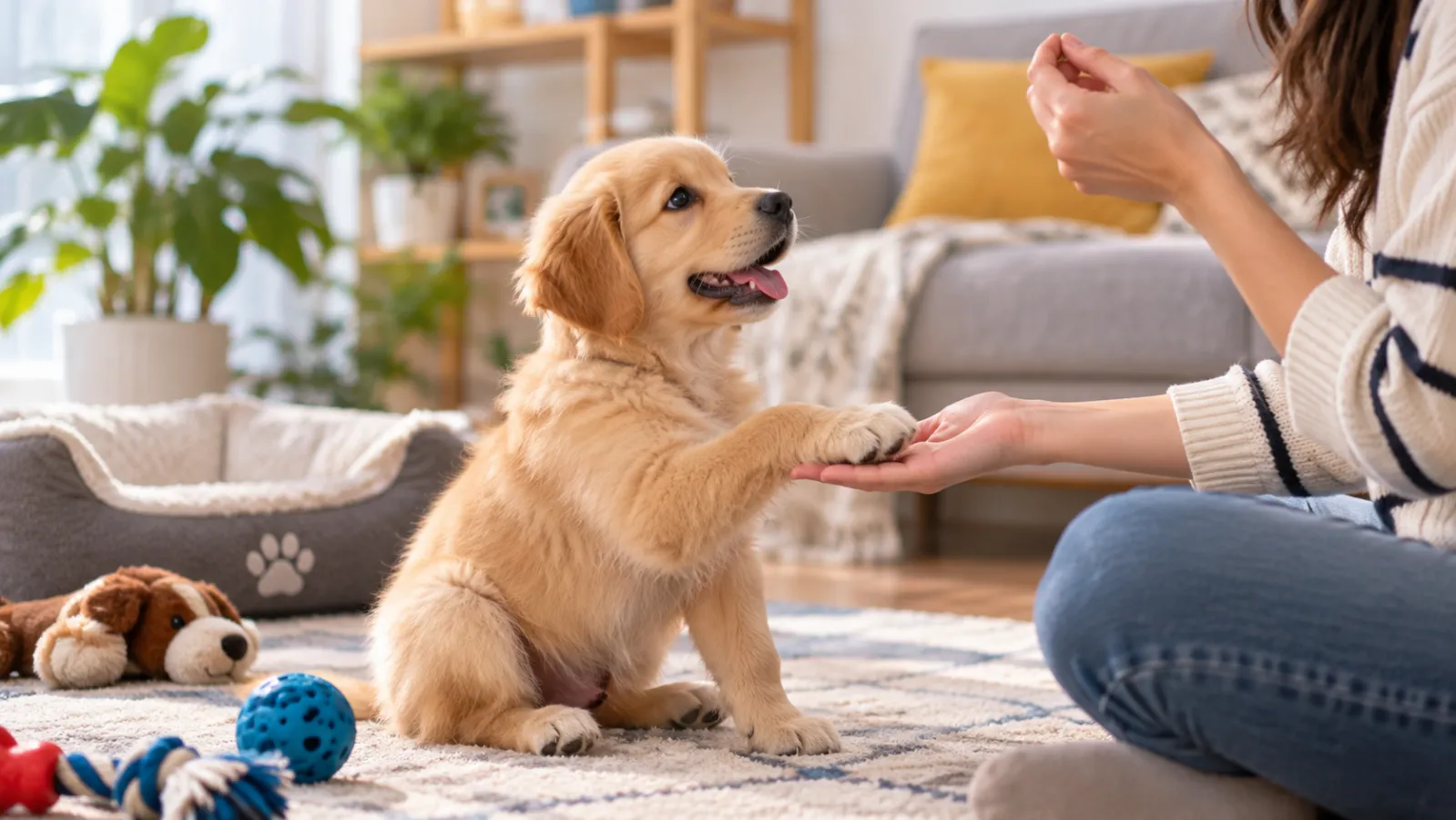

Training a dog can be one of the most rewarding parts of sharing your life with them. It can also test your patience.
One day, your dog may seem to understand “sit” perfectly. The next day, they look at you as if they have never heard the word before. That is normal. Dogs learn at different speeds, and even the same dog can behave differently depending on their surroundings, motivation, energy level, and previous experiences.
Good training is not about getting everything right on the first try. It is about giving your dog clear guidance, plenty of practice, and a reason to keep trying.
Whether you have just brought home a puppy or you are helping an older dog learn new habits, two things can make a huge difference: patience and consistency.
If you are still deciding what type of dog might fit your home and daily routine, our guide to Choosing the Right Dog Breed for Your Lifestyle can help you think about factors such as living space, activity level, family life, and time commitment.
What Do Patience and Consistency Really Mean?
Patience means giving your dog enough time to understand what you are asking.
A puppy learning “stay” for the first time cannot be expected to behave like a dog that has practised it for months. Some dogs pick up a new cue quickly. Others need more repetition, shorter sessions, or a different type of reward.
Consistency is about making the rules predictable.
Imagine that your dog is not allowed on the sofa. One family member says “off” every time the dog climbs up, while another person invites the dog onto the sofa in the evening.
From the dog's point of view, the rule is confusing.
The dog is not necessarily being stubborn. They are simply receiving two different messages.
The same principle applies to feeding, walking, jumping on visitors, coming when called, and other everyday behaviours. When everyone in the household follows the same basic expectations, your dog has a much easier time understanding what you want.
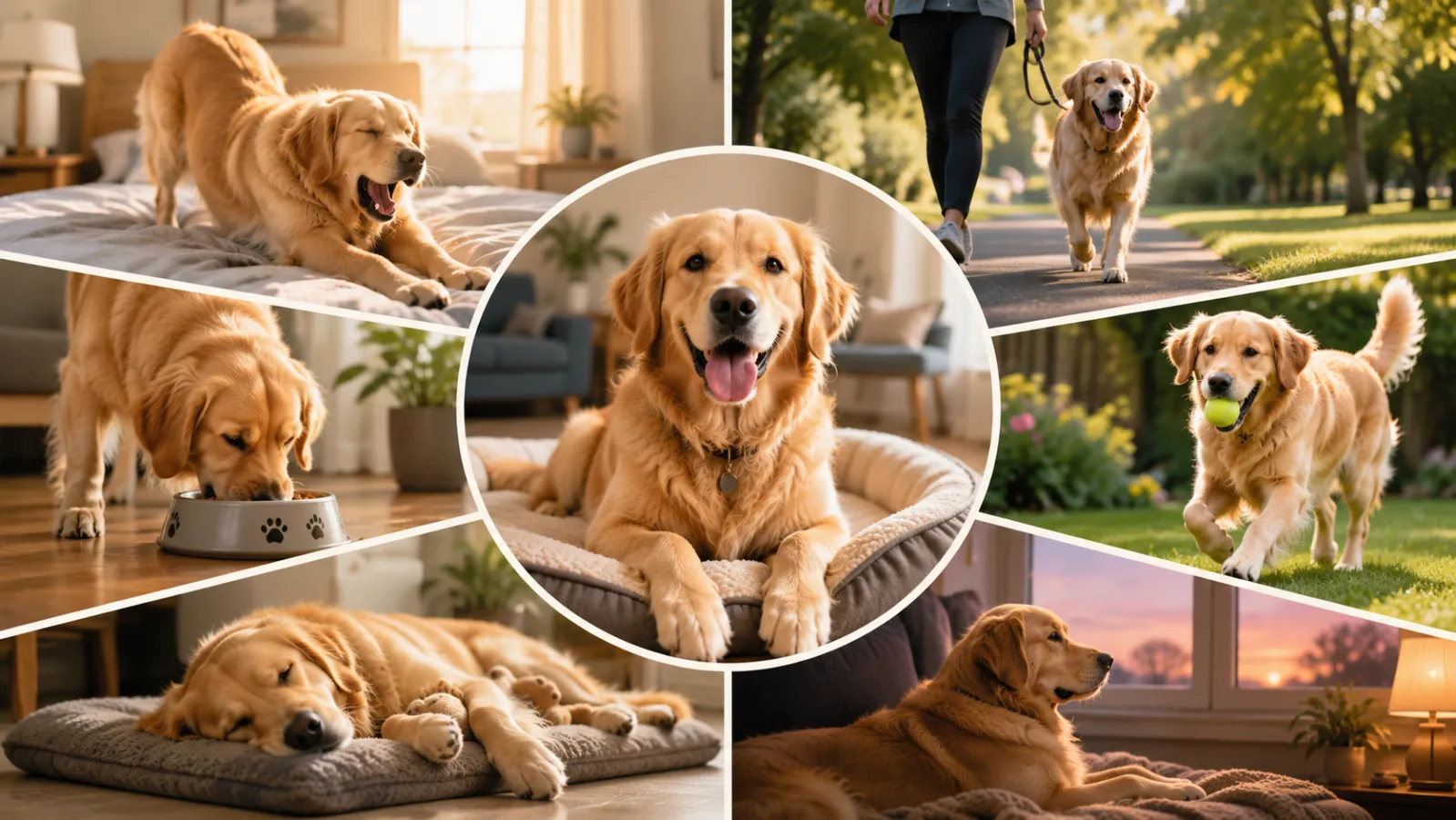
A predictable daily routine can help too. Regular meals, walks, play, rest, and short training sessions give dogs a clearer idea of what to expect throughout the day.
Why Patience Makes Training Easier
It is tempting to think that successful training means having a perfectly obedient dog.
That is not really the goal.
The goal is communication.
You want your dog to understand what you are asking, recognise which behaviours are rewarded, and gradually become more confident in different situations.
Mistakes are part of learning.
For example, if your dog cannot hold a “stay” for ten seconds, becoming frustrated will not make the behaviour easier. Go back to three or four seconds, reward the successful attempt, and slowly build from there.
Think about teaching someone to ride a bicycle. You would not expect them to balance perfectly after one attempt. You would give them another opportunity, make the challenge manageable, and encourage their progress.
Dogs benefit from the same approach.
Start With a Few Simple Commands
When you begin training, keep things simple. Instead of trying to teach ten behaviours at once, focus on a few useful cues that can make everyday life easier.
| Desired behaviourUseful cue | |
| Sit down | “Sit” |
| Remain in position | “Stay” |
| Come toward you | “Come” |
| Move away or stop jumping | “Off” |
Try to use the same word for the same behaviour every time.
If you use “come,” “here,” “come here,” and several other phrases for the same response, your dog may have a harder time understanding exactly what you mean.
It is also worth remembering that learning ability cannot be judged simply by breed. Dogs differ in motivation, temperament, attention, previous experiences, and environment.
If you are interested in how canine intelligence can relate to learning and training, you can also read Most Intelligent Dog Breeds. Intelligence is only one part of the picture, though. Individual personality and motivation matter just as much.
Create a Manageable Daily Training Routine
Training does not have to mean setting aside a huge block of time every day.
Many useful training moments can happen naturally during your dog's normal routine.
A simple day might look something like this:
| TimeActivity | |
| Morning | Potty break + short training |
| Afternoon | Walk + play |
| Evening | Obedience practice |
| Night | Calm walk + bedtime routine |
The important thing is not following a perfect timetable. It is creating opportunities for regular practice.
Keep sessions short enough for your dog to remain interested. If your dog starts looking around, wandering away, becoming frustrated, or losing focus, take a break.
A short successful session is often more useful than continuing until everyone is exhausted.
Your dog's exercise needs should also be considered. Some dogs need considerably more physical activity and mental stimulation than others.
A consistent daily schedule can make these needs easier to manage. For more ideas, see Create a Daily Routine.
Use Rewards to Show Your Dog What You Want
Dogs are more likely to repeat behaviours that lead to something they enjoy. That is why reward-based training can be so useful.
A reward does not always have to be a treat. Depending on the dog, it could be:
- Praise
- A favourite toy
- A short play session
- Attention
- A food reward
- Access to something the dog enjoys
Suppose you ask your dog to sit.
Their bottom touches the floor, and you immediately give them a small treat.
After enough repetitions, the dog begins to understand:
“When I hear this word and sit, something good happens.”
That connection helps strengthen the behaviour.
Choosing Training Treats
If you use food rewards, keep the pieces small and consider your dog's size, dietary needs, and overall food intake.
| Treat typePossible use | |
| Small soft treats | Everyday training |
| Small pieces of suitable cooked meat | Higher-value rewards |
| Freeze-dried treats | More distracting environments |
| Lower-calorie treats | Frequent reinforcement |
Treats should complement your dog's normal diet rather than replace meals.
You also do not need to give a food reward every single time forever. Once a behaviour becomes reliable, you can vary the rewards and use praise, play, toys, attention, or other appropriate rewards.
Reward the Behaviour You Want to See
Timing matters.
Imagine your dog sits when you ask, but you wait twenty seconds before giving the reward. Your dog may not clearly understand what earned it.
Try to reward as close as reasonably possible to the behaviour you want.
The clearer the connection between the action and the reward, the easier it is for your dog to understand the lesson.
Over time, you can gradually make the behaviour more reliable without always having food visibly available.
The goal is not a dog that thinks, “I will only listen if I can see a treat.”
The goal is a dog that understands the behaviour and has learned that responding appropriately is worthwhile.
What Should You Do When Your Dog Gets It Wrong?
This is where patience really matters.
Dogs make mistakes. They get distracted. They become excited. Sometimes they simply do not understand what you are asking.
Shouting or physical punishment does not teach the behaviour you actually want. It can also create fear and damage trust.
Instead, calmly redirect your dog and make the task easier.
Suppose your dog can normally hold a “stay” for five seconds but breaks it after two seconds in a busy room.
That does not necessarily mean the dog has forgotten “stay”.
The environment may simply be too difficult.
Go back to an easier version. Ask for a shorter stay, reduce distractions, reward success, and gradually build the challenge again.
Training should feel like a series of small victories rather than one long battle.
Keep Household Rules Consistent
A dog should not have to figure out which family member is giving which set of rules.
Before training gets serious, agree on the basics:
- Is the dog allowed on the furniture?
- Where does the dog eat?
- Is jumping on people allowed?
- Which areas of the home are off-limits?
- Which commands will everyone use?
- What should happen when visitors arrive?
Consider a dog that jumps whenever someone comes through the door.
One person pushes the dog away. Another laughs and pets the dog. A third person gives the dog attention.
From the dog's perspective, jumping sometimes works.
Instead, everyone can reinforce the same alternative, such as sitting calmly while the visitor enters.
The clearer the pattern, the easier it becomes for your dog to learn.
Be Patient During Potty Training
Potty training can be frustrating, especially when you feel like you are cleaning the same spot again and again.
But accidents are part of the learning process for many puppies.
Give your puppy regular opportunities to eliminate, particularly after sleeping, eating, drinking, and playing.
When your puppy uses the appropriate place, reward the behaviour promptly.
If an accident happens, clean the area thoroughly and continue with the routine.
Punishment after the fact does not teach a puppy where you wanted them to go. It can simply create confusion or fear.
Progress may be gradual, so look for improvement rather than expecting perfection immediately.
If you are raising a young puppy, Your First Puppy: Start Training Early for Lifelong Good Behavior is another useful guide to explore. It covers practical early training, toilet routines, name training, basic cues, and creating a manageable environment for a new puppy.
Helping a Dog Stop Jumping on Visitors
Jumping can be a difficult habit because attention itself can reward the behaviour.
Even pushing a dog away can sometimes encourage another jump if the dog is simply looking for interaction.
Rather than focusing only on stopping the unwanted behaviour, teach your dog what to do instead.
For example, ask for a “sit” when someone approaches.
If your dog remains calm, reward them with attention, praise, or another suitable reward.
With enough repetition, the dog begins to learn a new pattern:
Visitor arrives → stay calm → sit → good things happen.
That is much clearer than simply hearing “no” every time they jump.
Teach New Behaviours One Step at a Time
One of the easiest mistakes to make is assuming that because your dog learned something at home, they will automatically do it everywhere.
Dogs do not always generalise behaviours that way.
A dog may perform a perfect “stay” in a quiet living room and struggle with the same command at a busy park.
That is why training should gradually become more challenging.
You can increase:
- Distance
- Duration
- Movement
- Distractions
- Different locations
Start somewhere your dog can succeed.
Once the behaviour becomes reliable, make the next step slightly harder.
This is particularly important for cues such as “stay” and “come”.
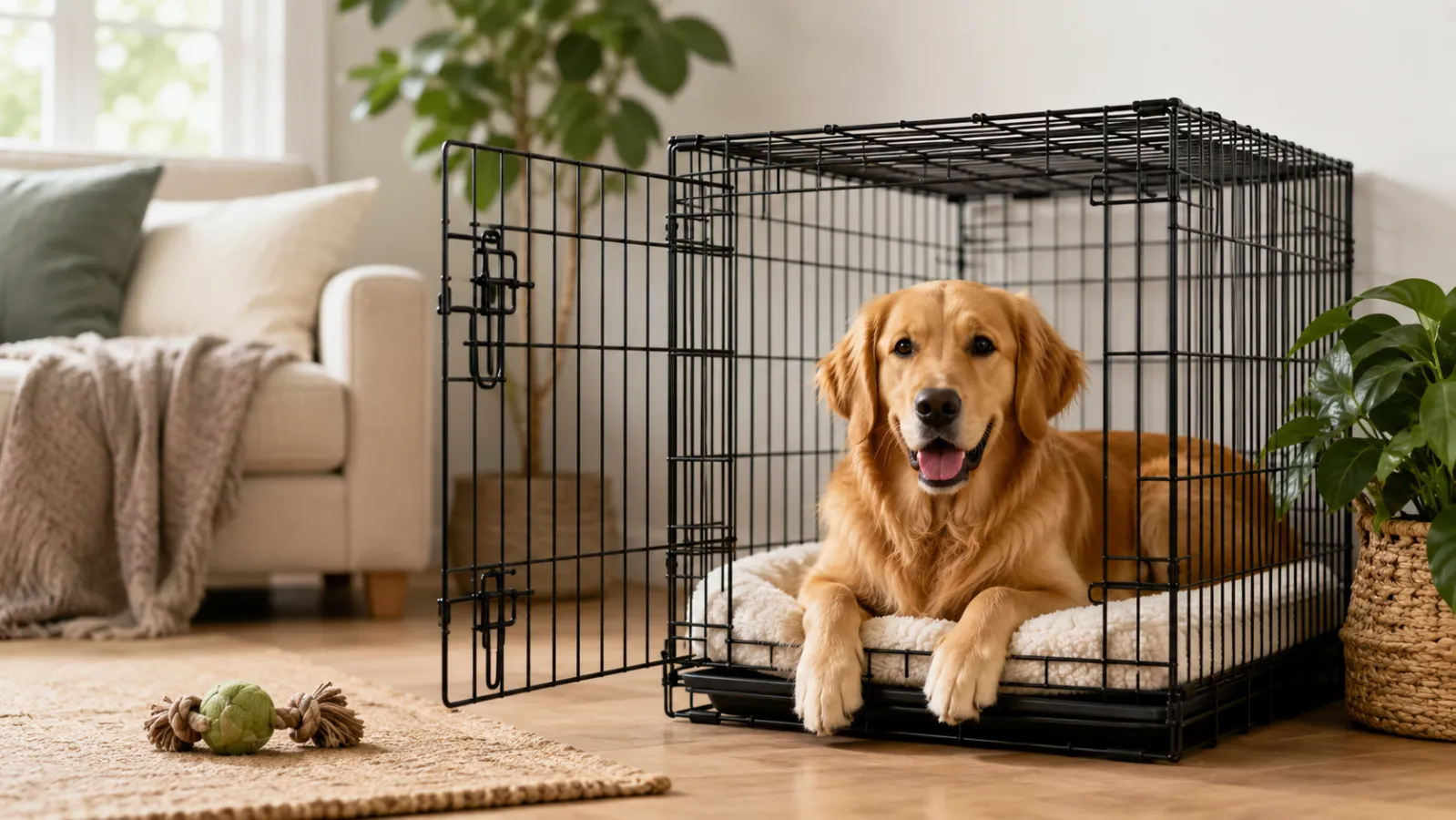
The same principle applies to crate training. If you are introducing a crate, Use Crate Training (Properly) can provide additional guidance on making the crate a positive part of your dog's routine.
Make Training Part of Everyday Life
You do not need to turn your home into a professional training facility.
Use the moments that already happen throughout the day.
Before opening the door, ask for calm behaviour.
Before serving dinner, ask for a sit.
During a walk, practise a familiar cue when the environment is quiet.
When your dog settles peacefully instead of demanding attention, notice it and reward it.
These small repetitions may seem insignificant, but they teach your dog that good behaviour matters even when you are not holding a bag of treats.
A structured day can also make training easier to maintain. If you want more ideas for organising meals, walks, play, training, and rest, see Create a Daily Routine.
Safety Comes First
Training and socialisation should always take your dog's age, health, vaccination status, temperament, and comfort level into account.
Puppies, in particular, should follow veterinary guidance regarding vaccination and exposure to potentially high-risk environments.
Do not force a frightened dog into an overwhelming situation simply because you want them to “get used to it”.
If a dog shows significant fear, aggression, severe distress, or another concerning behaviour, a veterinarian or appropriately qualified behaviour professional can help determine the right approach.
Training should build skills without compromising your dog's physical or emotional safety.
Helpful Training Tools
You do not need a room full of equipment to train your dog.
A few basic tools can be enough:
| ToolPurpose | |
| Treat pouch | Keeps rewards handy |
| Clicker | Provides a consistent training signal |
| Training leash | Helps with controlled practice |
| Puzzle toys | Provides mental stimulation |
| Crate | Can provide a designated resting space |
If you use a crate, introduce it positively.
A crate should never be used as punishment. Some dogs enjoy having a quiet resting space, while others may become distressed by confinement.
Common Training Mistakes to Avoid
Expecting Instant Results
Your dog may need many repetitions before a behaviour becomes reliable. Progress is usually built one successful attempt at a time.
Changing the Rules
If something is forbidden today but allowed tomorrow, your dog receives mixed signals.
Making Training Too Difficult
If your dog keeps failing, the exercise may simply be too difficult. Reduce distractions or return to an easier step.
Using Harsh Punishment
Yelling, hitting, and other harsh approaches can increase fear or stress rather than teaching the desired behaviour.
Forgetting to Reward Good Behaviour
Dogs do plenty of good things that humans barely notice.
A dog lying quietly beside you, waiting patiently at the door, or walking calmly on a leash may not seem exciting, but these are exactly the behaviours worth noticing and reinforcing.
What Long-Term Progress Really Looks Like
Dog training is not about creating a perfect dog.
It is about building communication and helping your dog understand how to navigate everyday life.
Some days will feel easy. Other days, your dog may suddenly behave as though every command has disappeared from their memory.
That is part of having a dog.
Age, temperament, previous experiences, environment, motivation, and individual needs can all affect progress.
What matters is staying calm, keeping expectations clear, and adjusting the difficulty when your dog needs help.
Over time, those small lessons can become habits.
And one day, you may realise that the puppy who once launched themselves at every visitor is now sitting quietly by the door, waiting for you to say hello.
That kind of progress is rarely the result of one perfect training session.
It comes from hundreds of small, patient moments.
First-Time Dog Owner Checklist
If you are just beginning, focus on these basics:
| TaskWhy it matters | |
| Veterinary visit | Provides appropriate health and vaccination guidance |
| Basic commands | Improves everyday communication |
| Consistent routine | Creates predictable expectations |
| Positive rewards | Encourages desirable behaviour |
| Appropriate socialisation | Helps dogs become comfortable with suitable experiences |
| Household rules | Prevents conflicting signals |
| Patient practice | Allows skills to develop gradually |
You do not need to master everything at once.
Start with one or two useful behaviours, practise regularly, and build from there.
Key Takeaways
- Patience gives your dog time to learn at their own pace.
- Consistency makes commands and household expectations easier to understand.
- Reward-based training can encourage desirable behaviour.
- Short, manageable training opportunities are often easier to maintain.
- Everyone in the household should follow the same basic rules.
- Mistakes should be handled calmly and used as opportunities to teach.
- Training difficulty should increase gradually.
- Safety should always come first.
Frequently Asked Questions
Should I give treats during dog training?
Treats can be effective rewards when used appropriately and in moderation. You can also use praise, play, toys, attention, or other rewards your dog enjoys.
How often should I train my dog?
Regular, manageable practice is generally more useful than occasional long sessions. Adjust the frequency and duration according to your dog's age, attention, motivation, and individual needs.
Can older dogs still be trained?
Yes. Older dogs can learn new behaviours. Their training may simply need to take their previous experiences, physical abilities, and individual needs into account.
What are the best treats for dog training?
Small treats that are appropriate for your dog's dietary needs and easy to chew can work well. Keep portions modest and consider them part of your dog's overall food intake.
How long does dog training take?
There is no single timeline. Some basic behaviours may develop relatively quickly, while more advanced training or behaviour modification can take considerably longer.
Should I punish my dog for mistakes?
Harsh punishment such as hitting or yelling should be avoided. Calmly redirect your dog, teach an appropriate alternative, and reinforce the behaviour you want to see.
Final Thoughts
The best training relationship is built on trust, clarity, and repetition.
Your dog does not need a perfect owner. They need someone who is willing to communicate clearly, stay patient when things go wrong, and notice the small successes along the way.
Keep the rules simple. Reward the behaviours you want. Make difficult tasks easier when necessary. Give your dog time to learn.
And remember: sometimes the biggest training breakthrough is not a dramatic command performed perfectly.
It is something much smaller.
A dog choosing to sit instead of jump.
Waiting calmly instead of barking.
Looking back at you because they have learned that listening is worthwhile.
Those little moments are where good training really begins.
Sources & References
- American Veterinary Society of Animal Behavior (AVSAB) — Humane Dog Training Position Statement
- AVSAB recommends reward-based methods for dog training and advises against aversive methods that rely on force, pain, or emotional/physical discomfort.
- AVSAB — Humane Dog Training Position Statement
- RSPCA — How to Train Your Dog & Top Training Tips
- The RSPCA recommends reward-based training and highlights the importance of short, regular training sessions and reducing distractions when teaching new behaviours.
- RSPCA — How to Train Your Dog
- Merck Veterinary Manual — Behavior Modification in Dogs
- This veterinary reference covers reward-based training, behaviour modification, reinforcement, shaping, and appropriate approaches to unwanted behaviours.
- Merck Veterinary Manual — Behavior Modification in Dogs
- Merck Veterinary Manual — Behavior Problems of Dogs
- Provides veterinary guidance on behaviour problems, reinforcement-based training, fear and anxiety, aggression, and replacing unwanted behaviours with desirable alternatives.
- Merck Veterinary Manual — Behavior Problems of Dogs
- American Animal Hospital Association (AAHA) — Expert Dog Training Tips
- AAHA discusses positive reinforcement, immediate rewards, training in low-distraction environments, and using rewards such as treats, praise, toys, and play.
- AAHA — Expert Dog Training Tips
How We Create Our Content
Our articles are developed using AI-assisted research, cross-checked with multiple AI systems, and reviewed against reputable professional and authoritative sources before publication.