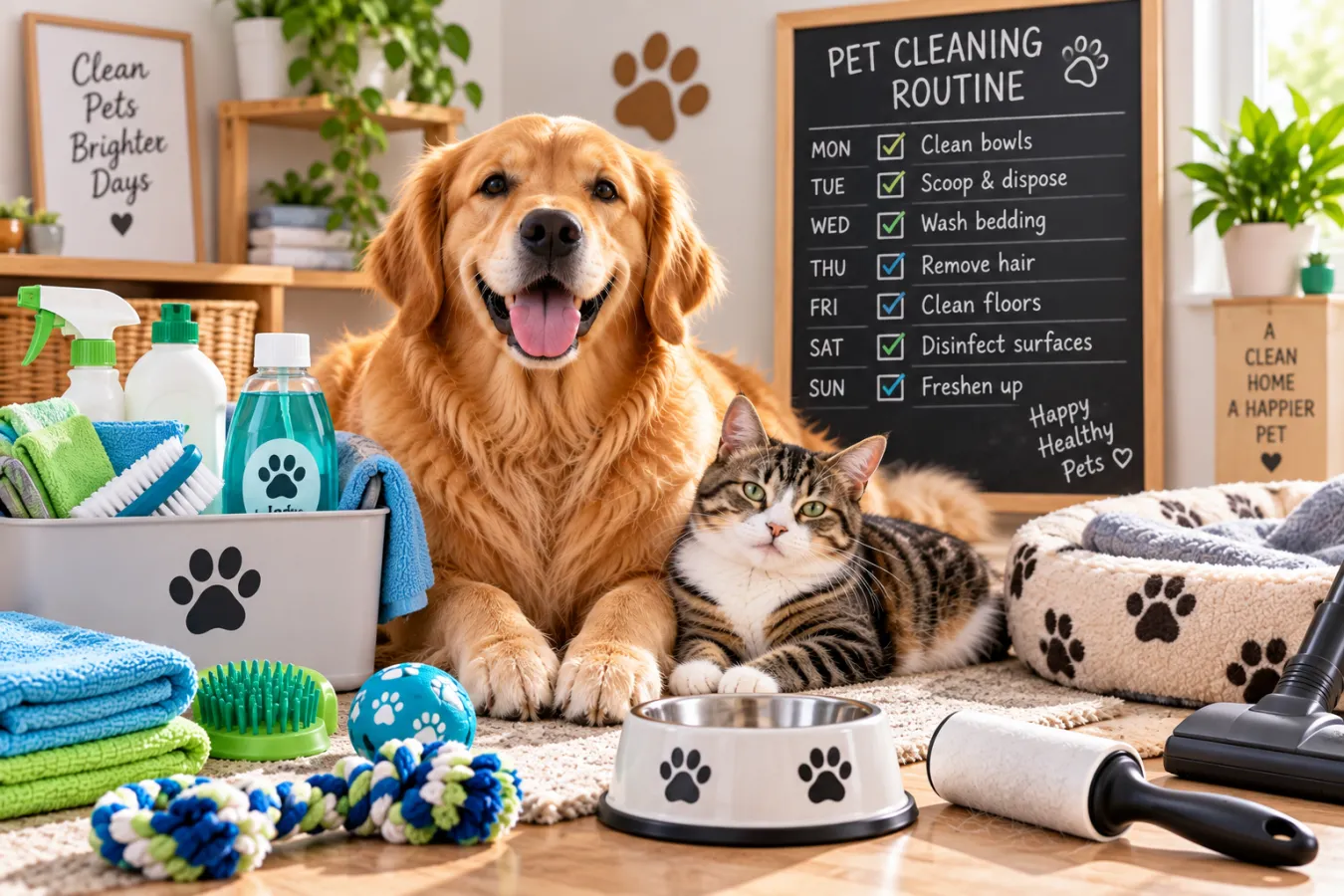
Pets bring companionship, energy, and plenty of happy moments into our homes. They can also bring muddy paws, loose fur, food spills, unexpected accidents, and lingering odors.
That's why having the right cleaning supplies ready before a mess happens can make pet ownership much easier.
You don't need an entire cupboard filled with specialty products. A practical pet-cleaning kit can cover most everyday situations with a few essential categories:
Pet-safe cleaners + odor removers + hair-removal tools + waste-disposal products
The key is choosing products that are appropriate for the surface, suitable for your pet, easy to use, and stored safely.
Why Every Pet Owner Needs a Cleaning Kit
Pet messes don't always happen at convenient times.
A puppy may have an accident on the carpet. A cat may scatter litter around the room. A dog may return from a walk covered in mud. Hair can collect on furniture, while food and water can leave residue around feeding areas.
Having cleaning supplies nearby means you can deal with these situations promptly instead of searching for products at the last minute.
A basic pet-cleaning kit can help you manage:
- Pet hair
- Food spills
- Water spills
- Urine accidents
- Vomit and other messes
- Pet odors
- Dirty floors
- Soiled bedding
- Waste disposal
- Feeding-area residue
The CDC recommends regular cleaning of pet items and surfaces and emphasizes following product-label directions when using cleaners and disinfectants. (cdc.gov)
1. Pet-Safe General-Purpose Cleaner
A suitable general-purpose cleaner is one of the most useful products in a pet owner's cleaning kit.
You can use an appropriate product for surfaces such as:
- Floors
- Sealed countertops
- Feeding-area surfaces
- Pet-accessible hard surfaces
- Crates
- Certain washable accessories
However, don't assume that a product marketed as "natural," "green," or "pet-friendly" is automatically appropriate for every surface or every animal.
Always check the label.
The EPA recommends reading product labels carefully and following directions when using cleaning products around pets. (epa.gov)
If you're particularly concerned about choosing safe household products, our guide on How to Choose the Best Pet-Safe Cleaning Products provides additional guidance on ingredients, labels, surfaces, and safe use.
2. Pet Odor Remover
Odors are one of the most common challenges in pet-friendly homes.
Pet odor can come from:
- Accidents
- Wet fur
- Bedding
- Carpets
- Upholstery
- Litter areas
- Feeding spaces
- Outdoor waste
An odor remover should ideally address the source of the smell, rather than simply covering it with a strong fragrance.
Look for products specifically designed for the type of odor and surface you're treating.
For example, an enzymatic cleaner may be useful for certain organic stains and odors when the product is appropriate for that material.
For more ideas, our guide on Best Products for Removing Pet Odors at Home explains how to approach persistent pet smells around the house.
3. Hair-Removal Tools
If you have a shedding pet, hair-removal tools can quickly become everyday essentials.
Useful options include:
- Lint rollers
- Fabric brushes
- Rubber hair-removal tools
- Reusable pet-hair removers
- Vacuum attachments
- Furniture brushes
Different tools work better on different surfaces.
For Clothing
A lint roller can be convenient for quick touch-ups.
For Furniture
A fabric brush or reusable hair-removal tool may work well.
For Floors
A vacuum cleaner or appropriate floor attachment is generally more practical.
For Bedding
Remove loose hair before washing whenever possible.
Regular grooming can also help manage loose hair. For cat owners, our guide on How to Train Your Cat to Accept Grooming offers practical guidance for making grooming a more manageable part of your pet's routine.
4. Pet Waste Bags
Every dog owner should have waste bags readily available.
A good waste bag should be:
- Strong
- Large enough for the waste
- Easy to open
- Resistant to tearing
- Easy to tie
- Convenient to carry
Keep spare bags in several locations, such as:
- Near the leash
- By the front door
- In your walking bag
- In the car
- Near the backyard
This makes it less likely that you'll run out when you need one.
5. A Convenient Waste-Bag Dispenser
A waste-bag dispenser is a small product that can make walks much easier.
Choose one that:
- Fits your preferred bag rolls
- Is easy to open
- Attaches securely
- Can be accessed quickly
- Doesn't add unnecessary weight
Keeping the dispenser attached to your dog's walking equipment can make waste cleanup more convenient.
For more guidance on choosing suitable disposal products, see How to Choose the Right Pet Waste Bags and Disposal Products.
6. Cleaning Brushes and Scrubbers
A dedicated cleaning brush can be useful for pet bowls, crates, hard surfaces, and other washable items.
Keep a few different sizes if necessary.
Large Brush
Useful for larger surfaces and crates.
Small Brush
Useful for corners, seams, and narrow areas.
Soft Brush
Useful for surfaces that could be scratched by aggressive scrubbing.
Choose tools based on the material you're cleaning.
A brush that works well on a durable plastic surface may be inappropriate for delicate upholstery.
7. Microfiber or Reusable Cleaning Cloths
Reusable cleaning cloths are practical for everyday spills.
They can be used for:
- Water splashes
- Food residue
- Paw marks
- Crate surfaces
- Feeding areas
- Hard household surfaces
Keep several available so that you always have a clean cloth when needed.
Wash reusable cloths regularly according to their care instructions.
8. Disposable Paper Towels
Reusable cloths are useful, but paper towels still have a place in a pet-cleaning kit.
They're particularly convenient for:
- Fresh accidents
- Vomit
- Wet spills
- Mud
- Contaminated surfaces
- Initial cleanup before deeper washing
The advantage is simple:
Use → Dispose → Clean the surface properly
This can be especially convenient when dealing with unpleasant messes.
9. Disposable or Reusable Gloves
Gloves can make certain cleaning tasks more comfortable.
Consider using them when dealing with:
- Pet waste
- Urine
- Vomit
- Heavily soiled bedding
- Litter-box cleanup
- Strong cleaning products
Always wash your hands thoroughly after cleaning, even when gloves have been used.
10. Pet-Safe Disinfectant
A disinfectant isn't necessarily required for every everyday mess.
Routine cleaning and disinfection are different processes.
Cleaning removes dirt and debris, while disinfection is an additional step intended to kill specified microorganisms.
The CDC recommends cleaning pet items regularly and using disinfectants appropriately when additional disinfection is needed. (cdc.gov)
If you use a disinfectant, check:
- Intended use
- Surface compatibility
- Pet species
- Dilution requirements
- Contact time
- Rinsing instructions
- Drying requirements
- Storage instructions
Never mix cleaning products.
And never allow your pet to access a freshly treated surface unless the product instructions say it is safe.
For a deeper explanation, read How to Choose Pet-Safe Disinfectants.
11. Carpet and Upholstery Cleaning Products
Carpets and furniture can quickly become targets for pet accidents and hair.
A useful cleaning kit may include:
- Pet-specific carpet cleaner
- Appropriate stain remover
- Upholstery-safe cleaner
- Absorbent towels
- Soft cleaning brush
- Vacuum attachment
Always check whether the product is compatible with your carpet or upholstery.
Don't assume that a cleaner safe for hard flooring is suitable for fabric.
For accidental spills and stains, our guide on How to Clean Pet Stains Without Damaging Your Carpet provides additional cleaning considerations.
12. Lint Roller
A lint roller is one of the simplest tools a pet owner can keep at home.
It can be useful for quickly removing:
- Dog hair
- Cat hair
- Fur from clothing
- Hair from cushions
- Loose hair from blankets
Keep one near frequently used furniture or near the door for quick cleanup before leaving home.
13. Pet Hair Vacuum Attachment
If your pet sheds heavily, a vacuum attachment designed for pet hair can make regular cleaning more efficient.
Look for attachments suitable for:
- Upholstery
- Carpets
- Hard floors
- Stairs
- Vehicle interiors
Always use the attachment according to the vacuum manufacturer's instructions.
If you're dealing with substantial shedding, our article on Best Cleaning Products for Pet Hair Around the Home can help you build a more effective hair-management routine.
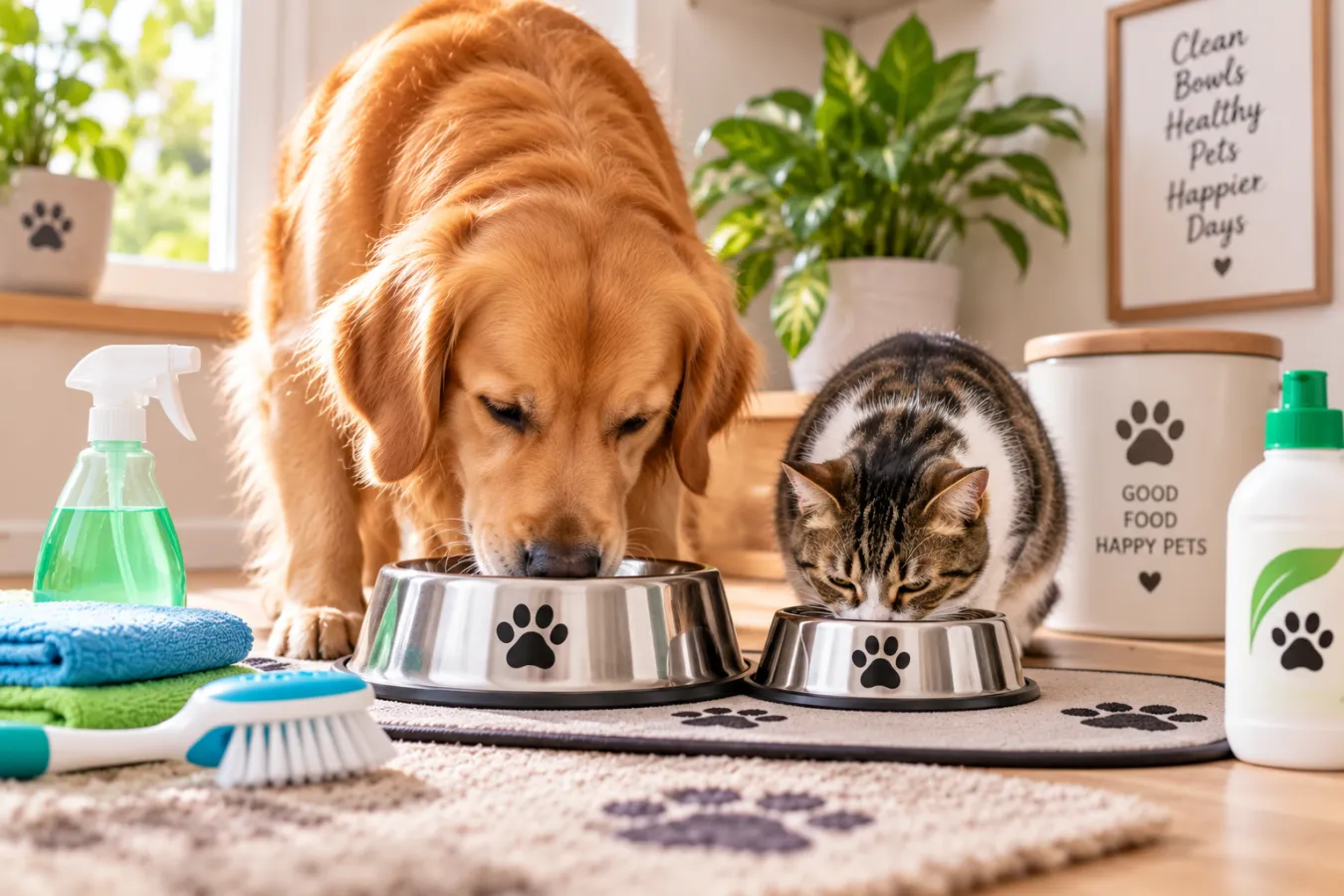
14. Washable Cleaning Mats
A washable mat underneath food and water bowls can help contain spills.
Look for:
- Waterproof materials
- Easy-to-wash surfaces
- Non-slip backing
- Adequate size
- Minimal grooves where food can collect
The mat itself needs regular cleaning.
A dirty mat can become another source of food residue and unpleasant odors.
15. Laundry Supplies for Pet Bedding
Pet bedding can collect considerable amounts of hair, dirt, moisture, and odors.
Useful laundry supplies may include:
- Suitable laundry detergent
- Stain treatment appropriate for the fabric
- Washable bedding covers
- Spare blankets
- Clean storage bags
Always follow the manufacturer's instructions for washing and drying pet bedding.
If you're establishing a regular bedding routine, see How to Keep Your Pet's Bedding Clean and Fresh for practical maintenance tips.
16. Enzymatic Cleaners for Appropriate Messes
Enzymatic cleaners are commonly used for certain organic stains and odors.
They may be particularly useful for:
- Urine
- Vomit
- Food-related stains
- Other biological messes
However, always check whether the product is suitable for your particular surface.
Read the directions carefully and allow the product to work for the specified period.
Don't assume that an enzymatic product is suitable for every material or every cleaning situation.
17. A Small Cleaning Bucket or Caddy
A cleaning caddy may not sound exciting, but it can transform your routine.
Keep commonly used supplies together:
Cleaner + Cloths + Brushes + Gloves + Waste Bags
This means you don't have to search through several cupboards when an accident occurs.
A dedicated storage container also helps keep pet-cleaning products organized.
18. Safe Storage Containers
Pet-cleaning supplies should always be stored securely.
Keep cleaning products:
- In their original containers
- Properly labeled
- Tightly closed
- Away from food
- Away from water bowls
- Out of pet reach
- Out of children's reach
The EPA recommends keeping household chemicals and cleaning products securely stored and away from pets. (epa.gov)
Never transfer chemicals into bottles that could be mistaken for food or beverages.
Build a Pet Cleaning Kit by Area
Instead of keeping every product in one place, you can create small cleaning stations around your home.
Near the Front Door
Keep:
- Waste bags
- Dispenser
- Lint roller
- Small towel
Near the Feeding Area
Keep:
- Cleaning cloths
- Bowl brush
- Suitable detergent
- Clean drying towel
Near the Pet's Sleeping Area
Keep:
- Lint roller
- Fabric brush
- Spare blanket
- Appropriate stain remover
Near the Cleaning-Supply Cabinet
Keep:
- General cleaner
- Disinfectant
- Gloves
- Cleaning brushes
- Paper towels
This setup makes routine maintenance much faster.
What Products Should You Avoid?
Not every cleaning product belongs in a pet-friendly home.
Be cautious about:
- Unlabeled cleaning mixtures
- Products used outside their intended purpose
- Strong chemicals used without ventilation
- Unverified homemade disinfectants
- Products that aren't suitable for your surface
- Chemicals stored within your pet's reach
- Cleaning products applied directly to animals
The CDC specifically advises against using household disinfectants directly on pets and recommends following label directions carefully. (cdc.gov)
Don't Mix Cleaning Chemicals
This deserves its own warning.
Never mix different cleaning products unless the manufacturer specifically instructs you to do so.
Mixing certain chemicals can create dangerous gases or other hazardous reactions.
For example, the CDC warns that mixing bleach with ammonia or certain other cleaners can produce toxic gases. (cdc.gov)
When using cleaning products:
Read → Measure → Apply → Rinse if required → Store safely
How to Create a Simple Daily Pet Cleaning Routine
A cleaning routine doesn't have to take hours.
Morning
- Check feeding area
- Remove visible hair and debris
- Clean water bowl
- Dispose of any waste
During the Day
- Clean accidents promptly
- Remove visible spills
- Use a lint roller on high-traffic furniture when needed
Evening
- Wash food bowls
- Clean feeding mats if necessary
- Check bedding
- Empty waste containers
- Quick vacuum of high-traffic areas when needed
The goal isn't perfection.
Consistency is what makes the difference.
Weekly Pet Cleaning Checklist
Once a week, consider checking:
- Pet bedding
- Feeding mats
- Crates
- Toys
- Pet carriers
- Floors around pet areas
- Furniture
- Waste-disposal supplies
- Cleaning-product stock
- Hair-removal tools
The appropriate frequency depends on your pet, household, and product instructions.
Monthly Pet Cleaning Supply Check
Once a month, inspect your cleaning supplies.
Ask:
- Have any products expired?
- Are labels still readable?
- Are containers damaged?
- Are brushes worn out?
- Do you have enough waste bags?
- Do you need additional stain remover?
- Is your lint roller stocked?
- Are spare towels available?
- Are cleaning products stored securely?
A quick inventory can prevent an inconvenient shortage.
Essential Pet Cleaning Products: Quick Checklist
If you're starting from scratch, prioritize these:
Must-Have
- Pet-appropriate general cleaner
- Odor remover
- Waste bags
- Waste-bag dispenser
- Lint roller
- Cleaning brush
- Reusable cloths
- Paper towels
- Gloves
- Appropriate detergent
Useful Extras
- Pet-appropriate disinfectant
- Carpet cleaner
- Enzymatic cleaner
- Hair-removal vacuum attachment
- Washable feeding mat
- Spare pet bedding
- Cleaning caddy
You don't need to buy everything immediately.
Start with the products that match your pet's habits and your home's most common messes.
Frequently Asked Questions
What cleaning products should every pet owner have?
A basic pet-cleaning kit should include a suitable general cleaner, odor remover, hair-removal tool, waste bags, cleaning brushes, reusable cloths, paper towels, gloves, and appropriate laundry supplies.
What is the best cleaner for a pet-friendly home?
The best cleaner depends on the surface and type of mess. Choose products designed for the specific surface and follow the manufacturer's instructions carefully.
Do I need a pet-safe disinfectant?
Not necessarily for every everyday cleaning task. Routine cleaning is often sufficient, while disinfection can be useful in specific situations. Follow product instructions and veterinary guidance when appropriate.
What is the best way to remove pet hair?
Use the tool suited to the surface. Lint rollers work well for clothing and quick touch-ups, while fabric brushes, reusable hair removers, and vacuum attachments can be useful for furniture and floors.
What should I use to remove pet odors?
Use a product designed for the specific odor and surface. Products that address the source of an odor can be more useful than simply masking smells with fragrance.
Should I keep pet cleaning supplies separate?
It is a good organizational practice to keep pet-cleaning tools together and cleaning chemicals securely stored away from pets, children, food, and water.
How should pet cleaning products be stored?
Keep products in their original labeled containers, tightly closed, and out of reach of pets and children. Follow the manufacturer's storage instructions.
Can I use household disinfectants around pets?
Some household disinfectants can be used around pets when used exactly according to their labels, but suitability varies by product, surface, and animal species. Keep pets away during application and follow re-entry instructions.
Can I use disinfectant directly on my pet?
No. Household surface disinfectants should not be applied directly to pets. Use only products specifically designed for animals and follow veterinary guidance.
How can I prepare for pet accidents?
Keep paper towels, gloves, an appropriate stain or odor cleaner, and waste-disposal supplies somewhere easily accessible. Prompt cleanup is easier when the necessary products are already nearby.
Final Thoughts
A clean pet-friendly home doesn't require dozens of expensive products.
The smartest approach is to build a simple, organized cleaning kit around the messes your pet actually creates.
Start with four essential categories:
Clean → Deodorize → Remove Hair → Dispose of Waste
Add specialized products such as disinfectants, carpet cleaners, enzymatic cleaners, or vacuum attachments when your household needs them.
Most importantly, read product labels carefully, use cleaners only for their intended purpose, never mix chemicals, and store cleaning products securely away from pets.
A little preparation can turn an unexpected mess from a stressful event into a five-minute cleanup.
The right products + the right routine = a cleaner, fresher, more comfortable pet-friendly home.
Sources & References
- CDC — About Cleaning and Disinfecting Pet Supplies
- U.S. Environmental Protection Agency — Read the Label First: Protect Your Pets
- ASPCA — Poisonous Household Products
- CDC — Cleaning and Disinfecting
Disclaimer
This article is intended for general educational purposes and does not replace veterinary advice, manufacturer instructions, or product-label directions. Always check that a cleaning product is appropriate for the specific surface and animal in your household. Keep cleaning chemicals away from pets and children, and seek veterinary assistance promptly if your pet is accidentally exposed to a potentially harmful product.
Created with AI • Independently Verified