Keeping a home clean with pets does not have to mean spending hours every day scrubbing, vacuuming, and washing everything in sight. The real difference comes from having a simple routine that prevents small messes from becoming bigger ones.
Pet hair can collect on furniture and floors, food particles can build up around feeding areas, bedding can hold odors and moisture, and accidents can leave stains if they are not handled promptly. Without a consistent system, cleaning can quickly feel overwhelming.
The good news is that you do not need an elaborate schedule. A practical pet cleaning routine can be divided into a few repeatable tasks: daily cleaning, weekly deep cleaning, bedding maintenance, and food and water area care.
The key is consistency. A few minutes of cleaning each day can make your weekly workload much easier.
Why a Pet Cleaning Routine Matters
Pets naturally bring some mess into the home. Shedding, muddy paws, drool, spilled food, litter, outdoor debris, and bathroom accidents are all part of everyday pet ownership.
A cleaning routine helps you stay ahead of those problems instead of reacting after the mess has already accumulated.
Regular cleaning can help:
- Reduce visible pet hair and debris
- Control unpleasant odors
- Keep feeding areas cleaner
- Prevent stains from becoming harder to remove
- Keep bedding fresh
- Make accidents easier to manage
- Create a more comfortable living space for pets and people
The goal is not to make your home perfectly spotless. It is to create a system that is realistic enough to maintain.
The Best Approach: Divide Cleaning Into Small Tasks
Trying to clean the entire house every day is unrealistic for most pet owners. A better approach is to divide responsibilities according to frequency.
Think of your routine in four levels:
Daily: quick cleaning and mess control
Weekly: deeper cleaning of pet areas and household surfaces
As needed: immediate response to accidents, spills, vomit, or heavily soiled items
Monthly or periodically: less frequently used toys, carriers, crates, storage areas, and equipment
This prevents cleaning from becoming an all-or-nothing task.
For example, sweeping pet hair from the busiest areas every day is easier than waiting until the entire floor is covered.
1. Create a Simple Daily Pet Cleaning Routine
Daily cleaning should focus on the areas that become dirty fastest.
You do not need to spend hours doing it. A short routine completed consistently is usually more useful than an ambitious routine that you stop following after a few days.
Clean Food and Water Areas
Food and water areas should be one of your highest priorities.
Pick up spilled food, wipe splashes around water bowls, and remove visible debris from feeding mats or nearby floors.
For bowls, the cleaning frequency depends partly on what your pet eats. The CDC recommends cleaning bowls after every use for wet food and cleaning dry-food and water bowls daily.
Use a pet-appropriate dishwashing method and make sure bowls are thoroughly rinsed and dried before being used again.
For more guidance on selecting suitable feeding products and nutrition-related supplies, you can also explore how to choose the right cat food for your pet and consider how your pet's food routine affects cleaning frequency.
Remove Visible Hair and Debris
Do a quick sweep or vacuum of the areas where your pet spends the most time.
Concentrate on:
- Around beds
- Feeding areas
- Entryways
- Favorite resting spots
- Under furniture where hair collects
- Areas where your pet regularly plays
You do not necessarily need to clean every room every day. Focus on high-traffic zones first.
Deal With Accidents Quickly
If your pet has an accident, clean it as soon as practical.
Fresh stains are generally easier to address than old, dried messes. Blot liquid rather than aggressively rubbing it deeper into the surface, then use a product appropriate for the material being cleaned.
Prompt cleaning is particularly important when house training a puppy. A consistent bathroom routine can reduce indoor accidents over time, while thorough cleanup helps prevent lingering odors from becoming a problem. See house training and potty training guidance for more practical routine-building advice.
Empty Waste Containers
Do not allow used waste bags, litter waste, paper towels, or heavily soiled cleaning materials to sit in the home for long periods.
A small covered bin or another appropriate waste-disposal system can make this task easier.
Keeping waste disposal convenient is one of the simplest ways to make a cleaning routine more consistent.
Do a Quick Surface Check
Before finishing your daily routine, take a quick look around your pet's main areas.
Check for:
- Food crumbs
- Spilled water
- Mud or outdoor dirt
- Hair buildup
- Dropped litter
- Damaged toys
- Soiled blankets
- New stains
This quick visual inspection can take less than five minutes and helps you catch problems early.
2. Build a Weekly Deep-Cleaning Routine
Daily cleaning keeps mess under control, but weekly cleaning gives you an opportunity to deal with areas that need more attention.
Choose one day of the week for your main pet-area cleaning, or divide the tasks across several days if that works better.
Wash Pet Bedding
Pet beds, blankets, crate pads, and washable covers can collect hair, skin debris, dirt, moisture, and odors over time.
The CDC gives a general example of cleaning pet beds and blankets weekly, with more frequent cleaning when necessary.
Always follow the care instructions for the specific item.
Before washing, remove as much loose hair and debris as possible. Check seams, removable covers, and areas where your pet rests most heavily.
For cats that need help becoming comfortable with routine handling and grooming, consistent grooming can also reduce loose hair that ends up on bedding and household surfaces. how to train your cat to accept grooming
Clean Crates, Carriers, and Resting Areas
Pet carriers, crates, play areas, and other confined spaces can accumulate fur, food particles, dirt, and odors.
Remove bedding and accessories first. Clean the hard surfaces according to the manufacturer's directions, rinse when required, and allow everything to dry completely before returning your pet.
For small animals, enclosure cleaning also needs to be appropriate for the species. A broader overview of suitable supplies and habitat considerations is available in best small pet products every owner needs.
Clean Floors More Thoroughly
Your weekly cleaning should go beyond the quick daily sweep.
Vacuum or mop more thoroughly, paying attention to:
- Corners
- Under furniture
- Around pet beds
- Behind feeding stations
- Near litter areas
- Along baseboards
- Frequently used pathways
Move lightweight furniture or pet equipment when practical so hair and debris do not remain hidden underneath.
Clean Pet Toys
Pet toys can become coated with saliva, dirt, food residue, and hair.
The cleaning method depends on the material.
Hard toys may be washable, while some fabric toys can be machine washed if the manufacturer allows it. Damaged toys should be removed from use, particularly if pieces are breaking off or becoming loose.
The CDC suggests monthly cleaning for pet toys as a general example, with more frequent cleaning when items become dirty or when circumstances require it.
3. Make Bedding Maintenance Part of Your Routine
Bedding deserves special attention because pets spend so much time on it.
Instead of treating bedding as a task you remember only when it smells bad, make it part of your regular schedule.
Have Washable Covers When Possible
Removable, washable covers make maintenance easier.
They allow you to clean the outer layer without necessarily washing the entire bed every time.
This is especially useful for pets that shed heavily or spend a lot of time outdoors.
Keep a Spare Set
Having an extra blanket, cover, or bed liner can make your routine much easier.
You can replace the dirty item immediately while the other one is being washed and dried.
This simple backup can prevent situations where a pet has to use an unsuitable or uncomfortable temporary surface while the regular bedding is unavailable.
Remove Hair Before Washing
Large amounts of loose hair can make washing more difficult.
Shake out bedding where appropriate, brush off loose hair, or use a suitable hair-removal method before putting washable items into the machine.
Dry Bedding Completely
Do not return damp bedding to your pet's sleeping area.
Moisture can contribute to musty odors and make the bed less comfortable. Follow the item's care instructions and allow it to dry fully before use.
4. Keep Food and Water Areas on a Separate Schedule
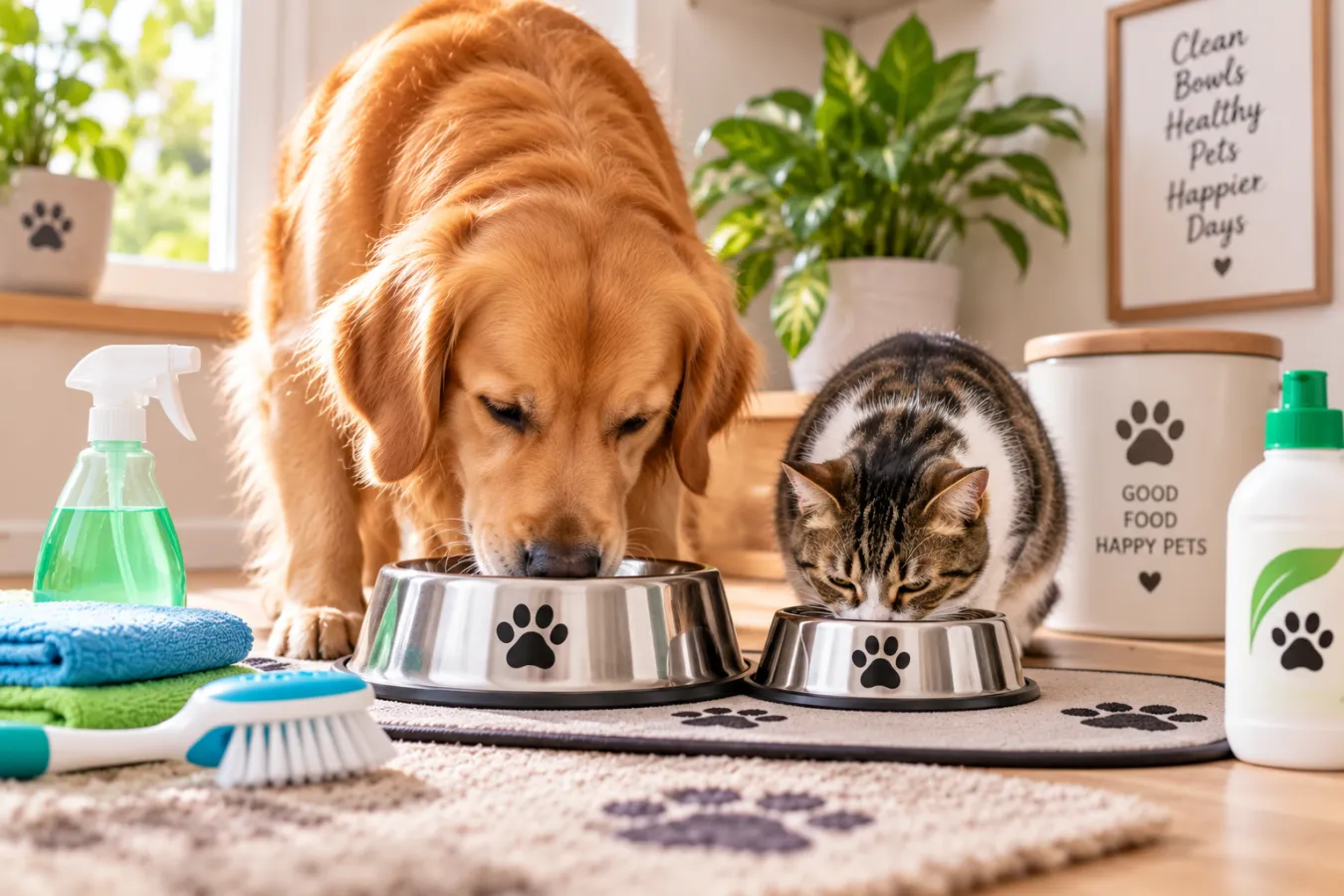
Feeding areas often need more attention than the rest of the room because they can accumulate food residue and moisture every day.
Create a simple feeding-area routine.
After Each Wet-Food Meal
Remove leftover wet food and clean the bowl.
Wet food can leave residue that becomes unpleasant if it remains on the surface.
Daily for Dry Food and Water Bowls
Clean dry-food and water bowls daily as part of your normal household routine. The CDC specifically recommends daily cleaning for dry-food and water bowls.
Do not forget the area surrounding the bowls.
Food and water can splash onto:
- Floors
- Mats
- Walls
- Nearby furniture
- Bowl stands
- Storage surfaces
Wash Feeding Mats
Feeding mats are useful because they catch crumbs and spills, but they also need regular cleaning.
Choose a mat that can be wiped or washed easily, depending on the material.
A feeding mat should make cleaning easier, not become another difficult-to-clean surface.
Store Food Properly
Food storage is part of a clean feeding routine.
Keep pet food in a suitable container and follow the product's storage instructions. Clean scoops and containers regularly so old residue does not build up.
For cats, making feeding decisions based on age, lifestyle, and nutritional needs can also help create a more consistent feeding schedule. your guide to choosing the right cat food
5. Choose Cleaning Products Carefully
A good routine depends not only on how often you clean but also on how you clean.
Always read product labels and use household cleaners according to their directions.
The EPA advises pet owners to read product labels carefully, follow safe-use instructions, store products properly, and keep pets away from treated areas when the label requires it.
The distinction between cleaning and disinfecting is also important. Cleaning physically removes dirt and germs, while disinfecting uses chemicals to kill germs on surfaces. The CDC notes that cleaning is generally sufficient for many pet items, while disinfecting is an additional step for situations where it is appropriate.
This means you should not automatically disinfect every surface every day.
Instead, match the cleaning method to the situation and the surface.
6. Never Mix Cleaning Chemicals
Combining household cleaning products can create dangerous fumes or unexpected chemical reactions.
Use one product according to its label instructions rather than mixing multiple cleaners together.
Good ventilation can also improve comfort while cleaning.
Always keep cleaning products secured away from curious pets, and never leave an open container of cleaner unattended.
7. Create a Routine That Fits Your Pet
Not every household needs exactly the same cleaning schedule.
A home with one short-haired indoor cat may have different needs from a home with several long-haired dogs or small animals.
Consider:
- Number of pets
- Type of pet
- Coat length
- Shedding level
- Indoor versus outdoor access
- Age
- Mobility
- Toilet habits
- Health status
- Number of people in the household
A useful routine should be customized rather than copied exactly from someone else.
For example, a high-shedding dog may need daily vacuuming in favorite areas, while another pet may require more frequent bedding changes but less floor cleaning.
8. Use a Simple Pet Cleaning Schedule
A written schedule can make routines much easier to remember.
Daily
Spend a few minutes on:
- Food and water bowls
- Feeding surfaces
- Visible hair
- Fresh spills
- Accidents
- Waste disposal
- Quick inspection of pet areas
Several Times a Week
Depending on your household:
- Vacuum high-traffic areas
- Sweep around litter or feeding stations
- Remove accumulated hair from furniture
- Wash frequently used blankets when needed
Weekly
Set aside time for:
- Washing bedding and blankets
- Cleaning crates and carriers
- Deeper floor cleaning
- Washing appropriate toys
- Cleaning feeding mats
- Checking corners and hidden areas
Monthly or Periodically
Review:
- Less frequently used toys
- Storage bins
- Carriers
- Grooming tools
- Pet accessories
- Hard-to-reach cleaning areas
The exact frequency should always be adjusted when items become visibly dirty or your pet's needs change. The CDC likewise recommends cleaning more frequently when items look dirty or smell bad.
9. Make Cleaning Easier With a Pet Cleaning Station
One practical way to improve consistency is to keep your most-used supplies together.
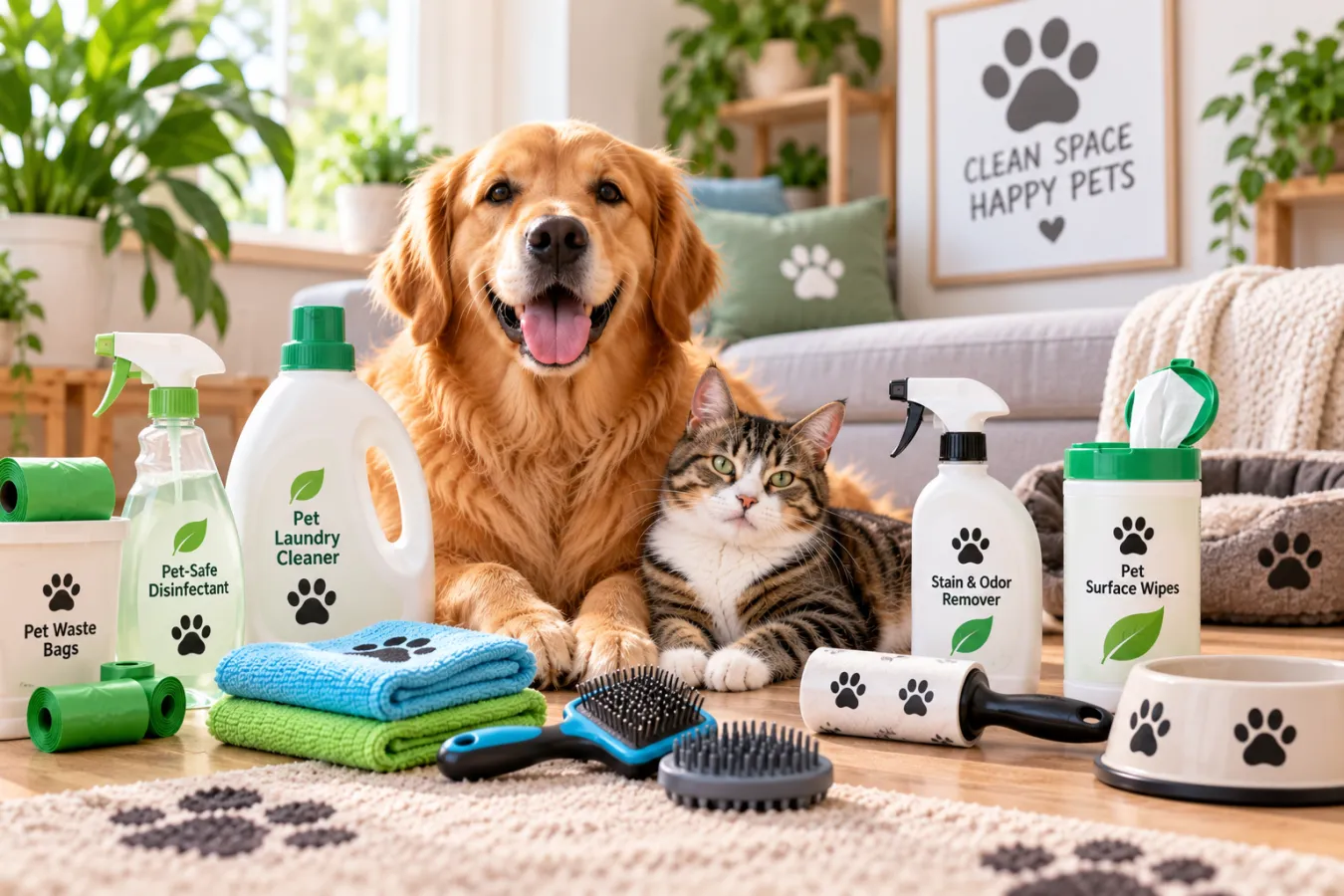
A small cleaning station can contain:
- Paper towels or washable cloths
- Pet-safe surface cleaner
- Waste bags
- Disposable gloves if needed
- A suitable brush
- Hair-removal tools
- Laundry supplies
- Cleaning cloths
- A small waste container
Keep products stored safely and out of your pet's reach.
The less time you spend searching for supplies, the easier it becomes to clean a mess immediately.
10. Follow the “Clean as You Go” Rule
One of the best habits for pet owners is simple: clean small messes when you notice them.
A spilled bowl of water takes seconds to wipe up.
A few food crumbs take seconds to sweep away.
A fresh accident is easier to address before it dries.
Loose hair is easier to remove before it spreads throughout the home.
This approach prevents your weekly cleaning session from becoming a major project.
What to Do When Your Routine Falls Behind
Even the best routine can occasionally get disrupted.
You may have a busy work week, travel plans, guests, bad weather, or simply a day when cleaning is not a priority.
Do not treat that as failure.
Restart with the most important areas first.
A useful order is:
Food and water → waste → accidents → bedding → floors → other surfaces
Once the high-priority areas are under control, return to the normal schedule.
Consistency over time matters more than perfection every day.
Common Pet Cleaning Routine Mistakes
Cleaning Only When Something Smells
Odor is often a sign that a mess has already built up.
Routine cleaning should happen before an area becomes noticeably dirty or unpleasant.
Ignoring the Area Around the Bowl
Cleaning the bowl but leaving food residue and water splashes around it defeats part of the purpose.
Treat the feeding station as one cleaning zone.
Washing Bedding but Not Checking It
Bedding should also be inspected for dampness, damaged seams, trapped debris, and odors.
Using Too Many Products
More cleaning products do not necessarily mean a cleaner home.
Use the right product for the right surface and follow its label instructions.
Creating an Impossible Schedule
A routine that takes an hour every night may work for a few days and then become abandoned.
A shorter routine that you can realistically repeat is usually more sustainable.
A 15-Minute Daily Pet Cleaning Routine
Busy pet owners can use a simple 15-minute reset.
Minutes 1–3: Check and clean food and water areas.
Minutes 4–6: Pick up waste and dispose of it properly.
Minutes 7–10: Sweep or vacuum the highest-traffic pet areas.
Minutes 11–13: Check bedding, blankets, and resting areas.
Minutes 14–15: Look for spills, stains, damaged items, or anything that needs attention.
That small reset can significantly reduce the amount of work waiting for you later.
Final Thoughts
A successful pet cleaning routine is not about keeping your home perfectly spotless. It is about creating simple habits that prevent mess, odor, hair, stains, and waste from building up.
Focus on the areas that matter most every day, reserve deeper cleaning for the week, maintain bedding consistently, and give food and water areas special attention.
Most importantly, make the routine realistic.
The best cleaning schedule is the one you can actually follow.
Frequently Asked Questions
How often should I clean my pet's food and water bowls?
Wet-food bowls should be cleaned after each use, while dry-food and water bowls should be cleaned daily.
How often should pet bedding be washed?
A weekly cleaning schedule is a useful general starting point, although bedding should be cleaned more often when it becomes dirty, damp, or smelly.
How do I keep pet hair under control?
Regular grooming combined with frequent cleaning of your pet's favorite resting areas can help reduce loose hair around the home.
Should I disinfect my pet's belongings every day?
Not necessarily. The CDC explains that cleaning is generally sufficient for many pet items, while disinfection is appropriate in certain situations, such as when a pet is sick or an item has been contaminated with urine or feces.
What is the easiest way to stay consistent with pet cleaning?
Divide tasks into daily and weekly categories, keep commonly used supplies together, and clean small messes as soon as you notice them.
What should I clean every day?
Prioritize food and water bowls, feeding surfaces, visible waste, fresh spills, accidents, and high-traffic areas where dirt and hair accumulate.
How can I make weekly cleaning easier?
Use washable bedding and mats, keep spare covers available, organize cleaning products in one safe location, and avoid allowing small messes to build up throughout the week.
Sources & References
- Centers for Disease Control and Prevention (CDC), About Cleaning and Disinfecting Pet Supplies — guidance on cleaning frequency, pet bowls, bedding, toys, and situations where disinfection may be appropriate.
- U.S. Environmental Protection Agency (EPA), Pet and household cleaning-product safety guidance — read labels, follow directions, store products safely, and protect pets from treated areas as directed.
- YourPetsWorld / Paw & Bloom, related pet-care resources on cat nutrition, grooming, house training, and small-pet supplies. YourPetsWorld pet-care articles
Created with AI • Independently Verified
Disclaimer: This article provides general pet-care information and is not a substitute for advice from a veterinarian or qualified animal-care professional. Cleaning requirements may vary depending on the animal, environment, product, and health circumstances.