Maintaining a healthy weight is one of the most important things you can do for your cat's long-term health. A cat that carries too much body fat may face a higher risk of diabetes, joint problems, breathing difficulties, reduced mobility, and other health complications. Even a small amount of excess weight can become significant over time, particularly in indoor cats that spend much of the day resting.
The good news is that healthy weight management does not require extreme diets or exhausting exercise routines. For most cats, successful weight management comes from a combination of appropriate portions, balanced nutrition, regular activity, environmental enrichment, and consistent monitoring.
Every cat is different. Age, breed, activity level, reproductive status, health conditions, and individual metabolism can all influence how many calories a cat needs. The goal is not simply to make a cat thinner. It is to help the cat reach and maintain a healthy body condition while preserving muscle and supporting overall well-being.
1. Understand Your Cat's Ideal Body Condition
Body weight alone does not always tell you whether your cat is at a healthy size. Two cats can weigh the same amount but have very different body compositions.
Veterinarians commonly use a body condition score to evaluate whether a cat is underweight, ideal, overweight, or obese. Instead of looking only at the number on the scale, body condition assessment considers the amount of fat covering the ribs, waist, abdomen, and other areas.
In a cat at an ideal body condition, you should generally be able to feel the ribs under a thin layer of fat without seeing them prominently. When viewed from above, there should be some visible narrowing behind the rib cage. From the side, the abdomen should have a modest upward tuck rather than appearing completely round.
An overweight cat may have ribs that are difficult to feel because of excess fat. The waist may become less visible, and there may be additional fat around the abdomen.
Keep in mind that the loose skin flap found on many cats near the lower abdomen is not automatically a sign of obesity. This area can be normal feline anatomy. What matters is the overall amount of body fat.
Your veterinarian can help you determine your cat's ideal body condition and establish a realistic target weight.
2. Understand Why Cats Become Overweight
Weight gain usually occurs when a cat consistently consumes more calories than it uses.
However, the reasons behind that imbalance can vary.
Overfeeding is one of the most common causes. Owners may provide larger portions than their cat actually needs or leave food available throughout the day.
Treats can also contribute significantly to excess calories. A few treats may seem insignificant, but repeated treats, table scraps, flavored foods, and frequent rewards can add hundreds of calories over time.
Lack of physical activity is another major factor. Indoor cats may have limited opportunities to walk, climb, chase, or explore, particularly when they spend long periods sleeping or resting.
Age can also influence weight. As cats become older, their activity levels and energy requirements may change.
Some medical conditions and medications can affect body weight as well. This is why sudden or unexplained weight gain should be discussed with a veterinarian rather than automatically being blamed on overeating.
The first step in weight management is identifying why the cat is gaining weight. Without understanding the cause, it can be difficult to create an effective long-term strategy.
3. Measure Portions Carefully
Portion control is one of the simplest and most effective tools for managing a cat's weight.
Many owners feed by filling a bowl rather than measuring the exact amount. This can result in a cat eating more calories than intended, especially when food is constantly available.
A measuring cup can make portion control much easier. For even greater precision, a kitchen scale can be used to measure food by weight.
Start by checking the feeding instructions provided by the manufacturer. These recommendations can provide a starting point, but they should not be treated as an exact prescription for every cat.
One cat may need more food because it is highly active, while another may require fewer calories because it spends most of the day resting.
It is also important to count treats and other extras as part of the daily calorie intake.
Instead of topping up the food bowl whenever it looks empty, establish a daily food allowance and divide it into meals.
For example, if your cat receives two meals per day, measure the total daily amount in the morning and divide it between breakfast and dinner.
This simple habit can make weight management much more consistent.
4. Understand Daily Calorie Needs
There is no single calorie number that is appropriate for every cat.
Daily calorie requirements depend on factors such as body weight, age, activity level, neuter status, metabolism, and health condition.
An indoor adult cat with a sedentary lifestyle may require fewer calories than a young, highly active cat.
This is why feeding recommendations based only on body weight can sometimes be misleading. The calorie density of different foods also varies significantly.
When comparing cat foods, look for the calorie content on the label. Understanding the number of calories provided by a particular portion helps you calculate how much food your cat is actually consuming.
If your cat is overweight, do not drastically reduce food without professional guidance. Rapid or uncontrolled weight loss can be dangerous for cats.
A veterinarian can calculate an appropriate calorie target and determine a safe rate of weight loss.
The goal should be gradual, controlled progress rather than rapid dieting.
5. Increase Exercise and Daily Activity
Cats are natural hunters, and their bodies are designed for activities such as stalking, chasing, climbing, jumping, and exploring.
Unfortunately, indoor lifestyles can significantly reduce opportunities for these behaviors.
Exercise does not need to mean forcing your cat to run around the house. Instead, create opportunities for natural movement throughout the day.
Interactive toys can be particularly useful. Wand toys, feather toys, toy mice, and other chase-based activities can encourage cats to move while engaging their hunting instincts.
Short play sessions are often more effective than one very long session. You might play with your cat for several minutes in the morning and again in the evening.
Climbing structures and cat trees can also encourage physical activity by giving cats opportunities to climb, jump, and move between different levels.
Puzzle feeders are another useful option. Instead of receiving food from a bowl, the cat has to interact with the feeder to obtain it.
This can combine mental stimulation with increased movement.
The key is consistency. A few minutes of activity every day can be more beneficial than an occasional long play session.
6. Choose an Appropriate Weight-Loss Diet
Cats that need to lose weight may benefit from a diet specifically designed for controlled calorie reduction.
Weight-management diets are generally formulated to provide appropriate nutrients while helping control calorie intake. Depending on the product, they may also provide higher protein levels, appropriate fiber, or other nutritional characteristics intended to support weight management.
The objective is not simply to feed less and less of a regular maintenance food. Dramatically reducing portions of a standard food can potentially reduce the intake of essential nutrients along with calories.
A veterinarian can determine whether your cat would benefit from a specialized weight-management formula.
Some cats may also benefit from diets with a higher moisture content because wet food can provide greater water intake and may have a lower calorie density per gram than some dry foods.
However, the right diet depends on the individual cat.
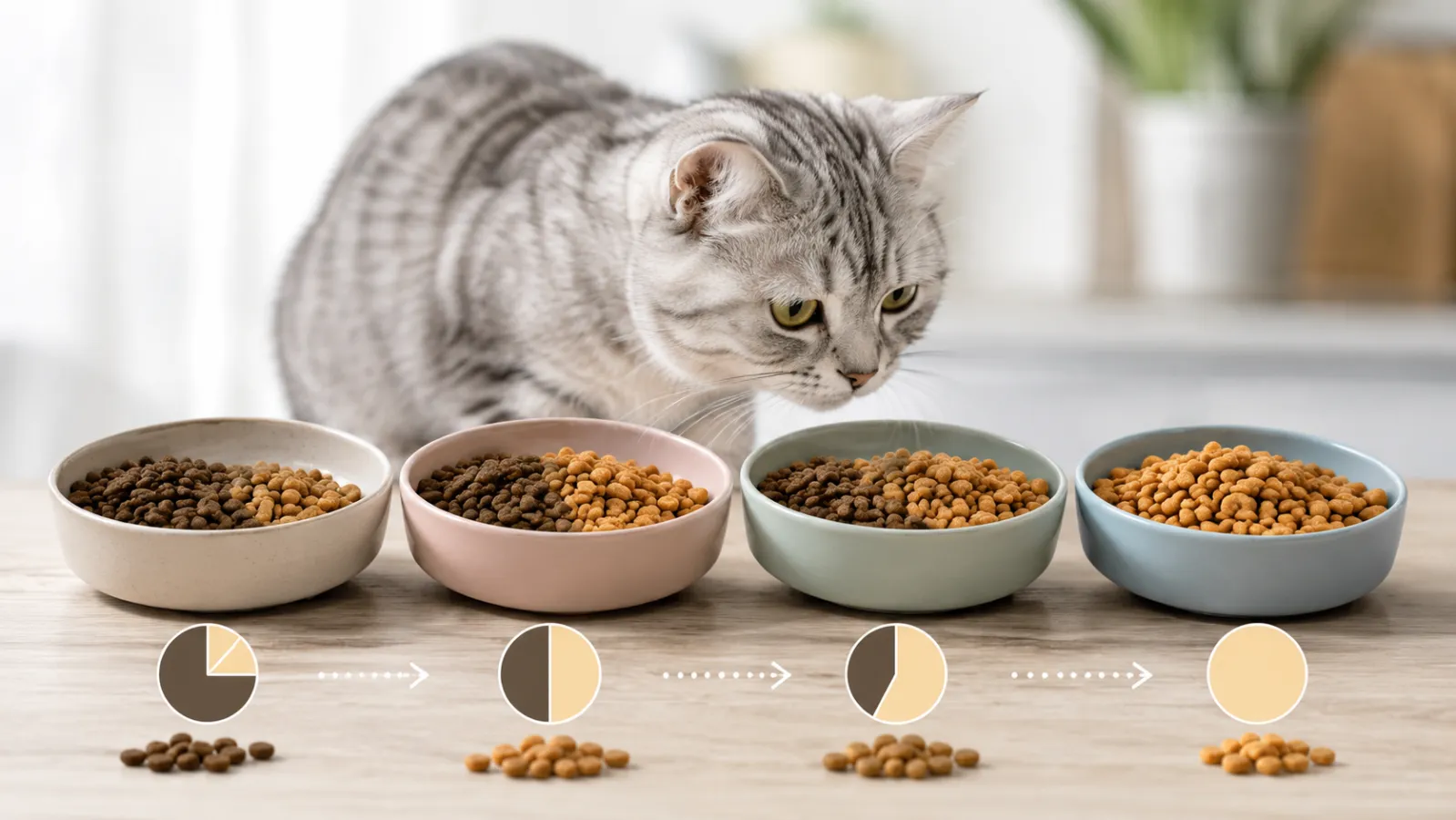
Do not switch to a weight-loss food or dramatically change the feeding plan without considering your cat's existing medical and nutritional needs.
7. Monitor Weight-Loss Progress
Successful weight management requires regular monitoring.
Do not rely only on visual changes because gradual weight loss can be difficult to notice from day to day.
Regular weigh-ins provide objective information.
For smaller cats, a pet scale can be helpful. Another practical method is to weigh yourself while holding your cat and then subtract your own weight. While this may not provide laboratory-level precision, it can help track trends at home.
Keep a simple record that includes:
Date
Body weight
Daily food amount
Treats
Activity level
Changes in behavior or appetite
A weight chart can make progress easier to visualize.
However, the scale is only part of the picture. Continue checking your cat's body condition as well.
If your cat is losing weight too quickly, stops eating, becomes weak, or develops other unusual symptoms, contact your veterinarian promptly.
Cats should lose weight gradually and under appropriate guidance.
8. Choose Healthy Treats
Treats can be an important part of the relationship between cats and their owners, but they should be used carefully during weight management.
High-calorie treats can quickly undermine a calorie-controlled feeding plan.
Instead, choose small, lower-calorie treats and keep track of how many your cat receives each day.
You can also make the regular diet more rewarding. Set aside a small portion of your cat's daily food allowance and use it as a reward during interactive play or training.
This allows your cat to receive rewards without adding significant extra calories.
Avoid frequently giving table scraps. Foods prepared for humans may contain unnecessary calories, salt, fats, or ingredients that are unsafe for cats.
Treats should complement the main diet rather than become a large part of it.
9. Create a More Active Home Environment
Weight management becomes easier when the environment encourages movement naturally.
Cats often prefer short bursts of activity followed by rest, so creating multiple opportunities for movement throughout the day can work well.
Consider placing climbing structures in safe areas of the home.
Rotate interactive toys rather than leaving every toy available all the time. New or temporarily unavailable toys may become more interesting when reintroduced.
Use food puzzles to make meals more engaging.
Move some food stations farther away from sleeping areas so the cat has to walk to reach them.
You can also encourage your cat to climb by placing safe resting areas at different heights.
The objective is not to make the home stressful. Cats should still have quiet places where they can rest and feel secure.
A stimulating environment can encourage healthy activity without forcing exercise.
10. Recognize the Risks of Obesity
Excess body fat can have a serious impact on a cat's health.
Obesity has been associated with conditions such as diabetes, osteoarthritis and reduced mobility. Overweight cats may also have more difficulty grooming themselves effectively and may become less active.
Reduced activity can then lead to further weight gain, creating a cycle that becomes increasingly difficult to break.
Extra body weight can also reduce quality of life. Jumping, climbing, grooming, and moving around the home may become more difficult.
Maintaining an appropriate body condition is therefore not simply about appearance.
It is about helping your cat remain mobile, comfortable, active, and healthy.
11. Avoid Crash Diets
One of the most important rules of feline weight management is to avoid extreme food restriction.
Cats should never be placed on a starvation diet.
Rapid weight loss can create serious health risks, including feline hepatic lipidosis, commonly known as fatty liver disease. This condition can occur when an overweight cat suddenly eats too little.
If your overweight cat stops eating, this should be treated seriously.
Do not assume that refusing food is simply part of the diet process.
Contact your veterinarian promptly if your cat significantly reduces its food intake or stops eating.
A controlled weight-loss plan should allow the cat to gradually lose excess body fat while continuing to receive adequate nutrition.
12. Veterinary Guidance Matters
A veterinarian is an essential part of responsible feline weight management.
Before starting a weight-loss program, your veterinarian can assess your cat's current weight, body condition, muscle mass, age, activity level, and general health.
They may also look for medical conditions that could influence weight.
Your veterinarian can help establish:
An ideal target weight
A safe calorie intake
An appropriate food
A suitable feeding schedule
A realistic rate of weight loss
A monitoring schedule
Exercise and enrichment recommendations
This individualized approach is much safer than relying on generic internet calorie calculators or drastically reducing food portions.
Veterinary guidance becomes even more important if your cat has diabetes, arthritis, digestive problems, kidney disease, urinary issues, or another medical condition.
Common Weight-Management Mistakes to Avoid
Several small habits can interfere with an otherwise good weight-management plan.
Leaving food available all day can make calorie intake difficult to control.
Giving treats whenever your cat begs can gradually increase daily calories.
Failing to measure portions can result in accidental overfeeding.
Assuming an indoor cat needs the same amount of food as a highly active outdoor cat can also lead to excess calories.
Another common mistake is focusing exclusively on exercise while ignoring diet. Physical activity is valuable, but controlling calorie intake is usually an essential component of weight management.
Finally, avoid judging progress too quickly. Healthy weight loss takes time.
Consistency matters more than speed.
A Simple Healthy Weight Management Routine
A practical routine might look like this:
Morning: Measure the day's food and provide the first meal.
Midday: Offer an interactive play session or puzzle feeder.
Afternoon: Provide a small measured meal if appropriate.
Evening: Have another active play session and offer the final meal.
Treats: Use only a small number of low-calorie rewards and include them in the overall calorie allowance.
Weekly: Record body weight and review progress.
Regularly: Check body condition and discuss progress with your veterinarian.
This routine can be adjusted to match your cat's lifestyle.
Final Thoughts
Healthy weight management is one of the most valuable forms of preventive care you can provide for your cat. Maintaining an appropriate body condition can support mobility, activity, comfort, and long-term quality of life.
The process begins with understanding your cat's ideal body condition and determining why excess weight has developed. From there, measured portions, appropriate calorie intake, balanced nutrition, daily activity, healthy treats, and regular monitoring can create a sustainable plan.
Helpful tools such as measuring cups, kitchen scales, interactive toys, puzzle feeders, weight charts, and low-calorie treats can make the process easier.
Most importantly, avoid extreme diets and sudden food restriction. Cats need gradual, carefully controlled weight loss, particularly when they are significantly overweight.
With patience, consistency, and veterinary guidance, many cats can safely reach a healthier weight and maintain it. Healthy weight management is not about making your cat eat less simply for the sake of losing weight. It is about creating a lifestyle that gives your cat the nutrition, activity, and care they need to live a healthier and more comfortable life.