Choosing cat food can be surprisingly complicated. Walk into any pet store in North America and you may find shelves filled with canned food, pâté, shredded meals, dry kibble, high-protein formulas, grain-free recipes, limited-ingredient diets, and products designed for nearly every stage of a cat's life.
With so many options, one question comes up again and again: Is wet food or dry food better for cats?
The answer is not as simple as choosing one option and declaring it universally healthier. Both wet and dry food can be appropriate for cats when the diet is complete and balanced and suited to the individual animal. The best choice depends on factors such as hydration, calorie needs, age, health, eating preferences, lifestyle, budget, and how well the owner can maintain a consistent feeding routine.
Understanding the differences between canned food and dry kibble can help you make a more informed decision and create a feeding plan that works for both you and your cat.
1. Understand the Nutritional Differences
The biggest difference between wet and dry cat food is their moisture content.
Wet food contains a high percentage of water, while dry kibble contains much less moisture. Because the water content changes the concentration of nutrients and calories, comparing foods simply by looking at the ingredient list can be misleading.
A complete and balanced wet food can provide all the essential nutrients a cat needs, including protein, fats, vitamins, minerals, and essential amino acids.
Dry food can also provide complete and balanced nutrition when it is properly formulated. Some dry foods are especially energy-dense, meaning a relatively small amount can contain a substantial number of calories.
This is important for portion control. A cat that eats dry kibble freely throughout the day may consume more calories than necessary without the owner realizing it.
The most important point is that the food should meet your cat's nutritional requirements rather than simply being labeled as "wet" or "dry."
When choosing a product in North America, look for a nutritional adequacy statement indicating that the food is complete and balanced for the appropriate life stage.
2. Wet Food Offers a Major Hydration Advantage
One of the strongest arguments for wet food is its moisture content.
Cats are not always enthusiastic water drinkers. Some cats obtain a significant amount of their daily water from their food, which means moisture-rich diets can be a practical way to support hydration.
Canned food contains substantially more water than dry kibble. This can be particularly helpful for cats that rarely visit their water bowl.
Hydration is important for normal body functions and is especially relevant when a veterinarian is managing certain urinary or kidney-related conditions. However, cats with medical conditions should receive individualized dietary advice rather than switching foods based solely on general recommendations.
Wet food can also be especially useful for cats that have difficulty drinking enough water on their own.
Providing fresh drinking water remains important regardless of diet. A cat eating wet food should still have clean water available throughout the day.
For some cats, a combination of wet food and multiple fresh-water stations can create a very effective hydration routine.
3. Does Dry Food Help Dental Health?
Dental health is one area where cat owners often hear conflicting information.
Some people believe dry kibble automatically cleans a cat's teeth. While certain specially designed dental diets can help reduce plaque or tartar through mechanical action, ordinary dry kibble should not be considered a substitute for proper dental care.
Most standard kibble breaks apart relatively easily when a cat eats it, meaning it does not necessarily scrape the teeth clean in the way some owners expect.
Dental health is better supported through regular veterinary dental evaluations, appropriate home dental care, and products specifically designed for oral health when recommended.
There are specially formulated dental diets and treats available, but their effectiveness depends on their design and how they are used.
Wet food is not automatically harmful to a cat's teeth either. Cats can eat balanced wet diets while still receiving appropriate dental care.
The key lesson is simple: do not choose dry food solely because you believe regular kibble will prevent dental disease.
4. Compare the Cost of Wet and Dry Food
Price is an important consideration for many cat owners.
Dry kibble is generally less expensive per calorie and is easier to purchase, transport, and store in large quantities.
Wet food usually costs more per serving, particularly when feeding larger cats or multiple cats.
However, looking only at the price of a can or bag does not tell the entire story. Calorie density varies between products, so you need to compare the actual amount of food required per day.
A less expensive food is not always the most economical option if your cat needs a larger quantity to meet its nutritional requirements.
Many households therefore use a combination approach.
For example, a cat might receive wet food once or twice a day while measured dry kibble makes up part of the remaining calorie allowance.
This can provide some of the hydration benefits of wet food while keeping food costs manageable.
When comparing brands, consider cost per day rather than simply the cost per package.
5. Consider Convenience and Lifestyle
Dry kibble is extremely convenient.
It can be measured quickly, stored easily, and transported without refrigeration before opening. This makes it practical for busy households, travel, automatic feeders, and multi-cat homes.
Wet food requires more attention once opened. Any unused portion generally needs to be refrigerated promptly and should be handled according to the manufacturer's storage instructions.
Wet food can also be less convenient when owners are away from home for long periods.
However, convenience should not automatically override nutritional needs.
If your cat benefits from a moisture-rich diet but you are away during the day, an owner might use a combination of feeding methods. A measured amount of dry food could be provided through a timed feeder while wet food is served before or after work.
Automatic feeders can also help prevent accidental overfeeding when they are programmed with controlled portions.
The best diet is one that is nutritionally appropriate and realistic enough for the owner to maintain consistently.
6. Combination Feeding Can Offer Flexibility
Combination feeding means using both wet and dry food as part of the same overall diet.
For many cats, this is an excellent middle ground.
A cat may receive canned food at breakfast and dinner while receiving a measured amount of dry kibble through the day.
Another cat may receive mostly dry food with a small portion of wet food to increase moisture intake.
Combination feeding can provide several practical benefits:
Increased dietary moisture
Greater variety in texture
Convenience for owners
Flexible meal planning
Easier portion control
Potentially greater acceptance among picky eaters
The most important consideration is total calorie intake.
If you add wet food to your cat's normal dry-food ration without reducing the amount of kibble, you may accidentally increase daily calories.
Instead, calculate the combined daily amount so that wet and dry food fit within the cat's calorie needs.
7. Age Can Influence the Best Food Choice
A cat's nutritional needs change throughout life.
Kittens require food formulated to support growth and development. Their diets generally need to provide appropriate levels of energy, protein, vitamins, minerals, and other essential nutrients.
For kittens, the key consideration is not simply wet versus dry. The food should be appropriate for growth and complete and balanced for the required life stage.
Adult cats usually need a maintenance diet that supports their activity level and body condition.
Senior cats may have different needs depending on their health, muscle condition, appetite, and activity. Some older cats may benefit from softer textures if dental problems make chewing difficult.
Wet food can be especially appealing to cats with reduced appetite because of its aroma and texture.
At the same time, some senior cats prefer dry food and continue eating it comfortably.
There is no universal rule that older cats must eat canned food or that kittens must eat kibble. The best choice depends on the individual cat and veterinary recommendations.
8. Think About Calorie Density and Weight Management
One of the biggest issues with dry food is that it is calorie-dense.
Because dry kibble contains relatively little water, calories are concentrated into a smaller quantity of food.
This makes portion control extremely important.
A cat that casually grazes from a full bowl all day may consume significantly more calories than it needs.
Wet food contains more water, which means the same volume of food may contain fewer calories depending on the product.
This can make moisture-rich diets useful for some cats that need better portion control.
However, wet food is not automatically a weight-loss food.
Some canned foods are highly calorie-dense, while some dry foods are specifically formulated for weight management.
The important factors are calories, nutritional balance, serving size, and your cat's individual needs.
If your cat is overweight, do not simply reduce food dramatically. Cats need controlled, gradual weight loss, and a veterinarian can help determine a safe calorie target.
9. Storage and Food Safety Matter
Proper storage helps protect your cat from spoiled or contaminated food.
Dry kibble should generally be stored in a cool, dry place and protected from excessive heat and moisture. Keeping it in its original packaging inside an airtight container can help maintain freshness while preserving important label information.
Wet food requires more attention.
Once opened, unused canned food should generally be covered and refrigerated according to the manufacturer's directions.
Do not leave wet food sitting out for extended periods, especially in warm environments.
Food bowls should also be washed regularly. Residue from wet food can become unpleasant or contaminated if bowls are not cleaned properly.
If your cat suddenly refuses a food that it normally enjoys, check the food's freshness, smell, storage conditions, and expiration information.
Good food hygiene is an important part of overall pet care.
10. How to Choose a Quality Cat Food
The number of marketing claims on cat food packages can make shopping confusing.
You may see phrases such as:
High protein
Natural ingredients
Premium
Grain-free
Limited ingredient
Holistic
Indoor formula
Sensitive stomach
While these labels can provide useful information, they should not be the only factors you use to choose food.
Start with nutritional completeness.
Look for a statement showing that the food is complete and balanced for the appropriate life stage.
Next, consider calorie content, feeding guidelines, ingredient quality, your cat's preferences, and any specific nutritional requirements.
A high-protein formula can be appropriate for many cats, but "high protein" alone does not guarantee that a product is right for your particular cat.
Likewise, grain-free does not automatically mean healthier. Cats require certain nutrients, not fashionable ingredient lists.
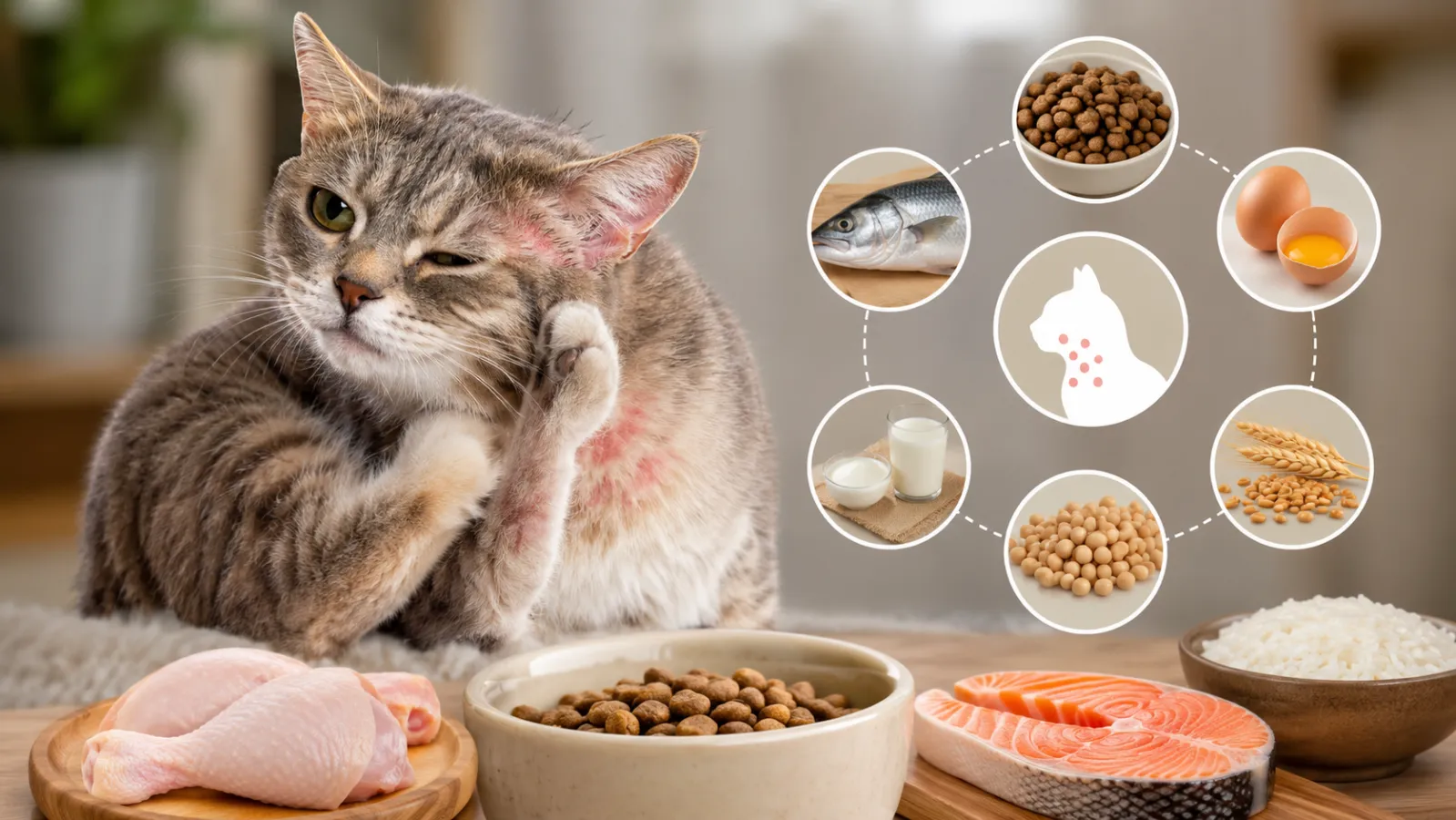
If your cat has allergies, digestive problems, urinary concerns, kidney disease, diabetes, or another medical condition, your veterinarian may recommend specific nutritional characteristics or a therapeutic diet.
11. Wet Food Can Be Helpful for Picky Eaters
Some cats are extremely selective about what they eat.
Texture can matter just as much as flavor. One cat may prefer smooth pâté, while another likes shredded meat in gravy or chunks with sauce.
Wet food often provides more aroma than dry kibble, which can make it appealing to cats with reduced appetite.
This can be especially useful when a cat is recovering from illness or experiencing age-related changes in appetite.
However, a sudden loss of appetite should never automatically be treated as simple pickiness.
Cats can become seriously ill when they stop eating, so a significant and unexpected change in appetite should be discussed with a veterinarian.
Offering different textures can sometimes improve acceptance, but nutritional adequacy should remain the priority.
12. Should You Feed Only Wet Food or Only Dry Food?
There is no universal requirement that healthy cats must eat exclusively wet food or exclusively dry food.
Some cats do extremely well on complete and balanced dry food.
Others thrive on wet food.
Many do well with combination feeding.
The right choice depends on the cat.
When deciding, consider:
Hydration
Calorie requirements
Age
Body condition
Health status
Dental health
Eating preferences
Owner schedule
Food budget
Storage requirements
A cat that loves wet food and rarely drinks water may benefit from a moisture-rich feeding plan.
A cat that prefers dry food and drinks adequately may do perfectly well with a complete and balanced kibble.
Some owners choose combination feeding because it provides flexibility and helps their cats become accustomed to more than one food texture.
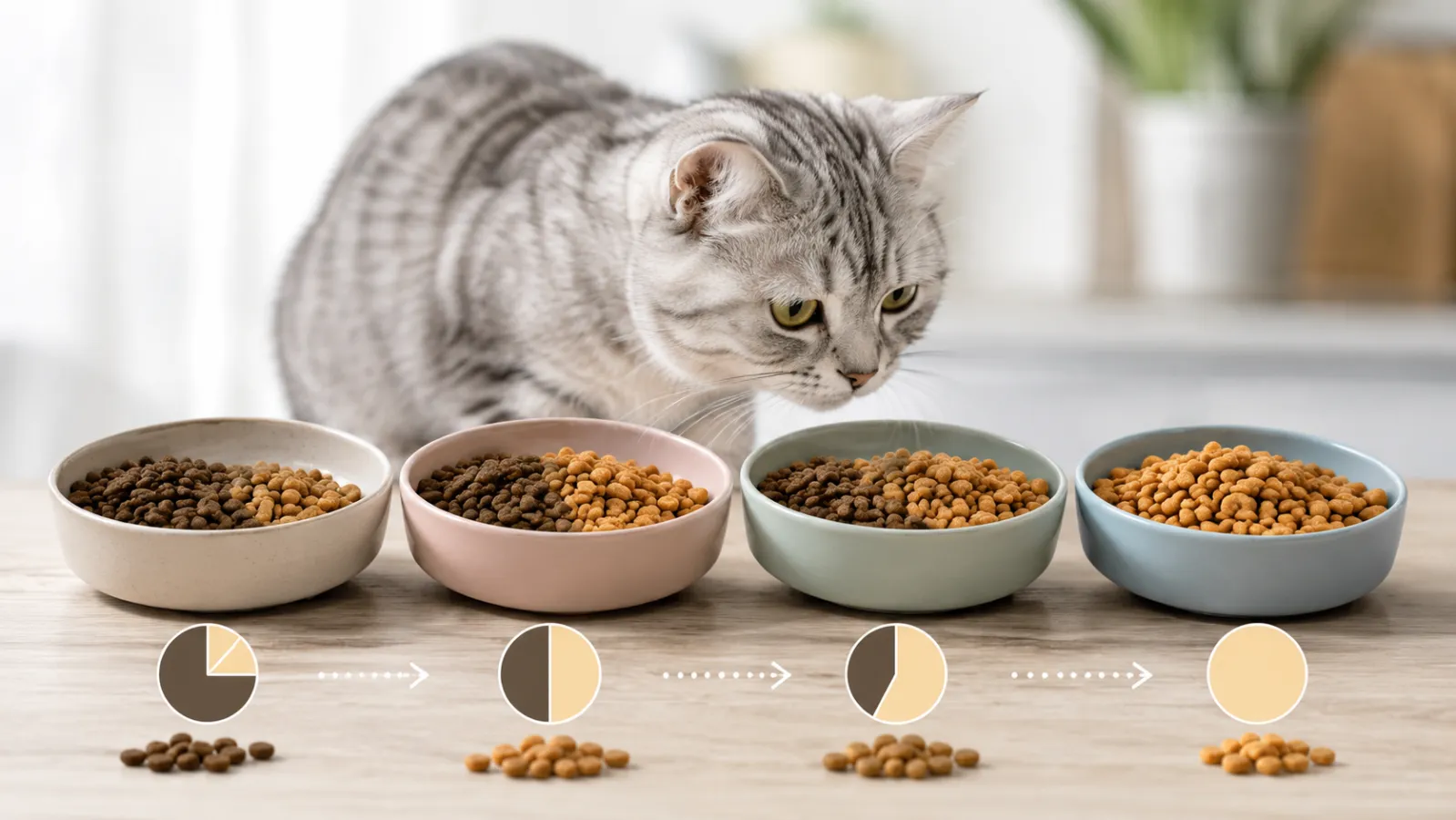
13. Transition Between Foods Gradually
Cats can be sensitive to sudden changes in diet.
If you decide to switch from dry food to wet food, from one brand to another, or from one formula to another, a gradual transition is often easier for the digestive system and may improve acceptance.
Instead of replacing the old food completely in one meal, gradually increase the amount of the new food while reducing the old food.
The exact transition period can vary depending on the cat and the diets involved.
Some cats adapt quickly, while others require more time.
If your cat refuses the new food, develops persistent vomiting or diarrhea, or stops eating, contact your veterinarian.
A successful transition should prioritize both nutritional adequacy and the cat's willingness to eat.
14. Make Mealtime Work for Your Cat
Feeding should be more than putting food in a bowl.
Cats naturally engage in hunting behaviors such as searching, stalking, and capturing food. Indoor cats may have fewer opportunities to express these behaviors.
Puzzle feeders and food-dispensing toys can make meals more engaging.
For dry kibble, puzzle feeders can encourage cats to work for small portions of their daily food.
For wet food, measured portions can be served in appropriate interactive feeding tools designed for moist diets.
You can also place multiple small meals throughout the day if your schedule allows.
These strategies can help provide mental stimulation while supporting portion control.
15. Common Feeding Mistakes to Avoid
Several mistakes can make an otherwise healthy diet less effective.
One common mistake is assuming that dry food can be left out indefinitely without measuring it.
Another is adding wet food on top of a full daily ration of dry food. This can increase calorie intake quickly.
Giving too many treats can also undermine portion control.
Some owners switch foods repeatedly because they think their cat needs constant variety. While variety can be useful for some cats, frequent unnecessary changes may create digestive problems or encourage selective eating.
Another mistake is choosing food based entirely on advertising claims rather than nutritional adequacy and individual needs.
Finally, do not force a cat to eat a specific diet without considering its overall health and appetite.
A cat that refuses food for a prolonged period needs veterinary attention.
16. A Practical Feeding Example
A healthy adult cat might have a daily routine such as:
Morning: A measured portion of complete and balanced wet food.
Afternoon: A controlled portion of dry kibble in a puzzle feeder or automatic feeder.
Evening: Another measured portion of wet food.
Throughout the day: Fresh drinking water.
Treats: A small number of low-calorie treats included within the daily calorie allowance.
This is only an example.
Some cats may need different portions, different meal frequencies, or a completely different diet based on age, health, and activity level.
The important principle is to measure total daily intake rather than choosing food portions based on appearance or the size of the bowl.
Final Thoughts
The question of whether wet food or dry food is better for cats does not have one universal answer.
Wet food offers an important moisture advantage and can be especially appealing to cats that prefer soft textures or do not drink much water. Dry kibble offers convenience, easy storage, simple portioning, and often a lower cost per calorie.
Both can provide excellent nutrition when they are complete and balanced and appropriate for your cat.
For many North American households, combination feeding offers a practical compromise. It can provide moisture-rich meals while maintaining the convenience of measured dry kibble.
The most important factors are not whether the food comes from a can or a bag. Focus on nutritional adequacy, calorie control, hydration, life-stage requirements, your cat's health, and consistent feeding habits.
Choose food based on your cat rather than marketing trends. Measure portions carefully, maintain fresh water, store food safely, monitor your cat's weight and appetite, and consult a veterinarian when health conditions or nutritional concerns make the decision more complicated.
A good feeding plan is one that provides complete nutrition, fits your cat's individual needs, and is practical enough for you to follow consistently. Whether you choose canned food, dry kibble, or a combination of both, thoughtful feeding can play an important role in keeping your cat healthy, hydrated, active, and comfortable throughout life.