Setting up a freshwater aquarium can be an exciting experience. Watching colorful fish swim through a beautifully decorated tank can bring a relaxing and rewarding element to your home. However, a successful aquarium requires more than choosing a tank, adding water, and buying fish.
Beginners often make simple mistakes during the first few weeks or months of fishkeeping. Some problems may seem harmless at first but can eventually lead to poor water quality, stressed fish, algae problems, disease, or even fish loss.
The good news is that most beginner aquarium mistakes are preventable.
You do not need to be an expert aquarist to maintain a healthy freshwater aquarium. You simply need to understand the basics, establish a stable environment, choose compatible fish, feed responsibly, and monitor water conditions regularly.
Four areas deserve particular attention from the beginning: avoiding overstocking, completing the aquarium cycling process, preventing overfeeding, and regularly testing water.
Here are 20 common freshwater aquarium mistakes beginners should avoid.
1. Overstocking the Aquarium
One of the most common mistakes is adding too many fish.
A new aquarium can look empty when only a few fish are swimming inside, which may tempt beginners to keep adding more. However, every fish contributes waste to the aquarium and requires oxygen, swimming space, food, and appropriate living conditions.
Adding too many fish can overwhelm the aquarium's biological filtration and make water quality more difficult to maintain.
Before adding fish, consider:
- Adult fish size
- Tank volume
- Swimming requirements
- Filtration capacity
- Species compatibility
- Schooling requirements
- Waste production
Never plan your stocking based only on how large the fish look when purchased. Many fish sold in stores are juveniles and can grow considerably.
A lightly stocked aquarium is often easier to maintain than one packed with fish.
2. Skipping the Aquarium Cycling Process
Another major beginner mistake is adding fish before the aquarium has developed an established biological filtration system.
The aquarium nitrogen cycle is essential because beneficial microorganisms help process fish waste.
Fish waste can contribute ammonia to the water. Beneficial bacteria help convert ammonia into nitrite and then nitrate.
Ammonia and nitrite can be harmful to fish, so allowing the biological filtration system to establish before fully stocking the aquarium is an important part of responsible fishkeeping.
A new aquarium should therefore not be treated as immediately ready for a large fish population simply because the water looks clear.
Cycling takes time and should be monitored with appropriate water tests.
3. Adding Too Many Fish at Once
Even after an aquarium has been properly cycled, adding a large number of fish at the same time can create an unnecessary biological load.
The beneficial bacterial population needs to respond to the amount of waste being produced.
Adding fish gradually allows you to observe how the aquarium responds and gives you an opportunity to monitor water parameters between additions.
A better approach is to:
- Add an appropriate number of fish
- Monitor water quality
- Allow the aquarium to stabilize
- Observe fish behavior
- Add additional fish only when appropriate
Slow and careful stocking is usually safer than trying to fill the aquarium immediately.
4. Overfeeding Fish
Many beginners assume that hungry-looking fish need more food.
However, fish often appear eager whenever food enters the aquarium. This does not necessarily mean they need a larger meal.
Overfeeding can result in:
- Uneaten food
- Increased waste
- Poor water quality
- Excessive algae
- Higher biological load
- Fish health problems
Feed an appropriate amount for your fish rather than feeding until they stop showing interest.
The correct portion depends on the species, fish size, age, activity level, and type of food.
If food regularly remains uneaten, reduce the portion.
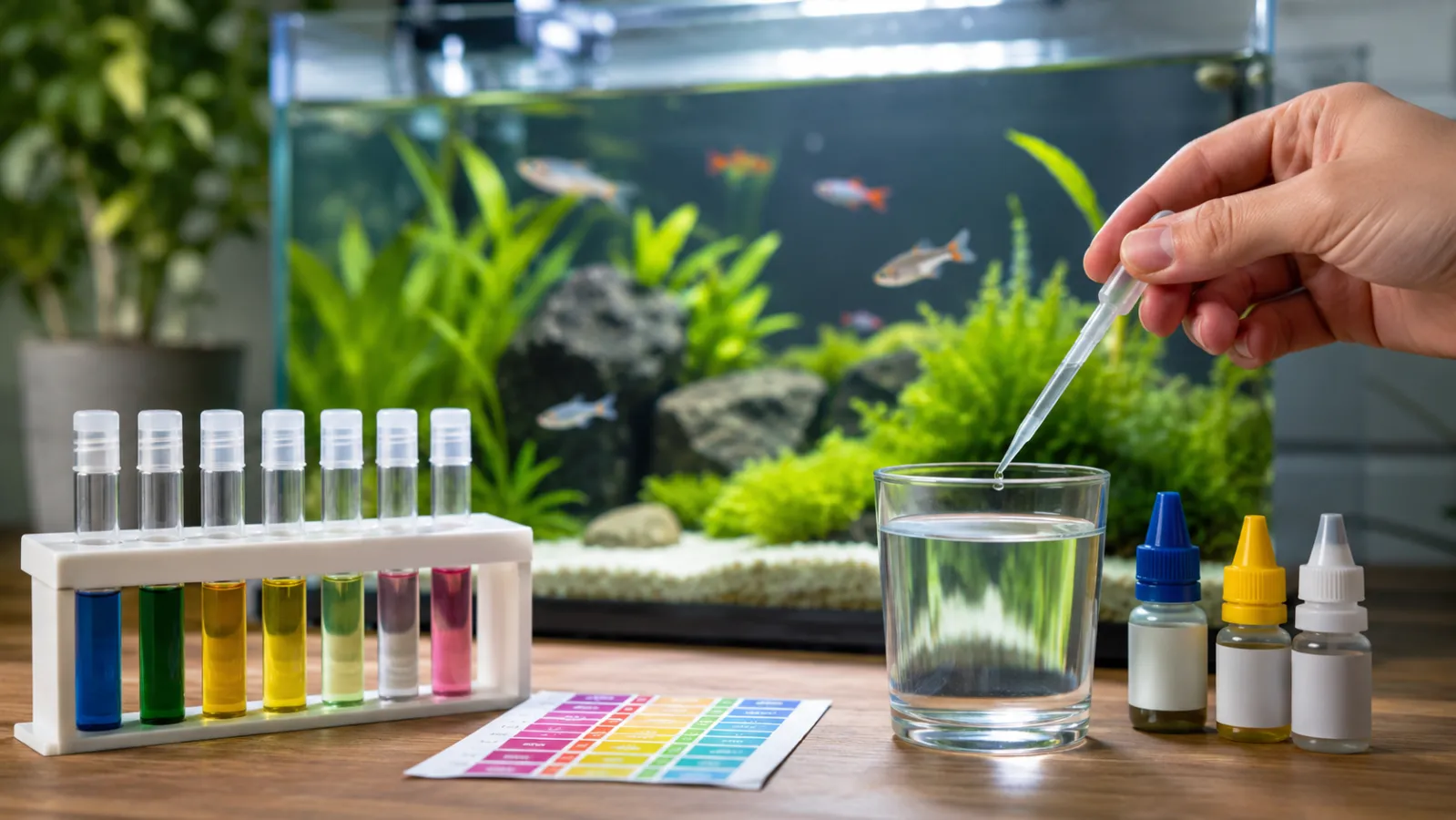
5. Neglecting Water Tests
Clear water does not necessarily mean healthy water.
Ammonia, nitrite, nitrate, pH, and other parameters can change without obvious visual signs.
Regular water testing allows you to identify problems before fish show severe symptoms.
Important parameters to monitor may include:
- Ammonia
- Nitrite
- Nitrate
- pH
- Temperature
The frequency of testing depends on the aquarium's age, stocking level, maintenance routine, and any problems that may be occurring.
New aquariums generally require particularly careful monitoring while the biological filtration system becomes established.
6. Choosing Fish Without Checking Compatibility
A fish may look perfect in the store but still be a poor choice for your aquarium.
Different species can have very different:
- Temperaments
- Adult sizes
- Temperature requirements
- Water chemistry preferences
- Swimming behaviors
- Feeding habits
- Schooling requirements
For example, an aggressive or territorial fish may not be suitable for a peaceful community aquarium.
Similarly, a fish that grows very large may eventually outgrow a tank even if it looks small when purchased.
Before buying a fish, research the species rather than relying only on its appearance or a general label such as "community fish."
7. Ignoring the Adult Size of Fish
Buying fish based on their current size is a common mistake.
A juvenile fish may look perfectly suited to a small aquarium, but its adult size may be dramatically different.
Always ask:
- How large will this fish become?
- How quickly does it grow?
- How much swimming space does it need?
- Will it become territorial?
- Could it eat smaller tankmates?
Planning for adult size prevents future overcrowding and compatibility problems.
A responsible aquarium owner plans for the fish the animal will become, not just the fish being purchased today.
8. Performing Poor Water Changes
Water changes are an important part of aquarium maintenance, but beginners sometimes approach them incorrectly.
Some may avoid water changes for too long, while others may perform large changes without considering temperature or water chemistry.
When performing a water change:
- Use appropriately conditioned water
- Avoid extreme temperature differences
- Follow a consistent maintenance schedule
- Remove appropriate amounts of water
- Clean the aquarium without unnecessarily disrupting the biological system
Water changes help manage accumulating nitrate and other dissolved waste.
However, water changes should be performed thoughtfully rather than as a reaction to every small problem.
9. Cleaning Everything Too Thoroughly
A common misconception is that an aquarium should be completely sterilized during every cleaning.
An established aquarium contains beneficial microorganisms on surfaces such as filter media, substrate, and decorations.
Aggressively cleaning or replacing all biological filter media at once can disrupt the biological filtration system.
Avoid unnecessarily sterilizing the entire aquarium.
Instead, focus on removing excess waste while preserving the established biological environment.
When cleaning filter media, follow the equipment manufacturer's instructions and use appropriate aquarium water when necessary to avoid unnecessarily damaging beneficial microorganisms.
10. Ignoring Fish Behavior
Your fish can provide valuable information about the aquarium.
Beginners sometimes focus only on whether the fish are alive and eating. However, changes in behavior can provide early warning signs.
Pay attention to:
- Swimming patterns
- Appetite
- Breathing
- Hiding
- Aggression
- Fin condition
- Body appearance
- Interaction with tankmates
For example, a normally active fish that suddenly hides all day may be experiencing stress. Fish gasping near the surface may indicate an oxygenation or water-quality issue. Repeated chasing may indicate compatibility or territorial problems.
Knowing what normal behavior looks like makes unusual behavior easier to recognize.
11. Choosing the Wrong Aquarium Size
Some beginners buy a very small aquarium because they assume it will be easier to maintain.
In reality, smaller aquariums can experience changes in temperature and water chemistry more quickly because they contain less water.
This does not mean small aquariums are impossible to maintain. It means they may require careful management.
Choose an aquarium based on the fish you want to keep rather than simply choosing the smallest tank available.
A larger aquarium can often provide greater stability and more flexibility for beginners.
12. Using an Inadequate Filter
Filtration is one of the most important components of an aquarium.
A filter helps provide mechanical filtration, water movement, and biological filtration.
The correct filter depends on:
- Aquarium volume
- Fish population
- Fish size
- Waste production
- Desired water movement
- Filter design
Do not assume that a filter is automatically adequate because it fits physically on the aquarium.
Check its recommended aquarium size and consider the biological load of your fish.
Highly stocked aquariums may place greater demands on filtration than lightly stocked tanks.
13. Ignoring Aquarium Temperature
Different fish have different temperature requirements.
Tropical fish generally require warmer water than coldwater species, and maintaining stable conditions is important.
Use a reliable aquarium thermometer rather than assuming that room temperature is suitable.
If you keep tropical fish, use an appropriately sized aquarium heater when necessary.
Check the temperature regularly and investigate sudden changes.
A heater should be selected according to aquarium size, fish requirements, and room conditions rather than simply choosing the most powerful option.
14. Adding Fish Before Preparing the Aquarium
Another common mistake is buying fish before the aquarium is properly prepared.
Before bringing fish home, make sure you have:
- An appropriate aquarium
- Suitable filtration
- Appropriate heating if required
- A thermometer
- Water conditioner
- Appropriate substrate
- Suitable food
- Basic testing equipment
- Appropriate decorations or hiding places
Preparing the environment first makes the transition easier and reduces the temptation to make rushed purchases.
15. Choosing Fish Based Only on Appearance
Colorful fish can be extremely tempting.
However, appearance should never be the main factor determining whether a fish belongs in your aquarium.
A beautiful fish may:
- Grow too large
- Be aggressive
- Require specialized water conditions
- Need a large social group
- Produce significant waste
- Require a different diet
- Need more swimming space
Research should come before purchase.
Choose fish that fit your aquarium rather than changing your aquarium around an impulse purchase.
16. Forgetting About Schooling Fish
Some species should be kept in groups.
Tetras, rasboras, danios, Corydoras, and other social species may need appropriate groups to feel secure and display natural behavior.
Buying one or two individuals simply because you want to add different species can result in an unnatural social environment.
Before purchasing schooling fish, research the recommended group size for the exact species.
A community aquarium does not necessarily need many different species. A few carefully selected species kept in appropriate groups can create a much healthier environment.
17. Ignoring the Importance of Oxygenation
Fish need dissolved oxygen.
Oxygen levels can be affected by:
- Water temperature
- Surface movement
- Filtration
- Stocking level
- Aquarium plants
- Organic waste
Good surface movement helps support gas exchange between the aquarium water and atmosphere.
If fish are repeatedly gasping at the surface or gathering around areas of strong water movement, investigate the cause.
Do not automatically assume that adding an air pump is the only solution. Check water quality, temperature, filtration, and stocking as well.
18. Making Too Many Changes at Once
When something goes wrong, beginners may change several things simultaneously.
For example, they may:
- Replace filter media
- Add chemicals
- Change the water
- Add medication
- Adjust the heater
- Move decorations
Changing everything at once can make it difficult to determine what caused the original problem.
Instead, identify the most likely issue and make appropriate changes carefully.
Monitor the aquarium afterward.
A systematic approach makes troubleshooting much easier.
19. Not Quarantining New Fish
New fish can introduce diseases or parasites into an established aquarium.
A quarantine aquarium provides an opportunity to observe new fish before they join the main population.
During quarantine, monitor:
- Appetite
- Swimming behavior
- Physical appearance
- Breathing
- Waste
- Signs of disease
Not every fishkeeper has a separate quarantine setup, but it can be particularly valuable when protecting an established aquarium.
20. Trying to Fix Problems Without Finding the Cause
Perhaps the most important beginner lesson is to identify the underlying cause of a problem.
If fish become inactive, do not immediately assume they need medicine.
If algae appears, do not automatically add an algae treatment.
If water becomes cloudy, do not simply replace everything.
Ask:
What changed?
Then investigate:
- Water parameters
- Feeding
- Stocking
- Filtration
- Temperature
- Lighting
- Maintenance
- Fish compatibility
Understanding the cause allows you to correct the problem instead of repeatedly treating the symptoms.
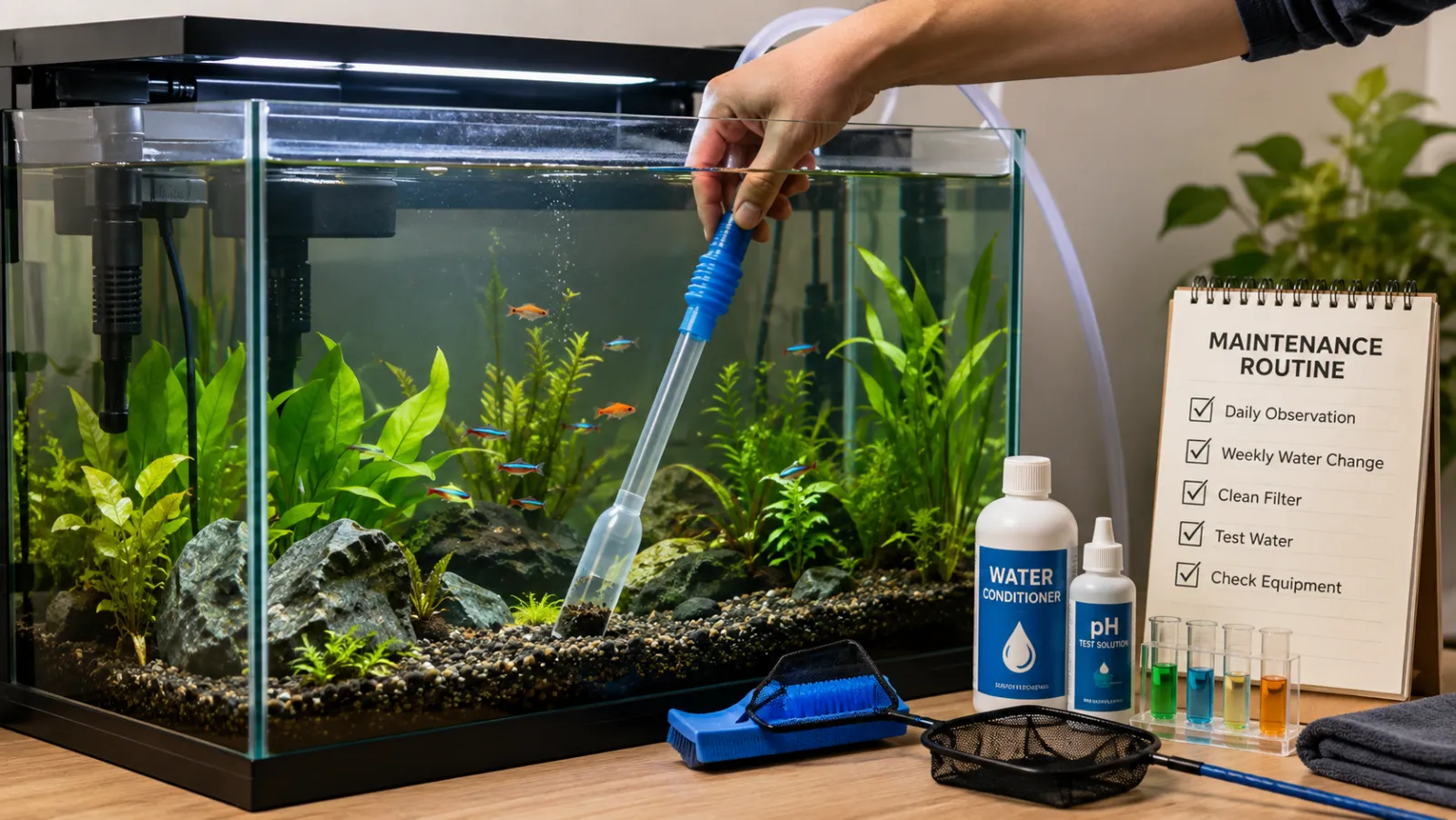
A Simple Beginner Aquarium Maintenance Routine
A straightforward routine can prevent many common mistakes.
Daily
Observe your fish and check their behavior.
Look for unusual swimming, aggression, appetite changes, or signs of illness.
Feed appropriate portions and remove obvious excess food when necessary.
Weekly
Check aquarium equipment and perform the appropriate water maintenance for your setup.
Test water parameters according to your aquarium's needs.
Inspect the substrate, plants, and decorations for excessive waste.
Monthly
Review your aquarium's overall condition.
Ask whether the fish are growing normally, whether the aquarium is becoming overcrowded, and whether equipment remains appropriate.
Check that your stocking plan still makes sense as fish mature.
Final Thoughts
Freshwater fishkeeping does not have to be complicated, but beginners need to understand that an aquarium is a living ecosystem rather than simply a container of water.
The most important mistakes to avoid include overstocking, skipping the cycling process, overfeeding, and neglecting water tests. These problems can contribute to poor water quality and unnecessary stress for fish.
Research fish before purchasing them, plan for adult size, cycle the aquarium properly, introduce fish gradually, feed responsibly, and monitor water conditions regularly.
Most importantly, learn to observe your aquarium.
Healthy fish should not simply survive. They should have suitable water conditions, enough space, compatible tankmates, appropriate nutrition, and an environment that supports natural behavior.
By avoiding common beginner mistakes and taking a patient approach, you can build a freshwater aquarium that is healthier, more stable, and much easier to enjoy over the long term.