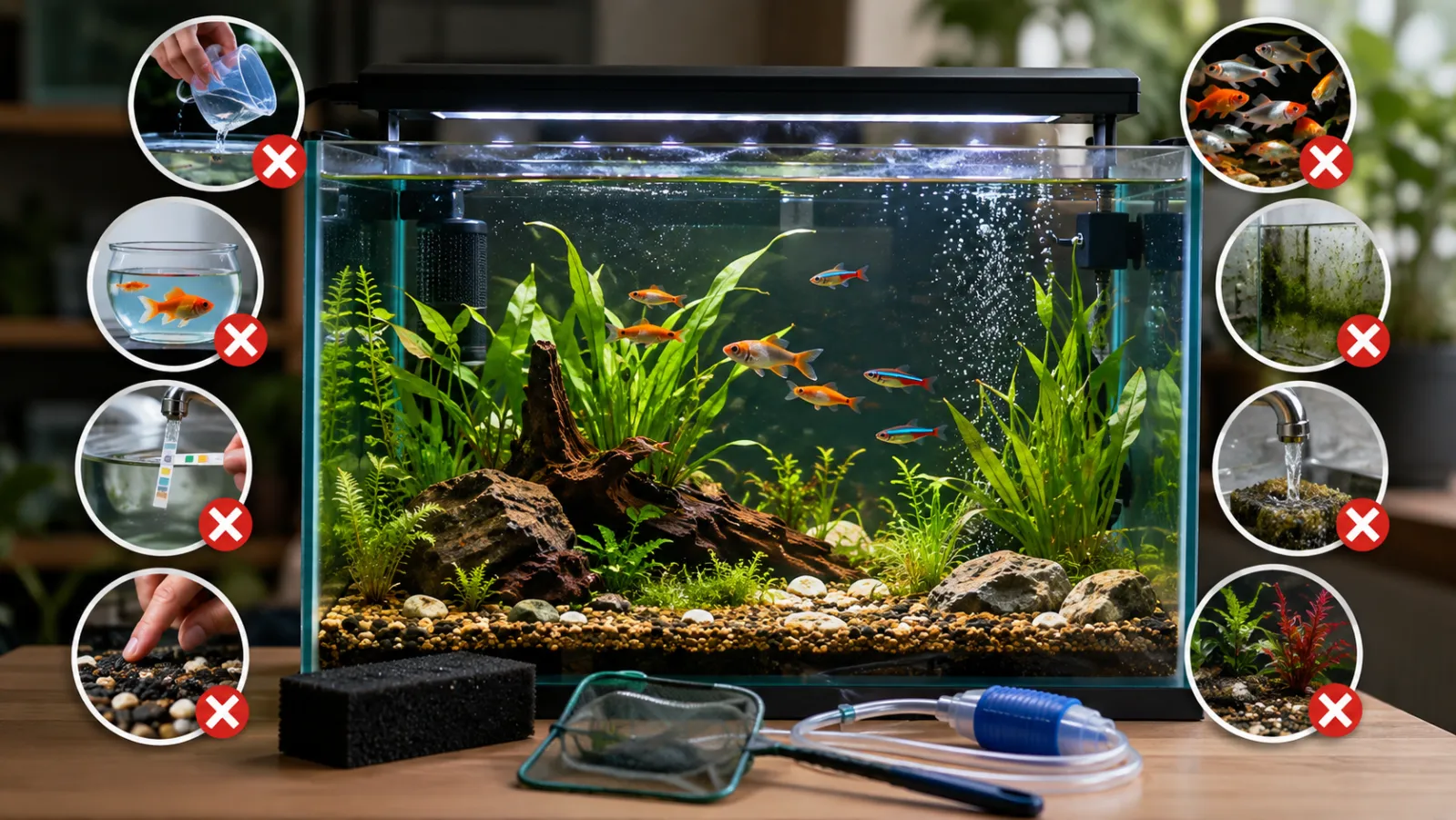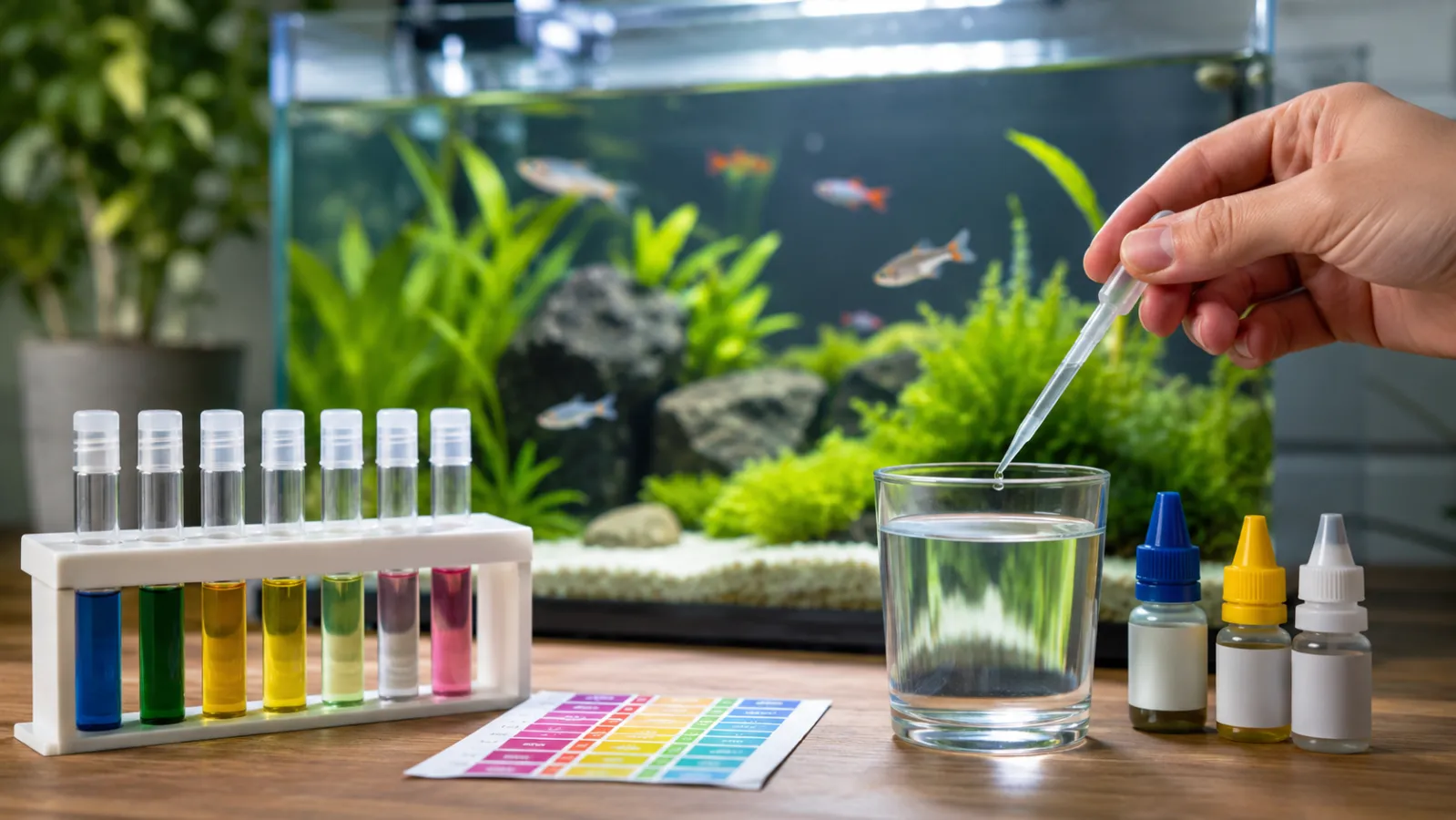
Keeping an aquarium healthy does not have to mean spending hours every week cleaning, testing, and rearranging everything inside the tank. In fact, one of the best ways to make aquarium care easier is to create a simple maintenance routine that you can follow consistently.
Many aquarium problems develop because maintenance is irregular. A water change gets delayed, the filter is forgotten, algae is allowed to spread, or water testing only happens after fish start behaving strangely. Small issues can gradually become bigger problems when there is no routine in place.
A consistent schedule helps you stay ahead of these issues. Instead of waiting for the aquarium to look dirty or for water quality to deteriorate, you can build small maintenance tasks into your daily and weekly habits.
A good aquarium routine should include daily observations, weekly checks, regular water testing, and periodic equipment maintenance. The exact schedule depends on your tank size, fish population, filtration, plants, and water conditions, but the basic approach can work for almost any home aquarium.
1. Why an Aquarium Maintenance Routine Matters
An aquarium is a living ecosystem. Fish produce waste, bacteria process that waste, plants interact with nutrients, and filtration helps keep the water moving and cleaner.
Because so many processes are happening continuously, aquarium care is most effective when it is also continuous.
A maintenance routine can help you:
- Catch problems early
- Keep water quality more stable
- Prevent excessive waste buildup
- Maintain effective filtration
- Control algae
- Reduce emergency cleaning
- Make aquarium care less stressful
Without a routine, it is easy to forget small tasks. Over time, missed maintenance can affect water chemistry and fish health.
The goal is not to create a complicated schedule. The goal is to create a routine that is simple enough to follow consistently.
2. Start With Daily Aquarium Observations
Daily observation is one of the easiest and most valuable maintenance tasks.
You do not need to perform a major cleaning every day. Instead, spend a few minutes looking carefully at your aquarium.
Watch your fish.
Ask yourself:
Are they swimming normally?
Are they eating as usual?
Are any fish hiding more than normal?
Is anyone gasping near the surface?
Do the fish appear unusually weak or stressed?
Behavioral changes can provide early clues that something is wrong.
Also check the aquarium itself.
Look at:
- Water clarity
- Water level
- Temperature
- Filter flow
- Heater operation
- Visible waste
- Uneaten food
- Excessive algae
Daily observation becomes particularly useful once you know what normal behavior looks like for your fish.
3. Keep Feeding Part of Your Routine
Feeding is one of the most important daily aquarium tasks, but it is also an area where beginners commonly make mistakes.
Overfeeding can increase waste, contribute to water-quality problems, and encourage algae growth.
Instead of feeding based on how excited your fish appear, follow a controlled feeding routine appropriate for their species and dietary requirements.
During feeding, observe whether the fish actually consume the food.
If food regularly remains uneaten, review the amount being offered.
Your feeding routine should include:
- Appropriate portions
- Suitable food for the species
- Consistent timing
- Observation during feeding
- Removal of obvious uneaten food when necessary
Good feeding habits reduce the amount of cleaning your aquarium requires later.
4. Create a Weekly Water-Quality Check
A weekly check is a practical way to monitor your aquarium's overall condition.
Depending on your setup, this may include testing:
- Ammonia
- Nitrite
- Nitrate
- pH
- Temperature
Some aquariums may also require monitoring of:
- GH
- KH
- Salinity
- Phosphate
- Calcium
- Other species-specific parameters
You do not necessarily need to test every possible parameter every week. Focus on the measurements that are relevant to your aquarium.
Water testing is especially important if:
- The aquarium is newly established
- Fish were recently added
- Fish behavior has changed
- The filter has stopped working properly
- Feeding has increased
- There has been a major maintenance change
The purpose of testing is not to chase perfect numbers. It is to understand whether your aquarium is stable and appropriate for your livestock.
5. Schedule Regular Partial Water Changes
Water changes are an important part of routine aquarium care.
Even a well-maintained aquarium gradually accumulates dissolved waste and nitrate. Partial water changes help dilute these compounds and maintain better water quality.
For many home aquariums, a weekly partial water change is a practical starting point, although the ideal amount and frequency depend on the aquarium.
When planning your water-change day:
Prepare replacement water properly.
Treat tap water appropriately and make the temperature reasonably close to the aquarium's existing conditions.
Remove an appropriate amount of aquarium water.
Avoid unnecessarily changing nearly all of the water during routine maintenance.
Vacuum areas where waste has accumulated.
Use a gravel vacuum or siphon to remove debris from the substrate.
Refill the aquarium slowly.
This helps reduce substrate disturbance and unnecessary stress.
A consistent water-change routine is usually better than waiting until the aquarium becomes visibly dirty.
6. Make Algae Control a Small, Regular Task
Algae does not need to become a major cleaning project.
A little algae is normal in many aquariums. The goal is to prevent excessive growth.
During your weekly maintenance, inspect:
- Aquarium glass
- Decorations
- Plants
- Filter tubing
- Substrate
Clean algae only where necessary.
If algae returns very quickly, investigate the cause rather than simply scrubbing more often.
Common factors include:
- Excessive lighting
- Direct sunlight
- Overfeeding
- High nutrient levels
- Poor maintenance
- Overstocking
A consistent lighting schedule and responsible feeding can make algae management much easier.
7. Maintain the Filter Regularly
Your aquarium filter runs continuously, so it should be included in your maintenance routine.
You do not necessarily need to clean the entire filter every week. Instead, inspect it regularly and clean components when necessary.
Check for:
- Reduced water flow
- Clogged intake
- Dirty mechanical media
- Blocked tubing
- Impeller problems
- Unusual noises
Mechanical filter media may need more frequent cleaning because it collects debris.
Biological media should generally be handled more carefully because beneficial bacteria live on these surfaces.
When appropriate, reusable filter media can often be gently rinsed in water removed from the aquarium during a water change.
Avoid replacing all biological media at the same time unless the manufacturer's instructions or a specific situation requires it.
8. Create a Monthly Equipment Check
Some equipment requires more detailed attention than a quick weekly inspection.
Once a month, take a closer look at:
- Filter components
- Intake and outlet pipes
- Heater
- Thermometer
- Air pump
- Air tubing
- Lighting
- Aquarium lid
- Electrical connections
Check for cracks, damage, reduced performance, unusual noises, or other changes.
A small equipment problem can become a major aquarium problem if it goes unnoticed.
For example, a weak filter may fail to provide adequate water movement, while a faulty heater can affect aquarium temperature.
Regular inspection helps you identify these issues before they create stress for your fish.
9. Keep a Simple Aquarium Maintenance Log
A maintenance log can make aquarium care much easier, especially if you have several tanks or tend to forget dates.
Your log does not need to be complicated.
Record things such as:
- Water-test results
- Water-change dates
- Filter maintenance
- New fish added
- New plants added
- Feeding changes
- Unusual fish behavior
- Equipment problems
Over time, the record becomes useful for spotting patterns.
For example, you may notice that nitrate consistently rises before your scheduled maintenance or that a particular equipment issue occurs repeatedly.
A log also gives you a reference point when troubleshooting.
10. Use a Calendar or Reminder System
Even a simple routine can be forgotten when life becomes busy.
Use a calendar, phone reminder, or checklist to schedule regular aquarium tasks.
For example:
Daily: Observe fish and equipment.
Weekly: Test relevant water parameters, perform a partial water change, inspect the filter, and remove excess algae or waste.
Monthly: Perform a more detailed equipment inspection and review your aquarium records.
As needed: Address unusual test results, excessive algae, decaying material, or equipment problems.
A reminder system turns aquarium care into a habit instead of a task you have to remember from scratch every time.
11. Adjust the Routine to Your Aquarium
There is no universal aquarium maintenance schedule.
A small, lightly stocked planted tank may require different care from a heavily stocked community aquarium.
Consider:
- Tank size
- Number of fish
- Adult fish size
- Feeding levels
- Filter capacity
- Live plants
- Water-test results
- Waste production
A heavily stocked aquarium may require more frequent maintenance.
A new aquarium may also require more frequent water testing while the biological filtration system is developing.
The important thing is to use your aquarium's condition to adjust the routine.
A schedule should be a guide, not a substitute for observation.
12. Know Which Tasks Need Immediate Attention
Not every aquarium issue can wait until your regular maintenance day.
Some signs require prompt investigation.
Pay attention to:
- Fish gasping at the surface
- Sudden loss of appetite
- Severe lethargy
- Rapid breathing
- Sudden fish deaths
- Detectable ammonia
- Detectable nitrite
- Major temperature changes
- Filter failure
- Significant water-quality changes
If you notice these signs, investigate immediately rather than waiting for your weekly checklist.
A maintenance routine helps prevent problems, but it should never stop you from responding when something unusual occurs.
13. Avoid Making Maintenance Too Complicated
One reason aquarium owners struggle with maintenance is that they create routines that are too demanding.
You do not need to perform a major cleaning every day.
A practical routine can be surprisingly simple:
Daily: Look.
Weekly: Test, inspect, and perform routine maintenance.
Monthly: Check equipment more thoroughly.
As needed: Respond to problems.
This approach is easier to maintain than creating a long list of tasks that eventually becomes overwhelming.
Consistency is more valuable than complexity.
14. Build Maintenance Around Your Weekly Schedule
Choose a specific day that fits naturally into your routine.
For example, you may decide that Saturday morning is aquarium maintenance time.
On that day, you can:
- Observe the fish.
- Test the water.
- Prepare replacement water.
- Clean the aquarium glass if needed.
- Vacuum the substrate.
- Perform the partial water change.
- Check the filter.
- Inspect the heater and other equipment.
- Record the results.
Having a dedicated maintenance period makes aquarium care easier to remember.
The exact day does not matter as much as consistency.
15. Keep Aquarium Equipment Organized
Organization can make routine maintenance faster.
Store your aquarium supplies together:
- Aquarium bucket
- Water conditioner
- Gravel vacuum
- Algae scraper
- Water test kit
- Thermometer
- Replacement filter media
- Towels
Keep aquarium-specific equipment separate from household cleaning supplies.
An organized maintenance area means you are less likely to skip tasks simply because equipment is difficult to find.
16. Do Not Clean Just for the Sake of Cleaning
One of the most important lessons in aquarium care is that every maintenance action should have a purpose.
You do not need to scrub an area simply because it looks slightly different.
Ask:
Is there excessive waste?
Is algae becoming a problem?
Is water flow reduced?
Are water parameters changing?
Is equipment becoming dirty enough to affect performance?
This approach prevents overcleaning.
Remember that beneficial bacteria and natural biofilm are part of the aquarium's biological system.
17. Use Water Testing to Improve Your Routine
Your water-test results can help you determine whether your maintenance routine is actually working.
For example, if nitrate rises quickly between water changes, you may need to review:
- Feeding levels
- Stocking
- Waste removal
- Filter capacity
- Water-change frequency
If ammonia or nitrite appears in an established aquarium, investigate the underlying cause.
Testing should not simply be an item you check off a list.
Use the information to make better decisions.
18. Create a Routine That You Can Follow Long Term
The best aquarium maintenance routine is not the most detailed routine.
It is the routine you will actually follow.
A simple system could look like this:
Daily Routine
Observe fish, check feeding, inspect temperature, and make sure the filter and other equipment are running normally.
Weekly Routine
Test important water parameters, remove waste, clean algae as needed, inspect the filter, and perform an appropriate partial water change.
Monthly Routine
Inspect equipment thoroughly, review maintenance records, assess stocking and plant growth, and check whether your routine still fits the aquarium.
As-Needed Routine
Respond immediately to unusual fish behavior, water-quality problems, filter failure, or other unexpected changes.
This creates a balanced system without making aquarium care feel like a full-time job.
Common Routine-Building Mistakes to Avoid
Creating an overly complicated schedule: A complicated routine is difficult to maintain.
Testing only when something looks wrong: Important water-quality problems may be invisible.
Ignoring equipment: A filter or heater can fail between maintenance sessions.
Cleaning everything every week: Overcleaning can disturb the biological environment.
Forgetting to record changes: A log can help identify trends and causes.
Using the same schedule for every aquarium: Different tanks have different maintenance needs.
Waiting for major problems: Early intervention is usually easier than emergency correction.
Final Thoughts
Building an easy aquarium maintenance routine is one of the best things you can do for both your fish and yourself.
Instead of waiting for the aquarium to become dirty or for a problem to appear, divide maintenance into manageable tasks.
Start with daily observations. Check your fish, temperature, feeding, water level, and equipment. Once a week, test relevant water parameters, perform an appropriate partial water change, remove excess waste, control algae, and inspect filtration. Each month, take a closer look at your equipment and review your maintenance records.
The exact schedule should be adjusted according to your aquarium's size, stocking level, filtration, plants, feeding habits, and water-quality results.
For aquarium owners across North America, keeping a consistent routine can also help you adapt to seasonal temperature changes and variations in household water conditions.
Most importantly, keep the routine realistic. You do not need to spend hours cleaning every part of the aquarium. Small, consistent actions are usually more effective than occasional major cleaning sessions.
With a simple schedule, regular water testing, and careful equipment maintenance, aquarium care becomes easier to manage and your fish get the stable environment they need to stay healthy.