Setting up a new aquarium is exciting. You choose the tank, add the substrate and decorations, arrange the plants, install the filter, and imagine your fish swimming through their new home. However, one of the most important steps happens before you add most livestock: cycling the aquarium.
Aquarium cycling is the process of establishing beneficial bacteria that help break down harmful waste produced by fish and other aquatic organisms. Without an established biological filtration system, toxic compounds such as ammonia and nitrite can quickly build up and create dangerous conditions.
For beginners, the nitrogen cycle can sound complicated, but the basic idea is simple: fish produce waste, bacteria process that waste, and regular maintenance helps control the compounds that remain in the water.
A properly cycled aquarium provides a much more stable environment for fish and reduces the risk of sudden water-quality problems.
1. What Is the Aquarium Nitrogen Cycle?
The nitrogen cycle is the biological process that helps an aquarium process waste.
Fish constantly produce waste through their natural activity. Uneaten food, decaying plants, and other organic material can also contribute to waste. As these materials break down, ammonia is produced.
Ammonia is highly toxic to fish. In an established aquarium, beneficial bacteria convert ammonia into nitrite.
Nitrite is also toxic. Fortunately, another group of beneficial bacteria converts nitrite into nitrate.
Nitrate is considerably less toxic than ammonia and nitrite, although it can still become harmful when allowed to accumulate at high levels. Partial water changes, healthy plants, and appropriate aquarium maintenance help control nitrate.
The cycle can be summarized as:
Waste → Ammonia → Nitrite → Nitrate → Water changes and plant uptake
This process does not happen instantly. A new aquarium needs time for the appropriate bacterial communities to develop.
2. Why Cycling a New Aquarium Matters
Adding fish to an uncycled aquarium can expose them to dangerous levels of ammonia and nitrite.
New aquariums do not automatically have enough beneficial bacteria to process a significant amount of fish waste. Even if the water looks completely clean and clear, the aquarium may not yet be biologically ready for fish.
This is why cycling is so important.
A properly established aquarium can:
- Process fish waste more efficiently
- Reduce toxic ammonia buildup
- Reduce toxic nitrite buildup
- Create more stable water conditions
- Make aquarium maintenance easier
- Reduce unnecessary stress on fish
Cycling is particularly important for beginners because many early aquarium problems can be traced back to adding livestock too quickly.
Patience during the first stage of aquarium setup can prevent major problems later.
3. Where Do Beneficial Bacteria Live?
Beneficial bacteria are not simply floating around in the water. They primarily colonize surfaces where they can establish stable populations.
Important areas include:
- Filter sponges
- Biological filter media
- Gravel or substrate
- Aquarium decorations
- Plants and other surfaces
The filter is especially important because many filters provide a large amount of surface area for beneficial bacteria.
This is one reason why filter maintenance should be gentle. Cleaning or replacing all biological media at once can reduce the established bacterial population.
A healthy biological filter is one of the most valuable parts of a mature aquarium.
4. How Long Does Aquarium Cycling Take?
There is no single exact number of days that applies to every aquarium.
A new aquarium may take several weeks to develop a strong biological filtration system. The timeline can vary depending on factors such as temperature, pH, available surface area, bacterial products, ammonia source, filtration, and overall aquarium conditions.
Do not assume that an aquarium is cycled simply because it has been running for a certain number of days.
The safest approach is to test the water and look for evidence of biological activity.
During cycling, you may initially observe ammonia increasing. As ammonia-processing bacteria become established, ammonia should begin to decline while nitrite rises.
Later, as nitrite-processing bacteria develop, nitrite should also decline while nitrate becomes detectable.
Testing gives you a much better indication of what is happening than simply counting days.
5. Fishless Cycling Is a Beginner-Friendly Approach
One common way to cycle a new aquarium is through fishless cycling.
The idea is to provide an ammonia source for beneficial bacteria without exposing live fish to dangerous ammonia and nitrite levels.
As bacteria establish, they begin processing the ammonia and eventually produce nitrate.
Fishless cycling can make the process easier to control because you do not have to keep fish in water with potentially dangerous concentrations of toxic compounds.
During this process, regular water testing is essential.
You want to monitor:
Ammonia: This should eventually be processed efficiently by the biological filter.
Nitrite: This should rise during part of the cycling process and eventually fall as nitrite-processing bacteria become established.
Nitrate: Its appearance can indicate that the nitrogen cycle is progressing, although nitrate alone should not be used as proof that an aquarium is fully ready.
The exact cycling procedure can vary depending on the ammonia source and products being used, so always follow the directions for the method you choose.
6. Test Ammonia and Nitrite Regularly
Water testing is one of the most important parts of aquarium cycling.
A new aquarium can look perfect while the water chemistry is unsuitable for fish. Testing allows you to see changes that are impossible to detect just by looking at the tank.
During cycling, regularly monitor:
- Ammonia
- Nitrite
- Nitrate
- pH
- Temperature
Ammonia and nitrite deserve particular attention because both can become dangerous to fish.
Keep a simple record of your test results. Writing down the numbers and dates can help you understand whether ammonia and nitrite are rising, falling, or staying stable.
Instead of asking, “Has my aquarium been running long enough?”, a better question is, “What are my test results telling me?”
7. Understand the Difference Between Ammonia, Nitrite, and Nitrate
These three compounds are connected, but they are not equally dangerous.
Ammonia
Ammonia comes from fish waste and decomposing organic matter. It is highly toxic, especially under certain water conditions.
A healthy established aquarium should generally keep ammonia at or near zero.
Nitrite
Nitrite is created when beneficial bacteria process ammonia. It is also toxic and can interfere with fish health.
In a stable, cycled aquarium, nitrite should generally remain at or near zero.
Nitrate
Nitrate is the later product of the nitrogen cycle. It is less immediately toxic than ammonia and nitrite, but it still needs to be controlled.
Regular partial water changes are one of the primary ways aquarium keepers manage nitrate.
Understanding these three compounds makes aquarium maintenance much easier because you can see how waste moves through the biological system.
8. Do Not Add Fish Too Quickly
One of the most common beginner mistakes is buying several fish immediately after setting up a tank.
It may be tempting to fill the aquarium at once, but suddenly adding a large number of fish can overwhelm the developing biological filtration system.
Instead, add livestock gradually.
When you introduce fish slowly, the beneficial bacterial population has a better opportunity to adjust to the increasing amount of waste.
After adding a small number of fish, continue monitoring ammonia and nitrite. If either begins rising, your aquarium may not yet be processing waste efficiently enough.
Adding livestock gradually is not just about preventing overcrowding. It also helps the biological system adapt.
9. Add Livestock According to Tank Capacity
Cycling does not mean that an aquarium can support unlimited fish.
Even a fully established aquarium has a biological capacity. Every fish contributes to the overall waste load.
Before adding new livestock, consider:
- Adult fish size
- Number of fish
- Filtration capacity
- Aquarium volume
- Feeding requirements
- Species compatibility
- Swimming space
- Waste production
A cycled tank can still develop water-quality problems if too many fish are introduced at once.
Think of cycling as establishing the biological foundation of your aquarium, not as a permanent guarantee that water quality will always remain perfect.
Good stocking decisions still matter.
10. Monitor Water Parameters After Cycling
Your responsibility does not end once the aquarium is considered cycled.
Water parameters should continue to be monitored after livestock is introduced.
A stable aquarium should normally show very low or undetectable ammonia and nitrite, while nitrate is managed through water changes and other appropriate maintenance.
Testing is particularly important after:
- Adding new fish
- Increasing feeding
- Cleaning or replacing filter media
- A major equipment failure
- A fish dies
- Medication is used
- A large aquarium change is made
These events can affect the biological balance.
Regular testing helps you identify changes before fish become seriously stressed.
11. What Happens If Ammonia or Nitrite Rises?
If ammonia or nitrite is detected at concerning levels in an aquarium containing fish, take the situation seriously.
Possible causes include:
- Adding too many fish too quickly
- Overfeeding
- Uneaten food
- Dead fish or animals
- Decaying plant material
- Insufficient biological filtration
- Replacing too much filter media at once
- Filter failure
- A newly established aquarium
The appropriate response depends on the situation, but reducing the source of waste and performing suitable water changes are common parts of managing water-quality problems.
Continue testing frequently until the aquarium becomes stable again.
Avoid trying to solve every problem by adding large amounts of chemicals without first understanding the cause.
The goal should be to restore and support the aquarium's biological filtration system.
12. Be Careful With Filter Maintenance During Cycling
The filter is central to biological filtration, so beginners should be particularly careful when maintaining it.
Do not assume that a filter needs to be completely spotless.
A filter that contains established biological media is home to beneficial microorganisms.
When reusable biological media becomes dirty, gently cleaning it in removed aquarium water can help preserve the bacterial population. Avoid unnecessarily replacing all biological media at once.
Always follow the manufacturer's recommendations for your specific filter.
The goal is to maintain water flow and remove excessive debris while preserving the biological surfaces that help process waste.
13. Live Plants Can Support Aquarium Stability
Live aquatic plants can play a useful role in aquarium ecosystems.
Plants use nutrients from the water and can take up nitrogen compounds, including nitrate. They also provide additional surfaces where microorganisms can live.
However, plants should not be considered a replacement for biological filtration, water testing, or proper maintenance.
A heavily planted aquarium can have different nutrient dynamics from a bare or lightly planted aquarium, but it still requires monitoring.
Choose plants according to your lighting, substrate, water conditions, and the needs of your fish.
14. Avoid Large Changes During a Stable Cycle
Beginners sometimes become nervous when they see cloudy water, algae, or changes in test results and respond by completely cleaning the aquarium.
This can make things worse.
The developing biological system needs consistency. Constantly replacing water, changing all filter media, removing every surface from the aquarium, and deeply cleaning the substrate can interfere with bacterial colonization.
Routine maintenance should be controlled and purposeful.
There are situations where significant water changes or emergency intervention are appropriate, especially when fish are exposed to dangerous water conditions. However, ordinary cycling should not be treated like a cleaning project.
Give the biological system time to develop.
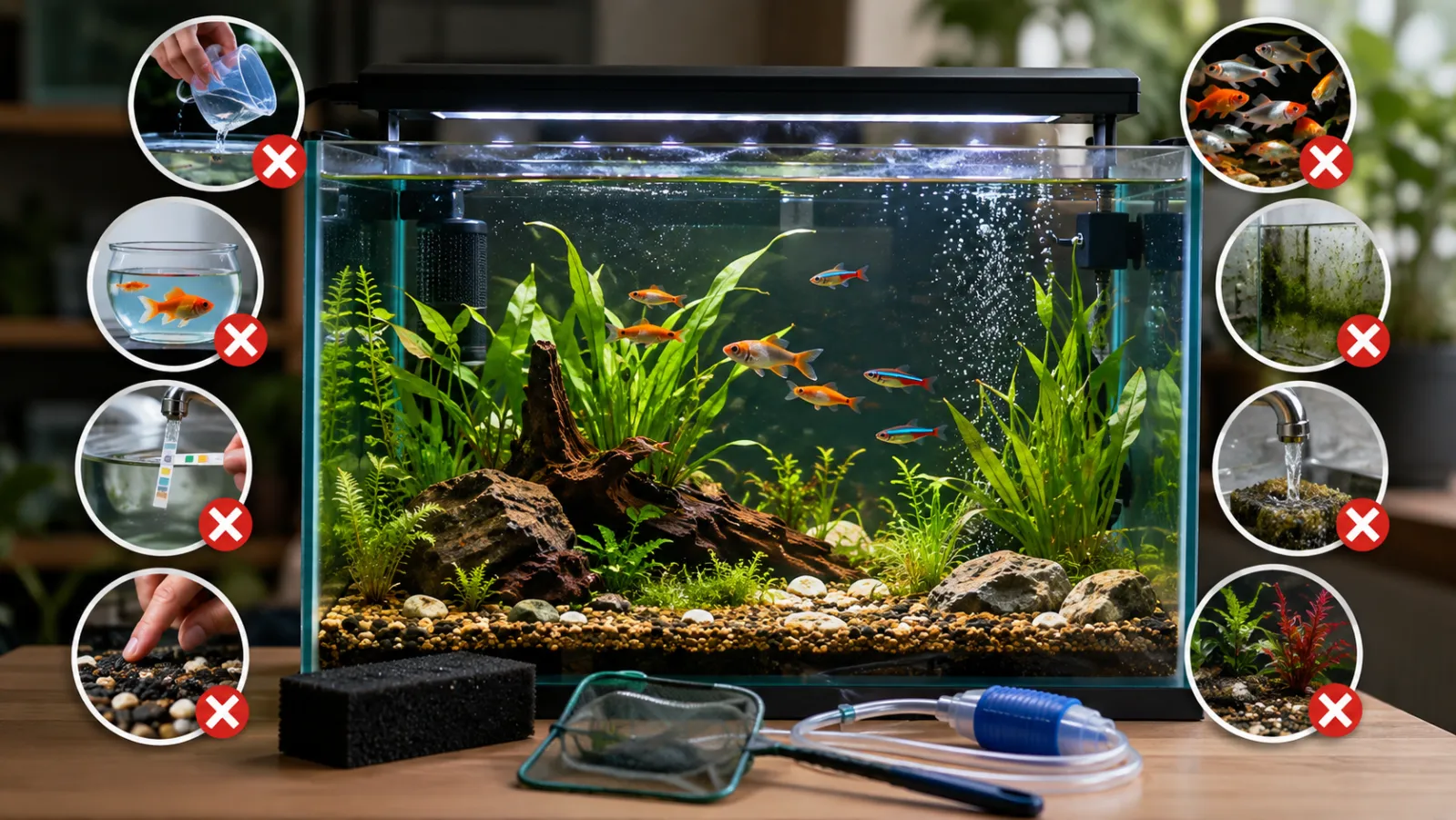
Common Aquarium Cycling Mistakes to Avoid
Adding fish immediately: A new aquarium may not yet have enough beneficial bacteria.
Not testing the water: Appearance alone cannot tell you whether ammonia and nitrite are safe.
Adding too many fish at once: This can create a sudden increase in waste production.
Overfeeding: Uneaten food contributes to ammonia production as it decomposes.
Replacing all filter media: This can significantly reduce established beneficial bacteria.
Assuming cycling has a fixed timeline: Every aquarium develops at a different rate.
Ignoring temperature and pH: Biological activity and fish health are affected by overall water conditions.
Stopping maintenance after cycling: A cycled aquarium still needs regular testing and water changes.
Avoiding these mistakes can make the transition from a new setup to a stable aquarium much smoother.
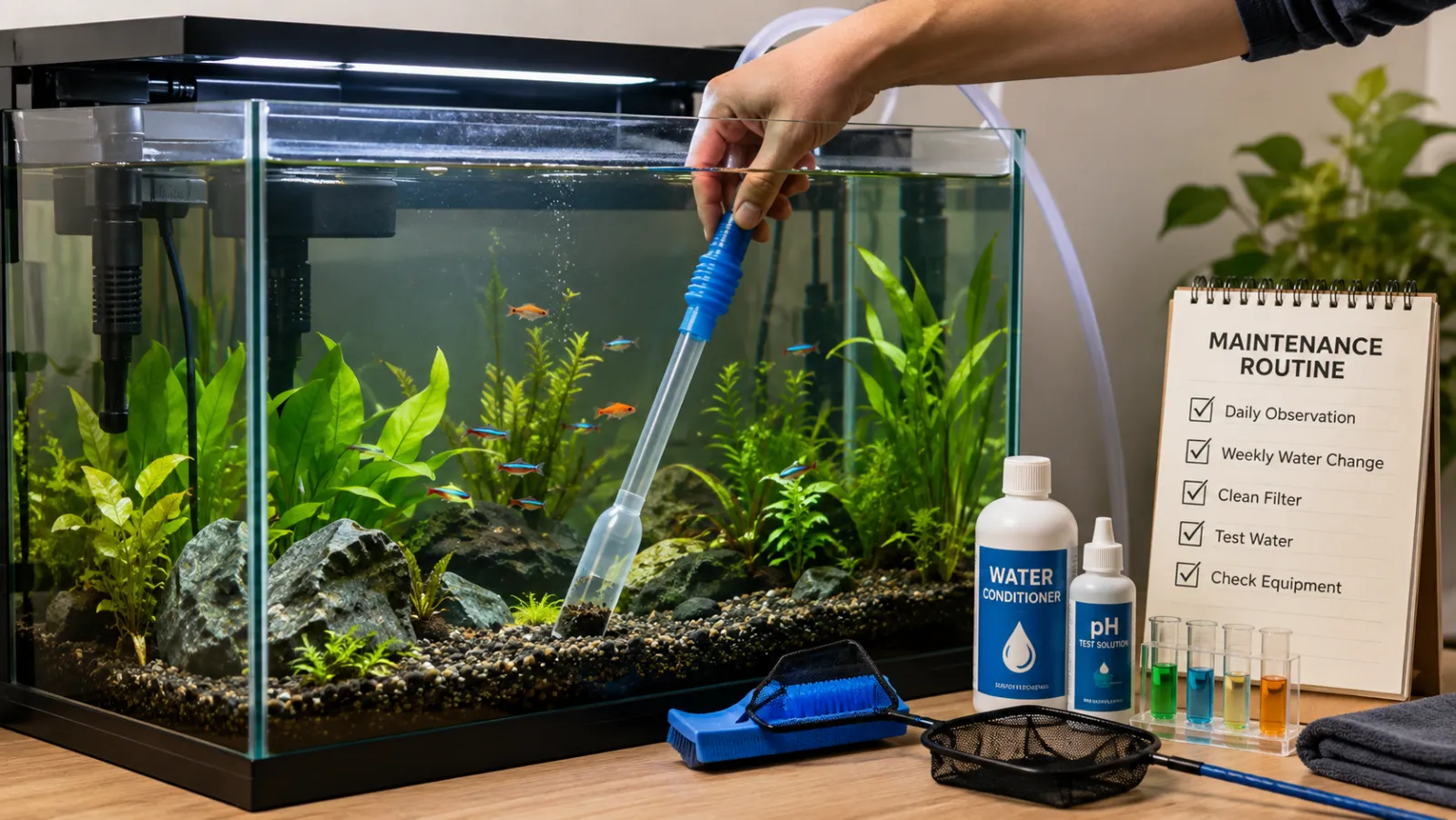
A Simple Cycling Checklist for Beginners
When starting a new aquarium, a simple process can help keep things organized.
Step 1: Set up the aquarium, substrate, decorations, plants, heater, and filter.
Step 2: Prepare the water appropriately and bring the aquarium to a suitable temperature.
Step 3: Establish an ammonia source using your chosen fishless cycling method.
Step 4: Test ammonia, nitrite, nitrate, and other relevant parameters regularly.
Step 5: Allow beneficial bacteria to establish and monitor the changes in your test results.
Step 6: Continue testing until the aquarium demonstrates reliable processing of ammonia and nitrite according to the cycling method being used.
Step 7: Perform appropriate maintenance before introducing livestock.
Step 8: Add fish gradually rather than stocking the aquarium all at once.
Step 9: Continue testing after fish are introduced.
Step 10: Maintain regular water changes, feeding control, filtration, and observation.
Following a structured approach can make the process much less confusing for beginners.
Final Thoughts
Aquarium cycling is one of the most important concepts for anyone setting up a new fish tank. It may seem complicated at first, but the basic process is straightforward: waste produces ammonia, beneficial bacteria convert ammonia into nitrite, other bacteria convert nitrite into nitrate, and regular aquarium maintenance keeps the resulting nitrate under control.
The most important lessons for beginners are to understand the nitrogen cycle, test ammonia and nitrite regularly, monitor overall water conditions, and add livestock gradually.
Do not rush the process. A new aquarium needs time to develop its biological filtration system, and testing is more reliable than simply waiting a certain number of days.
Once your aquarium is established, continue monitoring it rather than assuming the work is finished. A healthy aquarium is an ongoing ecosystem that depends on stable filtration, responsible feeding, suitable stocking, regular maintenance, and observation.
By giving your aquarium time to cycle and building good maintenance habits from the beginning, you create a stronger foundation for healthy fish, clearer water, and a more stable aquarium for years to come.