Choosing the right substrate is one of the most important decisions when setting up a freshwater aquarium. Substrate is more than a decorative layer at the bottom of the tank. It can influence plant growth, fish behavior, cleaning routines, water movement, and the overall appearance of the aquarium.
For a planted aquarium, the right substrate can provide a suitable environment for roots and help plants establish themselves. For fish, substrate can affect comfort, feeding behavior, digging, and natural activity. The wrong substrate can make maintenance difficult or may be unsuitable for particular species.
There is no single substrate that is perfect for every freshwater aquarium. Gravel, sand, planted substrates, and specialized options can all work well when they are selected according to the needs of the fish, plants, aquarium design, and aquarist.
Before choosing a substrate, consider four major factors: fish requirements, plant requirements, grain size, and ease of maintenance.
1. Why Aquarium Substrate Matters
Substrate creates the foundation of your aquarium.
It can:
- Improve the appearance of the tank
- Provide a surface for beneficial microorganisms
- Support rooted aquarium plants
- Give bottom-dwelling fish an environment to explore
- Create a more natural-looking habitat
- Help define different areas of an aquascape
Substrate also affects how easily waste can be removed.
Some types allow debris to remain near the surface, making it relatively easy to siphon. Other substrates can trap debris more deeply and require different cleaning techniques.
Choosing substrate should therefore be based on both appearance and practicality.
2. Consider Your Fish First
The fish living in your aquarium should be one of the first things you consider.
Different species interact with substrate in different ways.
Some fish spend much of their time swimming in the middle or upper water column, while others constantly explore the bottom.
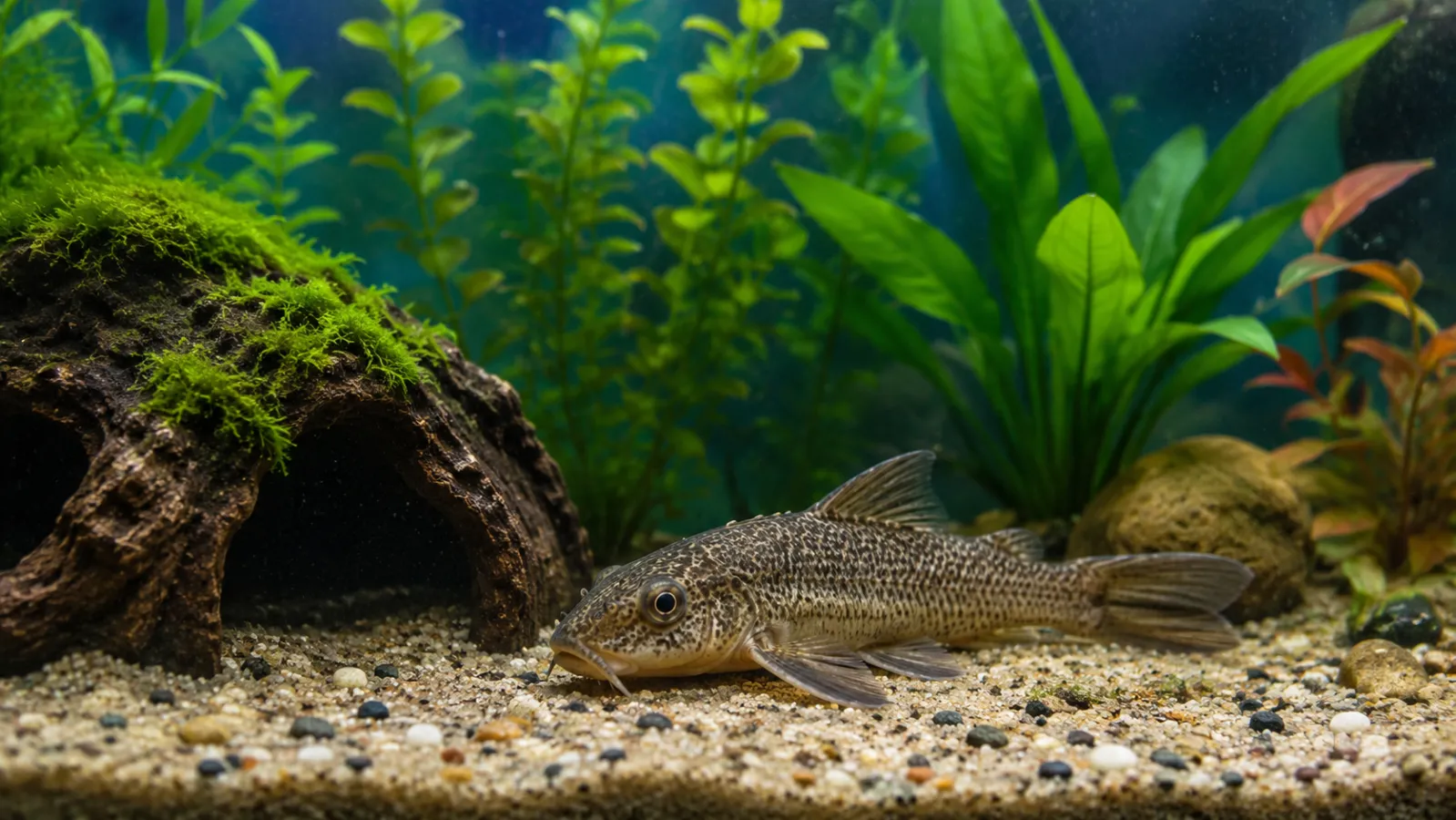
Bottom-dwelling fish may sift through substrate while searching for food. Some species dig, burrow, or move substrate around as part of their natural behavior.
Before buying substrate, ask:
- Does the fish spend time on the bottom?
- Does it dig or burrow?
- Does it search through substrate for food?
- Could sharp particles damage delicate body parts?
- Does the species prefer a particular type of bottom environment?
- Will the substrate make feeding easier or more difficult?
Fish behavior should always take priority over decorative preferences.
3. Consider the Needs of Aquarium Plants
If you plan to grow live plants, substrate becomes even more important.
Some plants obtain a significant amount of nutrition through their roots. Others, such as many rhizome plants, are better attached to rocks or driftwood and do not need their rhizomes buried in substrate.
Rooted plants may benefit from substrates that provide physical support and, depending on the species, access to nutrients.
Consider:
- Root development
- Nutrient availability
- Substrate depth
- Grain size
- Compaction
- Planting method
A substrate that works well for one plant may not be ideal for another.
4. Aquarium Gravel
Gravel is one of the most popular freshwater aquarium substrates.
It is available in many colors, textures, and grain sizes, making it easy to match different aquarium designs.
Gravel can be suitable for:
- Community aquariums
- Beginner tanks
- Fish-only aquariums
- Many planted aquariums
- Aquascapes requiring a traditional appearance
One advantage of gravel is that it can be relatively easy to maintain. Larger particles allow debris to settle between pieces, where it can often be removed using an aquarium siphon.
However, extremely coarse or sharp gravel may not be appropriate for fish that frequently interact with the bottom.
Choose smooth, aquarium-safe gravel when keeping bottom-dwelling species.
5. Aquarium Sand
Sand creates a completely different appearance from gravel.
It can produce a natural, smooth-looking aquarium and is particularly attractive in setups designed around bottom-dwelling fish.
Sand may be suitable for fish that naturally sift through fine substrates.
However, sand can require slightly different maintenance techniques.
If debris sits on top of the sand, it can often be removed carefully with a siphon without disturbing the entire substrate. If the siphon is placed too deeply, however, sand can easily be pulled out of the aquarium.
Sand can also compact more easily than larger-grain substrates.
This does not automatically make sand bad, but it means you should choose an appropriate grain size and maintain it correctly.
6. Fine Versus Coarse Substrate
Grain size is an important factor.
Fine Substrate
Fine sand can create a natural appearance and may be suitable for fish that interact with the bottom.
Advantages can include:
- Smooth texture
- Natural appearance
- Comfortable surface for many bottom-dwelling fish
- Easy visual contrast with plants
Potential challenges include:
- Compaction
- More careful siphoning
- Difficulty anchoring some plants
Medium-Grain Substrate
Medium-sized gravel provides a balance between appearance, drainage, plant support, and maintenance.
It can work well in many community aquariums.
Coarse Substrate
Larger gravel can create strong visual texture and allow water to move between particles.
However, very large or rough pieces may trap debris and may not be suitable for every bottom-dwelling fish.
The best grain size depends on the aquarium inhabitants and planting plan.
7. Planted Aquarium Substrates
Specialized planted substrates are designed specifically for aquariums containing live plants.
They may provide nutrients and other properties intended to support plant growth.
These substrates can be particularly useful for aquarists who want to create a heavily planted aquarium.
However, they are not automatically necessary for every planted tank.
Hardy aquarium plants can often grow successfully in simpler setups when their nutritional needs are met through other methods.
Before purchasing a specialized planted substrate, research:
- Nutrient content
- Expected lifespan
- Whether it affects water chemistry
- Recommended depth
- Compatibility with your fish
- Maintenance requirements
Choose a planted substrate because your plants need its properties—not simply because it is marketed for planted aquariums.
8. Inert Substrate
An inert substrate is generally chosen because it does not intentionally alter water chemistry.
Common examples include many types of aquarium gravel and sand.
Inert substrate can be useful when you want greater control over water parameters and prefer to manage plant nutrients separately.
It can also be a practical choice for beginner aquariums because it is relatively straightforward.
If you have fish that require specific water conditions, always confirm that the substrate you choose is compatible.
9. Substrates That Can Affect Water Chemistry
Some specialized substrates can influence parameters such as pH or water hardness.
This may be useful when the substrate's properties match the requirements of the fish or plants.
However, changing water chemistry without understanding the consequences can create problems.
Before using a substrate that alters water parameters, research:
- pH effects
- Hardness effects
- Buffering behavior
- Recommended fish species
- Replacement requirements
Do not choose a substrate solely because it changes water chemistry. The change should be appropriate for the aquarium inhabitants.
10. Substrate Depth Matters
The amount of substrate you use also matters.
A very shallow layer may make it difficult to anchor rooted plants securely.
A very deep substrate bed may create unnecessary maintenance challenges and can trap organic material if poorly managed.
The appropriate depth depends on:
- Aquarium size
- Plant species
- Root development
- Aquascape design
- Grain size
- Whether multiple substrate layers are being used
If you are creating a planted aquarium, research the depth recommended for your particular plants and substrate.
11. Choose Substrate That Is Safe for Fish
Not every decorative material is suitable for aquarium use.
Substrate should be:
- Aquarium-safe
- Free from harmful coatings
- Appropriate for your fish
- Free from sharp edges when necessary
- Properly prepared before use
This is particularly important for fish that spend a lot of time on the bottom.
Corydoras and other bottom-oriented species can spend significant amounts of time interacting with the substrate, so a smooth and appropriate substrate can be an important part of their environment.
12. Match Substrate to Your Fish's Natural Behavior
A good aquarium tries to accommodate natural behavior.
Some fish like to sift sand through their mouths. Others dig holes, search between rocks, or forage along the bottom.
For these species, substrate is part of their habitat rather than merely decoration.
Research the natural behavior of your fish before choosing the substrate.
A visually attractive substrate that prevents normal behavior is not a good choice.
13. Consider Color and Appearance
Substrate has a major impact on how your aquarium looks.
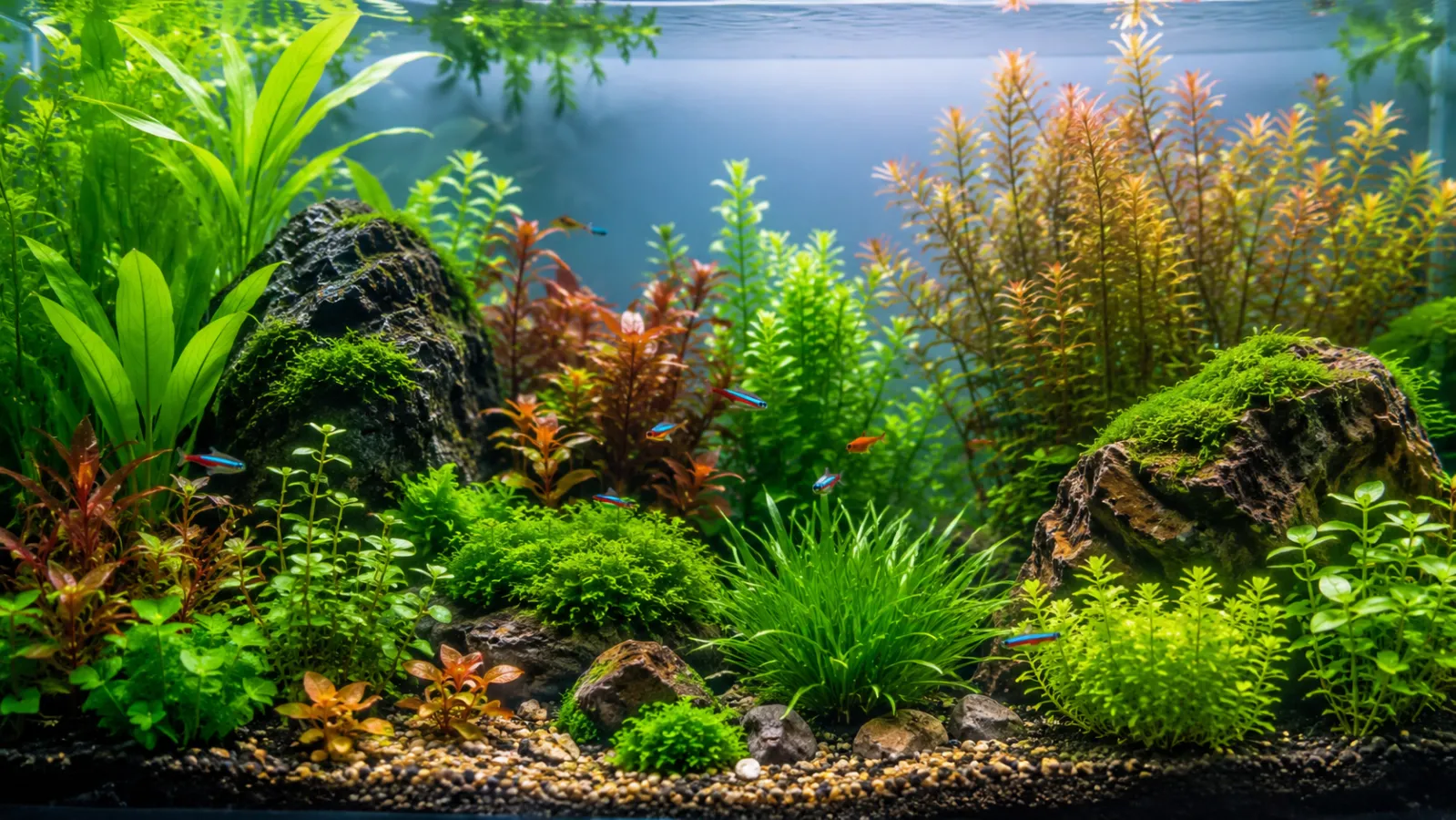
Dark substrate can make certain fish colors appear more prominent and can create a dramatic planted-aquarium appearance.
Light-colored sand can produce a bright, natural look.
Neutral-colored gravel can provide a more traditional aquarium appearance.
Although appearance should not be the primary factor, it is completely reasonable to choose a substrate that complements your aquascape after confirming that it is safe and appropriate.
Avoid choosing a substrate based only on color if its physical properties are unsuitable for your fish.
14. Think About Cleaning and Maintenance
Ease of maintenance should be considered before buying substrate.
Ask yourself:
- How easy will it be to remove waste?
- Will debris become trapped?
- Can I siphon it without removing too much substrate?
- Will the substrate compact?
- Will plants be easy to replant?
- How often will it require maintenance?
This is especially important for beginners.
A substrate that looks beautiful but requires more maintenance than you are willing to perform can quickly become frustrating.
Choose an option that fits your normal aquarium-care routine.
15. How to Clean Aquarium Gravel
Gravel can generally be cleaned using an aquarium siphon.
During routine water changes, gently move the siphon through the gravel to remove accumulated debris.
Do not aggressively disturb the entire substrate at every cleaning.
Beneficial microorganisms live on aquarium surfaces, including substrate, so unnecessarily stripping or sterilizing the substrate can interfere with the established biological environment.
Clean enough to remove excess waste while maintaining a healthy aquarium ecosystem.
16. How to Clean Aquarium Sand
Sand requires a slightly different approach.
Instead of pushing the siphon deep into the sand, hold it slightly above the surface and allow loose debris to be removed without taking large amounts of sand with it.
The exact technique depends on the type of siphon and sand being used.
If the sand becomes disturbed during maintenance, gently level it afterward.
Avoid stirring the entire substrate unnecessarily.
17. Substrate and Plant Placement
Think about where each plant will be placed before adding substrate.
Tall background plants may require deeper rooting areas.
Foreground plants may need a different planting depth.
Some plants should not be buried at all.
For plants such as Anubias and Java fern, the rhizome should remain exposed rather than being deeply buried.
For rooted plants, make sure their roots can establish securely in the substrate.
Planning the planting layout before filling the aquarium can make setup much easier.
18. Can You Mix Different Substrates?
Yes, aquarium keepers sometimes use multiple substrate types in one aquarium.
For example, an aquascape may combine different materials to create visual depth or provide different conditions for plants.
However, mixing substrates can also make maintenance more complicated.
If you use multiple substrates, plan how they will be separated and how you will clean each area.
Avoid creating unnecessary complexity unless it serves a specific purpose.
For beginners, a simple and consistent substrate can often be easier to maintain.
19. Wash Substrate Before Adding It
Many substrates should be rinsed before being added to an aquarium.
Dust and fine particles can make the water extremely cloudy after installation.
Rinse substrate according to the manufacturer's instructions.
Some specialized planted substrates may have different preparation requirements, so do not assume every substrate should be washed aggressively.
Always follow the instructions provided for the specific product.
20. Common Substrate Mistakes to Avoid
Choosing Only for Appearance
A beautiful substrate is not useful if it is unsuitable for your fish or plants.
Using Sharp Gravel
Sharp edges can be problematic for fish that spend significant time on the bottom.
Ignoring Plant Requirements
Some plants need specific substrate conditions to establish successfully.
Choosing Extremely Fine Sand Without Planning Maintenance
Fine sand can compact and may require careful cleaning.
Adding Too Much Substrate
An unnecessarily deep substrate can make maintenance more difficult.
Ignoring Water Chemistry
Some substrates can influence water parameters, which may not be appropriate for every aquarium.
Failing to Rinse Suitable Substrates
Excess dust can make a new aquarium extremely cloudy.
21. Best Substrate Choices for Different Aquariums
There is no universal winner, but different substrates can suit different setups.
Best for Beginner Community Aquariums
Smooth aquarium gravel is a practical choice for many beginner community tanks.
It is attractive, widely available, and relatively straightforward to maintain.
Best for Bottom-Dwelling Fish
A smooth, fine substrate such as appropriate aquarium sand can be a good option for species that naturally interact with sandy environments.
Best for Planted Aquariums
A quality planted substrate can be useful for aquariums containing many rooted plants, especially when the aquarist wants a nutrient-rich foundation.
Best for Simple Low-Maintenance Aquariums
A basic inert gravel or sand can provide an attractive appearance without adding unnecessary complexity.
22. A Simple Substrate Selection Process
Choosing the right substrate becomes easier when you follow a simple process.
Step 1: Identify Your Fish
Research how your fish interact with the bottom of the aquarium.
Step 2: Identify Your Plants
Determine whether your plants are primarily rooted, attached to hardscape, or floating.
Step 3: Choose the Grain Size
Select fine, medium, or coarse substrate based on fish and plant requirements.
Step 4: Check Water Chemistry
Confirm whether the substrate is inert or capable of changing water parameters.
Step 5: Consider Maintenance
Choose a substrate you can comfortably clean and maintain.
Step 6: Plan the Aquascape
Think about foreground, midground, background, plants, rocks, and driftwood.
Step 7: Prepare the Substrate
Clean or prepare it according to the manufacturer's instructions.
Step 8: Monitor the Aquarium
After setup, observe your fish, plants, water quality, and substrate condition.
Final Thoughts
The best freshwater aquarium substrate is not necessarily the most expensive, most colorful, or most specialized option. It is the substrate that fits the needs of your fish, plants, aquarium design, and maintenance routine.
Before choosing, consider how your fish interact with the bottom, what your plants need for healthy root development, which grain size is appropriate, and how easy the substrate will be to maintain.
Smooth gravel can be a practical choice for many community aquariums. Sand can work well for fish that naturally interact with fine substrates. Specialized planted substrates can benefit certain planted setups, while inert materials can provide a simple foundation for beginners.
Most importantly, choose substrate with the long-term aquarium environment in mind. Your fish will live with this material every day, and your plants may depend on it for support and nutrients.
A thoughtfully selected substrate can improve the appearance of your aquarium while supporting fish behavior, plant growth, and easier maintenance. With the right foundation, you can create a freshwater aquarium that is both attractive and practical to care for over the long term.