Seeing your freshwater fish suddenly spending most of their time at the bottom of the aquarium can be worrying. While some fish naturally spend a lot of time near the substrate, a noticeable change in swimming behavior can sometimes indicate that something is wrong.
Fish may stay at the bottom because of stress, unsuitable water conditions, incorrect temperature, insufficient oxygenation, illness, or even normal species-specific behavior. The important thing is to look at the situation as a whole rather than assuming that staying near the bottom always means your fish are sick.
Before taking action, consider what is normal for the particular species and whether the behavior is new. A Corydoras resting near the substrate may be completely normal, while a normally active tetra suddenly remaining on the bottom deserves closer attention.
When freshwater fish begin staying at the bottom unexpectedly, check four important areas: water parameters, temperature, oxygenation, and other signs of illness or stress.
1. First, Determine Whether the Behavior Is Normal
Not every fish that stays near the bottom has a problem.
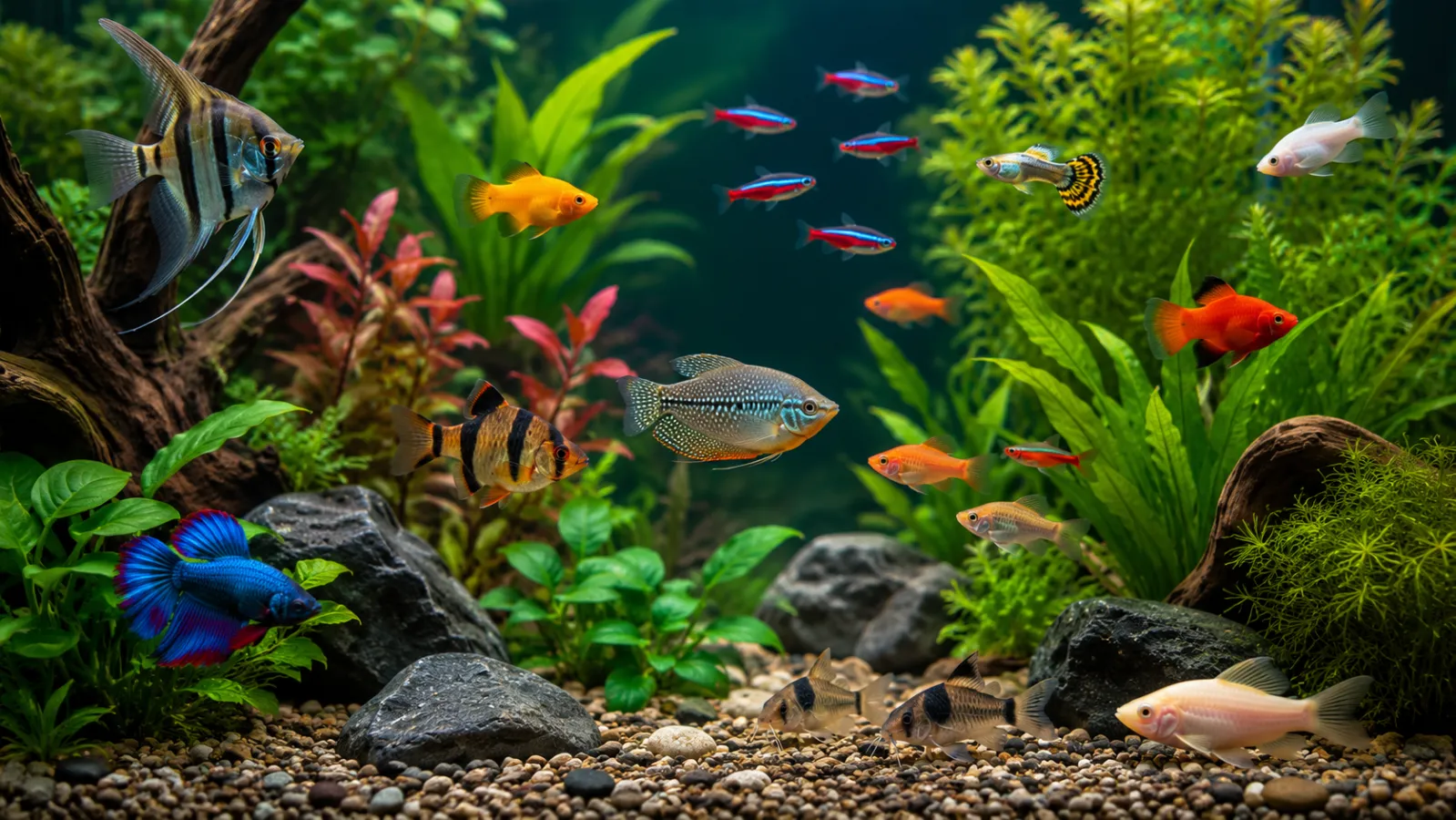
Some freshwater species naturally spend much of their time close to the substrate. Bottom-dwelling fish such as Corydoras, loaches, and certain plecos are adapted to spending significant amounts of time in lower areas of the aquarium.
Even fish that normally swim throughout the tank may occasionally rest near the bottom.
The key question is:
Is this normal behavior for your fish, or is it a sudden change?
Pay attention to how your fish behaved previously.
If they have always spent time near the bottom, there may be nothing to worry about. If they were previously active and suddenly become inactive, investigate the aquarium conditions.
2. Check Your Water Parameters
Poor water quality is one of the first things to investigate when fish suddenly change their behavior.
Aquarium water can look clean while still containing harmful levels of substances that cannot be seen with the naked eye.
Important parameters to check include:
- Ammonia
- Nitrite
- Nitrate
- pH
- Temperature
Ammonia and nitrite are particularly important because elevated levels can be harmful to fish.
If your fish are suddenly staying near the bottom, test the water rather than guessing what is wrong.
A properly established aquarium should have biological filtration capable of processing fish waste, but problems can occur after overfeeding, overstocking, filter failure, major maintenance changes, or other disruptions to the aquarium's biological balance.
3. Check Ammonia and Nitrite
Ammonia and nitrite deserve particular attention when fish behavior changes suddenly.
Both can be harmful to freshwater fish, and elevated levels can cause signs of stress.
Possible signs may include:
- Reduced activity
- Loss of appetite
- Rapid breathing
- Gasping
- Unusual swimming
- Staying in unusual areas of the aquarium
- General lethargy
If testing shows a problem, address the water-quality issue promptly and avoid adding additional fish.
Do not simply try to cover up unusual behavior by changing several things at once. Identify the underlying aquarium problem and correct it carefully.
4. Check Nitrate Levels
Nitrate is generally less immediately toxic than ammonia and nitrite, but excessive accumulation can indicate that aquarium maintenance or stocking needs attention.
High nitrate levels can contribute to long-term stress and may occur when:
- Too many fish are kept in the aquarium
- Water changes are insufficient
- Too much food is being added
- Organic waste is accumulating
- Filtration and maintenance are inadequate
Regular water testing can help you identify trends before they become serious problems.
5. Check the Water Temperature
Temperature is another major factor.
Freshwater fish are ectothermic, meaning their body temperature is influenced by their surrounding environment.
If the aquarium is too cold or too warm for the species, fish may become less active.
A sudden temperature change can also cause stress.
Check the actual water temperature using a reliable aquarium thermometer rather than relying only on the setting of a heater.
Consider whether:
- The heater is working correctly
- The heater is appropriately sized
- The room temperature has changed
- A recent water change caused a temperature difference
- The aquarium is located near an air conditioner or draft
- The fish species has appropriate temperature requirements
Different freshwater fish have different temperature preferences, so always compare the aquarium temperature with the needs of the species you keep.
6. Check Oxygenation
Low dissolved oxygen can cause abnormal swimming behavior and serious stress.
Fish may show signs of oxygen-related problems by:
- Breathing rapidly
- Gasping near the surface
- Remaining unusually still
- Gathering near water movement
- Becoming lethargic
Warm water generally holds less dissolved oxygen than cooler water, so oxygen availability can become especially important in warm tropical aquariums.
Poor surface movement can also reduce gas exchange.
Check whether your filter is functioning and whether there is reasonable movement at the water's surface.
7. Look at Your Filter
A malfunctioning filter can quickly affect aquarium conditions.
Check that the filter is:
- Running properly
- Producing appropriate water movement
- Not clogged
- Properly maintained
- Receiving power
Do not replace all biological filter media at once unless there is a specific reason to do so. Beneficial microorganisms living in established filtration media play an important role in processing aquarium waste.
If the filter suddenly stops working, investigate the problem promptly.
8. Look for Signs of Stress
Staying at the bottom can sometimes be a stress response.
Fish may become stressed because of:
- Poor water quality
- Aggressive tankmates
- Sudden environmental changes
- Excessive aquarium activity
- Inadequate hiding places
- Transportation
- New fish being introduced
- Overcrowding
Look at the entire aquarium rather than focusing only on one fish.
Ask yourself whether anything changed recently.
Did you:
- Add new fish?
- Change the aquarium layout?
- Perform a large water change?
- Replace equipment?
- Change the temperature?
- Add new decorations?
- Increase feeding?
- Move the aquarium?
A recent change can provide an important clue.
9. Watch for Aggression From Tankmates
Fish that are being chased or bullied may spend more time hiding near the bottom.
Observe interactions between the fish.
Look for:
- Repeated chasing
- Fin nipping
- Territorial behavior
- One fish constantly hiding
- A fish being prevented from reaching food
- Damage to fins or body
A fish may retreat to the bottom because it feels safer there.
This can be particularly noticeable after adding a territorial or aggressive species to a community aquarium.
If bullying is persistent, the compatibility of the fish should be reassessed.
10. Check for Signs of Illness
Illness is another possible reason a fish may become inactive.
Look carefully at the fish's body and behavior.
Potential warning signs include:
- White spots
- Torn or deteriorating fins
- Swollen abdomen
- Unusual growths
- Discoloration
- Clamped fins
- Rapid breathing
- Loss of appetite
- Abnormal swimming
- Scratching against objects
- Weight loss
- Open sores
One symptom alone may not identify a particular disease.
Avoid randomly adding medications without first assessing the aquarium conditions and identifying a plausible cause.
Many fish health problems are closely connected to water quality and environmental stress.
11. Check Whether the Fish Is Eating
Appetite can provide useful information.
A fish that is staying at the bottom but continues eating normally and behaves otherwise normally may be experiencing a less serious issue—or simply displaying normal behavior.
A fish that stays at the bottom, refuses food, breathes rapidly, and shows physical abnormalities requires much closer attention.
Monitor feeding behavior carefully.
Make sure food is reaching the species appropriately, particularly in community aquariums where faster fish may consume everything before slower fish have an opportunity to eat.
12. Consider Recent Water Changes
Water changes are an essential part of aquarium maintenance, but sudden differences between old and new water can stress fish.
Check whether the new water was:
- Properly conditioned
- Reasonably close in temperature
- Appropriate for the aquarium's water chemistry
Avoid making sudden major changes to water chemistry unless there is a specific reason and you understand how to do so safely.
Consistency is generally important for aquarium fish.
13. Consider Overcrowding
An overcrowded aquarium can create multiple problems.
More fish produce more waste, increase competition for food and space, and can place greater demands on filtration and oxygen availability.
Signs associated with an overcrowded aquarium can include:
- Poor water quality
- Increased aggression
- Persistent stress
- Reduced activity
- Frequent illness
- Difficulty maintaining stable water parameters
If your aquarium has become heavily stocked, review the adult size and requirements of every species.
Do not judge stocking levels only by how much empty swimming space appears to remain.
14. Check the Aquarium's Hiding Places
Some fish naturally prefer sheltered environments.
If your aquarium is extremely open, fish may spend time near the bottom because they feel more secure there.
Plants, driftwood, rocks, caves, and other appropriate decorations can create useful shelter.
However, hiding places should be suitable for the species and should not overcrowd the aquarium.
A well-designed aquarium gives fish opportunities to move between open swimming areas and sheltered spaces.
15. Consider Lighting and Activity Levels
Very bright lighting can cause some fish to become less active, especially if they naturally prefer shaded environments.
If your fish are staying near the bottom immediately after the aquarium lights turn on, observe whether their behavior changes when the lighting is reduced or turned off.
Floating plants and other forms of cover can provide shade for appropriate species.
However, lighting should also meet the requirements of live aquarium plants if you keep them.
16. Observe All the Fish
If only one fish is staying at the bottom, the cause may be different from a situation where the entire aquarium population becomes inactive.
One Fish Is Staying at the Bottom
Possible causes may include:
- Individual stress
- Illness
- Injury
- Bullying
- Age-related weakness
- Species-specific behavior
Many Fish Are Staying at the Bottom
This can be more concerning because it may indicate an aquarium-wide problem such as:
- Poor water quality
- Temperature problems
- Low oxygen
- Chemical contamination
- Major environmental stress
When several fish change behavior at the same time, check the aquarium environment first.
17. Avoid Overfeeding
Overfeeding can contribute to poor water quality.
Uneaten food breaks down and adds organic waste to the aquarium.
If you regularly see food sitting on the substrate after feeding, reduce the amount you provide.
Feed appropriate portions and remove excessive uneaten food when necessary.
A clean feeding routine can help reduce unnecessary waste and make water quality easier to maintain.
18. Be Careful With Aquarium Chemicals
When fish behave strangely, it can be tempting to immediately add a medication, water conditioner, or other chemical product.
Avoid adding products randomly.
First identify what has changed and test the water where appropriate.
Using unnecessary treatments can sometimes create additional problems or make it harder to determine the original cause of the behavior.
If illness appears likely, seek advice from a qualified aquatic veterinarian or experienced fish-health professional when available.
19. What Should You Do Immediately?
If your freshwater fish suddenly begin staying at the bottom, follow a simple troubleshooting process.
Step 1: Observe the Fish
Look for breathing problems, physical abnormalities, aggression, and changes in appetite.
Step 2: Test the Water
Check ammonia, nitrite, nitrate, pH, and temperature as appropriate for your aquarium.
Step 3: Check Equipment
Make sure the heater and filter are operating correctly.
Step 4: Check Oxygenation
Look at surface movement and signs of rapid breathing or gasping.
Step 5: Review Recent Changes
Think about anything that changed in the aquarium recently.
Step 6: Check Tankmates
Look for bullying, chasing, or territorial behavior.
Step 7: Avoid Unnecessary Changes
Do not make multiple major changes at once without understanding the cause.
This systematic approach can help you identify problems more effectively.
20. When Should You Be Concerned?
Staying at the bottom becomes more concerning when it is accompanied by other abnormal symptoms.
Pay particular attention if your fish:
- Stops eating
- Breathes rapidly
- Gaspes at the surface
- Has visible injuries
- Develops white spots or unusual growths
- Has clamped fins
- Loses balance
- Becomes extremely lethargic
- Is repeatedly attacked by tankmates
- Is joined by multiple fish showing similar symptoms
If several serious symptoms appear together or fish are rapidly deteriorating, professional aquatic veterinary advice may be appropriate.
21. Prevention Is Better Than Troubleshooting
The best way to reduce unexplained behavior changes is to maintain a stable aquarium from the beginning.
Good aquarium practices include:
- Regular water testing
- Appropriate water changes
- Proper filtration
- Correct temperature
- Suitable stocking
- Appropriate feeding
- Compatible tankmates
- Adequate oxygenation
- Suitable hiding places
- Regular equipment checks
Preventive care makes it easier to recognize when something genuinely changes.
Final Thoughts
If your freshwater fish are staying at the bottom, do not immediately assume that they are sick.
Some fish naturally spend much of their time near the substrate, while others may rest occasionally. However, a sudden change in swimming behavior can indicate stress, poor water quality, unsuitable temperature, insufficient oxygenation, aggression, or illness.
Start by checking the aquarium rather than guessing.
Test the water parameters, verify the temperature, check filtration and oxygenation, observe tankmates, and look for other signs of illness or stress.
Most importantly, consider what is normal for the particular species you keep. A behavior that is concerning in one fish may be completely normal in another.
By paying attention to your fish's normal behavior and maintaining stable aquarium conditions, you can identify potential problems earlier and provide a healthier environment for your freshwater fish.