Choosing the right freshwater aquarium plants can completely transform an aquarium. Plants add natural beauty, create hiding places, provide structure, and can make fish feel more secure. However, not every aquarium plant is suitable for every tank.
Some plants need strong lighting and regular nutrient supplementation, while others can thrive under low light with very little maintenance. Some grow slowly and remain compact, while others can grow rapidly and require frequent trimming.
The best approach is to choose plants based on the conditions you can realistically provide rather than choosing plants simply because they look attractive in photographs.
Before buying aquarium plants, consider four important factors: lighting available, fish species, growth rate, and maintenance level.
1. Understand Your Aquarium Before Choosing Plants
Before purchasing plants, take a close look at your aquarium.
Consider:
- Tank size
- Water temperature
- Available lighting
- Substrate type
- Filtration
- Water flow
- Fish species
- Existing decorations
- Available space
These factors determine which plants are likely to grow successfully.
A plant that thrives in a high-tech aquarium with powerful lighting and injected carbon dioxide may struggle in a simple beginner aquarium.
For this reason, choosing plants should begin with understanding your existing setup.
2. Consider the Lighting Available
Lighting is one of the most important factors in freshwater plant growth.
Plants use light for photosynthesis, but different species require different levels of light.
Low-Light Plants
Low-light plants are often excellent choices for beginners because they can grow under relatively modest aquarium lighting.
Popular options include:
- Anubias
- Java fern
- Java moss
- Cryptocoryne species
These plants are generally more forgiving when compared with demanding high-light species.
However, low-light does not mean no-light. Aquarium plants still need an appropriate light source and photoperiod to grow.
Medium-Light Plants
Medium-light plants offer more variety but may require better lighting and more consistent nutrients.
Examples can include:
- Some Cryptocoryne varieties
- Vallisneria
- Amazon sword
- Certain stem plants
Their requirements vary by species, so always check the specific plant before purchasing.
High-Light Plants
High-light plants can create spectacular aquascapes but are generally more demanding.
They may require:
- Strong aquarium lighting
- Consistent nutrients
- Carbon dioxide supplementation in some setups
- Regular trimming
- Careful algae management
If you are new to planted aquariums, starting with easier plants can help you learn how your aquarium behaves before moving toward more demanding species.
3. Match Plants to Your Fish
Fish and plants share the same environment, so compatibility matters.
Some fish are gentle around plants, while others may dig, uproot, nibble, or destroy them.
Before choosing a plant, consider your fish's behavior.
For example, fish that frequently dig through the substrate can disturb newly planted species. Herbivorous or plant-eating fish may consume certain plants.
Some larger fish may also uproot plants simply because of their size and activity.
Research your fish species before selecting plants.
Ask:
- Will the fish eat the plant?
- Will they uproot it?
- Do they need open swimming space?
- Will the plant provide useful shelter?
- Can the plant tolerate the aquarium's water conditions?
A beautiful plant is not a good choice if your fish constantly destroy it.
4. Consider the Growth Rate
Aquarium plants can grow at very different speeds.
Slow-growing plants are often easier to manage because they require less frequent trimming.
Fast-growing plants can quickly fill empty spaces and may be useful for establishing a heavily planted aquarium, but they require more maintenance.
Slow-Growing Plants
Examples include:
- Anubias
- Java fern
- Java moss
These can be useful for aquariums where you want a stable appearance without constant pruning.
Fast-Growing Plants
Some stem plants and floating plants can grow rapidly under suitable conditions.
Fast growth can be useful because plants may absorb nutrients from the water and quickly create cover. However, they may need frequent trimming to prevent them from blocking light or taking over the aquarium.
Choose growth speed according to the amount of maintenance you are willing to perform.
5. Choose Plants Based on Your Maintenance Level
One of the biggest mistakes beginners make is selecting plants that require more care than they are prepared to provide.
If you prefer a simple aquarium, choose hardy plants with relatively modest requirements.
If you enjoy aquascaping and do not mind regular maintenance, you can explore more demanding plants.
Low-Maintenance Aquarium
A beginner-friendly setup may include hardy species such as:
- Anubias
- Java fern
- Java moss
- Cryptocoryne
These plants can provide a natural appearance without requiring an extremely complex setup.
Moderate-Maintenance Aquarium
A moderate-maintenance planted aquarium may include a mixture of rooted plants and stem plants that require more regular pruning and nutrient management.
High-Maintenance Aquarium
Advanced planted aquariums may use high lighting, carbon dioxide supplementation, specialized substrates, and carefully managed fertilization.
These setups can produce impressive results but require greater knowledge and consistency.
6. Understand Where Each Plant Grows
Not every aquarium plant should be planted in the substrate.
Some species are better attached to rocks, driftwood, or other aquarium decorations.
Plants That Can Attach to Hardscape
Plants such as Anubias and Java fern are commonly attached to rocks or driftwood.
Their rhizomes should not be deeply buried in the substrate because doing so can cause problems.
Instead, they can be secured to suitable surfaces while their roots gradually attach.
Rooted Plants
Other plants are designed to grow in substrate.
Examples include many Cryptocoryne species and Amazon swords.
These plants benefit from having their roots positioned appropriately in the substrate.
Understanding how a plant naturally grows helps you place it correctly.
7. Think About Plant Size
Always consider the mature size of a plant.
A small plant may look perfect when purchased but become much larger over time.
Large plants can become excellent background plants in larger aquariums but may overwhelm a small tank.
When choosing plants, consider:
- Mature height
- Mature width
- Growth rate
- Placement
- Available swimming space
A good planting plan usually places shorter plants toward the front and larger plants toward the back.
8. Create Foreground, Midground, and Background Areas
Planning plant placement can make your aquarium look more natural and spacious.
Foreground Plants
Shorter plants work well toward the front of the aquarium.
They allow you to see fish and create an open visual area.
Midground Plants
Medium-sized plants can fill the middle section and create transitions between the foreground and background.
Background Plants
Tall plants are often placed toward the back of the aquarium.
They can hide equipment, create depth, and provide shelter for fish.
This simple arrangement can make even a beginner aquarium look much more thoughtfully designed.
9. Consider Floating Plants
Floating plants can provide shade and cover near the water surface.
They may be useful for fish that prefer shaded environments or appreciate cover from above.
However, floating plants can multiply quickly under suitable conditions.
If they cover too much of the surface, they can reduce the amount of light reaching plants below and may interfere with surface gas exchange.
Regularly thin floating plants when necessary.
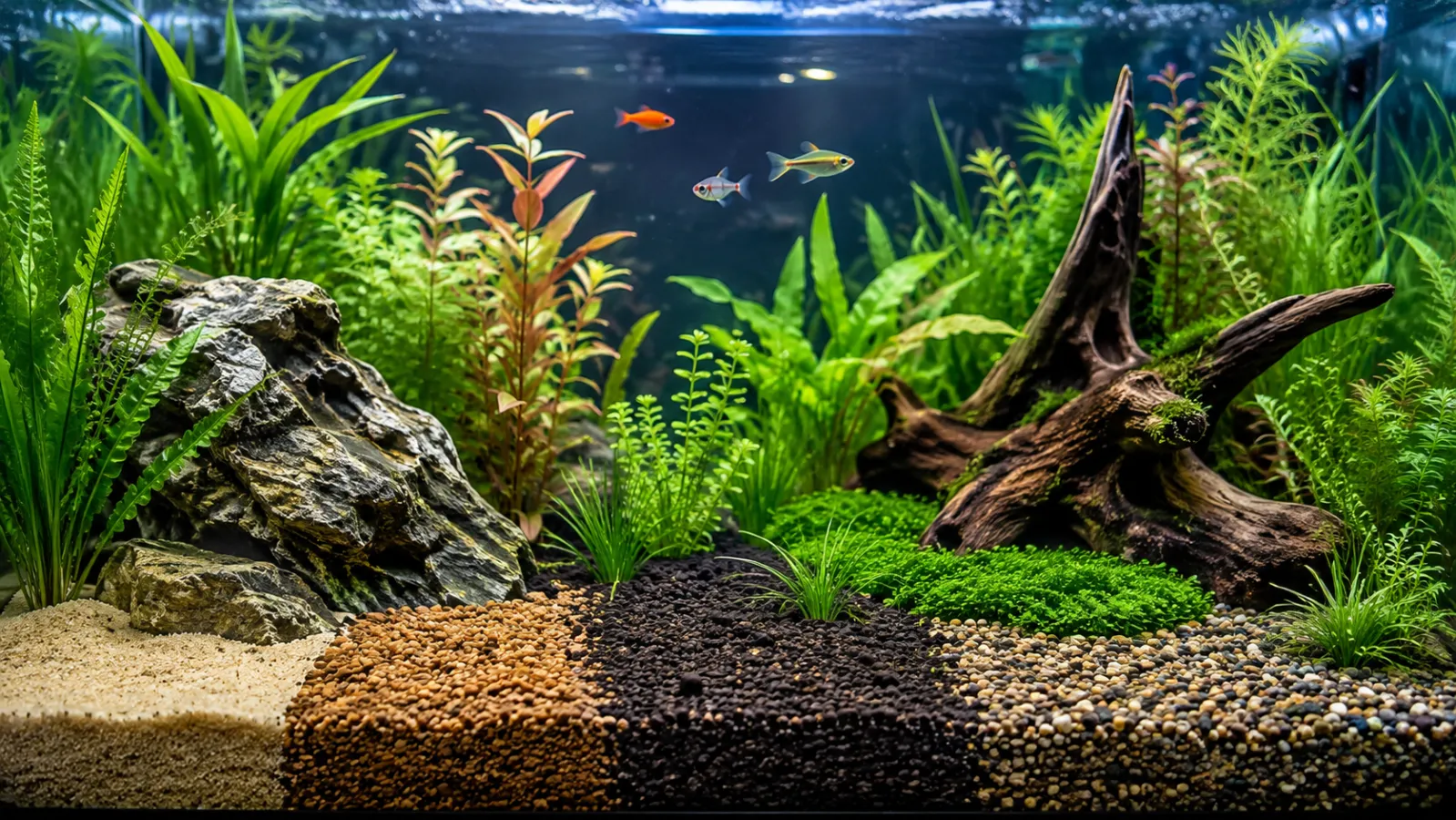
10. Choose Plants That Suit Your Substrate
Substrate can affect plant growth, especially for species that depend heavily on their roots.
Some plants can grow successfully in simple gravel, while others may benefit from nutrient-rich planted substrates.
If you already have an established aquarium with gravel, you do not necessarily need to replace the entire substrate to add plants.
Root tabs or other species-appropriate nutrient solutions may be useful for certain rooted plants, depending on the setup.
Always follow product instructions and avoid adding unnecessary nutrients simply because you want faster growth.
11. Understand Aquarium Nutrients
Plants require nutrients to grow.
These can include:
- Nitrogen
- Phosphorus
- Potassium
- Iron
- Trace elements
Fish waste can provide some nutrients, but it may not provide everything that a heavily planted aquarium needs.
Plant requirements vary considerably.
Low-demand plants may grow successfully with relatively little supplementation, while demanding plants may require more carefully managed nutrients.
The goal should be balanced nutrition rather than adding as much fertilizer as possible.
Excess nutrients can contribute to algae problems when combined with unsuitable lighting or other aquarium imbalances.
12. Do You Need Carbon Dioxide?
Not every aquarium requires injected carbon dioxide.
Many hardy freshwater plants can grow without a dedicated CO₂ injection system when lighting and nutrients are appropriately balanced.
However, more demanding plants can benefit significantly from additional carbon availability.
If you are a beginner, you do not need to build a highly technical planted aquarium immediately.
Starting with easy plants can help you understand lighting, nutrients, algae, and plant growth before investing in advanced equipment.
13. Avoid Buying Plants Based Only on Appearance
A plant may look beautiful in a store or online but still be unsuitable for your aquarium.
Before buying it, research:
- Lighting requirements
- Temperature range
- Mature size
- Growth rate
- Nutrient requirements
- CO₂ requirements
- Planting method
- Fish compatibility
- Maintenance requirements
This takes only a few minutes but can save you money and frustration.
The best aquarium plant is not necessarily the most visually impressive one. It is the plant that can thrive in your actual aquarium.
14. Watch for Algae
Algae is one of the most common concerns in planted aquariums.
Some algae is normal and can occur even in healthy tanks. However, excessive algae may indicate an imbalance involving lighting, nutrients, carbon availability, water conditions, or maintenance.
If algae becomes a problem, do not automatically add more chemicals.
First evaluate:
- How long the aquarium lights are on
- Light intensity
- Nutrient levels
- Plant growth
- Water changes
- CO₂ availability if applicable
- Feeding practices
- Overall aquarium maintenance
Healthy, actively growing plants can help create a more balanced planted aquarium, but plants alone do not guarantee an algae-free tank.
15. Quarantine or Inspect New Plants
New plants can sometimes introduce unwanted organisms into an aquarium.
Depending on where the plants come from, they may carry snails, algae, eggs, or other organisms.
Inspect new plants carefully before placing them into your aquarium.
Some fishkeepers choose to quarantine or treat plants before adding them to an established aquarium.
The appropriate approach depends on your setup and the source of the plants.
16. Trim Plants Regularly
Plant maintenance does not need to be complicated, but some plants require regular trimming.
Remove:
- Dead leaves
- Damaged leaves
- Excessively long stems
- Overgrown sections
- Decaying plant material
Regular trimming keeps the aquarium attractive and prevents fast-growing plants from blocking light or taking over other areas.
Use clean aquarium-safe tools when trimming.
17. Give New Plants Time to Adapt
New aquarium plants may not look perfect immediately after planting.
Some plants experience a transition period when moved from one growing environment to another.
Leaves may change or deteriorate while the plant adapts to submerged growth and the conditions in your aquarium.
Do not immediately assume that a plant is dead because some leaves decline.
Give it appropriate light, nutrients, water conditions, and time to establish.
However, remove clearly decaying material when necessary to prevent unnecessary organic waste.
18. Common Mistakes When Choosing Aquarium Plants
Choosing Plants That Need More Light Than You Have
A demanding plant may struggle in a low-light aquarium.
Ignoring Fish Behavior
Fish that dig, nibble, or uproot plants can make certain species difficult to maintain.
Buying Too Many Fast-Growing Plants
Fast-growing plants can quickly become difficult to manage.
Ignoring Mature Size
A plant that looks small today may eventually dominate a small aquarium.
Adding Too Much Fertilizer
More fertilizer does not automatically produce healthier plants.
Overlooking Maintenance
Choose plants that match the amount of time you can realistically spend caring for the aquarium.
Choosing Plants Without Research
A few minutes of research can prevent unsuitable purchases and failed plant growth.
19. Best Freshwater Aquarium Plants for Beginners
If you are new to planted aquariums, consider starting with relatively hardy species.
Popular beginner-friendly choices can include:
Anubias: Slow-growing and commonly attached to rocks or driftwood.
Java Fern: Hardy and suitable for many low- to moderate-light setups.
Java Moss: Useful for attaching to hardscape and creating natural cover.
Cryptocoryne: Available in different forms and can work well in many beginner aquariums.
Amazon Sword: A larger rooted plant that can make an attractive centerpiece in an appropriately sized aquarium.
The exact requirements still vary between species and varieties, so research the particular plant you purchase.
20. A Simple Plant Selection Process
Choosing plants becomes much easier when you follow a consistent process.
Step 1: Check Your Lighting
Determine whether your aquarium provides low, moderate, or high lighting.
Step 2: Identify Your Fish
Research whether your fish eat, dig up, or disturb plants.
Step 3: Check the Plant's Mature Size
Make sure the plant will fit the aquarium as it grows.
Step 4: Consider Growth Rate
Decide whether you prefer slow-growing or fast-growing plants.
Step 5: Evaluate Maintenance
Choose plants that match the amount of time you want to spend trimming and caring for them.
Step 6: Check Nutrient Requirements
Determine whether the plant requires additional substrate nutrients or fertilizers.
Step 7: Plan Placement
Decide which plants belong in the foreground, midground, background, or on hardscape.
Step 8: Start Small
You do not need to fill the aquarium with dozens of plants immediately. Start with a few suitable species and learn how they grow.
Final Thoughts
Choosing the right freshwater aquarium plants is not simply about finding the most attractive species. The best plants are those that match your aquarium's actual conditions and your ability to maintain them.
Before purchasing, consider lighting available, fish species, growth rate, nutrient requirements, mature size, and maintenance level.
If you are a beginner, hardy low- or moderate-demand plants such as Anubias, Java fern, Java moss, and suitable Cryptocoryne species can be good starting points. As you gain experience, you can explore more demanding plants and advanced planted-aquarium techniques.
A successful planted aquarium does not require the most expensive equipment or the largest collection of plants. It requires the right plants in the right environment.
Choose plants carefully, give them suitable conditions, monitor their growth, and maintain them consistently. With thoughtful plant selection, your freshwater aquarium can become a healthier, more natural-looking, and enjoyable environment for both you and your fish.