Choosing your first freshwater fish can be one of the most exciting parts of starting an aquarium. With so many colorful species available, it is easy to choose a fish simply because it looks beautiful at the store. However, appearance should not be the only consideration.
Different freshwater fish have very different requirements for tank size, water conditions, temperament, diet, swimming space, and social behavior. Some species are relatively forgiving and can be excellent choices for beginners, while others require more specialized care and experience.
The best beginner fish are not necessarily the smallest or cheapest fish. A good choice is a species whose adult size, behavior, water requirements, and feeding needs fit your aquarium and your ability to care for it. Veterinary-reviewed and major aquarium-care sources commonly identify species such as guppies, bettas, platies, zebra danios, tetras, and corydoras among popular beginner choices, while emphasizing that proper tank setup, cycling, filtration, and stable water quality remain essential for every species.
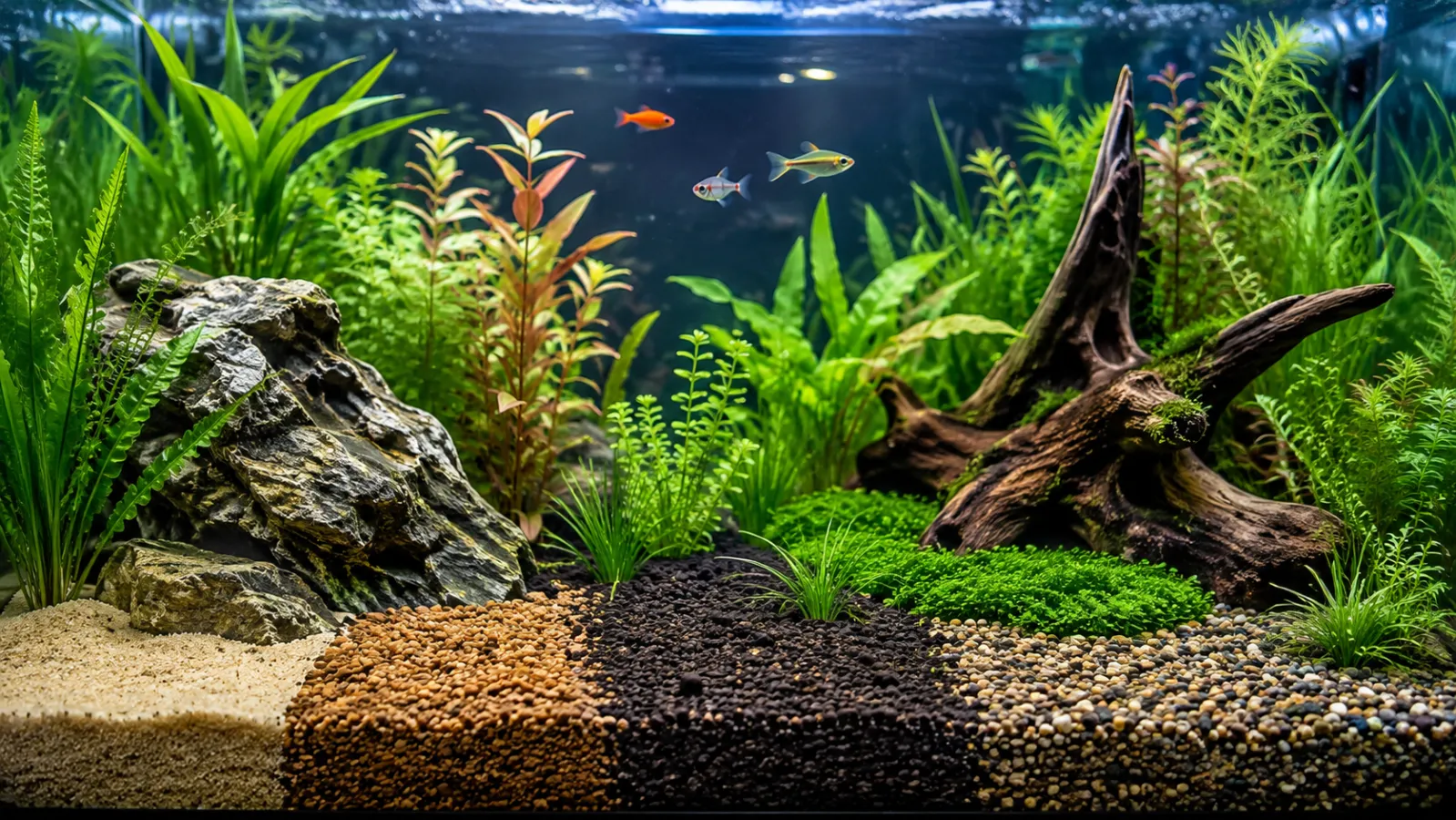
Before buying any fish, think about the aquarium first. Then choose livestock that fits the environment rather than trying to make the environment fit an unsuitable fish.
1. Start With the Aquarium, Not the Fish
One of the biggest beginner mistakes is buying fish first and deciding how to house them afterward.
The better approach is to determine your aquarium size and setup before choosing livestock.
Consider:
- Aquarium volume
- Filter capacity
- Heater requirements
- Water parameters
- Available swimming space
- Decorations and plants
- Number of fish you plan to keep
- Compatibility between species
A larger aquarium can also be more forgiving because changes in water chemistry and temperature are diluted across a greater volume of water. Petco notes that larger aquariums can provide more stability for beginners, even when smaller species can technically be maintained in smaller setups.
Your aquarium should be fully cycled before adding fish. A beginner-friendly species still needs stable and appropriate water conditions.
2. What Makes a Fish Good for Beginners?
A beginner-friendly fish generally has characteristics that make daily care manageable.
Look for species that are:
Relatively hardy: They should be reasonably adaptable when kept under appropriate conditions.
Peaceful: A calm temperament makes community keeping easier.
Appropriate for your tank size: The fish should fit comfortably at adult size.
Easy to feed: Their dietary requirements should match foods you can reliably provide.
Suitable for your water: The species' preferred conditions should be compatible with your source and aquarium water.
Appropriate for your experience: Avoid choosing a species that requires highly specialized equipment or very precise environmental control when you are just starting.
However, "hardy" does not mean a fish can tolerate neglect. Even beginner species require clean water, proper filtration, suitable temperature, appropriate food, and regular maintenance.
3. Guppies: Colorful and Beginner-Friendly
Guppies are among the most popular freshwater fish for beginners.
They are small, active, colorful, and generally peaceful. Their wide range of colors and patterns makes them particularly attractive for community aquariums. PetMD describes guppies as beginner-friendly, active, hardy fish that adapt well to a variety of aquarium setups.
Why Guppies Can Be a Good Choice
Guppies are relatively easy to feed and are generally comfortable with other peaceful, similarly sized fish.
They can work well for beginners who want a lively aquarium rather than a single-fish display.
Their small adult size can also make them suitable for appropriately sized smaller community aquariums.
An Important Consideration: Breeding
Guppies reproduce readily when males and females are kept together.
This can be surprising for new fish keepers. A small group can eventually become a much larger population.
If you do not want to manage unexpected fry, consider carefully how you combine males and females. Petco specifically notes that breeding can be virtually inevitable when both sexes are housed together.
4. Platies: Hardy Community Fish
Platies are another popular option for beginners.
They are generally peaceful, active, colorful livebearers and are often recommended for community aquariums.
Aquarium Co-Op describes platies as particularly robust and notes that they generally prefer harder water and can accept a wide range of community foods.
Why Platies Can Be a Good Choice
Platies are:
- Active
- Colorful
- Generally peaceful
- Relatively adaptable
- Easy to feed
They can be an excellent choice for someone who wants a lively community aquarium.
Like guppies, however, platies can reproduce quickly when males and females are kept together.
Make your stocking plan with adult population growth in mind.
5. Betta Fish: Best for a Single-Fish Setup
Betta fish are frequently recommended as a first aquarium fish because of their striking colors, personality, and relatively manageable care requirements.
However, the popular image of a betta living in a tiny container is misleading. Bettas still need a properly equipped, filtered, heated, and fully cycled aquarium with stable water conditions. PetMD describes bettas as beginner-friendly when their aquarium is properly set up and maintained.
Why Bettas Appeal to Beginners
A betta can be a good option if you prefer a single-fish aquarium.
They are visually impressive and do not require a large school.
However, temperament is extremely important.
Male bettas can be territorial and should not generally be housed together. Some bettas may also be unsuitable for particular community setups because individual temperament varies.
A betta setup should also provide gentle water movement, hiding areas, and access to the water's surface.
6. Zebra Danios: Active Schooling Fish
Zebra danios are active, hardy freshwater fish that can be a good choice for beginners looking for a lively schooling species.
They are fast swimmers and spend a lot of time moving around the aquarium.
Petco lists zebra danios among beginner-friendly fish and notes that they tolerate a relatively broad range of water conditions.
What Beginners Should Know
Zebra danios are social schooling fish and should not be treated as solitary display fish.
Because they are active swimmers, they benefit from adequate horizontal swimming space.
This is an important reminder that a fish's adult behavior matters just as much as its adult size.
A fish may be small but still need plenty of swimming room.
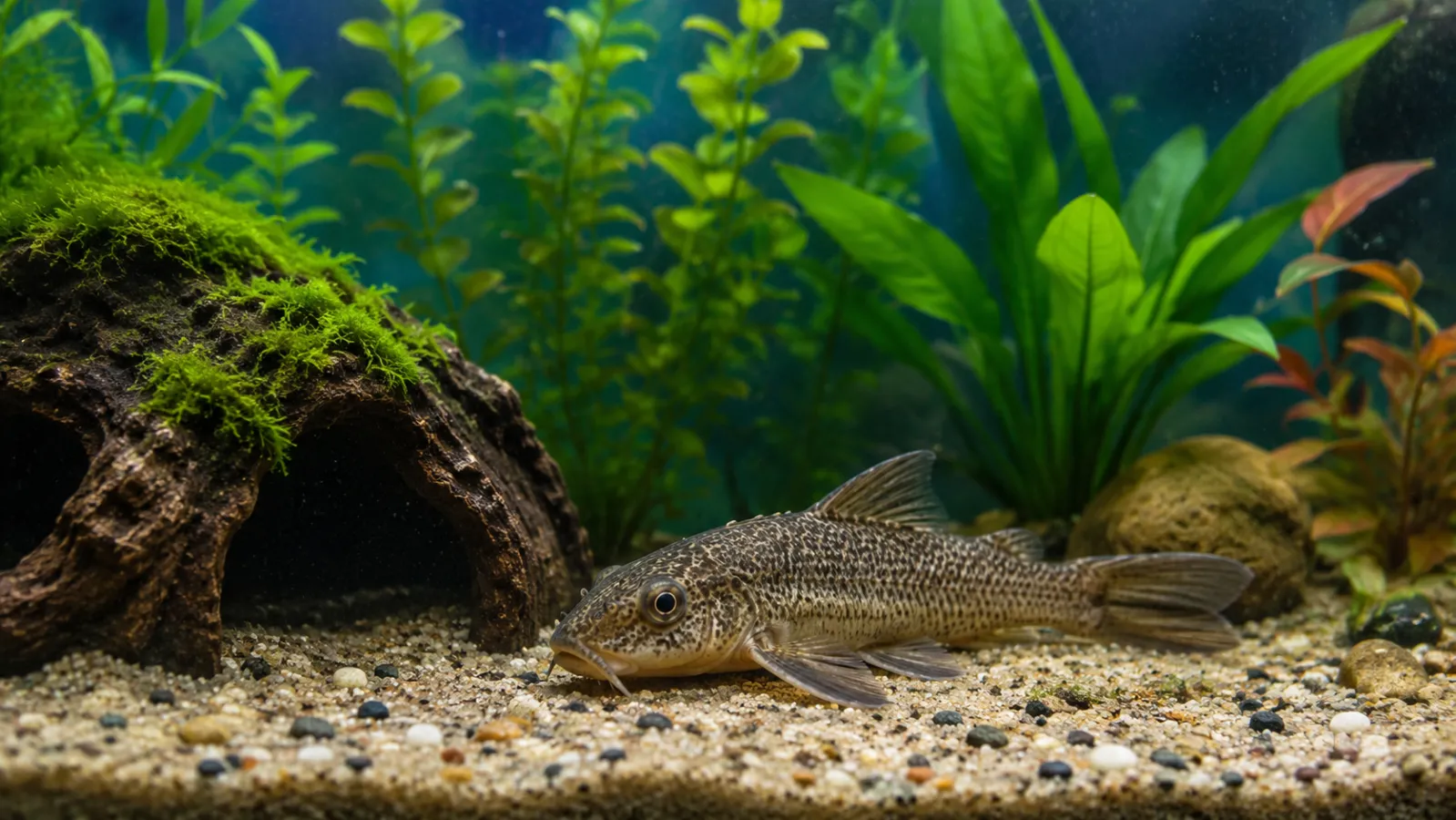
7. Corydoras: Peaceful Bottom-Dwelling Fish
Corydoras are popular freshwater bottom-dwelling fish known for their calm behavior and interesting activity.
PetMD identifies pygmy corydoras as particularly suitable for peaceful beginner aquariums and notes that they should be housed in groups and protected from larger or aggressive tankmates.
Other corydoras species can grow larger, so research the exact species rather than treating every corydoras as identical.
Why Corydoras Can Be a Good Choice
They spend much of their time near the bottom of the aquarium and can add activity to a different part of the water column.
Corydoras also have specific social needs. They generally do better when kept with members of their own species rather than alone.
Do not buy one simply because you have seen it described as a "cleanup fish."
Corydoras still require proper food and should not be expected to survive on leftovers.
8. Neon Tetras: Beautiful but Need a Stable Aquarium
Neon tetras are among the most recognizable freshwater aquarium fish.
Their bright blue and red coloration makes them attractive additions to peaceful community aquariums.
However, they are better suited to a properly established aquarium than a brand-new tank.
Petco describes neon tetras as peaceful schooling fish but notes that they can be more sensitive to water quality than some hardier beginner species.
What Beginners Should Know
Neon tetras are schooling fish, so they should be kept in an appropriate group.
They also need compatible tankmates and stable conditions.
For a brand-new aquarist, it can be wiser to establish the aquarium first, confirm that water parameters are stable, and then introduce more sensitive schooling species gradually.
Their beautiful appearance should not distract from their social and environmental requirements.
9. Mollies: Active and Adaptable
Mollies are another popular livebearing freshwater fish.
They are generally peaceful community fish and can be suitable for beginners when housed in an appropriately sized aquarium.
Petco includes mollies among beginner-friendly freshwater species and notes that they are relatively adaptable.
Things to Consider
Mollies can become considerably larger than some other common beginner fish, so adult size matters when planning your aquarium.
They also reproduce readily when males and females are mixed.
Because they are active fish, provide adequate swimming space rather than choosing a tank based only on the fish's juvenile size.
10. Consider Harlequin Rasboras for a Peaceful Community
Harlequin rasboras are peaceful schooling fish that can work well in community aquariums with compatible species.
They are attractive without being excessively aggressive and can add movement to the middle portion of the aquarium.
Like tetras and danios, they should be kept with compatible members of their species rather than treated as solitary fish.
Before purchasing any schooling species, check the space required for the group rather than calculating tank needs around a single fish.
A community aquarium should be designed around the requirements of the entire group.
11. Adult Size Matters More Than Store Size
One of the most important lessons for beginners is to think about the fish's adult size.
A juvenile fish at the store may look tiny, but it may eventually become much larger.
Research:
- Maximum adult size
- Growth rate
- Swimming behavior
- Space requirements
- Social needs
Never choose a fish simply because it fits comfortably in the aquarium today.
Ask whether it will still fit comfortably months or years later.
This is particularly important with fish such as mollies, swordtails, larger catfish, goldfish, and many cichlids.
The aquarium should be appropriate for the adult fish, not the juvenile fish you purchase.
12. Temperament Is Just as Important as Size
Two fish can be similar in size and still be completely unsuitable as tankmates.
Before creating a community aquarium, consider whether the species are:
- Peaceful
- Territorial
- Fin-nipping
- Predatory
- Highly active
- Slow-moving
- Sensitive to competition
For example, a peaceful small fish may become stressed if housed with aggressive or highly territorial species.
Bettas deserve particular attention because individual aggression and territorial behavior can make certain tank combinations unsuitable.
Always research compatibility before combining species.
13. Understand Water Requirements
Water requirements should be one of your first considerations when selecting fish.
Check the species' preferred:
- Temperature
- pH
- Hardness
- Other relevant water parameters
Do not buy a fish and then assume you can easily force your aquarium water to match an arbitrary target.
Instead, look for fish whose requirements are compatible with your established aquarium and source water.
The same aquarium may work extremely well for one species and poorly for another.
Stable, suitable conditions are more important than simply choosing the fish with the most attractive appearance.
14. Consider Feeding Requirements
A beginner-friendly fish should have a diet that you can consistently provide.
Before buying a species, find out whether it is:
- Herbivorous
- Carnivorous
- Omnivorous
- A surface feeder
- A midwater feeder
- A bottom feeder
Guppies, for example, can accept a varied diet, while bettas require appropriately formulated high-protein foods because of their carnivorous feeding habits.
Bottom-dwelling fish should not simply be expected to survive on food that sinks from other fish.
Every fish should receive appropriate nutrition.
Good feeding also helps maintain water quality because overfeeding can quickly increase aquarium waste.
15. Think About Group Size
Some fish thrive alone, while others need companions.
This is one of the most important differences between species.
Betta: A single male can be appropriate for a solo setup.
Guppies: Social fish that can be kept in groups.
Tetras: Schooling fish that need an appropriate group.
Danios: Active schooling fish that benefit from being kept with others of their species.
Corydoras: Social bottom-dwellers that generally do better in groups.
The exact group size depends on species and aquarium conditions, so research the specific fish you plan to purchase.
Never assume that a schooling fish will be happy simply because it is small enough for your tank.
16. Match Fish to Your Maintenance Experience
A beginner should choose fish that match the amount of care they can realistically provide.
If you are completely new to aquariums, starting with relatively hardy and straightforward species may make the learning process easier.
This does not mean you should avoid every challenging species forever.
It simply means that your first aquarium should allow you to learn about:
- Water testing
- Filtration
- Feeding
- Water changes
- Stocking
- Fish behavior
- Aquarium cycling
Once you understand these fundamentals, you can decide whether you want to maintain more specialized species.
17. Fish Beginners May Want to Research More Carefully
Not every popular freshwater fish is ideal for a first aquarium.
Some species have specialized requirements, large adult sizes, demanding diets, aggressive behavior, or substantial filtration needs.
Be particularly careful with fish that:
- Grow very large
- Require specialized water conditions
- Are highly aggressive
- Need very large groups
- Produce significant amounts of waste
- Need specialized diets
- Require large swimming areas
Goldfish are a good example of why research matters. They are commonly purchased by beginners, but their adult size and waste production mean that they require much more space and filtration than many people expect.
A fish being common in a pet store does not automatically make it easy to keep.
18. Avoid Choosing Fish Based Only on Appearance
A beautiful fish can still be a poor match for your aquarium.
Before purchasing, ask four simple questions:
How big will it get?
What is its temperament?
What water conditions does it need?
What does it eat?
If you cannot answer these questions, spend a little more time researching before buying.
Choosing carefully at the beginning can prevent problems later.
It is much easier to select an appropriate fish than to discover after purchase that your aquarium is too small or incompatible.
19. A Simple Beginner Fish Selection Process
Use this approach before bringing home any new fish.
Step 1: Measure your aquarium's actual volume.
Step 2: Check that the tank is fully cycled and stable.
Step 3: Determine your water temperature, pH, and other relevant parameters.
Step 4: Research the fish's adult size.
Step 5: Check its temperament and compatibility.
Step 6: Determine whether it needs to live alone or in a group.
Step 7: Research its feeding requirements.
Step 8: Check whether its swimming and environmental needs fit your aquarium.
Step 9: Consider how many fish your filtration system and aquarium can realistically support.
Step 10: Add livestock gradually and monitor water quality afterward.
This approach can help prevent impulse purchases and reduce many common beginner mistakes.
20. Quick Comparison of Popular Beginner Fish
Guppies: Colorful, active, generally peaceful, and relatively hardy. Watch for rapid breeding when males and females are kept together.
Platies: Peaceful, active, robust community fish that are relatively easy to feed. They also reproduce readily.
Bettas: Excellent for a properly equipped solo aquarium, but territorial behavior means tankmate selection requires care.
Zebra danios: Active schooling fish that need suitable swimming space and companions.
Corydoras: Peaceful bottom-dwellers that generally benefit from being kept in groups and need appropriate tankmates.
Neon tetras: Peaceful schooling fish with attractive coloration, best introduced to a mature, stable aquarium.
Mollies: Active and adaptable community fish, but their adult size and breeding should be considered.
Common Beginner Fish-Selection Mistakes
Choosing based only on color: A beautiful fish may have demanding care requirements.
Ignoring adult size: Juvenile fish can become much larger than expected.
Buying a single schooling fish: Social species usually need appropriate companions.
Mixing fish without checking temperament: Similar size does not guarantee compatibility.
Ignoring water requirements: Fish need conditions appropriate for their species.
Adding too many fish at once: This can overwhelm biological filtration.
Assuming every fish can live in a small aquarium: Tank size must match adult size and behavior.
Choosing fish before cycling the aquarium: A new tank needs established biological filtration before livestock is introduced.
Final Thoughts
Choosing the best freshwater fish for beginners is not about finding one species that is universally "easy." The right choice depends on your aquarium size, water conditions, maintenance ability, and the type of fish you want to keep.
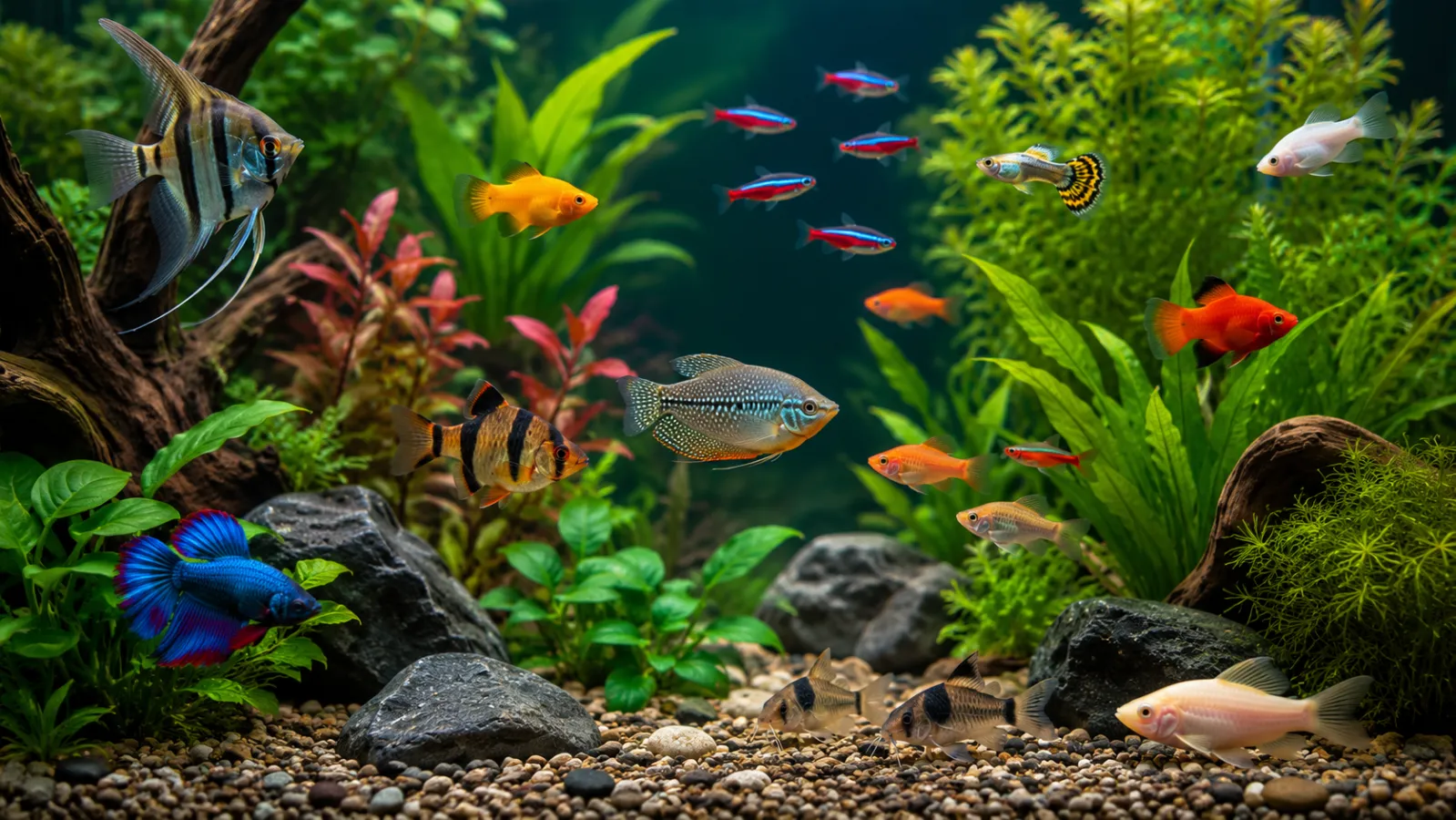
Guppies, platies, bettas, zebra danios, corydoras, neon tetras, and mollies can all be attractive options for beginners, but each has different social, environmental, feeding, and space requirements.
Before purchasing any fish, focus on four essential questions: How large will it become? What is its temperament? What water conditions does it require? What does it need to eat?
Also consider whether it needs to live alone or in a group and whether your aquarium can comfortably support it at adult size.
Most importantly, remember that even the hardiest beginner fish still need a properly cycled aquarium, clean and stable water, appropriate filtration, responsible feeding, and regular maintenance.
The best first fish is not simply the one you like most at the store. It is the one whose needs you can consistently meet.
When you choose your fish based on compatibility rather than appearance alone, you give yourself a much better chance of building a peaceful, healthy freshwater aquarium that you can enjoy for years to come.