
You take the puppy outside, wait patiently, praise the success, and walk back indoors feeling like you’ve cracked it. Five minutes later there’s a puddle on the floor.
If that scene feels familiar, you’re in good company. Potty training rarely runs in a straight line. One day the dog seems to understand; the next day the living-room rug becomes the preferred spot again. The good news is that most dogs can learn clear bathroom habits when the routine is predictable, the timing makes sense for their age and body, and the right behaviour gets rewarded right away.
Build a schedule your dog can actually follow
Dogs don’t watch the clock, but they quickly learn the rhythm of a household. Many start waiting by the door at familiar times or heading toward the place where the lead usually appears.
Use that natural sense of pattern. Take your dog to the toilet area:
- first thing after waking in the morning
- after meals and, when it makes sense, after drinking
- after naps and energetic play
- before bedtime
- before you leave them alone or put them in a crate
- any time you notice the signs they need to go
Young puppies need far more frequent chances than healthy adults. Some manage only an hour or two while awake; others stretch the interval as bladder control improves. Watch the individual puppy rather than sticking rigidly to a printed timetable. Adult dogs still need regular opportunities, and those needs shift with size, activity, diet, medication, and how much water they drink.
If patterns feel unclear, jot down bathroom trips and accidents for a few days. The schedule often reveals itself quickly.
For broader early-training ideas, see Puppy Training: Building Good Habits from Day One.
Pick one familiar toilet spot
Whenever possible, use the same suitable outdoor area. Familiar smells help a dog recognise “this is the place.” Give them a little time to sniff and settle—some go almost at once, others need a few quiet minutes, especially if the surroundings are noisy or full of distractions.
Choose a spot that is safe and practical for your dog’s size and your living situation. Apartment dwellers may need a consistent outdoor patch reached by lift or stairs. When outdoor access is limited, carefully introduced puppy pads or another indoor option can bridge the gap, provided the location stays consistent.
Once your dog finishes, reward them before heading back inside. Otherwise a dog who loves being outdoors may decide that relieving themselves simply ends the fun.
Use one short cue and reward the moment that matters
Pick a calm, simple phrase—“go potty,” “toilet time,” or whatever feels natural—and use it the same way each time you reach the spot or as the dog begins to go. Don’t chant it repeatedly or get frustrated if nothing happens. A cue is a learning aid, not a remote control.
When they finish in the right place, give a small treat and warm praise immediately. Timing is everything. Waiting until you’re back indoors muddies the connection. Some dogs light up for food; others prefer enthusiastic praise or a quick play moment. Use whatever your dog genuinely values, and keep the whole exchange relaxed so toileting around you feels safe rather than high-pressure.
Learn the signs before the accident happens
Most dogs give clues if you know what to look for: more intense floor-sniffing, circling, sudden restlessness, stopping mid-play, whining, or heading toward the door. These signals aren’t foolproof—context matters—but after waking, eating, or a burst of play they are especially worth acting on.
When you spot a likely sign, calmly take the dog to the usual spot. If accidents keep occurring, shorten the intervals rather than expecting longer hold times than the dog can manage.
Make supervision realistic
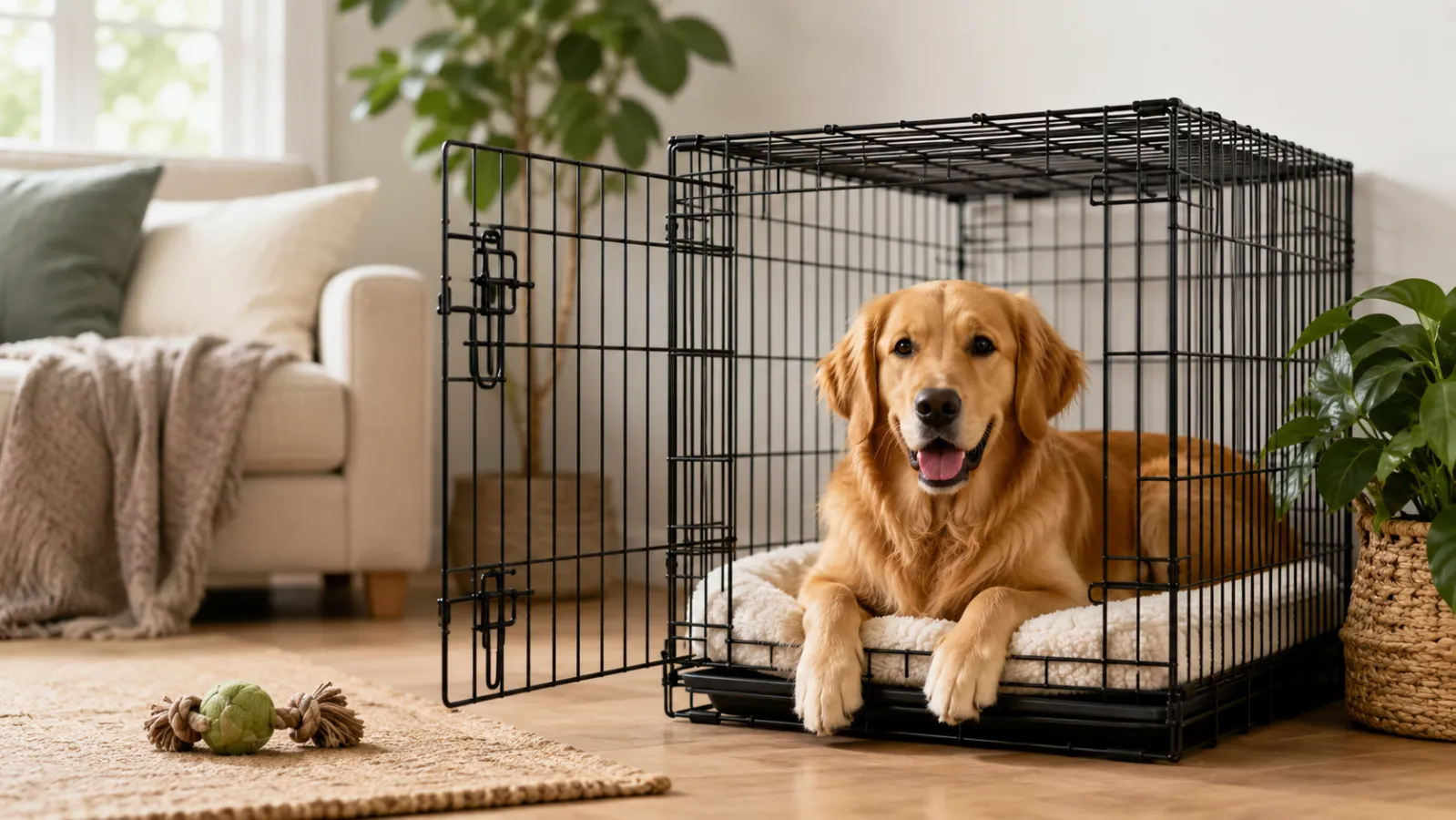
Unrestricted run of the whole house during early training is an invitation for quiet accidents behind the sofa. Keep the dog in the same room with you when you can. Baby gates or a suitably sized pen create a manageable space. A crate can help some households when introduced gradually and positively—choose one the dog can stand, turn, and lie down in comfortably, and never leave a young puppy confined longer than their bladder can handle. A crate is a resting place, never a punishment, and a frightened dog should never be forced into prolonged confinement.
If you’re preparing for a new puppy, Your First Puppy: Start Training Early for Lifelong Good Behavior has practical settling-in advice that pairs well with house-training.
When an accident happens
Take a breath. An indoor mess is almost never spite or stubbornness. If you catch the dog in the act, interrupt calmly without scaring them and guide them outside; reward if they finish there. If you find the evidence later, simply clean it up thoroughly with a pet-safe enzymatic cleaner. Lingering odour can draw the dog back to the same spot. Scolding, rubbing a nose in the mess, or delayed punishment does not teach location—it only teaches anxiety about toileting in your presence.
Note when accidents occur. Right after coming indoors may mean the outdoor time was too short. During long solo periods may mean the schedule or confinement plan needs adjusting.
One important exception: a previously reliable dog who suddenly starts having accidents, urinates more frequently, strains, shows blood in the urine, drinks excessively, or shows other new changes should see a veterinarian. Medical issues can look exactly like training setbacks.
Fitting the routine into real life
You don’t need elaborate apps or rigid charts. Anchor the day with a few predictable moments—first thing in the morning, after meals, after play or naps, and last thing at night—then adjust to your dog’s age and needs. Puppies require more frequent breaks. Elderly dogs, dogs on certain medications, or those with health conditions often need extra opportunities too. Apartment living simply means planning the lead and harness a little earlier so you’re ready when urgency appears.
If you want to weave bathroom breaks into a fuller daily rhythm of meals, walks, and rest, Creating a Daily Routine for Dogs offers helpful structure.
Progress is measured in fewer accidents and clearer communication, not perfection. Puppies need time for physical control to catch up with understanding. Rescue dogs may need time to feel secure enough to relax their habits. Older dogs may simply need more frequent chances than they once did. Stay consistent, stay observant, and adjust as the dog in front of you changes. With that approach, the puddles become rarer and the routine becomes just another ordinary part of the day.
Sources
1. American Veterinary Society of Animal Behavior (AVSAB). Humane Dog Training Position Statement. https://avsab.org/wp-content/uploads/2021/08/AVSAB-Humane-Dog-Training-Position-Statement-2021.pdf
2. American Kennel Club (AKC). How to Potty Train a Puppy. https://www.akc.org/expert-advice/training/how-to-potty-train-a-puppy/
3. VCA Animal Hospitals. Housetraining for Puppies and Dogs. https://vcahospitals.com/know-your-pet/house-training-your-puppy
4. The Humane Society of the United States. How to House Train Your Dog or Puppy. https://www.humanesociety.org/resources/how-house-train-your-dog-or-puppy
5. Merck Veterinary Manual. Behavior Problems of Dogs. https://www.merckvetmanual.com/behavior/behavioral-problems-of-dogs
How we create our content: Our articles are developed using AI-assisted research, cross-checked with multiple AI systems, and validated against reputable professional and authoritative sources before publication.