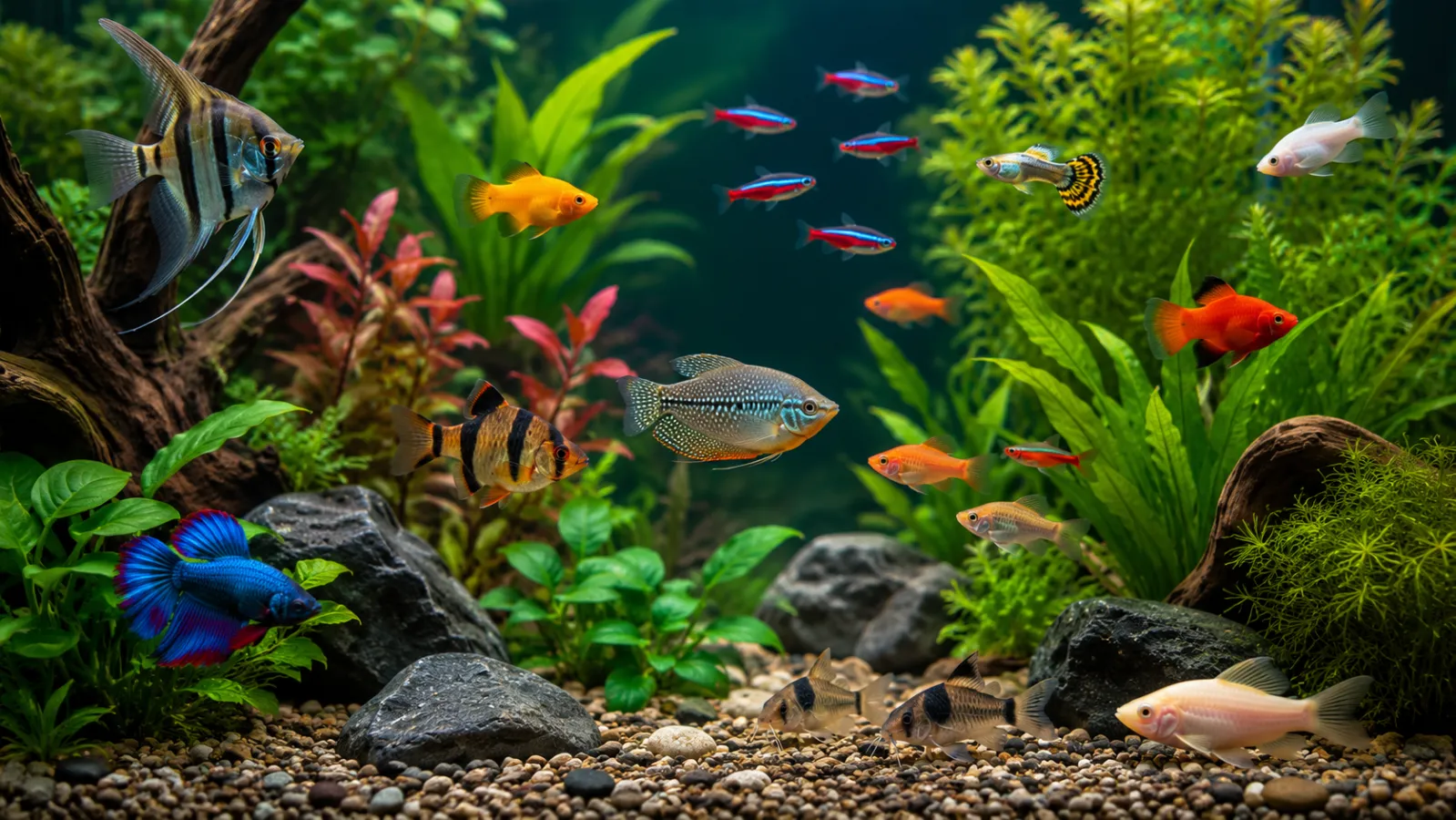
One of the most exciting parts of setting up a freshwater aquarium is choosing the fish you want to keep. Bright tetras, peaceful guppies, colorful platies, active danios, graceful angelfish, and fascinating bottom-dwellers can all make an aquarium more interesting. But before adding fish, there is one important question every fishkeeper should ask: How many fish can you keep in a freshwater aquarium?
The answer is not simply based on the size of the tank. A 20-gallon aquarium does not automatically have a fixed number of fish it can safely hold. The appropriate stocking level depends on the adult size of the fish, their activity level, territorial behavior, filtration, water maintenance, swimming space, and compatibility.
Overstocking can increase waste, create competition for food and space, raise stress levels, and make it much harder to maintain stable water conditions. A lightly stocked aquarium is often easier for beginners to manage because there is less waste and more room for fish to establish comfortable territories.
Before adding fish, always think beyond how many fish can physically fit inside the aquarium. The real goal is to create a stable, healthy environment where every fish has enough space, oxygen, food, shelter, and appropriate water conditions.
1. Tank Size Is Only the Starting Point
Tank volume is one of the first factors to consider when planning an aquarium, but it should never be the only factor.
A larger aquarium generally provides more swimming space and a greater volume of water to dilute waste. It can also offer more opportunities to create separate territories and hiding areas.
However, two aquariums with the same water volume may have completely different stocking requirements.
For example, a tank containing several small, peaceful schooling fish may have different requirements from a tank containing large territorial cichlids. Similarly, active fish that constantly swim across the aquarium may need more open space than slower-moving species.
This means that stocking should be based on the needs of the actual species rather than relying on a single universal formula.
2. Consider the Adult Size of Your Fish
One of the most common stocking mistakes is buying fish based on their current size.
Many fish sold at aquarium stores are juveniles. They may look tiny when purchased but can grow considerably as adults.
Always research the adult size of a species before bringing it home.
For example, a juvenile fish that is only a few inches long may eventually require a much larger aquarium. If you plan your stocking around the fish's current size, your aquarium may quickly become overcrowded.
Before purchasing a fish, ask:
- How large will it become?
- How quickly does it grow?
- Does it need open swimming space?
- Is it territorial?
- Does it need to live with other fish of its species?
- What size aquarium is appropriate for adults?
Planning for adult size prevents many stocking problems later.
3. Understand Filtration Capacity
Filtration plays an essential role in aquarium health.
Fish produce waste, and uneaten food also contributes to the organic load in the aquarium. Beneficial microorganisms in an established biological filter help process harmful nitrogenous waste, but filtration does not make an aquarium capable of holding unlimited fish.
A filter should be appropriately sized for the aquarium and the biological load.
When stocking heavily, the amount of waste entering the system increases. This means the aquarium may require stronger biological filtration, more frequent maintenance, and closer monitoring of water parameters.
A powerful filter does not automatically make overstocking safe.
Filtration is one part of aquarium management, not a replacement for adequate swimming space and responsible stocking.
4. Think About Fish Compatibility
The number of fish you can keep is also affected by whether the fish can live peacefully together.
Two species may both be small but still be poor tankmates.
Some fish are peaceful community species, while others may be territorial, aggressive, predatory, or prone to fin-nipping.
Before combining species, research:
- Temperament
- Adult size
- Water temperature requirements
- Water chemistry preferences
- Swimming behavior
- Feeding behavior
- Territorial tendencies
- Schooling or shoaling requirements
- Predator-prey relationships
A peaceful aquarium is not simply an aquarium with a low number of fish. It is an aquarium where the inhabitants are appropriately matched.
5. Schooling Fish Need Groups
Some freshwater fish are social and naturally live in groups.
Tetras, rasboras, danios, Corydoras, and other schooling or shoaling species may be more comfortable when kept with appropriate numbers of their own kind.
This creates an important stocking challenge.
You cannot always solve overcrowding by purchasing only one or two fish from every species. Some fish need a proper social group to display normal behavior.
For example, instead of keeping one or two schooling fish from several different species, a more appropriate setup may involve keeping a suitable group of one or two species.
This can create a more natural-looking aquarium while reducing unnecessary competition and stress.
6. Consider Swimming Space
Water volume and swimming space are not exactly the same thing.
A tall aquarium may contain the same amount of water as a longer aquarium, but active swimming fish may benefit more from horizontal swimming space.
Fish such as danios and some barbs are active swimmers. They may use large portions of the aquarium throughout the day.
When choosing fish, consider how they use the tank:
Surface swimmers: These species spend much of their time near the upper portion of the aquarium.
Midwater swimmers: Many community fish spend most of their time in the middle of the water column.
Bottom dwellers: Corydoras and other bottom-oriented species spend much of their time near the substrate.
Using different areas of the aquarium can make a community tank more efficient, but it does not mean that unlimited fish can be added simply because they occupy different levels.
Every fish still contributes to the overall biological load.
7. Avoid Relying on the "One Inch per Gallon" Rule
You may have heard the traditional aquarium rule that suggests keeping one inch of fish per gallon of water.
Although this rule is simple, it is not a reliable universal stocking formula.
Fish differ significantly in body shape, activity, waste production, oxygen requirements, behavior, and adult size.
For example, one inch of a slender, small-bodied fish is not biologically equivalent to one inch of a deeper-bodied fish.
The rule also does not account for territorial behavior or the need for schooling groups.
Instead of using a simple calculation, evaluate the complete aquarium:
- Adult fish size
- Number of fish
- Species behavior
- Swimming requirements
- Filtration
- Water maintenance
- Aquarium dimensions
- Compatibility
- Oxygenation
- Aquascaping
This produces a much more realistic stocking plan.
8. Common Freshwater Fish and Stocking Considerations
Every species has different requirements, but understanding common aquarium fish can help beginners think about stocking more realistically.
Guppies
Guppies are small, active livebearers that are popular in community aquariums.
They can reproduce rapidly, which is an important consideration. A tank that begins with a small number of guppies can become much more populated if males and females are kept together.
If you keep mixed sexes, plan for potential fry and population growth.
Tetras
Many tetra species are peaceful schooling fish that can work well in community aquariums.
However, their group requirements should be considered when planning stocking. It is usually better to provide an appropriate group rather than keeping isolated individuals.
Different tetra species also have different adult sizes and behavior, so research the specific species before purchasing.
Corydoras
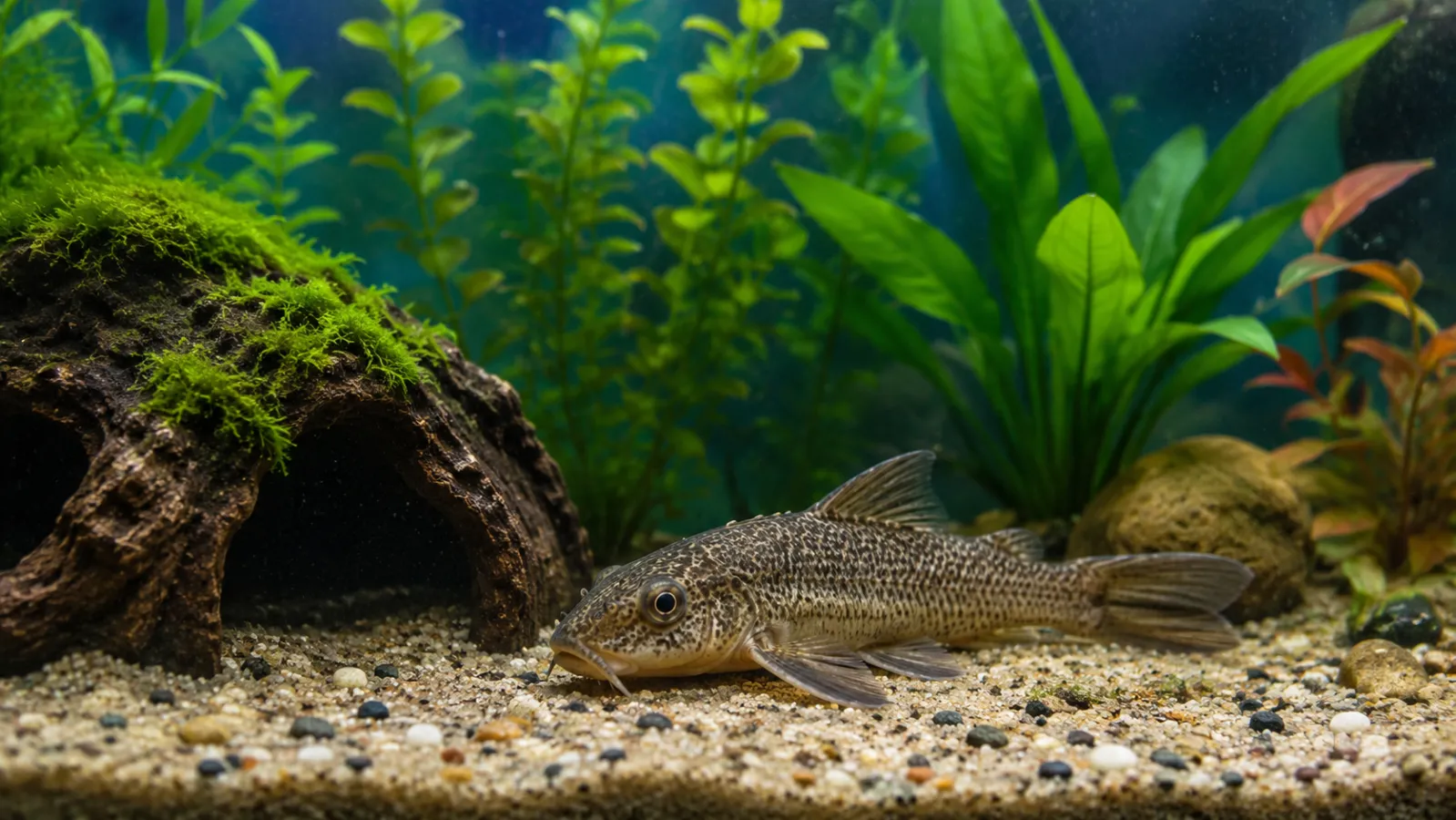
Corydoras are popular bottom-dwelling fish. They are social and generally do better when kept in an appropriate group of their own species.
They also require suitable substrate and access to food at the bottom of the aquarium.
Adding Corydoras does not mean you can ignore the aquarium's total biological load.
Goldfish
Goldfish require considerably more space than their small size in a store may suggest.
They can grow large and produce substantial amounts of waste. They are therefore not ideal candidates for small aquariums simply because they are sold as small juveniles.
Always plan for the adult fish rather than the size at purchase.
Angelfish
Angelfish are much larger than many beginner community fish and can become territorial, especially as they mature.
Their body shape and height also mean that aquarium dimensions matter.
A tank that is technically large enough in volume may still be unsuitable if it does not provide adequate swimming and vertical space.
9. Don't Forget the Fish You Already Have
When adding new fish, consider the existing population.
A common mistake is to look at the empty space in the aquarium and assume that there is room for more fish.
Instead, ask whether the aquarium is already producing a significant amount of waste.
Check:
- Current fish population
- Adult sizes
- Water parameters
- Filter performance
- Maintenance schedule
- Fish behavior
- Existing territories
- Available swimming space
If the aquarium is already stable and appropriately stocked, adding more fish may disrupt that balance.
10. Quarantine New Fish When Appropriate
Introducing new fish can create more than a stocking issue.
New fish may carry pathogens or parasites that could affect the existing aquarium population.
For fishkeepers who have the space and equipment, quarantining new fish separately before introducing them to the main aquarium can reduce this risk.
Quarantine also gives you an opportunity to observe the new fish, monitor their eating behavior, and make sure they appear healthy before introducing them to an established community.
This is particularly valuable when adding fish to an established aquarium that already contains healthy animals.
11. Watch for Signs of Overstocking
Your aquarium may be overstocked even if the fish appear fine at first.
Look for warning signs such as:
- Frequently elevated ammonia or nitrite
- Persistent nitrate accumulation
- Cloudy water
- Excessive algae
- Fish gasping near the surface
- Frequent aggression
- Fish hiding unusually often
- Slow or abnormal swimming
- Poor growth
- Frequent illness
- Excess food and waste accumulating in the tank
One sign alone does not necessarily prove that the aquarium is overstocked. However, several problems occurring together should prompt you to reassess your stocking level and aquarium maintenance routine.
12. Water Quality Matters More Than a Fish Count
A specific fish count does not tell you whether an aquarium is healthy.
A tank containing ten tiny fish may have a completely different biological load from a tank containing ten larger fish.
Instead of asking only, "How many fish can I keep?" ask:
"Can my aquarium consistently maintain healthy water conditions for these fish?"
Regularly testing water parameters can help you determine whether your aquarium is handling its current biological load.
Important parameters may include:
- Ammonia
- Nitrite
- Nitrate
- pH
- Temperature
The exact ideal range depends on the species you keep.
If water quality becomes difficult to maintain despite appropriate maintenance, your stocking level may be too high, or another aquarium management issue may need to be addressed.
13. Plants Can Help, But They Do Not Make Overstocking Safe
Live aquatic plants can be extremely beneficial in freshwater aquariums.
They can provide:
- Shelter
- Natural structure
- Grazing opportunities
- Visual barriers
- Additional habitat
- Some nutrient uptake
However, plants should not be viewed as a solution for excessive stocking.
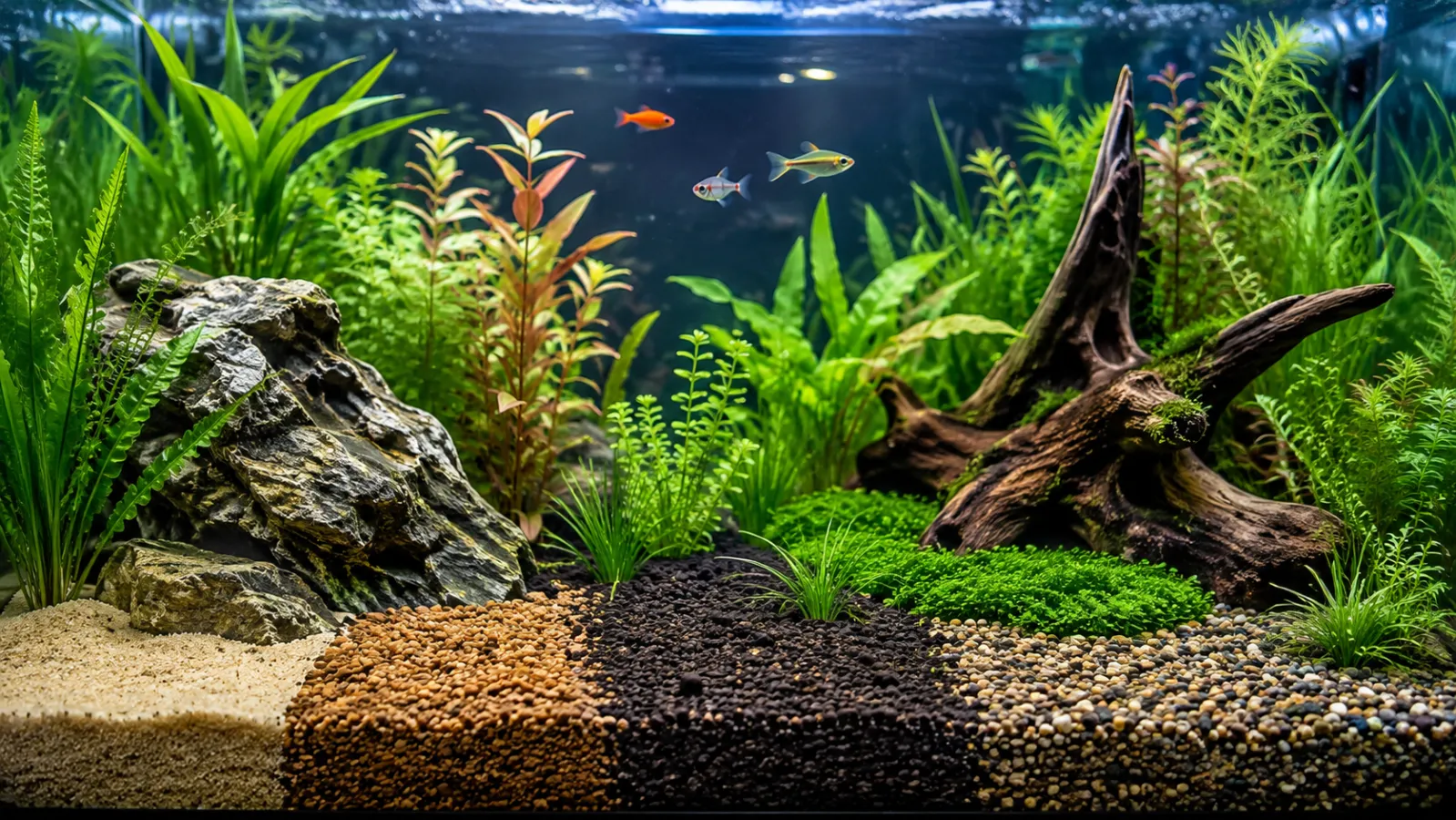
A heavily planted aquarium can still become overcrowded. Plants contribute to a healthier ecosystem, but they do not eliminate fish waste or replace proper filtration and water changes.
14. Add Fish Slowly
A new aquarium should not be filled with its entire planned fish population immediately.
Aquariums depend on biological filtration, and the beneficial microorganisms responsible for processing waste need time to establish and adjust to the biological load.
Adding fish gradually allows you to observe how the aquarium responds.
After adding fish:
- Monitor water parameters
- Watch fish behavior
- Check whether the filter is keeping up
- Maintain appropriate water changes
- Allow the aquarium to stabilize before adding more
A slower approach is usually safer than trying to create a fully stocked aquarium in a single day.
15. Leave Room for Growth
When planning a freshwater aquarium, think about what the tank will look like six months or one year from now—not just today.
Fish grow.
Plants grow.
Some species reproduce.
Aquarium populations can change unexpectedly.
Leaving some capacity in your aquarium gives you flexibility and makes routine maintenance easier.
A slightly understocked aquarium is often much easier to manage than an aquarium operating at its maximum biological capacity.
16. How to Plan Your Stocking Step by Step
Before buying fish, create a simple stocking plan.
Step 1: Identify Your Aquarium
Record the tank's actual water volume and dimensions.
Step 2: Choose Your Main Fish
Select one or two species that you want to build the aquarium around.
Step 3: Research Adult Size
Never plan based on juvenile size.
Step 4: Check Compatibility
Make sure the fish can safely share the same environment.
Step 5: Check Group Requirements
Determine whether each species needs a social group.
Step 6: Evaluate Filtration
Make sure your filtration system is appropriate for the aquarium and planned biological load.
Step 7: Add Fish Gradually
Allow the aquarium to adjust between additions.
Step 8: Monitor Water Quality
Regular testing can reveal problems before fish become visibly stressed.
Final Thoughts
So, how many fish can you keep in a freshwater aquarium?
There is no single number that works for every tank. The correct stocking level depends on the adult size of your fish, tank volume, filtration capacity, swimming space, compatibility, behavior, and maintenance routine.
Before adding fish, research each species carefully. Consider how large it will become, whether it needs a group, how active it is, and whether it can peacefully live with your existing fish.
Most importantly, do not treat aquarium capacity as a target that must be filled.
A healthy aquarium is not the one containing the maximum possible number of fish. It is the one where the fish have enough space, water quality remains stable, filtration can handle the biological load, and every species can display appropriate natural behavior.
When in doubt, choose the conservative option. Keeping fewer fish and maintaining excellent water quality is generally a better long-term strategy than overcrowding an aquarium and struggling to correct the resulting problems.
Plan for adult size, choose compatible species, add fish gradually, monitor your water, and leave room for growth. With thoughtful stocking, your freshwater aquarium can remain healthier, more stable, and easier to enjoy for years to come.