Keeping a fish tank clean is one of the most important parts of responsible aquarium care. A clean aquarium is not simply about making the glass look spotless. The real goal is to maintain healthy water quality, control waste, support beneficial bacteria, and create a stable environment where fish, plants, and other aquatic life can thrive.
One of the biggest questions new and experienced aquarium owners ask is: How often should you clean your fish tank?
The answer depends on several factors, including the size of the aquarium, number and type of fish, filtration system, feeding routine, presence of live plants, and overall water quality. A lightly stocked, well-maintained aquarium may need less hands-on cleaning than a heavily stocked tank.
Cleaning too little allows waste, algae, and pollutants to accumulate. However, cleaning too aggressively can disrupt the beneficial biological system that keeps aquarium water stable.
The best approach is regular, moderate maintenance rather than occasional deep cleaning.
1. Understand What “Cleaning” a Fish Tank Really Means
Many people think cleaning an aquarium means removing all the water, scrubbing every decoration, washing the gravel, and starting again.
That is usually not necessary.
A healthy aquarium is a living ecosystem. Beneficial bacteria grow on surfaces throughout the tank, particularly in filter media and other established surfaces. These microorganisms play an important role in processing fish waste and maintaining the nitrogen cycle.
Because of this, aquarium maintenance should focus on removing excess waste without destroying the biological balance.
Regular aquarium cleaning usually involves:
- Partial water changes
- Removing visible waste
- Cleaning algae from glass
- Vacuuming parts of the substrate
- Checking and maintaining the filter
- Removing dead or decaying plant material
- Inspecting aquarium equipment
You generally do not need to completely empty the tank during routine maintenance.
2. How Often Should You Perform a Partial Water Change?
For many home aquariums, a partial water change is commonly performed approximately once a week. A useful starting point for many tanks is replacing around 10% to 25% of the water, although the ideal amount and frequency depend on your aquarium's conditions.
For example, a heavily stocked aquarium may require more frequent maintenance than a lightly stocked tank with healthy plants and efficient filtration.
Before adding replacement water, make sure it is appropriately prepared for aquarium use. Tap water may contain chlorine or chloramine, which can harm fish and beneficial bacteria. Use an appropriate water conditioner according to the product instructions.
The replacement water should also be close to the aquarium's existing temperature. Large temperature differences can stress fish.
During a water change, use an aquarium siphon or gravel vacuum to remove waste from the substrate.
The goal is not to remove every microorganism or completely reset the aquarium. The goal is to remove accumulated pollutants while maintaining stability.
3. Clean Algae as Needed
Algae are a normal part of many aquariums. A small amount is not necessarily a problem, but excessive algae can cover the glass, decorations, plants, and equipment.
How often you need to clean algae depends on how quickly it grows.
Some aquariums may only need the glass cleaned once every week or two, while others may require attention several times a week.
Algae growth can be influenced by:
- Excessive lighting
- High nutrient levels
- Overfeeding
- Too much direct sunlight
- Insufficient maintenance
- Imbalance between light and plant growth
A magnetic aquarium cleaner, algae scraper, or suitable cleaning pad can help remove algae from the glass.
Avoid using household cleaning sprays, detergents, or soaps anywhere near aquarium water. Even small residues can be dangerous to aquatic animals.
Rather than simply removing algae repeatedly, try to identify why it is growing so quickly.
If algae returns rapidly, review your lighting schedule, feeding habits, water quality, and maintenance routine.
4. Vacuum the Substrate Regularly
The substrate at the bottom of a fish tank collects waste over time. Uneaten food, fish waste, dead plant material, and other debris can settle between gravel or other substrate materials.
A gravel vacuum can remove much of this accumulated debris during a water change.
You do not necessarily need to vacuum every part of the substrate during every maintenance session. In established aquariums, especially planted tanks, cleaning smaller sections at a time can help minimize disturbance.
Be careful around plant roots and avoid aggressively stirring the entire substrate.
The frequency depends on the aquarium:
Lightly stocked tank: Substrate cleaning may be needed less frequently.
Heavily stocked tank: More frequent substrate cleaning may be necessary.
Planted tank: Vacuum carefully around plants and avoid excessive disturbance.
Bare-bottom tank: Waste is usually easier to see and remove.
The important thing is to prevent excessive organic waste from accumulating.
5. Maintain Your Aquarium Filter Properly
Your filter is working continuously to help maintain water quality. Because of this, filter maintenance is an essential part of aquarium cleaning.
However, there is an important difference between cleaning a filter and stripping it completely clean.
Filter media can contain beneficial bacteria that support biological filtration. Cleaning everything at once or replacing all biological media unnecessarily can reduce this bacterial population.
When appropriate, reusable filter sponges and biological media can often be gently rinsed in water removed from the aquarium during a water change.
Avoid washing biological filter media under untreated tap water unless the manufacturer specifically recommends it.
You should also regularly inspect:
- Filter intake
- Impeller
- Tubing
- Filter sponge
- Water flow
- Filter housing
A sudden reduction in water flow may indicate a blockage or dirty filter component.
Follow the manufacturer's instructions regarding filter media replacement. Some disposable cartridges need regular replacement, while reusable media can often be cleaned and maintained for much longer.
6. Establish a Weekly Fish Tank Cleaning Routine
For many aquarium owners, a weekly routine is an easy way to stay consistent.
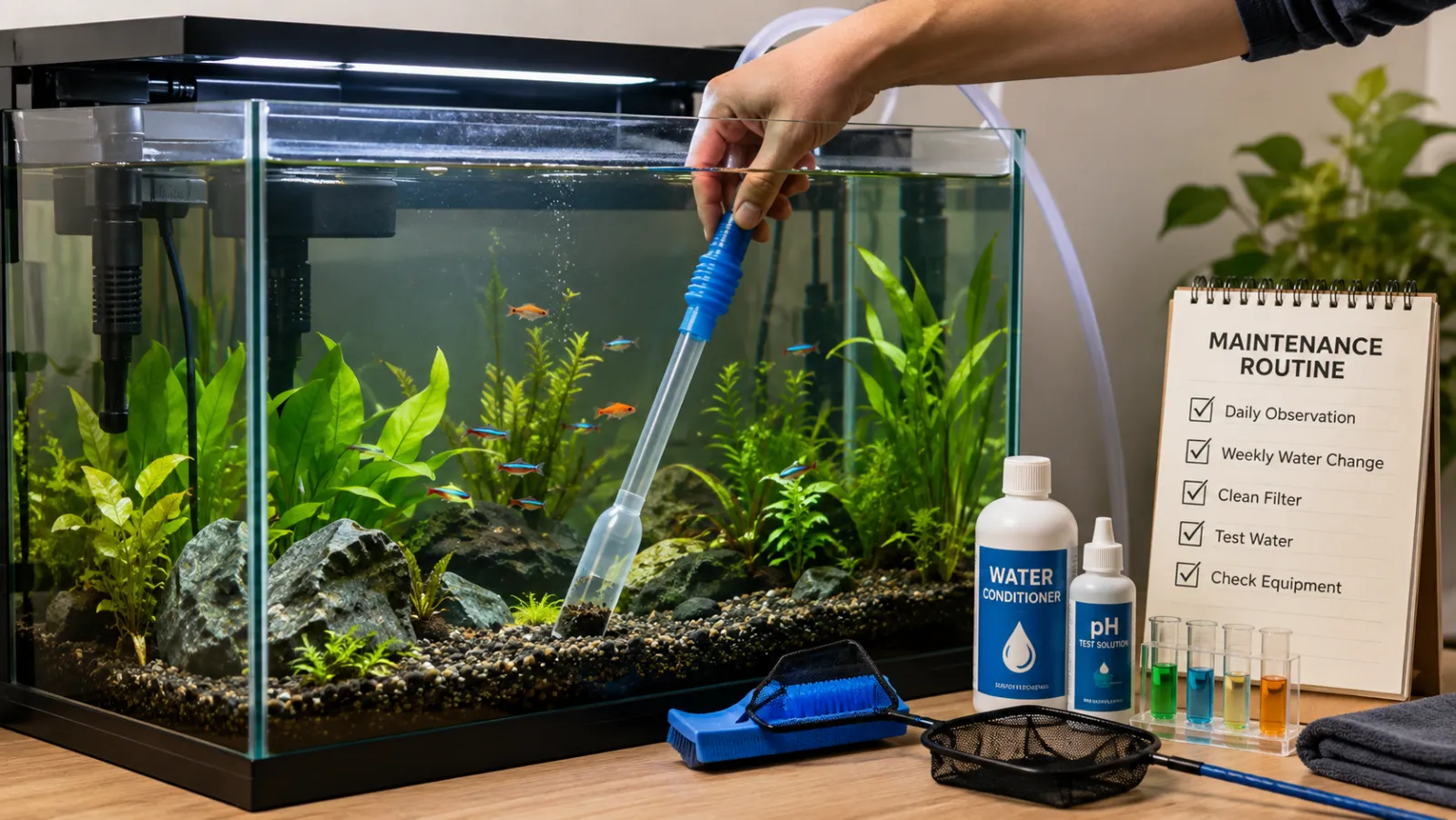
A typical weekly maintenance session might include:
Step 1: Check the fish for unusual behavior or signs of stress.
Step 2: Check the water temperature.
Step 3: Test important water parameters when appropriate.
Step 4: Remove algae from the glass.
Step 5: Remove visible waste and uneaten food.
Step 6: Vacuum part of the substrate.
Step 7: Perform an appropriate partial water change.
Step 8: Inspect the filter and equipment.
Step 9: Refill the aquarium with properly prepared water.
This routine does not need to take hours. Once you become familiar with your aquarium, regular maintenance can become a straightforward part of your weekly schedule.
7. Clean More Often If Your Aquarium Has Heavy Waste
Not every aquarium can follow exactly the same schedule.
Certain situations may require more frequent maintenance.
A tank may need additional attention if it has:
- A large number of fish
- Large fish that produce significant waste
- Frequent feeding
- Poor filtration
- Rapid algae growth
- High nitrate levels
- Few or no live plants
- Recent illness or fish loss
For example, a heavily stocked aquarium can accumulate waste much faster than a lightly stocked planted aquarium.
Instead of following a rigid cleaning schedule, use your water test results and observations to adjust your routine.
Your aquarium should tell you when maintenance needs to increase.
8. Avoid Over-Cleaning Your Aquarium
It may seem logical that cleaning more often always means a healthier aquarium. However, excessive cleaning can create its own problems.
Completely dismantling an established aquarium, replacing all filter media, scrubbing every surface, and changing nearly all the water can cause unnecessary disruption.
The aquarium's biological system depends on beneficial microorganisms. Removing too much of this established biological environment at once can make it harder for the aquarium to process waste efficiently.
Over-cleaning can also cause unnecessary stress to fish.
Instead, aim for consistent maintenance rather than extreme cleaning.
Remove excess waste while allowing the aquarium's biological system to remain established.
9. Should You Clean the Decorations?
Aquarium decorations can collect algae and debris, so they may need occasional cleaning.
However, they do not need to be scrubbed every week simply because they have a small amount of natural growth.
If decorations become heavily covered in algae or accumulate significant waste, remove them carefully and clean them using aquarium-safe methods.
Never use soap or household chemicals.
If you are cleaning decorations outside the aquarium, rinse them thoroughly before returning them to the tank.
Natural-looking algae growth can also be part of an established aquarium. The decision to clean decorations should depend on appearance, waste accumulation, and the needs of the aquarium rather than an idea that every surface must always look brand new.
10. Remove Uneaten Food Quickly
One of the easiest ways to reduce cleaning problems is to prevent waste from accumulating in the first place.
Overfeeding is a common aquarium mistake. Uneaten food breaks down and contributes to organic waste, which can affect water quality.
Feed fish an appropriate amount based on their species, size, age, and dietary requirements.
Observe feeding time carefully. If food regularly remains on the bottom long after feeding, you may be offering too much.
When uneaten food is visible, remove it with a small aquarium net or siphon.
Good feeding habits can significantly reduce the amount of cleaning your aquarium requires.
11. Watch for Signs That Your Tank Needs Cleaning
Your aquarium can often provide clues when maintenance needs to increase.
Look for:
- Increasing algae growth
- Visible waste on the substrate
- Cloudy water
- Unpleasant odors
- Reduced filter flow
- High nitrate levels
- Uneaten food
- Decaying plants
- Fish showing unusual behavior
Clear water does not automatically mean that the aquarium is healthy, and slightly cloudy water does not always mean something is seriously wrong.
Water testing is important because some problems cannot be seen with the naked eye.
For example, ammonia and nitrite may be dangerous even when the aquarium looks perfectly clean.
12. Monthly Aquarium Maintenance
In addition to weekly maintenance, some tasks can be reviewed approximately once a month.
Check the condition of:
- Filter tubing
- Intake and outlet components
- Heater
- Thermometer
- Air pump equipment
- Lighting
- Aquarium lid
- Decorations
- Electrical connections
Inspect equipment for damage, unusual noise, reduced performance, or buildup.
If your aquarium has live plants, remove dead leaves and trim overgrown growth as necessary.
Monthly maintenance is also a good opportunity to review your aquarium's overall condition. Has the fish population changed? Has algae increased? Are nitrate levels consistently higher? Is the filter still providing adequate circulation?
These questions can help you improve your maintenance schedule before small problems become major ones.
13. Do Different Types of Aquariums Need Different Cleaning Schedules?
Yes. Aquarium maintenance varies depending on the setup.
A freshwater community aquarium may require routine weekly water changes and regular substrate cleaning.
A heavily stocked aquarium may need more frequent water changes because waste accumulates faster.
A planted aquarium can sometimes have different maintenance needs because plants may absorb certain nutrients, but trimming and substrate care still matter.
A saltwater aquarium can involve additional monitoring and specialized maintenance because marine systems have more water parameters to manage.
A small aquarium should not automatically be considered easier. Smaller volumes of water can change more quickly when waste accumulates or conditions fluctuate.
The best cleaning schedule is the one that matches the biological demands of your specific aquarium.
14. Create a Maintenance Calendar
One of the simplest ways to stay consistent is to create a maintenance calendar.
For example:
Daily:
Check fish, temperature, feeding, and equipment.
Weekly:
Inspect water quality, clean algae as needed, remove waste, and perform an appropriate partial water change.
Every few weeks:
Inspect the filter and clean reusable components when needed.
Monthly:
Inspect equipment thoroughly and review your overall aquarium maintenance routine.
As needed:
Trim plants, remove excessive algae, clean decorations, and address unusual water-quality changes.
The exact schedule should be adjusted according to your aquarium's test results and appearance.
Keeping a simple record of water changes and test results can also help you identify patterns.
Common Fish Tank Cleaning Mistakes to Avoid
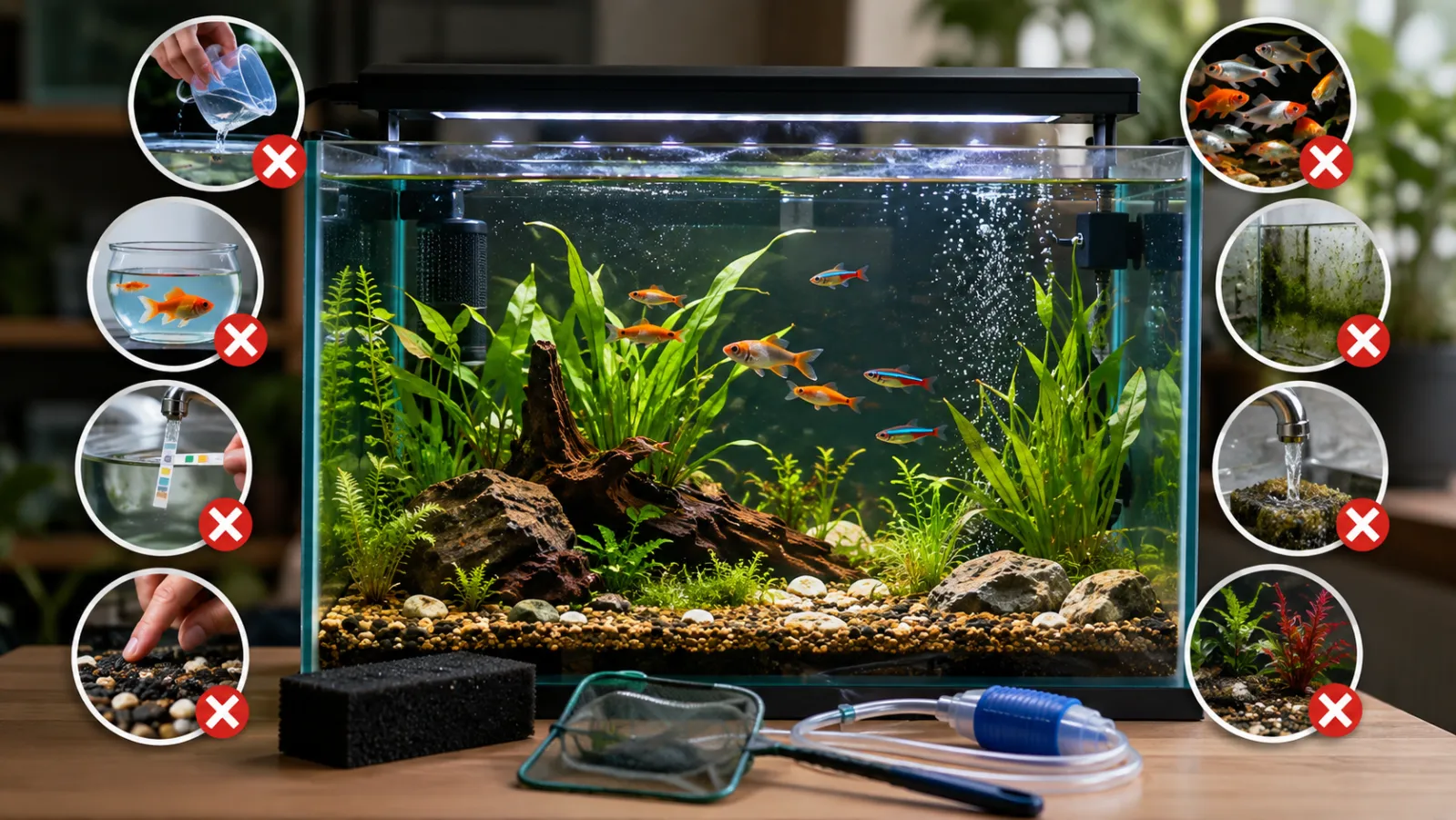
Changing all the water unnecessarily: Large changes can create sudden shifts in temperature and water chemistry.
Cleaning all filter media at once: This can remove too much of the beneficial biological population.
Using soap: Household cleaning products can be harmful to fish.
Overfeeding: Excess food creates additional waste and increases maintenance needs.
Ignoring the substrate: Waste can accumulate out of sight between gravel particles.
Cleaning only when the tank looks dirty: Water chemistry problems are not always visible.
Following a rigid schedule without testing: Different aquariums have different biological needs.
The goal should be to develop a routine based on observation and water quality rather than relying on one rule for every aquarium.
Final Thoughts
So, how often should you clean your fish tank?
For many aquariums, light daily checks and regular weekly maintenance provide a strong foundation. Partial water changes, algae removal, substrate cleaning, and filter maintenance should be performed according to the aquarium's specific needs.
The most important thing is finding the right balance. Cleaning too little allows waste and pollutants to build up, while excessive cleaning can disturb the beneficial biological system that helps keep your aquarium stable.
Think of aquarium maintenance as caring for a living ecosystem rather than simply washing a container. Test the water, observe your fish, remove excess waste, maintain your equipment, and make gradual adjustments when necessary.
With a consistent maintenance routine, your fish tank can stay cleaner, healthier, and easier to manage. More importantly, your fish will have a stable environment that supports their long-term health and well-being.