Choosing the right freshwater aquarium heater is one of the most important decisions you can make when setting up a tropical fish tank. Many freshwater fish require stable water temperatures to remain healthy, active, and comfortable. Even small temperature fluctuations can become a problem when they happen repeatedly or when the water becomes too cold for the species you keep.
A dependable aquarium heater helps maintain a consistent temperature, but choosing one is not simply about buying the most powerful model available. The correct heater depends on your tank size, the temperature requirements of your fish, room temperature, heater capacity, and how accurately you can monitor the water.
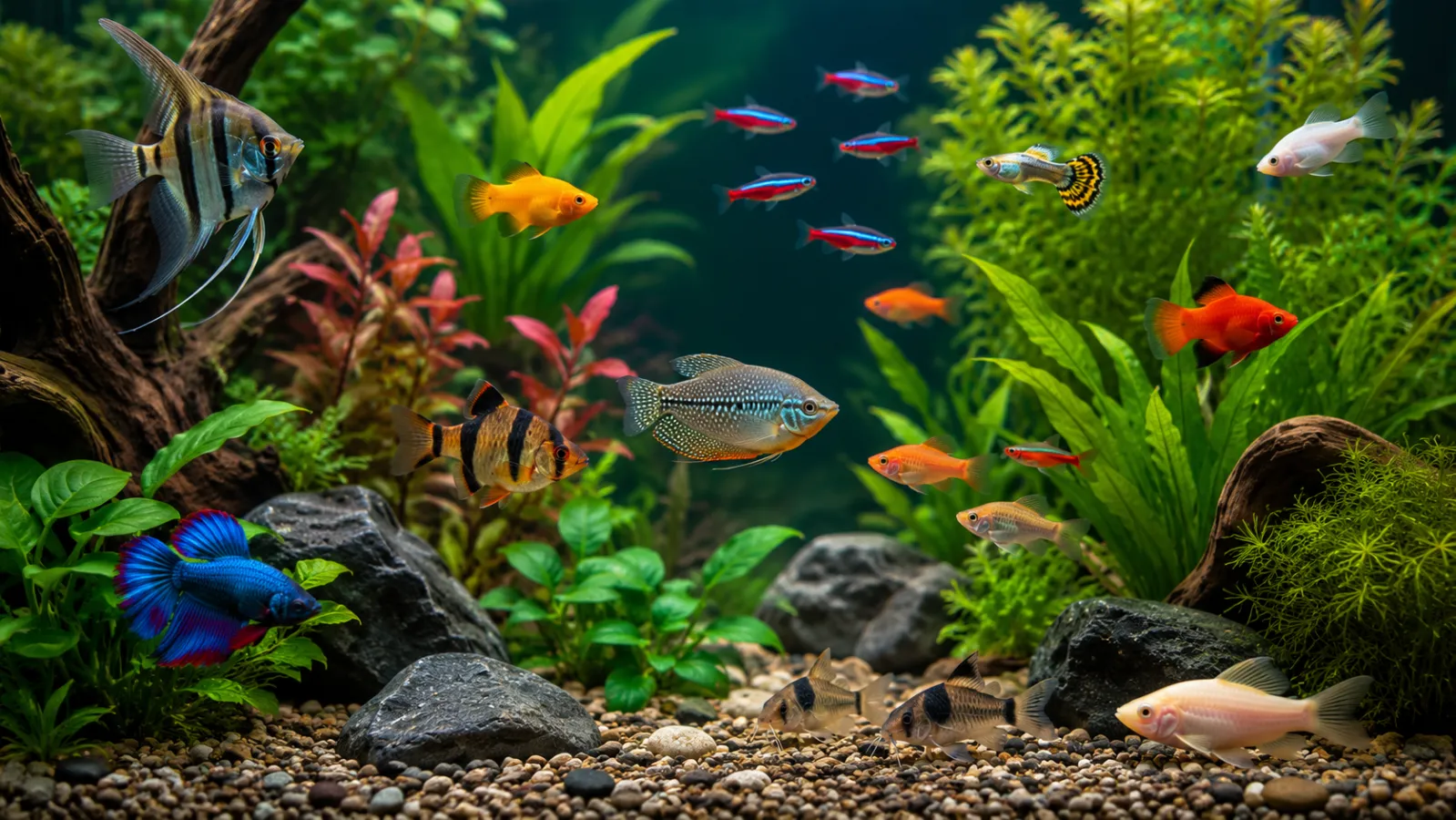
A good aquarium heating system should provide stable temperatures without creating unnecessary risks. Whether you are keeping tetras, guppies, angelfish, bettas, discus, or another tropical freshwater species, understanding how aquarium heaters work will help you choose equipment that matches your setup.
1. Understand Why Aquarium Heating Matters
Fish are ectothermic animals, meaning their body temperature is strongly influenced by the surrounding water.
This makes water temperature an important part of aquarium care.
If the water becomes too cold, fish may become less active and their normal physiological processes can be affected. Sudden temperature changes can also cause stress.
On the other hand, excessively warm water can create problems as well. Warmer water holds less dissolved oxygen, and fish may become stressed if temperatures rise beyond the range appropriate for their species.
The goal is therefore not simply to make the aquarium warm. The goal is to maintain a stable temperature appropriate for the fish you keep.
2. Start With Your Fish's Temperature Requirements
Before purchasing a heater, identify the temperature range required by your fish.
Different freshwater species have different preferences. Tropical fish generally require warmer water than many temperate or coldwater species.
For example, common tropical aquarium fish such as many tetras, guppies, and angelfish generally require warmer water than goldfish.
Do not choose a heater based only on the label saying "tropical aquarium." Research the actual needs of your fish.
Consider:
- Recommended temperature range
- Preferred temperature
- Sensitivity to temperature changes
- Whether all species in the aquarium have compatible requirements
If you have a community aquarium, make sure the fish can comfortably share the same temperature range.
3. Choose the Correct Heater Capacity
One of the most important factors when selecting an aquarium heater is its wattage.
Heaters are available in different wattages designed for different aquarium volumes. A small aquarium may require a lower-wattage heater, while a larger aquarium may need considerably more heating capacity.
However, there is no single wattage that is automatically correct for every tank of a particular size.
Room temperature matters.
A tank located in a warm room may require less heating power than the same tank in a cold room. The difference between the room temperature and the desired aquarium temperature affects how much work the heater needs to do.
When selecting a heater, consider:
- Aquarium volume
- Ambient room temperature
- Desired water temperature
- Aquarium location
- Whether the room experiences significant temperature changes
Always follow the heater manufacturer's recommended tank-size range.
4. Avoid Choosing a Heater That Is Too Weak
A heater that is underpowered may struggle to maintain the desired temperature.
This can become particularly noticeable during colder months or in rooms where temperatures fluctuate significantly.
An undersized heater may run for long periods while still failing to maintain stable water temperature.
If your aquarium consistently remains below the target temperature, the problem may not necessarily be the heater itself. The room temperature, aquarium placement, tank cover, water circulation, and heater capacity may all play a role.
Choose a heater designed to handle your aquarium rather than selecting the smallest possible option simply because it costs less.
5. Avoid Excessively Powerful Heating
More power is not automatically better.
A very powerful heater in a small aquarium can potentially heat the water rapidly if its thermostat or control system fails.
For this reason, selecting a heater appropriate for the aquarium is generally preferable to choosing an unnecessarily oversized model.
Some fishkeepers use multiple appropriately sized heaters in larger aquariums rather than relying on one extremely powerful heater. This can provide more even heating and some redundancy if one unit stops working.
The best setup depends on the aquarium size, equipment, room conditions, and manufacturer's recommendations.
6. Use a Reliable Temperature Monitor
A heater's built-in thermostat is useful, but it should not be your only source of information.
A separate aquarium thermometer allows you to independently check the actual water temperature.
This is important because a heater may display or be set to a particular temperature while the actual aquarium temperature differs.
Place the thermometer where it can provide a useful representation of the aquarium's water temperature.
Regularly check it for:
- Temperature stability
- Unexpected drops
- Unexpected increases
- Equipment failure
- Seasonal changes
A simple thermometer can help you identify a heating problem before your fish show obvious signs of stress.
7. Consider an Adjustable Heater
Adjustable aquarium heaters allow you to set the desired temperature rather than operating at one fixed setting.
This can be useful when keeping tropical fish because different species and aquarium conditions may require different temperature settings.
An adjustable heater also gives you more flexibility if your fishkeeping setup changes.
However, avoid constantly changing the temperature without a reason. Stability is usually more important than repeatedly adjusting the heater.
Set the heater according to the needs of your fish and monitor the actual water temperature.
8. Think About Heater Placement
Where you place the heater can affect how evenly heat is distributed.
Installing the heater in an area with good water circulation can help warm water move throughout the aquarium.
Many fishkeepers place heaters near filter outlets or areas of water movement so that heated water can circulate.
Follow the manufacturer's installation instructions carefully.
Depending on the model, the heater may need to be fully submerged to a specific level. Never assume that every aquarium heater can be positioned in exactly the same way.
9. Maintain Good Water Circulation
A heater warms the water around it, but the entire aquarium needs reasonably consistent temperature distribution.
Good circulation helps move warm water throughout the tank.
Filtration and water movement can therefore contribute to more even heating.
If the heater is placed in a stagnant corner, the area immediately around it may become warmer than other parts of the aquarium.
This is another reason why heater placement and filtration should be considered together.
10. Look for Safety Features
Modern aquarium heaters may include features designed to make operation safer and more convenient.
Depending on the model, features may include:
- Automatic temperature control
- Overheat protection
- LED indicators
- Shatter-resistant construction
- Dry-run protection
- Adjustable temperature settings
Features vary between products, so read the manufacturer's specifications before purchasing.
A heater should also be used according to its instructions. Never modify aquarium electrical equipment or use equipment in ways that the manufacturer does not recommend.
11. Consider the Aquarium Environment
The aquarium's surroundings can affect how much heating is required.
For example, an aquarium located in a consistently warm indoor room may lose less heat than one placed near:
- An exterior door
- A frequently opened window
- An air conditioner
- A drafty area
- A cold floor
- An unheated room
If your aquarium is exposed to large temperature fluctuations, the heater may need to work harder to maintain stability.
Choosing an appropriate location for the aquarium can therefore make temperature management easier.
12. Use a Lid When Appropriate
An aquarium lid can help reduce evaporation and may also reduce heat loss from the water surface.
This can be particularly useful in tropical aquariums.
However, the lid should still allow appropriate gas exchange and ventilation according to the aquarium design.
A covered aquarium can also reduce the risk of fish jumping out, which is an additional benefit for many species.
13. What Temperature Should a Freshwater Aquarium Be?
There is no universal temperature that is ideal for every freshwater fish.
The correct temperature depends on the species.
Many tropical community fish are commonly kept in water around the mid-to-upper 70s Fahrenheit, but individual species can have different preferences and acceptable ranges.
Rather than choosing a temperature because it is popular among fishkeepers, research the requirements of your particular species.
If multiple species are kept together, select a temperature that falls appropriately within the compatible range for all of them.
14. Avoid Sudden Temperature Changes
Stable temperature is generally more important than constantly adjusting the aquarium.
Sudden changes can stress fish.
This is particularly important during:
- Water changes
- Transportation
- Introducing new fish
- Heater replacement
- Power outages
- Seasonal temperature changes
When performing a water change, try to ensure the replacement water is appropriately conditioned and reasonably close to the aquarium's existing temperature.
Avoid introducing extremely cold or hot water directly into the aquarium.
15. What Happens If the Heater Stops Working?
A heater failure can cause the aquarium temperature to fall, particularly during colder weather.
This is why regular monitoring is important.
If you notice that the aquarium is significantly colder than expected, first check whether the heater is receiving power and whether the equipment is functioning according to its instructions.
Do not immediately increase the heater setting dramatically in an attempt to rapidly heat the aquarium.
Sudden temperature changes can also stress fish.
Instead, address the underlying problem carefully and restore the appropriate temperature gradually when necessary.
For larger or valuable aquariums, some fishkeepers choose redundant heating systems so that one equipment failure does not leave the entire aquarium without heating.
16. Heater Maintenance Matters
Aquarium heaters require proper care.
Before performing maintenance, follow the manufacturer's safety instructions and disconnect electrical equipment as appropriate.
Never remove a heated aquarium heater from the water while it is operating unless the manufacturer specifically states otherwise.
Sudden exposure to air can cause some heaters to overheat or suffer thermal shock.
Allow equipment to cool as directed before handling it.
Also inspect the heater periodically for:
- Cracks
- Damage
- Unusual behavior
- Corrosion
- Faulty controls
- Changes in temperature performance
If equipment appears damaged, stop using it and follow the manufacturer's replacement or safety guidance.
17. Consider a Backup Plan for Power Outages
Power outages can become a concern for tropical aquariums, particularly during cold weather.
Without electricity, the aquarium heater and filtration system may stop operating.
For short outages, a properly covered aquarium may retain heat for some time. Avoid opening the lid unnecessarily because this can allow heat to escape.
For longer outages, the appropriate response depends on aquarium size, room temperature, fish species, and outage duration.
Aquarium owners who live in areas with frequent outages may want to consider an appropriate backup power solution for essential equipment.
18. Common Aquarium Heater Mistakes
Avoiding common mistakes can make temperature management much easier.
Choosing Based Only on Tank Size
Tank volume matters, but room temperature and fish requirements matter too.
Ignoring the Adult Fish
Fish may have different temperature requirements as part of their long-term care needs. Research the species rather than choosing equipment first.
Relying Only on the Built-In Thermostat
Use an independent thermometer to verify the actual water temperature.
Placing the Heater in Poor Circulation
Poor circulation can lead to uneven heating.
Constantly Changing the Temperature
Fish generally benefit from stable conditions rather than frequent adjustments.
Buying the Cheapest Equipment
Price should not be the only consideration when choosing essential aquarium equipment. Reliability, appropriate capacity, safety features, and manufacturer guidance matter.
19. A Simple Aquarium Heater Checklist
Before purchasing a heater, ask yourself:
- What fish species am I keeping?
- What temperature range do they require?
- How large is my aquarium?
- What is the average room temperature?
- Does the room become colder during winter?
- What wattage does the manufacturer recommend?
- Is the heater adjustable?
- Does it have appropriate safety features?
- Where will I install it?
- Do I have a reliable thermometer?
- What will I do if the heater fails?
Answering these questions can help you avoid buying equipment that is unsuitable for your aquarium.
Final Thoughts
Choosing the right freshwater aquarium heater is about much more than selecting a wattage from a shelf.
The best heater is one that matches your tank size, fish temperature requirements, room conditions, and aquarium setup while providing reliable temperature control.
Before purchasing, research the temperature requirements of every fish species you plan to keep. Choose an appropriately sized heater based on the aquarium volume and ambient conditions, install it where water circulation can distribute heat effectively, and use a reliable thermometer to monitor the actual temperature.
Remember that a heater cannot compensate for poor aquarium management. Stable temperature, appropriate filtration, regular maintenance, and good water quality all work together to create a healthy environment.
When your aquarium temperature is stable and appropriate for your fish, you provide one of the most important foundations for long-term freshwater fishkeeping.