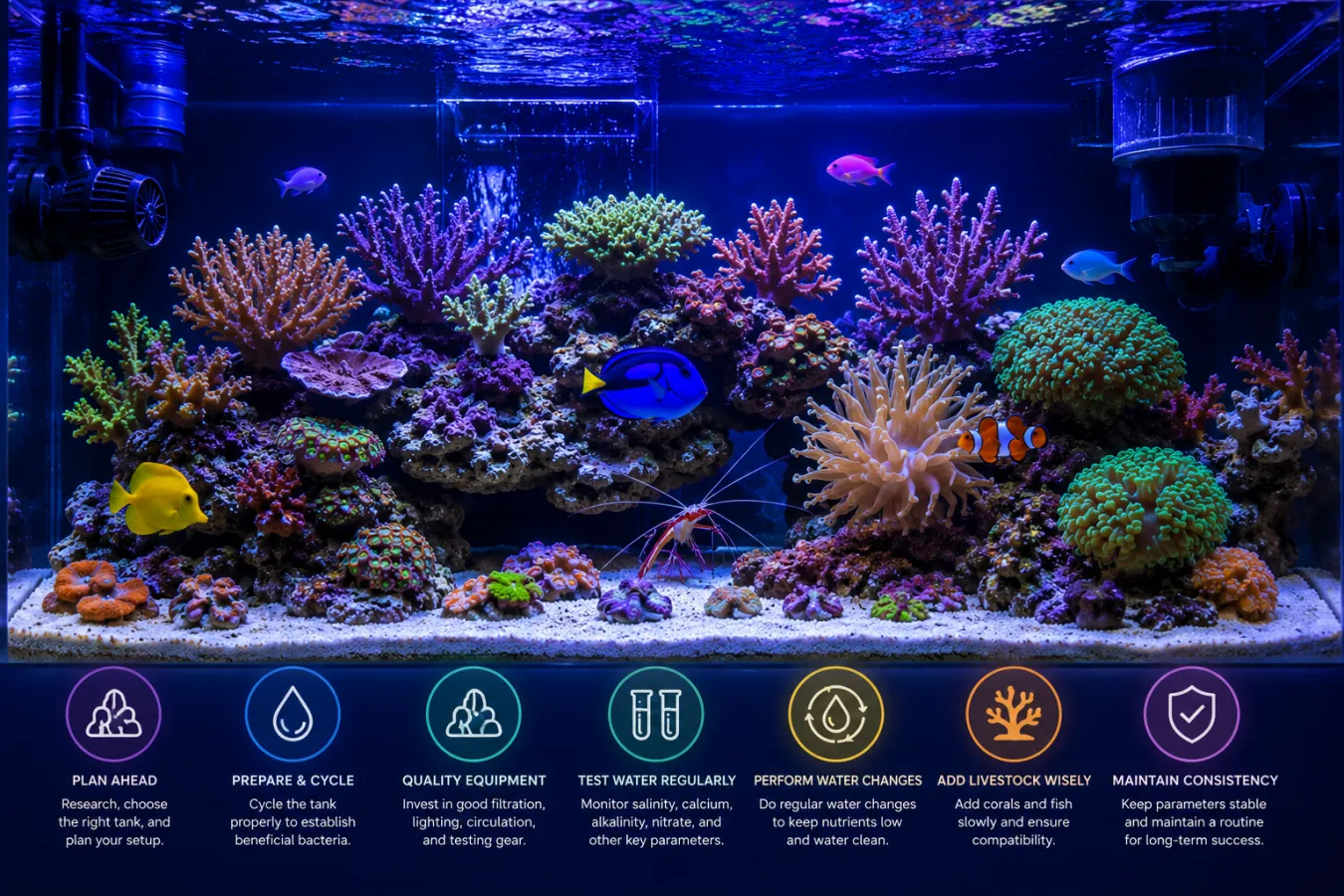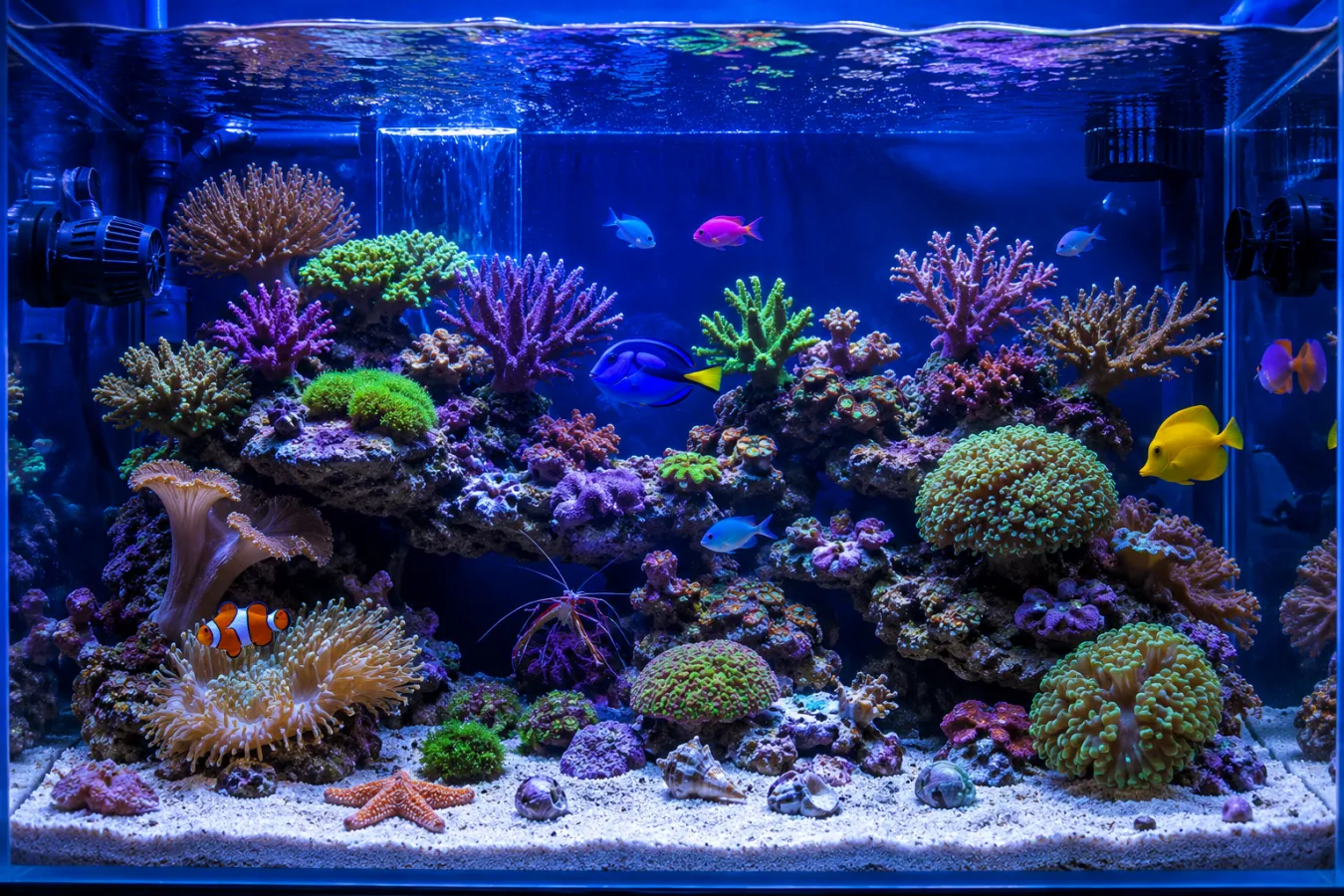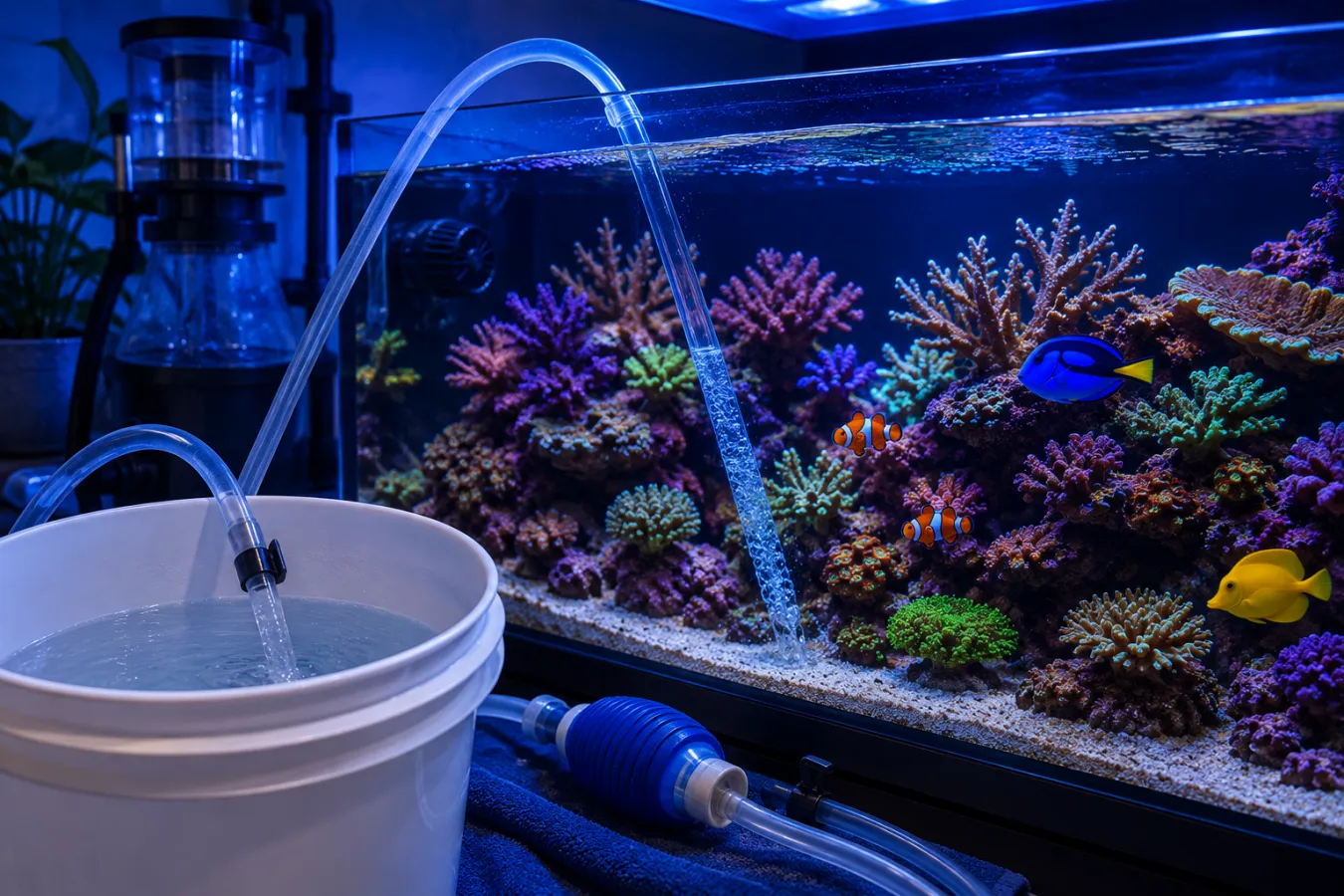
Maintaining stable salinity is one of the most important responsibilities of keeping a saltwater aquarium. Marine fish and invertebrates are adapted to living in water with a relatively consistent concentration of dissolved salts. When salinity changes too quickly or repeatedly, it can place unnecessary stress on aquarium inhabitants and may affect their health over time.
Unlike freshwater aquariums, saltwater systems require special attention because evaporation removes water but leaves dissolved salts behind. As water evaporates, the salinity of the remaining aquarium water gradually increases. Without proper top-offs and regular monitoring, even a healthy aquarium can develop unstable conditions.
Fortunately, maintaining stable salinity does not have to be complicated. With a reliable salinity meter, consistent evaporation monitoring, correctly prepared replacement water, and a simple maintenance routine, beginners can keep their marine aquarium much more stable.
1. Understand Why Salinity Stability Matters
Salinity describes the concentration of dissolved salts in aquarium water. Most reef aquariums are commonly maintained around a specific gravity of approximately 1.025–1.026, although the appropriate target can vary depending on the type of aquarium and the animals being kept.
Marine organisms have adapted to relatively stable ocean conditions. Their bodies constantly regulate the movement of water and dissolved substances between their tissues and the surrounding environment. Significant changes in salinity can make this regulation more difficult.
Sudden changes can cause stress, particularly for sensitive invertebrates. Fish may also become stressed when exposed to rapid shifts.
Stable salinity helps create a predictable environment for:
- Marine fish
- Corals
- Shrimp
- Snails
- Crabs
- Other saltwater invertebrates
The goal is not to constantly chase a particular number. Instead, choose an appropriate target for your aquarium and focus on keeping it consistent.
2. Use a Reliable Salinity Meter
One of the simplest ways to manage salinity is to measure it regularly with dependable equipment.
Common options include:
- Refractometers
- Digital salinity meters
- Hydrometers
A quality refractometer or digital salinity meter can provide more reliable measurements when properly maintained and calibrated. Hydrometers can also be useful, but their accuracy may vary depending on the design and how they are used.
If you use a refractometer, calibrate it according to the manufacturer's instructions and use the appropriate calibration solution. If you use a digital meter, keep its probe clean and follow the recommended calibration procedure.
Do not rely solely on how the aquarium looks. Clear water does not necessarily mean that salinity is correct.
Verify Unexpected Readings
If your salinity reading suddenly appears much higher or lower than normal, do not immediately make a large adjustment.
First check:
- Whether the meter is calibrated
- Whether the equipment is clean
- Whether the sample was collected correctly
- Whether temperature could affect the measurement
- Whether you recently performed a water change
- Whether evaporation has caused the water level to fall
Confirming an unusual reading before making a correction can prevent unnecessary changes to the aquarium.
3. Monitor Evaporation
Evaporation is one of the most common causes of rising salinity in marine aquariums.
When water evaporates, the dissolved salt remains behind. This means the aquarium contains less water but approximately the same amount of salt, causing the salt concentration to increase.
The rate of evaporation can vary considerably depending on the aquarium and environment.
Factors that can increase evaporation include:
- Warm room temperatures
- Open-top aquariums
- Strong lighting
- Fans
- High surface agitation
- Protein skimmers
- Dry indoor air
For this reason, two aquariums of the same size may require very different top-off routines.
Check your aquarium's water level regularly and learn how quickly it normally loses water. Once you understand your aquarium's evaporation rate, maintaining salinity becomes much easier.
4. Replace Evaporated Water With Freshwater
This is one of the most important rules of saltwater aquarium maintenance:
Replace evaporated water with freshwater, not saltwater.
When evaporation occurs, the water leaves the aquarium but the salt remains. Adding more saltwater would therefore add additional salt and can gradually increase salinity.
Freshwater replaces the water that was lost without adding unnecessary salt.
Many marine aquarium owners use purified water, such as appropriately prepared RO/DI water, for evaporation top-offs.
The exact water source you should use depends on your aquarium setup and local water quality, but the important principle remains the same: evaporation top-offs should not normally add additional salt.
Avoid Large Top-Offs
Do not allow the water level to drop significantly and then make a large correction whenever possible.
Small, regular top-offs help minimize fluctuations.
A simple routine is:
- Check the water level.
- Determine whether evaporation has occurred.
- Add the appropriate freshwater.
- Monitor salinity regularly.
- Adjust your top-off routine based on the aquarium's evaporation rate.
5. Consider an Automatic Top-Off System
An automatic top-off, commonly called an ATO, can make salinity management easier.
An ATO monitors the aquarium's water level and automatically adds freshwater when evaporation causes the level to fall.
This can be particularly useful for:
- Reef aquariums
- Open-top tanks
- Aquariums with high evaporation
- Hobbyists who travel frequently
- Systems where consistent water levels are important
An ATO can reduce daily fluctuations, but it still requires maintenance.
Regularly inspect:
- Water reservoirs
- Sensors
- Pumps
- Tubing
- Electrical connections
Also make sure the freshwater reservoir cannot accidentally run dry for extended periods.
Automation is useful, but it should not replace regular observation.
6. Mix Saltwater Carefully
Water changes are another situation where salinity can change quickly if replacement water is prepared incorrectly.
Always prepare replacement saltwater separately before adding it to the aquarium.
A basic process includes:
- Start with appropriate purified freshwater.
- Add the recommended amount of marine salt mix.
- Mix the water thoroughly according to the manufacturer's instructions.
- Allow the mixture to stabilize as recommended.
- Measure salinity.
- Make any necessary adjustments.
- Check the temperature before performing the water change.
Different salt mixes have different instructions, so follow the manufacturer's recommendations rather than assuming every product should be mixed identically.
Never add dry salt mix directly to an aquarium containing livestock.
7. Measure New Saltwater Before Adding It
One of the easiest mistakes to avoid is assuming that freshly mixed saltwater automatically has the correct salinity.
Always measure it.
Even when you use the same amount of salt mix each time, the final result can vary because of differences in:
- Measuring technique
- Water volume
- Temperature
- Mixing
- Salt distribution within the container
- Equipment accuracy
Testing the new water before adding it gives you an opportunity to correct the salinity outside the aquarium.
This is much safer than discovering afterward that the replacement water was significantly different from the aquarium water.
8. Keep Temperature Consistent
Temperature and salinity measurements can be related, depending on the testing equipment being used.
For this reason, understand how your specific meter or refractometer handles temperature.
When preparing replacement water, try to keep its temperature reasonably close to the aquarium's temperature before performing a water change.
Avoid making unnecessary changes to multiple parameters at the same time.
A consistent approach makes it easier to identify the cause if something changes unexpectedly.
9. Avoid Rapid Salinity Corrections
If your salinity is slightly outside your normal target, avoid making a dramatic correction unless there is an urgent situation requiring immediate action.
Rapid changes can create additional stress.
Instead, determine why the salinity changed.
If salinity is too high, possible causes include:
- Excessive evaporation
- Missed top-offs
- Adding saltwater instead of freshwater during top-off
- Replacement water mixed too strongly
If salinity is too low, possible causes include:
- Excessive freshwater addition
- Incorrectly mixed saltwater
- Measurement errors
- Unexpected water additions
Once you understand the cause, make an appropriate correction carefully and continue monitoring the aquarium.
10. Establish a Simple Salinity Monitoring Routine
You do not necessarily need to test every parameter every day. What matters most is developing a consistent routine that matches the needs of your aquarium.
Daily
Check:
- Water level
- Automatic top-off operation, if installed
- General aquarium conditions
Several Times Per Week
Depending on your system's stability, check:
- Salinity
- Evaporation rate
- Top-off water supply
During Water Changes
Check:
- Aquarium salinity
- Replacement water salinity
- Temperature
- Other important water parameters
New aquariums and systems experiencing changes may require more frequent testing than mature, stable aquariums.
11. Watch Your Fish and Invertebrates
Water testing is essential, but observing your livestock is also an important part of aquarium maintenance.
Pay attention to changes such as:
- Unusual hiding
- Reduced appetite
- Rapid breathing
- Abnormal swimming
- Unusual inactivity
- Changes in normal behavior
Invertebrates may also behave differently when aquarium conditions change.
However, unusual behavior does not automatically mean salinity is the problem. Temperature, ammonia, nitrite, oxygen levels, disease, aggression, and other water-quality issues can produce similar symptoms.
Use testing to investigate rather than guessing.
Common Salinity Mistakes Beginners Should Avoid
Adding Saltwater for Evaporation
Evaporated water should normally be replaced with appropriate freshwater. Adding saltwater during routine evaporation top-offs can cause salinity to rise.
Not Testing Newly Mixed Saltwater
Always measure replacement water before adding it to the aquarium.
Using an Uncalibrated Meter
An inaccurate instrument can lead to incorrect adjustments. Calibrate and maintain testing equipment according to its instructions.
Making Large Corrections
Avoid repeatedly making large changes in an attempt to quickly reach a particular number. Identify the cause and make controlled adjustments.
Ignoring Evaporation
Even small amounts of daily evaporation can accumulate. Regularly checking the water level helps prevent unnecessary salinity changes.
The Role of an Aquarium Lid
A properly designed aquarium lid can reduce evaporation and help prevent fish from jumping out.
However, a lid does not eliminate evaporation completely. You should continue monitoring the water level and salinity.
The aquarium should also maintain appropriate gas exchange and oxygenation for its inhabitants. The exact approach depends on the aquarium design and equipment.
Final Thoughts
Maintaining stable salinity is one of the foundations of successful saltwater aquarium care. The process becomes much easier when salinity is treated as something to manage consistently rather than a number to correct occasionally.
Use a reliable salinity meter, monitor evaporation, replace evaporated water with appropriate freshwater, and carefully mix replacement saltwater before water changes. Most importantly, avoid making sudden corrections based on a single questionable measurement.
A simple routine can make a major difference:
Measure, monitor evaporation, top off with freshwater, mix replacement saltwater carefully, and recheck salinity.
With consistent habits and properly maintained equipment, beginners can reduce salinity fluctuations and provide their marine fish and invertebrates with a stable environment in which they can thrive.