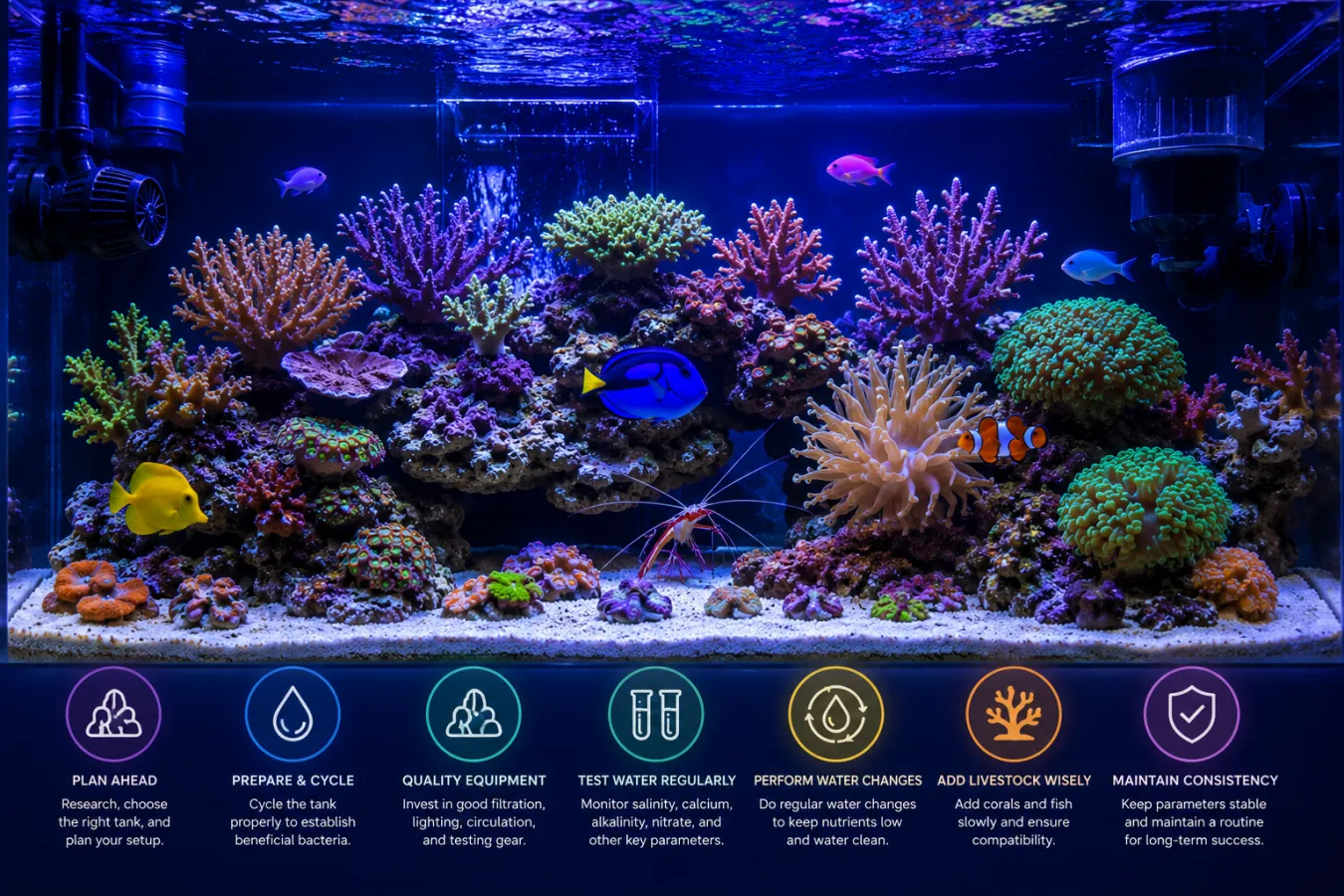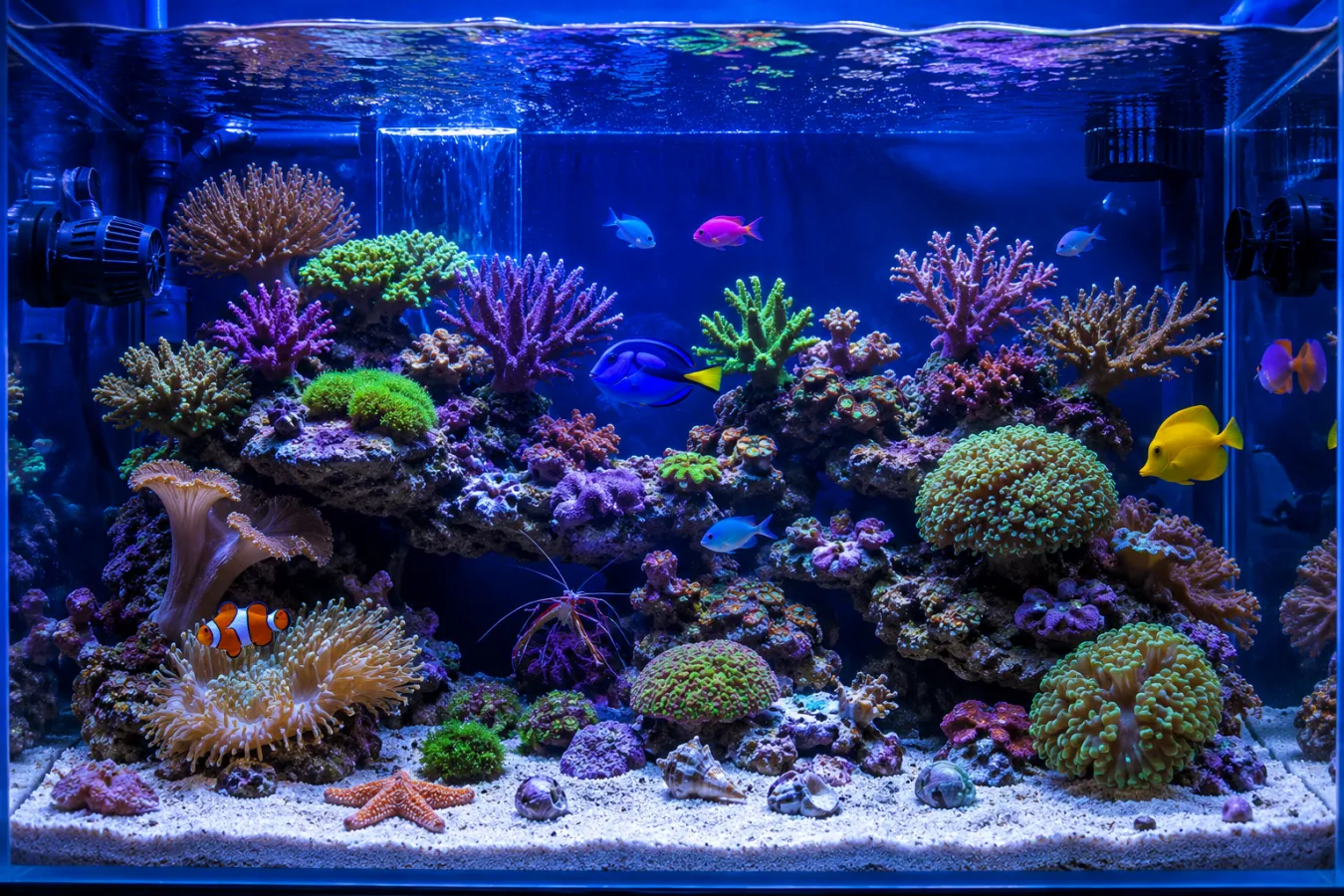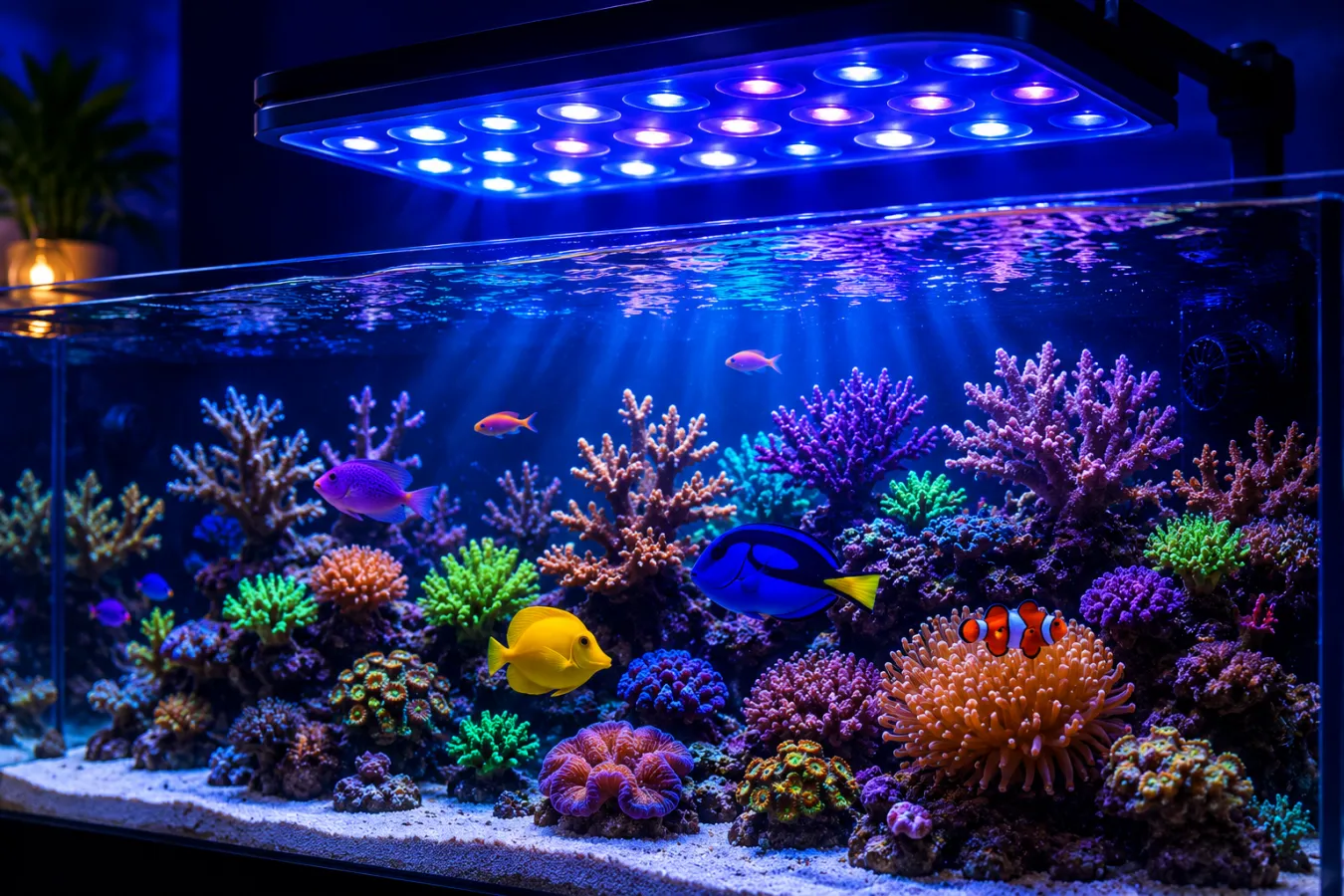
Regular water changes are one of the most important habits for maintaining a healthy saltwater aquarium. Over time, aquarium water can accumulate unwanted compounds while some important elements and minerals are gradually consumed by fish, corals, invertebrates, and other organisms. A properly performed water change helps refresh the aquarium environment and gives you an opportunity to maintain stable water conditions.
For beginners, water changes can seem complicated because saltwater needs to be prepared correctly before it goes into the aquarium. You need to consider salinity, temperature, water quality, and the amount of water being replaced. Creating a simple, repeatable routine makes the process much easier and helps prevent sudden changes that could stress your aquarium inhabitants.
Why Are Saltwater Aquarium Water Changes Important?
A saltwater aquarium is a closed environment. Unlike the ocean, water in a home aquarium isn't continuously replaced by tides and natural processes. Fish produce waste, uneaten food breaks down, and various biological processes change the chemistry of the water.
A properly planned water change helps remove some unwanted compounds while replenishing components present in freshly mixed saltwater. However, water changes should be viewed as one part of aquarium maintenance, alongside filtration, appropriate feeding, testing, and regular equipment checks.
If you're still building your aquarium setup, understanding filtration is equally important. Our guide on how to choose the right aquarium filter can help you understand how filtration works alongside regular water maintenance.
1. Prepare Your Replacement Saltwater Correctly
The first step is preparing new saltwater before removing water from the aquarium.
For most marine aquariums, this means starting with appropriate purified water and mixing it with a quality marine salt mix according to the manufacturer's instructions.
Never guess the amount of salt you need. Different salt mixes can have different recommended mixing procedures, so follow the instructions provided with your particular product.
You'll generally need:
- A clean mixing container
- Purified water
- Marine aquarium salt mix
- A mixing pump or powerhead
- A heater
- A reliable thermometer
- A salinity measuring device
Preparing the water in a separate container gives you an opportunity to check and adjust its temperature and salinity before it reaches your aquarium.
This is similar to preparing freshwater for an aquarium. Good preparation is one of the foundations of successful aquarium care, particularly when setting up a new system. Beginners can also review how to set up your first freshwater aquarium to understand the importance of planning aquarium equipment and maintenance from the beginning.
2. Use the Right Source Water
The quality of the water you use to make replacement saltwater matters.
Many marine aquarists use purified water, such as water produced by a reverse osmosis/deionization system, to minimize unwanted substances entering the aquarium.
Tap water can contain minerals, nutrients, or other compounds that may not be desirable in a reef aquarium. Your local water supply can also vary, so understand what is present in your source water before using it regularly.
If you're experiencing aquarium problems, water testing can provide valuable information. Rather than relying only on how clear the water looks, use appropriate test kits to monitor important parameters. Our guide on how to test aquarium water can help beginners understand why regular testing is important.
3. Match Temperature Before Adding Water
Temperature is one of the easiest factors to overlook when preparing replacement saltwater.
Adding water that is significantly colder or warmer than the aquarium can create an unnecessary temperature change. Marine organisms can be sensitive to sudden environmental changes, so the replacement water should be brought close to the aquarium's existing temperature before the water change.
Use a reliable thermometer to compare the new water with the aquarium.
If you're preparing a larger batch, allow enough time for the water to reach the appropriate temperature before beginning the water change.
Temperature management is also important when maintaining freshwater aquariums. For additional equipment guidance, see how to choose the right freshwater aquarium heater.
4. Match Salinity Carefully
Salinity is one of the most important factors in a saltwater aquarium.
Before adding replacement water, measure its salinity using an appropriate instrument, such as a refractometer or another reliable salinity measuring device.
The goal is to avoid creating a sudden change between the aquarium and replacement water.
This becomes especially important in reef aquariums, where corals and invertebrates can be sensitive to changes in water conditions.
Don't assume that the amount of salt you added automatically produced the correct salinity. Always measure the finished saltwater.
Regular water testing is an important part of aquarium care, so how to test aquarium water is a useful reference for building a consistent testing routine.
5. How Much Water Should You Change?
There isn't one universal water-change percentage that is perfect for every saltwater aquarium.
The appropriate amount and frequency can depend on:
- Aquarium size
- Fish population
- Coral population
- Feeding habits
- Filtration
- Nutrient levels
- Water-testing results
- Overall aquarium condition
Many aquarists prefer smaller, regular partial water changes rather than making very large changes without a specific reason.
The important point is consistency.
A predictable maintenance routine makes it easier to monitor your aquarium and notice changes before they become major problems.
6. Turn Off Appropriate Equipment
Before removing water, review your aquarium equipment.
Depending on your setup, you may need to temporarily turn off equipment such as:
- Return pumps
- Protein skimmers
- Certain circulation pumps
- Automatic top-off systems
The exact procedure depends on your aquarium design.
Be careful not to allow equipment designed to remain submerged to run without adequate water around it.
Electrical safety is particularly important when working around saltwater. Keep electrical connections away from splashes and follow the instructions provided with your equipment.
7. Remove the Old Aquarium Water
Once your equipment is safely prepared, remove the amount of aquarium water you have planned to replace.
A dedicated aquarium siphon or water-change hose can make the process much easier.
While removing water, you can also gently siphon debris from appropriate areas of the aquarium. However, avoid disturbing the entire substrate or aquascape unnecessarily.
The goal is to remove water and unwanted material while minimizing disruption to the aquarium environment.
Regular maintenance should be part of a broader aquarium-care routine. If you're new to aquarium keeping, how to set up your first freshwater aquarium offers another useful example of approaching aquarium maintenance systematically.
8. Clean Equipment During the Water Change
A water change can also be a convenient opportunity to inspect aquarium equipment.
Check items such as:
- Filter media
- Pumps
- Powerheads
- Protein skimmer components
- Heater
- Overflow
- Tubing
However, don't clean every component aggressively at the same time. Beneficial biological communities can develop on aquarium surfaces and filtration media.
If filter media needs cleaning, use appropriate aquarium water when practical rather than automatically rinsing biological media under untreated tap water.
Understanding your filtration system is essential, which is why how to choose the right aquarium filter is useful for aquarium owners.
9. Add the New Saltwater Slowly
Once the old water has been removed and the new saltwater has been checked, add it back to the aquarium carefully.
Pouring water too quickly can disturb sand, rockwork, and corals.
You can reduce disturbance by:
- Adding water slowly
- Pouring onto a clean container or plate
- Using a hose
- Directing flow away from delicate livestock
- Refilling the aquarium gradually
Take your time, especially if you have a reef aquarium with carefully positioned corals.
10. Recheck Temperature and Salinity
After completing the water change, allow the aquarium to settle and then check your equipment and water conditions.
Make sure:
- Pumps are operating correctly
- The heater is functioning
- The water level is appropriate
- The skimmer is operating normally
- Salinity remains appropriate
- Temperature is stable
Testing after maintenance can help you identify unexpected changes.
Don't wait until fish or corals appear stressed before checking your water. A consistent testing routine gives you information about what's happening inside the aquarium. For beginners, how to test aquarium water is an excellent starting point.
11. Don't Confuse Water Changes With Top-Offs
A top-off and a water change are two different things.
When aquarium water evaporates, the water leaves but the salt generally remains behind. Replacing evaporated water with additional saltwater can therefore increase salinity.
Top-off water should generally be prepared appropriately for evaporation management rather than being treated as a replacement for a scheduled water change.
A water change, on the other hand, involves removing existing aquarium water and replacing it with appropriately prepared saltwater.
Understanding this difference can help beginners avoid accidental salinity changes.
12. How Often Should You Perform Saltwater Water Changes?
The right schedule depends on your aquarium.
Some systems may benefit from smaller, more frequent water changes, while others may follow a different maintenance schedule based on filtration, stocking, nutrient management, and testing results.
Instead of choosing a schedule simply because another aquarium owner uses it, monitor your own aquarium.
Keep a simple record of:
- Water-change date
- Amount changed
- Salinity
- Temperature
- Water-test results
- Any unusual observations
Keeping records makes it easier to identify patterns.
This same habit can be useful with freshwater aquariums as well. Regular observation and maintenance can help identify problems before they become serious.
13. Test Your Water Regularly
Water changes should never replace testing.
Regular testing can help you understand whether your aquarium is maintaining appropriate conditions and whether something has changed.
Depending on your aquarium, you may monitor parameters such as:
- Salinity
- Temperature
- pH
- Ammonia
- Nitrite
- Nitrate
- Phosphate
- Alkalinity
- Calcium
- Magnesium
The specific parameters you need to monitor will depend on your livestock and aquarium type.
If your results suddenly change, don't automatically perform an unusually large water change without understanding the situation. First identify what has changed and determine an appropriate response.
For a basic introduction to aquarium testing, see how to test aquarium water.
14. Common Saltwater Water-Change Mistakes
Mistake 1: Adding Untested Saltwater
Never assume freshly mixed water has the correct salinity just because you followed a measuring guide.
Solution: Measure the finished saltwater before adding it.
Mistake 2: Ignoring Temperature
Adding significantly colder or warmer water can cause an unnecessary temperature change.
Solution: Match the replacement water temperature to the aquarium.
Mistake 3: Changing Too Much Water Without a Reason
Large changes can cause significant shifts in water conditions.
Solution: Establish an appropriate routine based on your aquarium's needs and test results.
Mistake 4: Forgetting to Turn Equipment Back On
It's surprisingly easy to finish a water change and forget to restart a pump or other equipment.
Solution: Create a simple checklist.
Mistake 5: Using Saltwater for Evaporation Top-Offs
This can gradually increase salinity.
Solution: Understand the difference between top-offs and water changes.
Mistake 6: Never Testing Water
Clear water doesn't necessarily mean everything is perfect.
Solution: Build regular testing into your aquarium routine.
A Simple Saltwater Water-Change Checklist
Before starting your next water change, run through this checklist:
Before the Water Change
- Prepare replacement water
- Mix the salt thoroughly
- Check salinity
- Check temperature
- Prepare your equipment
- Turn off appropriate equipment
During the Water Change
- Remove the planned amount of aquarium water
- Siphon appropriate debris
- Avoid unnecessarily disturbing livestock
- Inspect equipment
After the Water Change
- Add new saltwater slowly
- Restart equipment
- Check water level
- Confirm temperature
- Recheck salinity
- Observe fish and corals
- Record the maintenance
A simple routine can turn water changes from a stressful chore into a predictable part of aquarium ownership.
Final Thoughts
Saltwater aquarium water changes don't have to be complicated. The most important thing is to develop a consistent and careful routine.
Prepare replacement saltwater correctly, use appropriate source water, match the temperature and salinity, remove an appropriate amount of aquarium water, and add the replacement water gradually. Regular testing can then help you understand whether your aquarium is maintaining stable conditions.
Remember that water changes are only one part of maintaining a healthy saltwater aquarium. Good filtration, appropriate feeding, livestock compatibility, temperature control, water movement, and regular observation all matter too. You can learn more about filtration with how to choose the right aquarium filter and explore aquarium maintenance through how to perform a safe aquarium water change.
The best water-change routine is one you can perform consistently and confidently. Instead of waiting until your aquarium has an obvious problem, make preparation, testing, and maintenance part of your normal schedule. With careful habits and regular observation, you can create a more stable environment for your fish, corals, and other marine life.