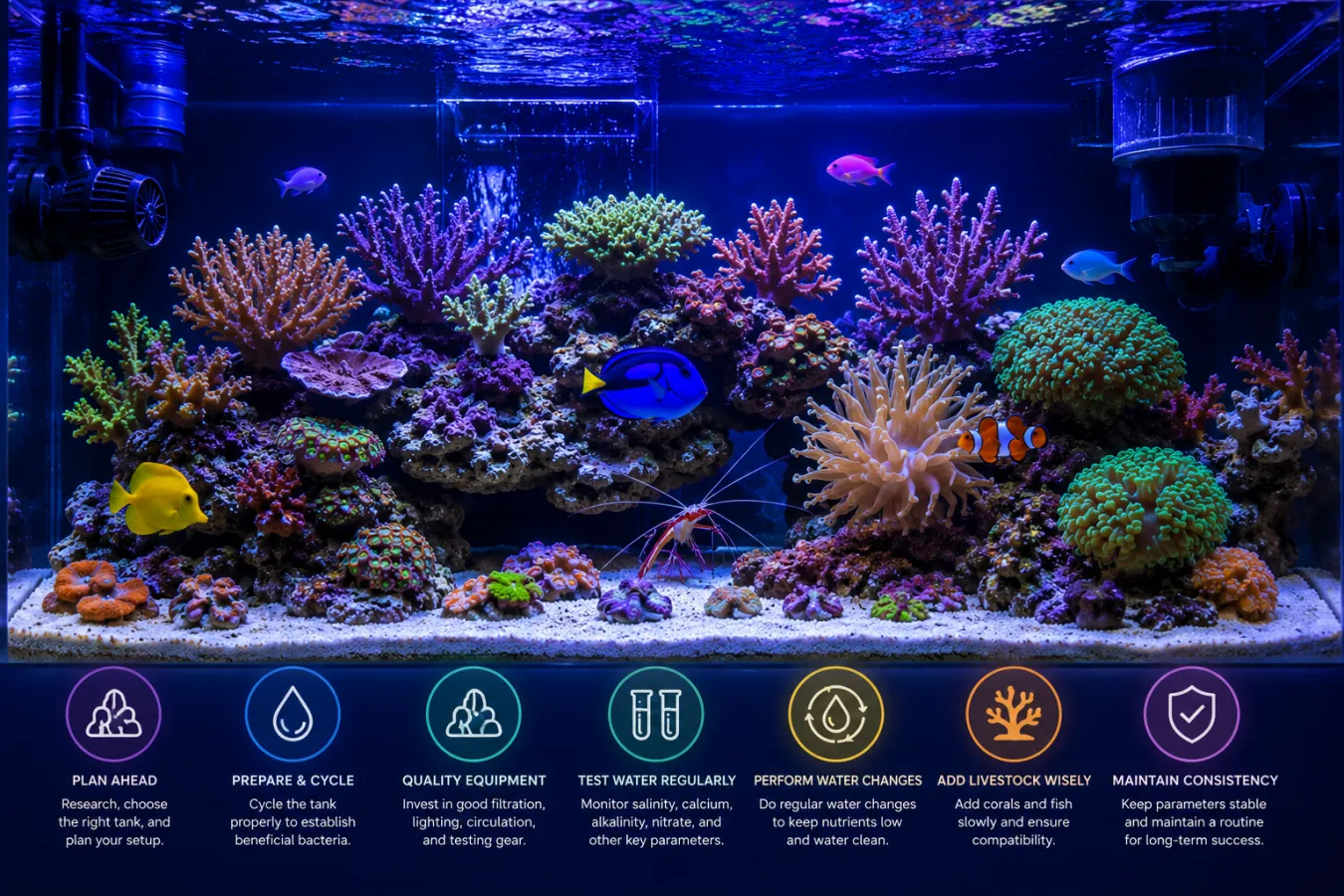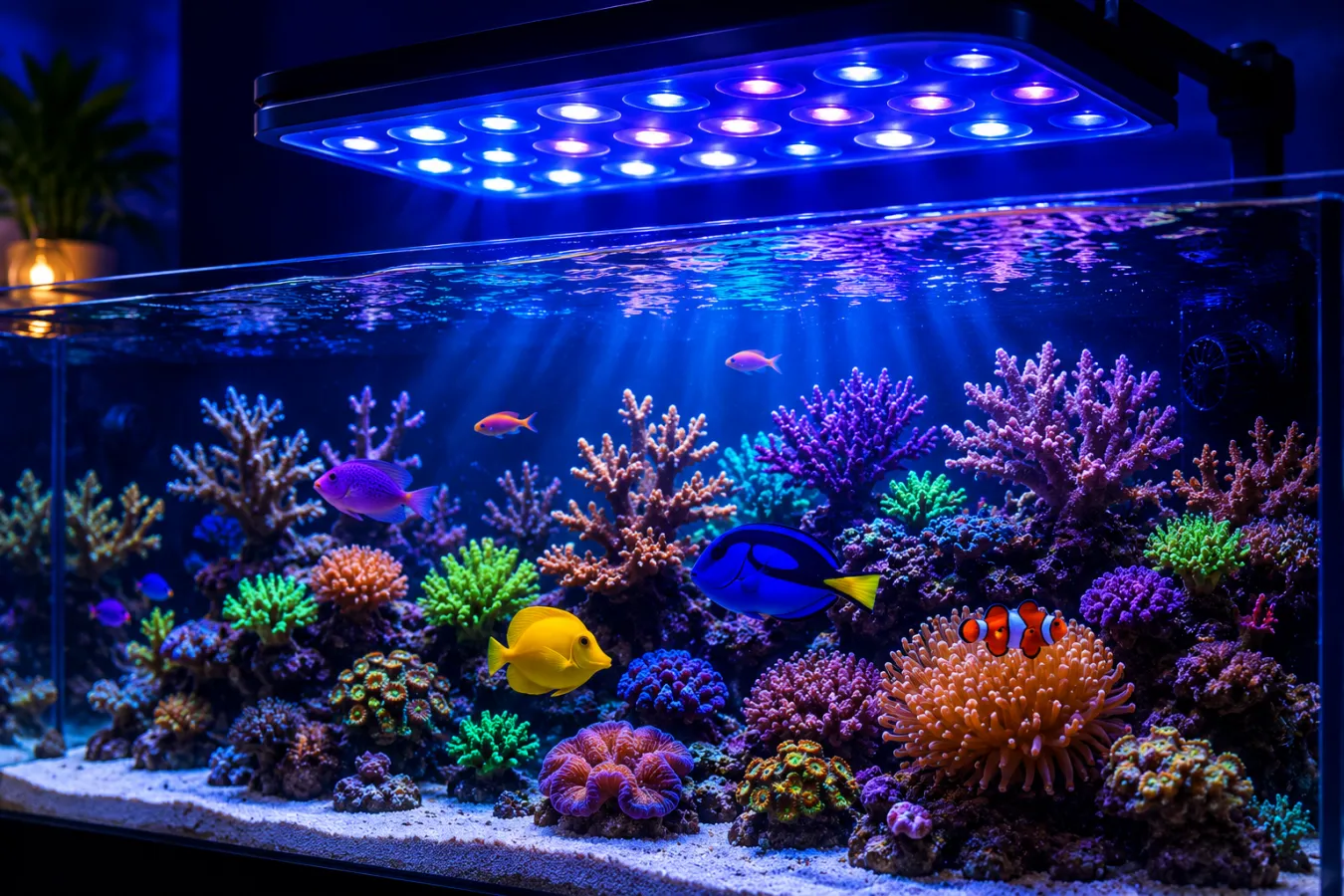
Creating a balanced saltwater aquarium ecosystem is about much more than filling a tank with seawater and adding a few colorful fish. A marine aquarium is a carefully managed environment where fish, corals, microorganisms, filtration, water chemistry, temperature, and maintenance all work together. When one part of the system changes too quickly, the rest of the aquarium can be affected.
For beginners, the most important lesson is to plan slowly and make changes carefully. Adding fish too quickly, ignoring salinity, overstocking the aquarium, or skipping regular water testing can create problems that are difficult to correct later. A well-planned aquarium gives its inhabitants a more stable environment and makes long-term maintenance much easier.
What Does a Balanced Saltwater Aquarium Mean?
A balanced saltwater aquarium is an environment where the aquarium's biological processes, water chemistry, equipment, and livestock are working together. It doesn't mean that every parameter remains perfectly unchanged. Instead, the goal is to maintain stable and appropriate conditions for the fish, corals, and invertebrates you keep.
A successful marine aquarium usually depends on several interconnected factors, including:
- Appropriate salinity
- Stable temperature
- Suitable filtration
- Adequate water movement
- Appropriate livestock selection
- Controlled feeding
- Regular water testing
- Routine maintenance
- Proper stocking levels
Just as choosing the right equipment is important when starting any aquarium, filtration should be selected according to the aquarium's size and inhabitants. If you're planning your equipment, how to choose the right aquarium filter can help you understand the role of filtration in maintaining a healthy aquatic environment.
1. Start With the Right Aquarium Plan
Before buying fish, corals, or equipment, decide what type of saltwater aquarium you want.
Will it be:
Fish-only?
Fish-only with live rock?
A soft-coral reef?
A mixed reef?
An SPS-focused reef?
Each type of aquarium can have different requirements. A fish-only aquarium may have simpler requirements than a reef aquarium containing demanding corals.
Planning ahead also helps you avoid buying equipment that doesn't match your long-term goals. Think about the livestock you want today as well as what you might want to keep in the future.
This same principle applies when selecting freshwater livestock. Understanding how to choose compatible freshwater fish demonstrates why compatibility and long-term planning should come before adding animals to an aquarium.
2. Establish Biological Filtration Before Adding Fish
One of the biggest mistakes beginners make is adding fish before the aquarium has developed an appropriate biological filtration system.
A new aquarium needs time for beneficial microorganisms to establish themselves. These microorganisms help process waste produced by aquarium inhabitants.
This process is commonly referred to as cycling the aquarium.
During cycling, compounds such as ammonia and nitrite can become dangerous to aquatic life. Therefore, you should understand your aquarium's biological development before introducing livestock.
Regular testing is essential during this process. You can learn more about monitoring aquarium conditions in how to test aquarium water.
3. Don't Add Fish Too Quickly
One of the most common saltwater aquarium mistakes is adding too many fish soon after setup.
It can be tempting to visit an aquarium store, see several beautiful species, and want to add them all immediately. Unfortunately, a new aquarium may not yet have enough biological capacity to handle a sudden increase in waste production.
Instead, add livestock gradually and give the aquarium time to adjust.
After introducing an animal, monitor the aquarium and check relevant water parameters before adding additional livestock.
A gradual approach also gives you time to observe fish behavior and identify compatibility issues. Choosing suitable inhabitants is just as important in freshwater systems, which is why how to choose compatible freshwater fish is a useful reference for understanding responsible stocking.
4. Maintain Stable Salinity
Salinity is one of the most important factors in a saltwater aquarium.
Marine organisms are adapted to saltwater conditions, and sudden changes can create unnecessary stress.
Use a reliable instrument to monitor salinity and establish a consistent target appropriate for your aquarium.
Remember that evaporation can affect salinity. When water evaporates, salt generally remains in the aquarium. Simply replacing evaporated water with saltwater can therefore cause salinity to gradually increase.
This is why freshwater used for evaporation top-offs and saltwater used for water changes should not be treated as the same thing.
Regular water testing helps you recognize changes before they become significant problems. How to test aquarium water is a useful starting point for beginners developing a testing routine.
5. Keep Temperature Stable
Temperature is another major component of a balanced marine aquarium.
Avoid large or sudden temperature changes whenever possible. Aquarium heaters, controllers, ventilation, and room temperature can all influence the system.
When selecting heating equipment, choose a unit appropriate for your aquarium rather than simply buying the largest heater available.
You should also position equipment correctly and regularly check that it is functioning as expected.
Although the following guide focuses on freshwater systems, how to choose the right freshwater aquarium heater provides useful general principles for thinking about aquarium heating equipment.
6. Choose Compatible Livestock
A balanced ecosystem isn't possible if the animals in the aquarium are incompatible.
Before purchasing a fish or invertebrate, research:
- Adult size
- Temperament
- Diet
- Swimming behavior
- Habitat requirements
- Compatibility
- Space requirements
- Reef compatibility
Don't choose livestock based solely on appearance.
A fish that looks beautiful in a store may not be appropriate for your aquarium's size or existing inhabitants.
The same principle applies to freshwater community tanks. How to choose compatible freshwater fish can help illustrate why livestock should be selected based on compatibility rather than appearance alone.
7. Avoid Overstocking
Overstocking is one of the fastest ways to create an unstable aquarium.
Every fish produces waste, consumes oxygen, and places additional demands on filtration and maintenance. Adding too many animals can therefore make it harder to maintain appropriate water conditions.
Before purchasing another fish, consider:
How large will it become?
How much swimming space does it need?
Will it compete with existing fish?
Can your filtration handle the additional waste?
Will your maintenance routine become more demanding?
A beautiful aquarium doesn't need to contain dozens of fish. A carefully selected group of compatible inhabitants can create a much healthier and more attractive display.
8. Don't Ignore Water Testing
One of the easiest aquarium-maintenance mistakes is relying entirely on visual observation.
Water can look perfectly clear while important parameters are changing.
Regular testing can provide information about conditions that you cannot see.
Depending on your aquarium, you may monitor:
- Salinity
- Temperature
- pH
- Ammonia
- Nitrite
- Nitrate
- Phosphate
- Alkalinity
- Calcium
- Magnesium
The parameters you need to monitor will depend on the type of aquarium and livestock you keep.
If you're unsure where to begin, how to test aquarium water provides a useful introduction to aquarium water testing.
9. Feed Fish Carefully
Feeding is another area where beginners can accidentally disrupt aquarium balance.
It can be tempting to feed more food because fish appear excited during feeding time. However, excess food that isn't consumed can break down and contribute to unwanted nutrients in the aquarium.
Instead:
- Feed appropriate portions.
- Observe whether food is being consumed.
- Avoid excessive feeding.
- Remove appropriate uneaten food when necessary.
- Adjust feeding based on your livestock.
Different fish have different nutritional requirements, so research the diet of each species you keep.
Choosing appropriate livestock and understanding their needs is an important part of aquarium planning, similar to the considerations discussed in how to choose compatible freshwater fish.
10. Maintain Good Filtration
Filtration is one of the foundations of a balanced aquarium.
Depending on the system, filtration may include mechanical, biological, and chemical components. Protein skimmers and other equipment may also play an important role in reef systems.
Your filtration should be appropriate for the aquarium's size, livestock, and waste production.
However, don't assume that a powerful filter can compensate for severe overstocking or excessive feeding. Equipment works best when it is combined with responsible aquarium management.
If you're evaluating filtration equipment, how to choose the right aquarium filter provides useful guidance on selecting filtration according to aquarium requirements.
11. Create Appropriate Water Movement
Water movement helps distribute oxygen, nutrients, and heat throughout the aquarium. It can also help prevent waste from settling in certain areas and provide appropriate flow for corals.
However, more flow isn't automatically better.
Different livestock can have different flow preferences. Some corals may thrive in stronger movement, while others prefer gentler conditions.
Observe your livestock and adjust circulation accordingly.
Water movement should work together with aquascaping, filtration, and livestock placement rather than being treated as an isolated piece of equipment.
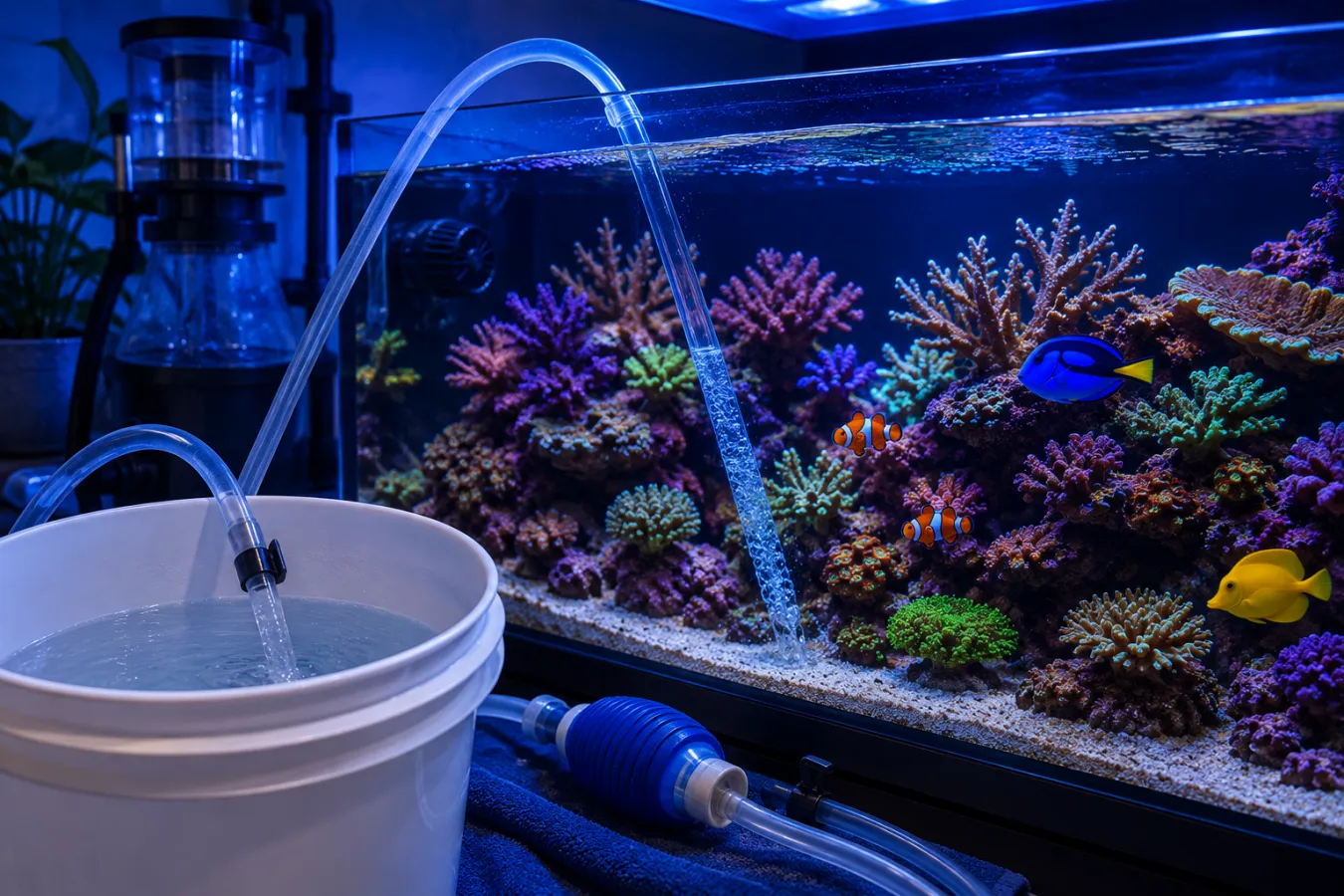
12. Perform Regular Water Changes
Regular water changes can help remove some unwanted compounds and replenish components from freshly prepared saltwater.
The exact amount and frequency should depend on your aquarium's livestock, filtration, feeding, nutrient levels, and testing results.
When performing a water change, prepare replacement saltwater carefully and check its:
- Temperature
- Salinity
- Overall suitability
Add the replacement water gradually to minimize unnecessary disturbance.
A consistent routine is generally easier to manage than waiting until water quality becomes a serious concern. For more guidance, see how to perform a safe aquarium water change.
13. Add Livestock Gradually
Patience is one of the most valuable skills in marine aquarium keeping.
After establishing your aquarium, don't feel pressured to fill every available space immediately.
Adding livestock gradually gives your biological filtration time to respond to additional waste production and gives you time to observe each new animal.
It also makes it easier to identify problems.
If you add five new fish at once and something goes wrong, determining the cause can be difficult. If you add livestock gradually, changes are easier to monitor and understand.
14. Quarantine New Fish When Appropriate
Quarantine is a useful consideration for many marine aquarium keepers because introducing a new fish can potentially introduce disease or parasites into an established system.
A separate quarantine setup allows new livestock to be observed and managed before being introduced to the display aquarium.
The exact quarantine procedure depends on your experience, livestock, and disease-management approach.
The broader principle is simple:
Don't rush new animals into your established aquarium.
Careful introduction helps protect the stability you've worked to create.
15. Build a Maintenance Schedule
A balanced aquarium is much easier to maintain when you have a routine.
Daily
Check:
- Fish behavior
- Coral appearance
- Temperature
- Equipment operation
- Water level
Weekly
Consider:
- Water testing
- Equipment inspection
- Glass cleaning
- Maintenance tasks
- Water changes according to your routine
Monthly
Review:
- Equipment condition
- Filter components
- Pumps
- Lighting
- Heater
- Overall livestock health
- Maintenance records
A routine helps prevent small issues from becoming large ones.
If you're still learning aquarium maintenance, how to set up your first freshwater aquarium provides another useful example of how planning and routine can make aquarium ownership easier.
Common Mistakes to Avoid
1. Adding Fish Too Quickly
Why it's a problem: The aquarium may not have enough biological capacity to process the additional waste.
Better approach: Add livestock gradually and monitor water conditions.
2. Ignoring Salinity
Why it's a problem: Sudden or gradual salinity changes can stress marine organisms.
Better approach: Measure salinity regularly and account for evaporation.
3. Overstocking
Why it's a problem: Too many animals can increase waste production and make maintenance more difficult.
Better approach: Research adult size, compatibility, and space requirements before purchasing livestock.
4. Skipping Water Testing
Why it's a problem: Clear water doesn't necessarily mean healthy water.
Better approach: Establish a regular testing routine.
5. Overfeeding
Why it's a problem: Uneaten food can contribute to unwanted nutrients.
Better approach: Feed appropriate portions and observe consumption.
6. Making Too Many Changes at Once
Why it's a problem: Sudden changes can make it difficult to identify what caused a problem.
Better approach: Make changes gradually whenever possible.
A Simple Balanced Saltwater Aquarium Checklist
Before adding anything to your aquarium, ask:
Is the aquarium cycled?
Is the salinity stable?
Is the temperature appropriate and stable?
Is the filtration suitable?
Is the livestock compatible?
Is the aquarium already appropriately stocked?
Have I researched the adult size of the new animal?
Am I testing the water regularly?
Do I have a quarantine plan for new fish?
Can I maintain the aquarium consistently?
If you can answer these questions confidently, you're much more likely to maintain a stable and enjoyable saltwater aquarium.
Final Thoughts
Creating a balanced saltwater aquarium ecosystem isn't about achieving perfection. It's about stability, planning, patience, and consistency.
Start by choosing the right aquarium setup and establishing biological filtration before adding livestock. Introduce fish gradually rather than filling the aquarium immediately. Keep salinity and temperature stable, avoid overstocking, feed responsibly, and make water testing part of your regular routine.
Remember that every part of the aquarium is connected. Filtration affects water quality, feeding affects waste production, livestock affects biological demand, and maintenance affects overall stability. Learning how to choose the right aquarium filter and how to test aquarium water can give you a stronger foundation for managing these interconnected factors.
Most importantly, take your time. A marine aquarium is a long-term project, not something that needs to be completed in a single weekend. Adding livestock slowly, observing your aquarium carefully, and responding to changes based on testing rather than guesswork can help you avoid many common beginner mistakes.
With thoughtful planning and a consistent maintenance routine, you can create a stable saltwater ecosystem where your fish, corals, and other marine life have the best possible opportunity to thrive.