Setting up your first freshwater aquarium can be an exciting experience. Choosing the tank, arranging decorations, selecting plants, and planning which fish to keep can make the process feel like the beginning of a beautiful new hobby.
However, a successful aquarium requires more than simply filling a tank with water and adding fish.
A healthy freshwater aquarium is a carefully balanced environment. Fish need suitable space, clean and stable water, appropriate filtration, and the right temperature for their species. Most importantly, a new aquarium needs time to establish beneficial bacteria before it can safely support a full population of fish.
Many beginner problems happen because fish are added too soon, the tank is too small, filtration is inadequate, or water quality is not monitored. The good news is that these problems can often be avoided by setting up the aquarium correctly from the beginning.
Whether you are preparing a small freshwater aquarium or a larger community tank, following a clear setup process can help you create a healthier environment for your fish and make aquarium maintenance much easier.
1. Choose the Right Aquarium Size
The first decision is the aquarium itself.
It can be tempting to start with the smallest tank available because it costs less and appears easier to manage. However, a very small aquarium can actually be less forgiving for beginners because water conditions can change more quickly in a smaller volume.
A larger aquarium generally provides more room for fish and gives you greater stability when small changes occur.
When choosing your tank, consider:
- Available space in your home
- Number and type of fish you want
- Adult size of the fish
- Filtration requirements
- Budget
- Weight of the filled aquarium
- Space required for equipment
Do not choose an aquarium based only on how many fish you want today. Think about how large those fish will become and how much swimming space they will eventually need.
A tank should be selected based on the adult needs of the livestock, not the size of juvenile fish at the store.
2. Decide What Type of Aquarium You Want
Before buying equipment, decide what kind of freshwater aquarium you want to create.
You might choose:
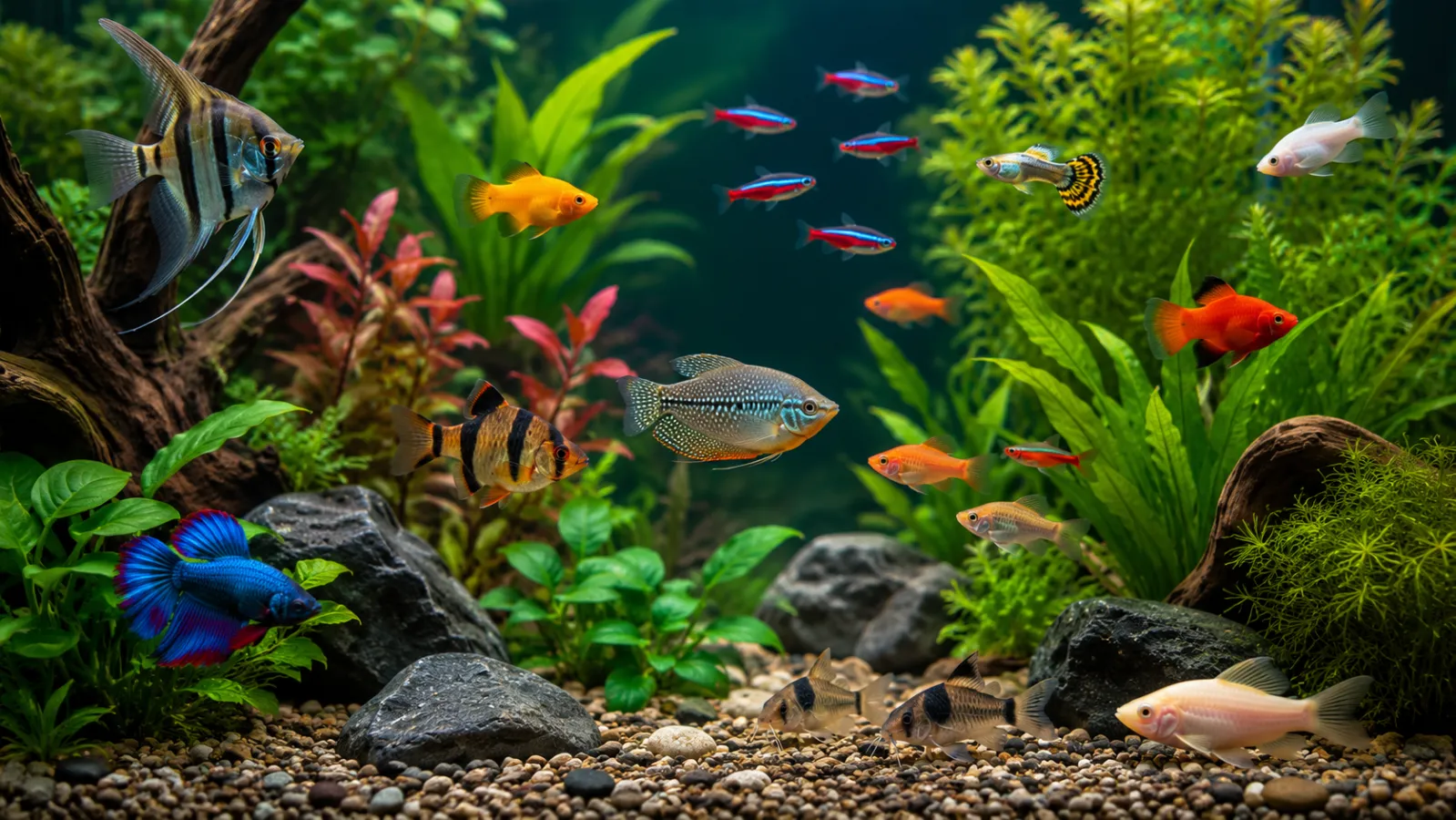
A community aquarium: Several compatible peaceful species are housed together.
A species-specific aquarium: The setup is designed around one particular type of fish.
A planted aquarium: Live aquatic plants are a major part of the design.
A single-fish setup: A suitable species, such as a betta, is kept as the primary or only fish.
Your choice affects the equipment, decoration, lighting, filtration, and livestock you will need.
It is easier to build the right aquarium when you know what you want the finished setup to look like.
3. Choose a Safe Location
Where you place your aquarium matters.
Choose a location with a sturdy, level aquarium stand or other appropriately designed support.
Avoid placing the aquarium where it will receive strong direct sunlight. Excessive sunlight can encourage algae growth and contribute to temperature changes.
Also keep the tank away from areas where it could be accidentally bumped or exposed to significant temperature fluctuations.
Before filling the aquarium, make sure:
- The stand is level
- The surface can support the aquarium's weight
- Nearby electrical outlets are safe and practical
- Equipment can be accessed easily
- There is enough space around the tank for maintenance
A filled aquarium can be extremely heavy, so the support system should be appropriate for the aquarium.
4. Choose the Right Filtration System
The aquarium filter is one of the most important pieces of equipment in your setup.
A filter helps remove suspended particles, supports beneficial bacteria, and contributes to water circulation.
When choosing a filter, consider:
- Aquarium size
- Fish stocking level
- Waste production
- Mechanical filtration
- Biological filtration
- Water flow
- Maintenance requirements
Mechanical filtration helps capture physical debris such as uneaten food and waste.
Biological filtration provides surfaces where beneficial microorganisms can establish and help process toxic waste compounds.
Some filters also support chemical filtration using specialized media, although this is not always necessary for everyday freshwater aquarium care.
Do not choose a filter based solely on the aquarium size printed on the package. Consider the actual biological load of your planned fish population as well.
5. Add an Appropriate Heater
Not every freshwater aquarium requires a heater.
The need depends on the species you plan to keep and the temperature of your home.
Many tropical freshwater fish require warmer and relatively stable water temperatures than typical room temperature can provide. In those cases, an appropriately sized aquarium heater is essential.
Before purchasing a heater, determine the temperature requirements of your fish.
Also use an aquarium thermometer so you can monitor the actual water temperature instead of relying solely on the heater's setting.
Place the heater according to the manufacturer's instructions and make sure it remains properly positioned below the required water level.
Temperature stability is more important than making frequent sudden adjustments.
6. Choose Suitable Substrate
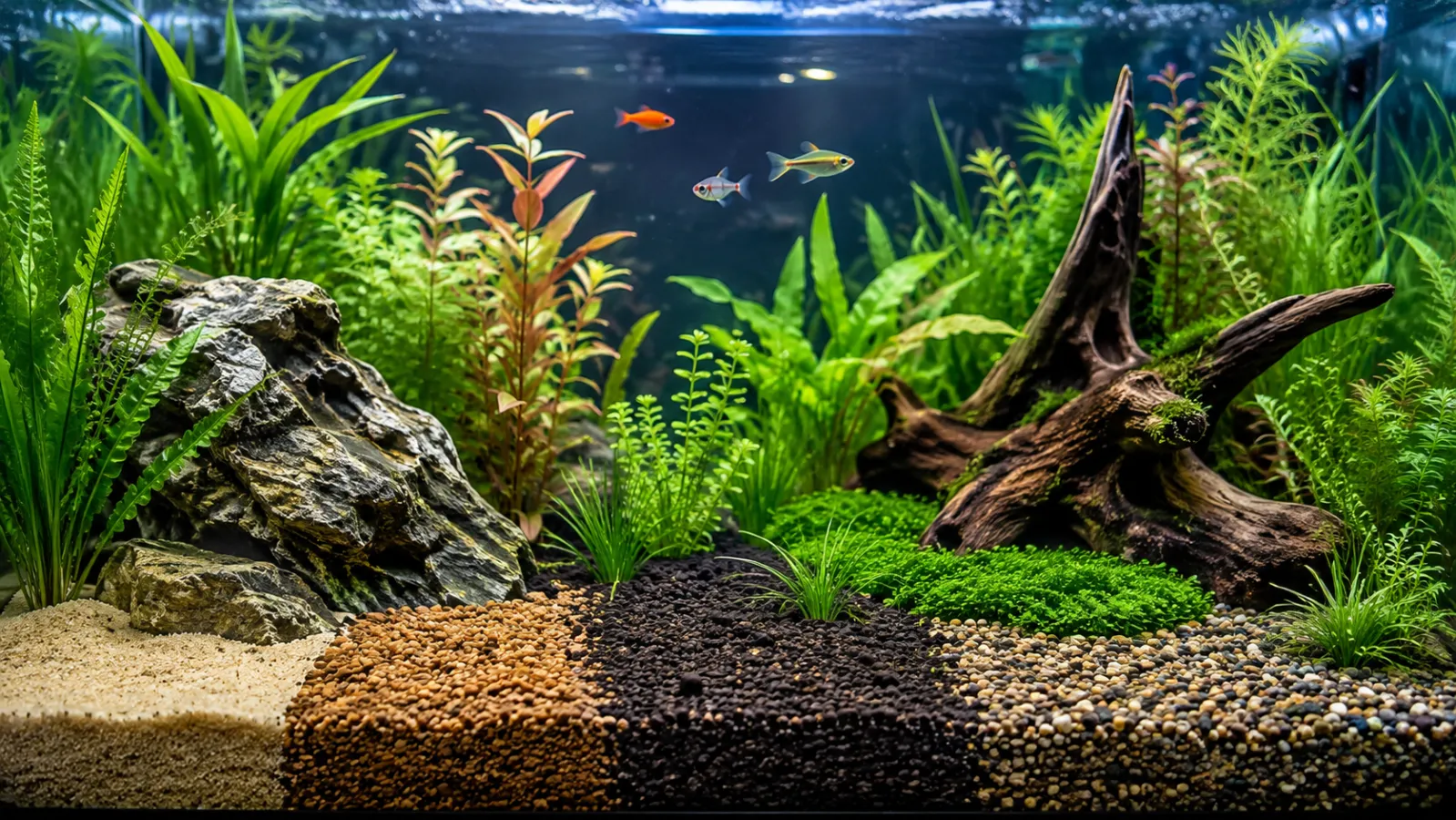
The substrate is the material placed at the bottom of the aquarium.
Common choices include:
- Gravel
- Sand
- Specialized planted-tank substrates
Your choice should depend on the fish, plants, and overall design.
For example, some bottom-dwelling fish spend significant time searching through the substrate, while planted aquariums may benefit from substrates designed to support plant growth.
Rinse suitable new substrate carefully before adding it to the aquarium to remove excess dust and debris. Avoid using soaps or household cleaning products.
Add the substrate gently to prevent damage to the aquarium glass.
7. Add Decorations and Plants
Decorations provide structure and visual interest, while plants can create hiding spaces and contribute to the aquarium environment.
You can use:
- Aquarium-safe rocks
- Driftwood
- Artificial plants
- Live aquatic plants
- Caves and shelters
- Other aquarium-safe decorations
Everything placed inside the aquarium should be safe for aquatic life.
Avoid decorations that can release harmful substances or have sharp edges that may injure fish.
When arranging the tank, think about swimming space as well as appearance.
Leave open areas for active fish to move naturally and create sheltered spaces for species that prefer hiding.
If using live plants, research their lighting and water requirements before purchasing them.
8. Fill the Aquarium With Properly Prepared Water
Once the tank, substrate, decorations, and equipment are ready, add the water.
If you are using tap water, it may contain chlorine or chloramine used in municipal water treatment. These substances can harm fish and beneficial bacteria.
Use an appropriate aquarium water conditioner according to the manufacturer's instructions.
When filling the aquarium, add water carefully so that you do not disturb the substrate or uproot plants.
A plate, shallow container, or similar aquarium-safe surface can help distribute the flow while filling.
Do not rush this stage.
9. Install and Test Your Equipment
Before adding fish, make sure your equipment is working properly.
Check:
- Filter
- Heater
- Thermometer
- Lighting
- Air pump, if used
- Other circulation equipment
Confirm that the filter is producing appropriate water movement.
Check the temperature and make sure the heater is maintaining the desired range for your fish.
This is a good time to identify equipment problems because there are no fish depending on the system yet.
10. Understand the Nitrogen Cycle
One of the most important concepts for beginners is the aquarium nitrogen cycle.
Fish waste and decomposing organic matter produce ammonia. Ammonia is toxic to fish.
Beneficial bacteria convert ammonia into nitrite. Nitrite is also toxic.
Another group of beneficial bacteria converts nitrite into nitrate.
Nitrate is less immediately toxic than ammonia and nitrite, but it can accumulate and needs to be controlled through water changes and other appropriate aquarium maintenance.
The basic process can be summarized as:
Waste → Ammonia → Nitrite → Nitrate
A newly established aquarium does not automatically contain enough beneficial bacteria to process a significant amount of fish waste.
This is why cycling is essential.
11. Cycle the Aquarium Before Adding Fish
One of the biggest beginner mistakes is adding fish immediately after setting up the aquarium.
A new aquarium needs time for its biological filtration system to develop.
Fishless cycling is a common approach because it allows beneficial bacteria to become established without exposing live fish to dangerous ammonia and nitrite levels.
During cycling, regularly monitor:
- Ammonia
- Nitrite
- Nitrate
- pH
- Temperature
Do not decide that the aquarium is cycled simply because it has been running for a certain number of days.
Testing is a better indicator of biological progress than time alone.
Once the aquarium demonstrates stable biological processing appropriate to the cycling method being used, you can begin planning livestock introduction.
12. Test the Water Regularly
Water testing is an essential part of setting up a new aquarium.
Clear water does not necessarily mean safe water. Some harmful compounds are invisible.
For many freshwater aquariums, important parameters include:
Ammonia: Should generally be at or near zero in a healthy established aquarium.
Nitrite: Should generally be at or near zero once biological filtration is established.
Nitrate: Should be monitored and controlled through appropriate maintenance.
pH: Should be suitable and reasonably stable for the species you keep.
Depending on the aquarium, you may also monitor hardness, temperature, or other species-specific parameters.
Keep a simple record of your test results during the cycling process.
13. Add Fish Gradually
Once your aquarium is properly established, resist the temptation to fill it with fish immediately.
Adding too many fish at once can suddenly increase waste production and overwhelm the developing biological system.
Instead, introduce livestock gradually.
This gives the biological filtration system time to adjust to the additional waste load.
After adding fish, monitor ammonia and nitrite more closely.
If water quality deteriorates, pause further additions and investigate the cause.
A healthy aquarium is not built in one shopping trip.
14. Choose Fish That Match Your Aquarium
The fish you select should fit your aquarium's size and conditions.
Before buying a species, research:
- Adult size
- Temperament
- Water requirements
- Temperature requirements
- Feeding needs
- Social behavior
- Swimming space
- Compatibility
A small fish can still require a large amount of swimming space.
Similarly, a peaceful fish may become stressed when housed with aggressive species.
Do not choose fish only because they are colorful or available at your local store.
Choose fish whose long-term requirements you can consistently meet.
15. Feed Responsibly From the Beginning
Feeding habits have a direct effect on aquarium water quality.
Overfeeding creates unnecessary waste and can contribute to ammonia and algae problems.
Feed an appropriate amount based on the species and observe how quickly the fish consume the food.
Avoid adding food simply because the fish appear interested.
If uneaten food remains in the aquarium, remove it when appropriate.
Good feeding habits make the aquarium easier to maintain and reduce unnecessary nutrient buildup.
16. Establish a Maintenance Routine
Once your aquarium is running, create a simple maintenance schedule.
Daily
Check:
- Fish behavior
- Feeding
- Temperature
- Filter operation
- Water level
- Visible waste
Weekly
Depending on your aquarium, this may include:
- Water testing
- Partial water change
- Substrate cleaning
- Algae removal
- Filter inspection
- Waste removal
Monthly
Review:
- Equipment condition
- Filter components
- Heater
- Lighting
- Plant growth
- Overall stocking
- Water-quality trends
A consistent routine is easier and more effective than occasional major cleaning sessions.
17. Avoid Overcleaning Your New Aquarium
A common beginner reaction to problems is to clean everything.
This is not always helpful.
Beneficial bacteria live on the filter media, substrate, decorations, and other established surfaces.
Avoid unnecessarily:
- Replacing all biological filter media
- Scrubbing every surface
- Completely emptying the tank
- Deep-cleaning all substrate
- Performing massive water changes without a reason
The goal is to remove excessive waste while maintaining biological stability.
Your aquarium should be clean enough to maintain good water quality without being stripped of its beneficial biological environment.
18. Watch for Common Beginner Problems
During the first few weeks, pay close attention to changes in the aquarium.
Possible warning signs include:
- Cloudy water
- Rapid algae growth
- High ammonia
- Detectable nitrite
- Unusual fish behavior
- Reduced filter flow
- Temperature instability
- Uneaten food
- Excess waste
If you notice a problem, investigate the cause instead of immediately making several major changes at once.
Water testing can help determine whether the issue is related to the nitrogen cycle, stocking, feeding, filtration, or another factor.
19. Common First-Aquarium Mistakes to Avoid
Adding fish too soon: A new aquarium needs time to establish biological filtration.
Choosing a tank that is too small: Smaller volumes can experience faster changes in water conditions.
Buying too many fish: Overstocking increases waste and maintenance demands.
Skipping water testing: Dangerous water chemistry is not always visible.
Using untreated tap water: Chlorine or chloramine can harm fish and beneficial bacteria.
Overfeeding: Excess food increases waste.
Ignoring temperature: Many species require stable conditions.
Choosing incompatible fish: Similar size does not mean compatible temperament.
Replacing all filter media at once: This can reduce beneficial bacteria.
Overcleaning: Excessive cleaning can disturb the biological balance.
Avoiding these mistakes can make your first aquarium much easier to manage.
20. A Simple First Aquarium Setup Checklist
Before purchasing fish:
Step 1: Choose an appropriate aquarium size.
Step 2: Select a sturdy, level location.
Step 3: Choose suitable filtration.
Step 4: Determine whether your fish require a heater.
Step 5: Add appropriate substrate and aquarium-safe decorations.
Step 6: Add live plants if desired.
Step 7: Fill the aquarium with properly conditioned water.
Step 8: Install and test the equipment.
Step 9: Begin the aquarium cycling process.
Step 10: Test ammonia, nitrite, nitrate, and other relevant parameters.
Step 11: Confirm the aquarium is biologically ready.
Step 12: Add compatible livestock gradually.
Step 13: Continue water testing after fish are introduced.
This simple process provides a strong foundation for a healthy freshwater aquarium.
Final Thoughts
Setting up your first freshwater aquarium is much more than filling a tank and adding fish. The most successful aquariums are built around careful planning, suitable equipment, biological stability, and consistent maintenance.
Start with an appropriate tank size and choose fish based on their adult needs rather than their appearance at the store. Select suitable filtration and provide heating when required. Use properly conditioned water and allow the aquarium to complete its cycling process before introducing livestock.
Once the aquarium is established, add fish gradually, monitor water parameters, feed responsibly, and maintain a regular routine.
For beginners, patience is one of the most valuable aquarium skills. You do not need to rush to create a fully stocked tank. Building the aquarium step by step gives the biological system time to develop and gives you time to learn how your aquarium behaves.
The result is more than a beautiful display. With the right setup and consistent care, your first freshwater aquarium can become a stable, healthy environment where your fish and plants can thrive for years to come.