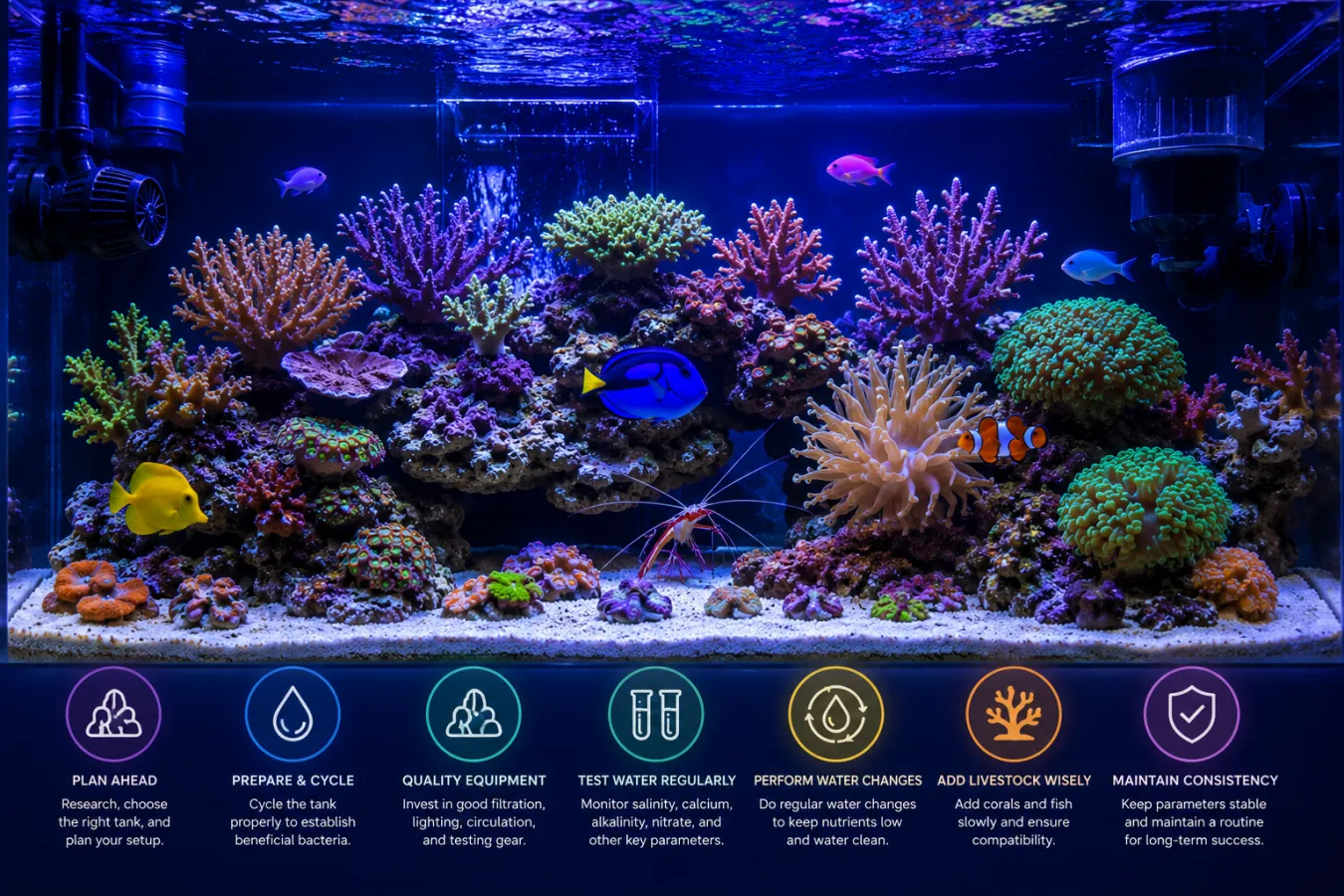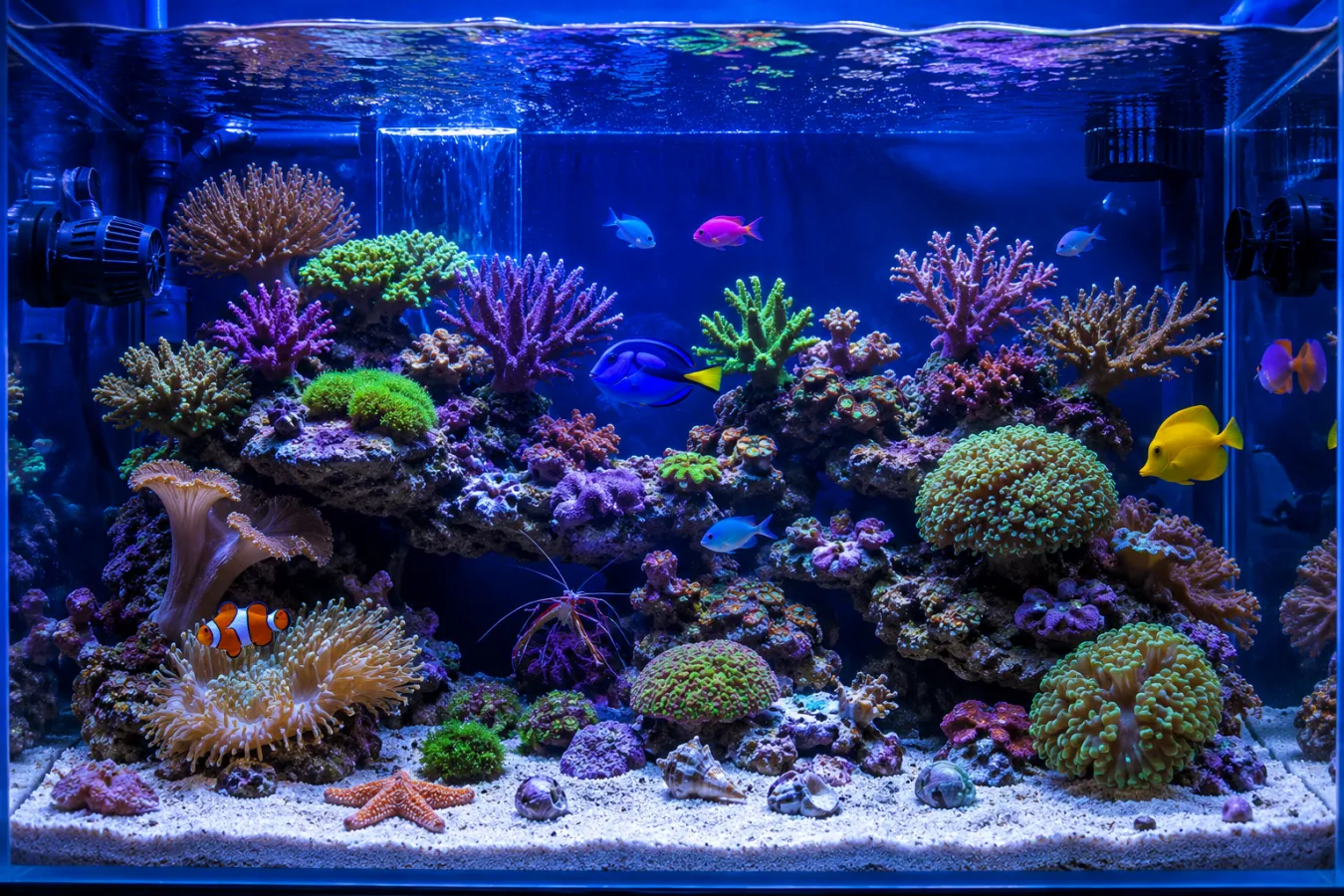
Setting up your first saltwater aquarium can be incredibly rewarding. A marine aquarium can bring the colors, movement, and atmosphere of an ocean environment into your home. However, saltwater aquariums generally require more careful planning than many beginner freshwater setups.
The difference is not simply the addition of salt. A marine aquarium requires you to manage salinity, water quality, filtration, temperature, water movement, and biological stability. You also need appropriate equipment and a willingness to let the aquarium mature before adding livestock.
The most important rule for beginners is simple: do not rush the process.
Before adding fish, prepare the appropriate aquarium and filtration, use a suitable marine salt mix and purified water, obtain reliable testing equipment, and allow the aquarium to complete its nitrogen cycle. A properly established biological system is essential because ammonia and nitrite can be harmful to marine life.
Whether you are planning a simple fish-only saltwater aquarium or eventually want to build a reef aquarium, starting with a stable foundation will make the hobby much easier.
1. Decide What Type of Saltwater Aquarium You Want
Before purchasing equipment, decide what you want your aquarium to become.
There are several broad types of marine aquariums.
Fish-Only Aquarium
A fish-only aquarium focuses primarily on marine fish.
This can be a simpler starting point than a reef aquarium because you may not need to meet the demanding lighting and chemistry requirements associated with corals.
Fish-Only With Live Rock
Live rock or suitable biological media can provide important biological filtration while also creating natural-looking structures and hiding places.
Reef Aquarium
A reef aquarium contains corals and potentially other invertebrates in addition to fish.
Reef systems generally require more careful management of lighting, water chemistry, flow, and nutrients.
For your first saltwater aquarium, it is often sensible to keep the setup relatively simple and learn the fundamentals before attempting a highly demanding reef environment.
2. Choose an Appropriate Aquarium
Tank size is an important consideration.
A larger volume of water generally provides more stability than a very small aquarium because changes in temperature and water chemistry can occur more rapidly in smaller systems.
This does not mean that a nano saltwater aquarium is impossible, but smaller systems can leave less room for error.
When choosing your aquarium, consider:
- Available space
- Budget
- Fish size
- Number of fish
- Filtration requirements
- Maintenance requirements
- Future plans for corals or invertebrates
Do not choose fish first and then try to find a tank that fits them. Choose an aquarium that can comfortably support the livestock you intend to keep.
3. Choose the Right Location
Before filling the aquarium, carefully choose where it will sit.
The location should provide:
- A stable, level surface
- Adequate support
- Access to electricity
- Space for equipment
- Protection from direct sunlight
- Reasonably stable room temperatures
Avoid placing the aquarium where it will be exposed to strong sunlight or frequent temperature changes.
Remember that a filled aquarium is extremely heavy. The stand and supporting surface must be appropriate for the aquarium.
4. Gather Your Essential Equipment
A saltwater aquarium requires more than a tank and a filter.
Depending on your setup, basic equipment can include:
- Aquarium and stand
- Marine filtration
- Heater
- Thermometer
- Powerhead or wavemaker
- Appropriate lighting
- Marine salt mix
- Purified water
- Refractometer or hydrometer
- Water-testing equipment
- Suitable substrate
- Live or dry rock
- Protein skimmer where appropriate
Marine aquarium guides commonly recommend equipment such as a heater, filter, protein skimmer, powerhead, marine salt mix, refractometer, thermometer, substrate, and live rock.
The exact equipment depends on whether you are keeping fish only, fish with live rock, or a reef aquarium.
5. Use Appropriate Water
Water quality is especially important in marine aquariums.
Many saltwater hobbyists use purified water, commonly produced through reverse osmosis/deionization (RO/DI), as the starting water for mixing marine salt.
Using purified water can help reduce unwanted substances that may be present in untreated source water.
If you use tap water, understand what is present in your local supply and use appropriate treatment where required. For sensitive marine systems, purified water is often preferred.
6. Choose a Quality Marine Salt Mix
Freshwater aquarium salt and marine aquarium salt are not interchangeable.
Marine salt mixes are specifically formulated to create artificial seawater and contain a range of dissolved salts and minerals.
Choose a marine salt mix designed for aquarium use and follow the manufacturer's instructions carefully.
Do not guess the amount of salt required.
Different products can have different mixing instructions, so measure the salt according to the manufacturer's guidance and verify the resulting salinity with an appropriate measuring device.
7. Mix Saltwater Separately
One important beginner rule is to mix your saltwater in a separate clean container whenever possible.
Add purified water to the mixing container and then add the marine salt according to the product instructions.
Use a small pump or powerhead to circulate the water while the salt dissolves.
A heater may also be used when appropriate to bring the water to the desired temperature before use.
Most importantly, never add dry marine salt directly into an aquarium containing fish or other livestock. Marine aquarium guidance recommends preparing and measuring saltwater separately before it enters the aquarium.
8. Measure Salinity Carefully
Salinity is one of the major differences between freshwater and saltwater aquarium keeping.
A refractometer or hydrometer can be used to measure specific gravity and help determine whether the saltwater is within the intended range.
A common marine aquarium target is around 1.023–1.025 specific gravity, although the appropriate value depends on the type of marine system and livestock being kept. Reef systems are commonly maintained around the higher end of this range.
Do not simply assume that adding a particular number of cups of salt will always produce the correct salinity.
Measure it.
If the reading is incorrect, make adjustments carefully rather than making large changes without testing.
9. Add Suitable Substrate
Substrate can contribute to the appearance and biological environment of a saltwater aquarium.
Common choices include marine sand and other aquarium-safe substrates suitable for marine systems.
Before adding substrate, rinse or prepare it according to the manufacturer's instructions.
Consider:
- Fish behavior
- Desired appearance
- Cleaning requirements
- Biological function
- Whether you plan to keep burrowing species
Some marine fish naturally interact with sand, so substrate selection should take their behavior into account.
10. Add Live or Dry Rock
Rock provides structure, hiding places, and surfaces for beneficial microorganisms.
Marine aquariums may use live rock, dry rock, or other appropriate biological media depending on the setup.
Live rock can already contain microorganisms that contribute to biological filtration, while dry rock provides a clean foundation that becomes biologically established over time.
Arrange the rock securely.
Do not create unstable structures that could collapse and injure fish or damage the aquarium.
Create caves, shaded areas, and open swimming spaces where appropriate.
11. Install the Filtration System
Filtration is essential for maintaining water quality.
Depending on the aquarium, filtration may involve:
- Hang-on-back filters
- Canister filters
- Sumps
- Biological media
- Live rock
- Protein skimmers
- Mechanical filtration
The appropriate system depends on the tank and livestock.
The purpose is not simply to make the water look clear. Biological filtration is particularly important because beneficial microorganisms help process nitrogenous waste.
A saltwater aquarium should be designed around its biological load rather than simply choosing equipment because it physically fits the tank.
12. Add a Protein Skimmer When Appropriate
Protein skimmers are commonly used in marine aquariums, particularly reef systems.
They help remove certain dissolved organic compounds from aquarium water before those materials are broken down further.
A skimmer is not a replacement for biological filtration, water changes, or responsible stocking.
Whether you need one depends on the aquarium design and livestock.
For a simple fish-only setup, the filtration approach may differ from a heavily stocked reef aquarium.
13. Provide Adequate Water Movement
Marine environments naturally have significant water movement.
Powerheads or wavemakers can help create circulation throughout the aquarium.
Good circulation can:
- Improve oxygen exchange
- Move nutrients and waste
- Reduce stagnant areas
- Support biological filtration
- Provide appropriate flow for marine organisms
The amount and direction of flow should be appropriate for your livestock.
Fish-only systems and coral reefs can have very different flow requirements.
Avoid creating a powerful current that constantly exhausts fish.
14. Install the Heater and Thermometer
Stable temperature is important for marine fish.
Install an appropriately sized aquarium heater and use a reliable thermometer to verify the actual water temperature.
Do not rely exclusively on the heater's built-in setting.
Check the aquarium temperature regularly and investigate unexpected changes.
The exact temperature should be based on the species you keep and the requirements of your marine system.
15. Choose Appropriate Lighting
Lighting requirements depend heavily on what you plan to keep.
A fish-only saltwater aquarium generally has simpler lighting requirements than a reef aquarium containing photosynthetic corals.
If you intend to keep corals, research their lighting requirements before purchasing your light.
Do not assume that an ordinary aquarium light will be sufficient for every reef organism.
Your lighting should be selected based on the livestock and aquarium design.
16. Start the Nitrogen Cycle
Cycling is one of the most important steps in setting up a new saltwater aquarium.
A newly established aquarium does not immediately have a mature population of beneficial microorganisms capable of processing fish waste.
The nitrogen cycle involves the biological conversion of ammonia into nitrite and then nitrate.
Ammonia and nitrite can be harmful to fish, which is why livestock should not simply be added to an uncycled aquarium.
A fishless cycling approach allows the biological filtration system to become established without exposing fish to intentionally elevated ammonia.
Marine aquarium guides recommend establishing the nitrogen cycle before adding livestock and monitoring ammonia, nitrite, and nitrate during the process.
17. Test the Aquarium During Cycling
Do not decide that your aquarium is cycled simply because the water looks clear.
Use appropriate test kits to monitor:
- Ammonia
- Nitrite
- Nitrate
- pH
- Salinity
The exact testing schedule depends on the cycling method and aquarium setup.
The important point is that cycling should be confirmed through testing rather than estimated based on how many days the aquarium has been running.
A new marine aquarium may take several weeks to establish biological stability, and the timeline can vary depending on the method, rock, bacteria, and other conditions.
18. Do Not Add Fish Too Early
This is one of the biggest mistakes a new saltwater aquarist can make.
The aquarium may look beautiful after the equipment is installed, but appearance does not mean the biological system is ready.
Do not add fish simply because:
- The water looks clear
- The equipment is running
- The salt has dissolved
- The tank has been running for a few days
Wait until your testing indicates that the biological system is appropriately established.
Patience during the cycling stage can prevent serious problems later.
19. Add Fish Gradually
Once the aquarium is appropriately established, avoid adding a large number of fish at once.
Adding livestock gradually gives the biological filtration system time to adjust to the increasing biological load.
Research each fish before purchase.
Consider:
- Adult size
- Temperament
- Diet
- Swimming space
- Compatibility
- Minimum aquarium requirements
- Reef compatibility if applicable
A fish that looks small and peaceful in a store may become unsuitable as it grows.
20. Acclimate New Fish Carefully
Moving fish from one environment to another creates a change in water conditions.
Before introducing new fish, follow an appropriate acclimation procedure based on the species, transport conditions, and advice from the seller or aquatic-care professional.
Avoid rapidly transferring fish without considering differences in:
- Temperature
- Salinity
- pH
- Other water conditions
Careful acclimation can reduce the shock associated with moving livestock between systems.
21. Monitor Salinity Regularly
Salinity can change in a saltwater aquarium, particularly because evaporation removes water but leaves dissolved salts behind.
This means replacing evaporated water with freshwater—not additional saltwater—when appropriate.
Regularly measure salinity rather than estimating it based on how much water has evaporated.
For marine aquariums, salinity stability is an important part of maintaining a healthy environment.
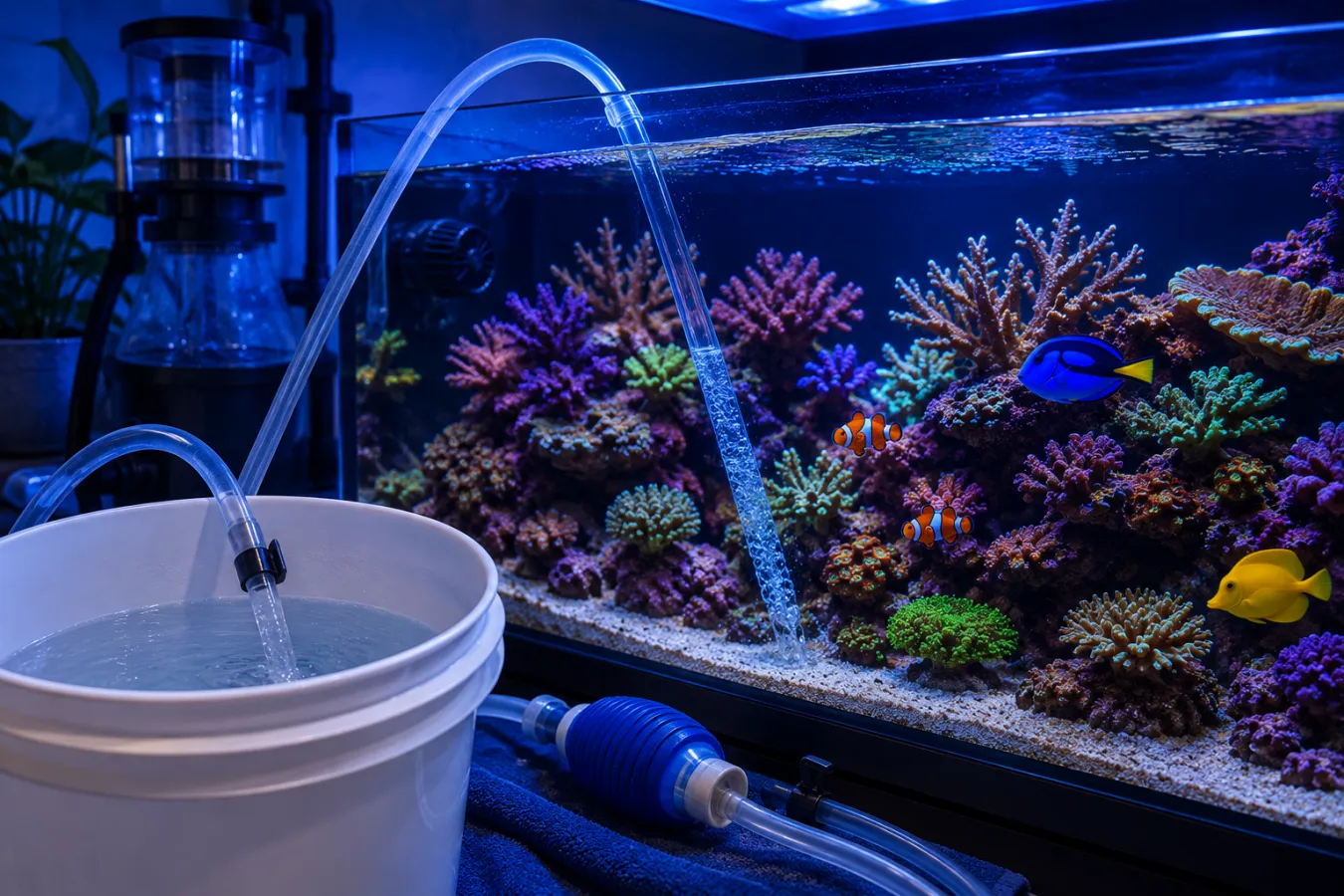
22. Perform Regular Water Changes
Water changes remain an important part of marine aquarium maintenance.
They can help replenish certain components and reduce accumulated waste, depending on the aquarium system.
The appropriate schedule and percentage depend on:
- Aquarium size
- Livestock
- Filtration
- Feeding
- Water chemistry
- Reef versus fish-only setup
Always prepare replacement saltwater properly and verify its temperature and salinity before adding it to the aquarium.
23. Avoid Overstocking
Saltwater fish can produce significant biological waste, and many marine species require substantial swimming space.
Do not assume that a larger filter means you can keep unlimited fish.
Consider:
- Adult fish size
- Territorial behavior
- Swimming space
- Compatibility
- Biological load
- Oxygen requirements
A lightly stocked aquarium can be easier to maintain and may provide a healthier environment.
24. Avoid Adding Too Many Changes at Once
Marine aquariums benefit from stability.
Avoid constantly changing:
- Salinity
- Temperature
- Lighting
- Flow
- Filtration
- Feeding
- Chemical supplements
If something appears wrong, test the water and identify the likely cause before making major changes.
A measured approach is usually better than repeatedly adjusting the aquarium based on guesswork.
25. Common Beginner Saltwater Aquarium Mistakes
Adding Fish Before Cycling
This can expose fish to harmful ammonia and nitrite.
Mixing Salt Directly in the Aquarium
Prepare saltwater separately before introducing it to the aquarium.
Failing to Measure Salinity
Never rely on assumptions. Use a refractometer or hydrometer.
Using Unsuitable Water
Consider purified water for mixing marine salt, particularly for sensitive marine systems.
Overstocking
Too many fish can increase waste and stress.
Ignoring Fish Compatibility
Marine fish can have highly different temperaments and space requirements.
Buying Equipment Without Planning
Choose equipment according to the aquarium and livestock.
Rushing the Setup
A marine aquarium needs time to become biologically stable.
26. A Simple Saltwater Aquarium Setup Checklist
Before adding your first fish, make sure you have:
- Appropriate aquarium and stand
- Suitable filtration
- Heater
- Thermometer
- Powerhead or wavemaker
- Appropriate lighting
- Marine salt mix
- Purified water
- Refractometer or hydrometer
- Water test kits
- Appropriate substrate
- Live or dry rock
- Protein skimmer if appropriate
- Water-change equipment
- Fish food
- A planned stocking list
Then verify that the aquarium is stable and properly cycled before adding livestock.
Final Thoughts
Setting up your first saltwater aquarium requires more planning and patience than many beginner freshwater setups, but the process becomes much easier when you approach it step by step.
Start with an appropriate aquarium, reliable filtration, suitable heating and water movement, and the right marine equipment. Use a quality marine salt mix with suitable purified water, measure salinity carefully, and establish the nitrogen cycle before adding fish.
Most importantly, do not rush the process.
A saltwater aquarium is a living ecosystem. The goal is not simply to make the tank look ready as quickly as possible. The goal is to create a stable environment capable of supporting marine life.
By planning your equipment, testing your water, cycling the aquarium properly, adding livestock gradually, and maintaining stable conditions, you can build a marine aquarium that is beautiful, healthy, and much easier to manage over the long term.