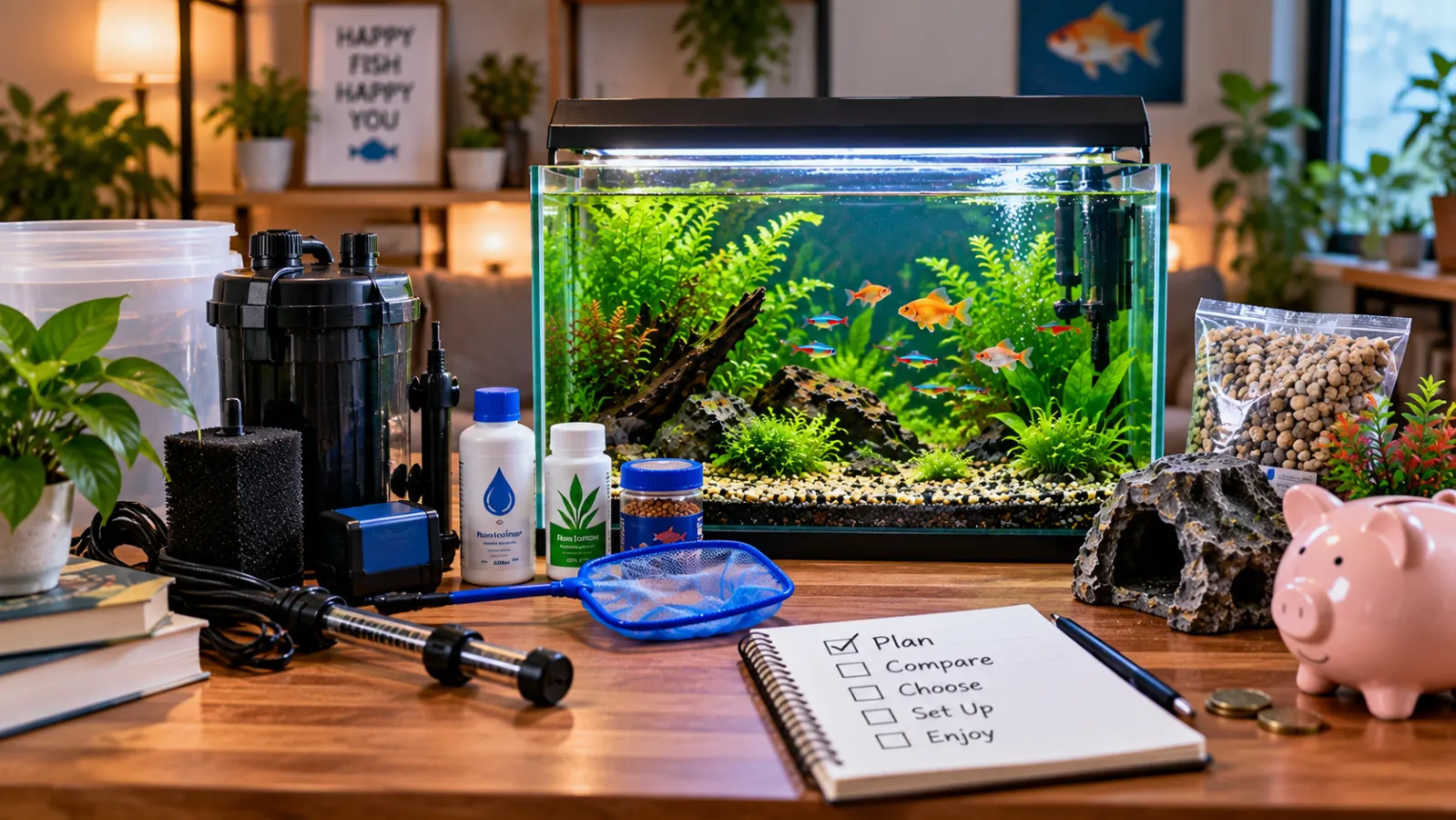
Choosing the right aquarium filter is one of the most important decisions you can make when setting up a fish tank. A good filter does much more than keep the water looking clear. It helps remove physical waste, supports beneficial bacteria, and contributes to maintaining suitable water conditions for your fish.
Why it's a concern: Filtration plays a major role in maintaining water quality and managing aquarium waste.
However, choosing an aquarium filter is not simply about buying the most powerful model available. The right filter depends on your tank size, filter capacity, biological load, type of filtration, water flow, and the needs of your fish.
Why Is Aquarium Filtration Important?
Fish live in the water surrounding them, so waste and other substances can accumulate in the same environment. Effective filtration helps manage these waste products and supports a healthier aquarium.
Most filtration systems can provide one or more of three main types of filtration:
Mechanical filtration removes physical particles and debris.
Biological filtration provides surfaces where beneficial bacteria can live and process nitrogenous waste.
Chemical filtration uses specialised media to remove or alter certain dissolved substances.
For most freshwater aquariums, mechanical and biological filtration form the foundation of the filtration system.
A filter should therefore be viewed as an important part of your aquarium's overall life-support system, rather than simply a device that makes the water look cleaner. (Aqueon)
1. Choose a Filter Based on Tank Size
The first thing to consider when choosing a filter is your aquarium's water volume.
Filter manufacturers generally provide a recommended tank size or flow rate. This is a useful starting point, but it should not be the only factor you consider.
Two filters that are both advertised for the same tank size can have different media capacities, flow rates, and filtration designs.
A heavily stocked aquarium can also require more filtration than a lightly stocked aquarium of the same volume.
Before buying a filter, consider:
- Aquarium volume
- Manufacturer's recommended tank size
- Filter flow rate
- Filter-media capacity
- Number of fish
- Adult size of the fish
Your stocking level is particularly important. How Many Fish Can You Keep in a Freshwater Aquarium? can help you think about aquarium capacity before purchasing equipment.
2. Understand Filter Capacity
Filter capacity refers to the amount of water a filter is designed to process over time. Manufacturers may express this as gallons per hour (GPH) or litres per hour.
A higher flow rate does not necessarily mean a better filter.
Your fish have their own preferences for water movement. Some species naturally live in flowing environments, while others prefer calmer water. Excessively strong current can make it difficult for some fish to swim comfortably.
When comparing filters, look at both the advertised flow rate and whether the flow can be adjusted.
An adjustable filter can give you greater flexibility when creating an environment that suits your fish.
3. Mechanical Filtration
Mechanical filtration physically traps suspended particles in the water.
Common mechanical media include sponges, foam, and filter floss. These materials can capture:
- Uneaten food
- Fish waste
- Plant debris
- Suspended particles
This helps improve water clarity and prevents larger pieces of debris from continually circulating through the aquarium.
However, mechanical filtration does not replace biological filtration. Removing visible debris is only one part of maintaining good aquarium conditions.
How Does Mechanical Media Work?
As water passes through the filter, particles become trapped within the media.
Over time, the media can become clogged. When this happens, water flow may decrease and the filter may become less effective.
Cleaning mechanical media regularly can help maintain proper flow, but it should be done carefully, particularly when the same media also supports beneficial bacteria.
4. Biological Filtration
Biological filtration is essential because beneficial bacteria help process toxic nitrogenous waste.
In a properly established aquarium, beneficial microorganisms colonize surfaces throughout the tank, including filter media.
These organisms participate in the nitrogen cycle:
Ammonia → Nitrite → Nitrate
Ammonia and nitrite are toxic to fish, while nitrate is generally less toxic but can become problematic when it accumulates.
This is one reason establishing and maintaining a healthy biological filter is so important.
Before adding fish, make sure you understand the basics of aquarium cycling. How to Set Up Your First Freshwater Aquarium provides additional guidance for beginners setting up an aquarium.
5. Consider the Type of Aquarium Filter
There are several types of aquarium filters available. The right choice depends on your aquarium, fish, available space, and maintenance preferences.
Hang-On-Back Filters
Hang-on-back, or HOB, filters attach to the back of the aquarium.
They commonly provide mechanical and biological filtration and are popular among freshwater fish keepers because they are relatively straightforward to install and maintain.
They can be a practical choice for many community aquariums.
Sponge Filters
Sponge filters use an air pump to move water through a sponge.
The sponge captures particles while also providing a large surface where beneficial bacteria can establish.
Because they generally produce gentle water movement, sponge filters can be useful for certain smaller aquariums, breeding setups, and fish that prefer calmer water.
Canister Filters
Canister filters sit outside the aquarium and circulate water through filtration media contained inside the canister.
They can provide substantial mechanical and biological filtration and offer considerable media capacity.
They are commonly considered for larger or more heavily stocked aquariums, although they can require more involved maintenance than simpler filtration systems.
Undergravel Filters
Undergravel filters draw water through the aquarium substrate.
The substrate becomes part of the filtration system, providing a large surface for microorganisms.
These systems have particular setup and maintenance requirements, so they are not suitable for every aquarium.
6. Consider the Biological Load
Tank volume alone does not determine how much filtration an aquarium needs.
Two aquariums of the same size can have very different filtration requirements depending on their inhabitants.
Biological load can be affected by:
- Number of fish
- Adult fish size
- Feeding habits
- Species
- Waste production
- Other aquatic animals
A tank containing a small number of small fish may produce much less waste than the same-sized tank containing several large fish.
This means a filter's advertised tank-size rating should be treated as a starting point rather than the only factor in your decision.
Choosing appropriate fish is equally important. Before creating a community aquarium, read How to Choose Compatible Freshwater Fish to learn more about temperament, adult size, water requirements, and swimming zones.
7. Match Water Flow to Your Fish
A filter should move enough water to perform its job without creating an unsuitable current.
Some fish are strong swimmers and may appreciate substantial circulation. Other species are more comfortable in gentle water movement.
If your fish struggle to maintain their position, constantly avoid the filter outlet, or appear stressed by the current, the flow may be too strong for the setup.
A filter with adjustable flow can be especially useful because you can modify circulation according to the needs of your fish.
The aim is to balance effective filtration with comfortable water movement.
8. Look for Mechanical and Biological Filtration
When comparing filters, don't focus only on the brand or the appearance of the equipment.
Pay attention to what filtration media the filter can accommodate.
A good setup should provide effective mechanical filtration while offering sufficient surface area for beneficial bacteria.
Some filters also provide space for chemical media such as activated carbon or specialized resins.
Chemical filtration can have specific uses, but it isn't necessarily required in every aquarium. Your primary focus should be establishing effective mechanical and biological filtration appropriate for your fish and setup.
9. Consider Filter Media Capacity
The amount of space available for filter media is another useful factor when comparing models.
A filter with more media capacity can provide additional room for mechanical and biological media.
When assessing a filter, ask:
- How much mechanical media does it hold?
- How much biological media can be added?
- Can the media be replaced separately?
- Is replacement media easily available?
- Can the media be cleaned without replacing everything?
Choosing a filter with flexible media options can make long-term maintenance easier.
10. Think About Maintenance
Even the best aquarium filter requires regular maintenance.
Check your filter regularly for:
- Reduced water flow
- Clogged media
- Accumulated debris
- Unusual noises
- Damaged components
- Impeller problems
Mechanical media may require cleaning when it becomes clogged.
Biological media should be handled more carefully because beneficial bacteria can colonize these surfaces. Avoid unnecessarily replacing all established biological media at once.
When cleaning filter media, using water removed during an aquarium water change can help avoid exposing established biological media to untreated tap water.
Regular water changes are also essential. A filter does not eliminate the need for water changes. For a safe maintenance routine, read How to Perform a Safe Aquarium Water Change?.
11. Monitor Your Aquarium Water
Clear water does not necessarily mean your aquarium water is healthy.
Ammonia, nitrite, nitrate, pH, and other parameters cannot always be assessed simply by looking at the aquarium.
Regular water testing can help you identify problems before they become more serious.
For a beginner-friendly explanation of aquarium water testing, read How to Test Aquarium Water: A Beginner's Guide.
Testing is particularly important when establishing a new aquarium, adding fish, changing filtration, or investigating unusual fish behavior.
Common Aquarium Filter Mistakes to Avoid
Choosing a Filter Based Only on Tank Size
A filter's tank-size rating is useful, but it does not account for every aquarium's biological load.
Choosing the Strongest Filter Available
More powerful water flow isn't necessarily better. Consider the natural behavior and swimming ability of your fish.
Ignoring Biological Filtration
A filter that only catches visible debris does not provide the complete filtration support your aquarium needs.
Replacing All Filter Media at Once
Replacing established biological media can remove beneficial bacteria and interfere with the aquarium's biological balance.
Neglecting Filter Maintenance
A clogged filter can have reduced water flow and operate less efficiently.
Assuming Filtration Replaces Water Changes
Filtration and water changes serve different purposes. Both should be part of a well-maintained aquarium.
How to Choose the Right Aquarium Filter
Before buying a filter, ask yourself:
What size is my aquarium?
Choose equipment designed for your aquarium volume.
How many fish will I keep?
Consider their number, adult size, feeding habits, and waste production.
What type of fish do I have?
Research their preferred water movement and habitat.
Does the filter provide mechanical and biological filtration?
These are fundamental components of aquarium filtration.
How much filter media can it hold?
More media capacity can provide additional flexibility for filtration.
Can I adjust the water flow?
Adjustability can help you match circulation to your fish.
Is the filter easy to clean and maintain?
A practical filter is one you can maintain consistently.
Final Thoughts
The best aquarium filter is not necessarily the biggest or most powerful model. It is the filter that appropriately matches your aquarium size, biological load, fish species, water-flow requirements, and maintenance routine.
Look for a system that provides effective mechanical filtration and enough biological media capacity for your setup. Consider the flow rate, filter-media options, maintenance requirements, and the specific needs of your fish before making your choice.
Most importantly, remember that filtration is only one part of responsible fishkeeping. Regular water testing, appropriate stocking, water changes, proper feeding, and consistent aquarium maintenance all work together to support a healthier environment.
With the right filter and a consistent care routine, you can make your aquarium easier to maintain and provide your fish with more stable living conditions.
Sources & References
RSPCA. Fish and Aquariums.
https://www.rspca.org.uk/adviceandwelfare/pets/fish
Aqueon. Aquarium Filtration Basics.
https://www.aqueon.com/articles/aquarium-filtration-basics
Aqueon. How to Choose the Best Filter for You and Your Tank.
https://www.aqueon.com/articles/how-to-choose-the-best-filter-for-you-and-your-tank
Aqueon. Everything You Need to Know About Filtration.
https://www.aqueon.com/articles/filtration
Ornamental Aquatic Trade Association (OATA). How to Test Water Quality in Your Freshwater Tank / Aquarium.
Ornamental Aquatic Trade Association (OATA). How to Set Up and Look After a Freshwater Tank / Aquarium.
PetMD. Why You Need an Aquarium Filter.
https://www.petmd.com/fish/care/evr_fi_aquarium_filters
Created with AI • Independently Verified
This article was created with the assistance of artificial intelligence and cross-checked using multiple AI systems to help identify errors, inconsistencies, and missing information.
Important factual claims are additionally checked against reputable veterinary, scientific, animal-welfare, and other authoritative sources before publication.
Our standard: AI helps us research and explain. Reliable evidence determines what we publish.
Last reviewed: September 2026